
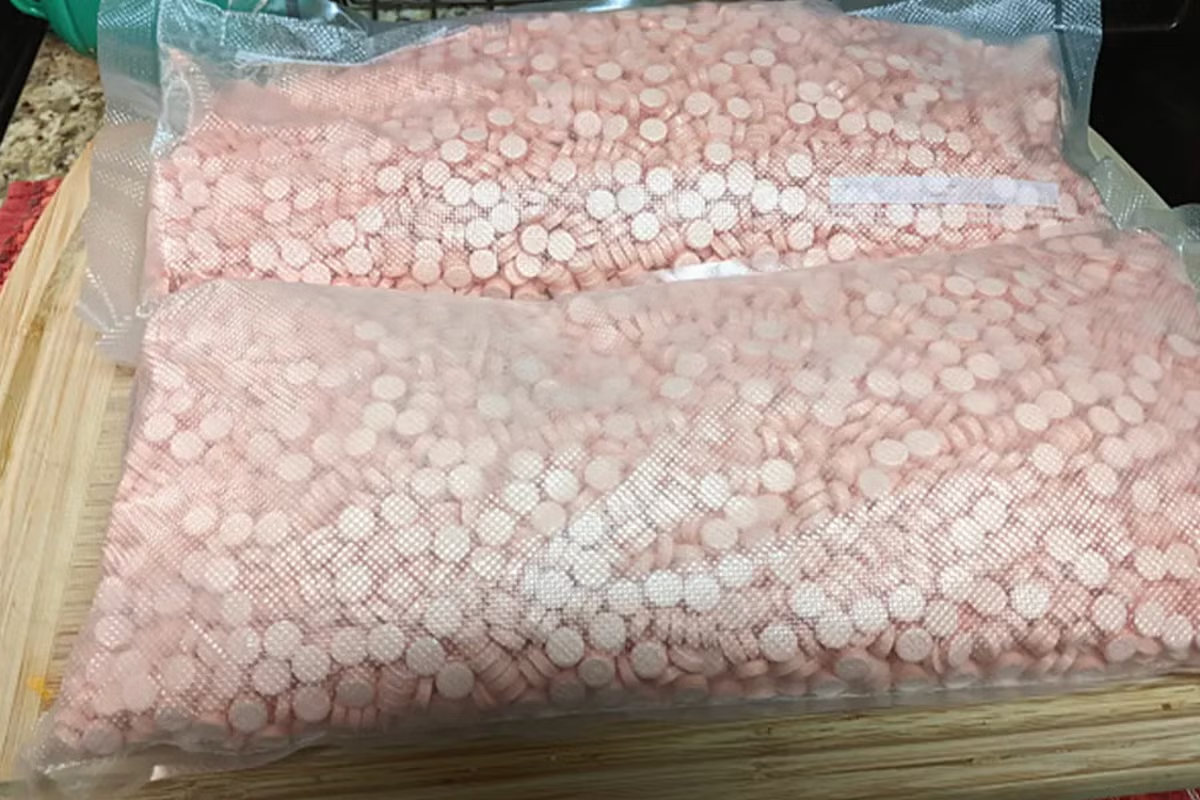
The sentencing of 74-year-old Austin resident Patricia Parker has drawn national attention for the unusual circumstances surrounding her role in a large-scale drug trafficking operation. What began as an attempt to secure her own medications evolved into a scheme that distributed what authorities estimate to be the equivalent of 150,000 lethal doses of fentanyl through the mail.
Parker’s case underscores the complexities surrounding counterfeit drug distribution networks in the United States and the methods traffickers use to conceal their operations. The details revealed in federal documents illustrate how an elderly woman with no prior history of major criminal activity became a key link in a supply chain involving counterfeit amphetamines laced with one of the deadliest synthetic opioids.
Parker’s activities came to light in 2022 when her attempt to sell counterfeit amphetamines to an undercover Food and Drug Administration (FDA) agent initiated a broader investigation. Over the next ten months, officials monitored her movements, intercepted packaging records, and ultimately raided her residence, uncovering thousands of pills stored throughout her home.
The case has raised questions about how easily individuals can become entangled in trafficking networks, particularly when facing financial strain, health challenges, or limited access to affordable medication. According to court filings, Parker believed she was distributing standard counterfeit stimulants but not fentanyl, although authorities argued she should have recognized the risks inherent in handling unregulated pills sourced from an individual she identified only as “John.”
A Drug Trafficking Operation Built Around a Personal Crisis
Federal documents indicate that Patricia Parker’s involvement with drug distribution began as a direct response to financial instability that emerged during the Covid-19 pandemic. Having worked in real estate, she reportedly experienced significant income loss when the housing market stalled early in the pandemic. At the same time, her own medical needs required regular access to prescription drugs that she could no longer afford through conventional channels.
According to her attorney, Patricia Parker had been purchasing medications from a man she knew as John for an extended period. When her financial situation worsened, he allegedly proposed that she help distribute his counterfeit drugs in exchange for receiving her own medications at no cost. This arrangement led to Parker’s transition into what authorities describe as a “remailer,” a role in which an individual receives large shipments of illicit substances and breaks them into smaller packages for distribution.
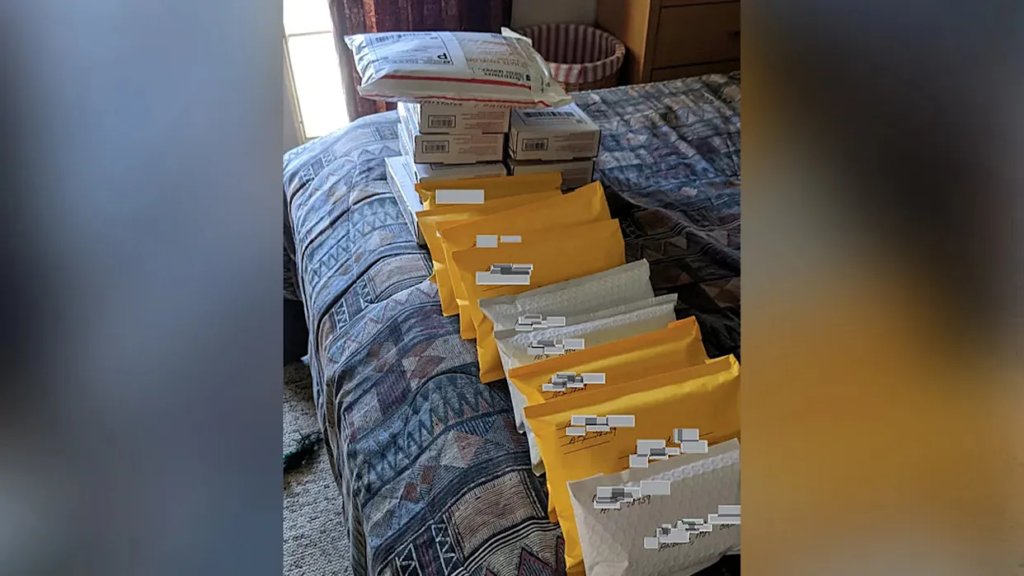
Patricia Parker’s responsibilities included addressing and sending parcels to locations across the country, all while using postal services to obscure the origin of the shipments. Authorities estimate that she mailed more than 1,000 packages during the course of the operation. While she told investigators and the court that she believed she was distributing counterfeit amphetamines, federal agents later confirmed that many of the pills contained fentanyl, a synthetic opioid responsible for tens of thousands of overdose deaths annually in the United States.
Read : List of Countries with the Most Bald Men in 2024: Spain top the list
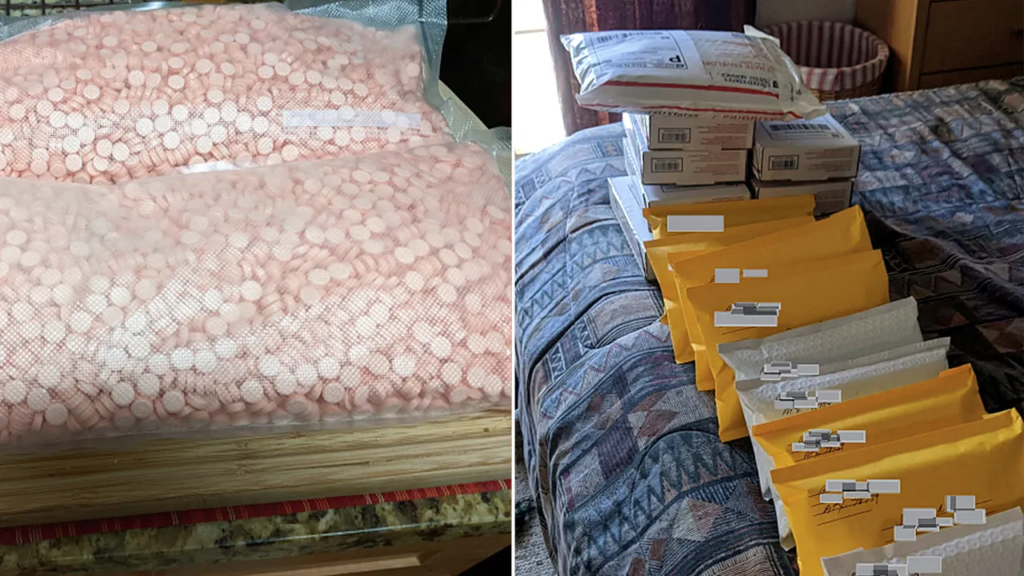
The scale of the operation only became fully apparent after the execution of a search warrant at her Austin home. Investigators found more than 18,000 pills stored in various containers, including an ornamental tin. Among the substances seized were pills resembling Adderall, oxycodone, and diazepam. Laboratory testing confirmed that numerous counterfeit amphetamine pills were laced with fentanyl. These findings formed a central part of the prosecution’s argument that Parker, despite her age, education, and life experience, had knowingly taken part in a high-risk criminal enterprise.
Federal Investigation Reveals Depth of Counterfeit Pill Distribution
The investigation into Parker’s activities was conducted jointly by the FDA’s Office of Criminal Investigations and the U.S. Postal Inspection Service. Their involvement reflects the multi-agency approach increasingly used to track drug trafficking operations that rely on the postal system for distribution. Authorities described Parker’s activities as part of a broader network in which traffickers rely on civilian remailers to ensure that packages appear to originate from typical residential locations rather than suspicious commercial senders.
Court filings detail how Parker first came to the attention of law enforcement. In May 2022, she attempted to sell counterfeit amphetamine pills to an undercover FDA special agent. During the controlled purchase, she provided pills that were later confirmed to contain fentanyl. Following this initial encounter, authorities monitored her shipping patterns, observed the frequency with which she mailed parcels, and conducted surveillance that eventually resulted in the search warrant executed ten months later.
Inside her residence, investigators discovered signs of an organized distribution operation. The various containers of pills included both Schedule II and Schedule IV controlled substances, all unapproved for use by the FDA. Authorities also found materials used to package and ship pills, including labels and shipping supplies, further demonstrating the systematic nature of the scheme. According to the U.S. Attorney’s Office, Parker’s participation extended over a substantial period of time, during which she played a consistent and reliable role in facilitating the movement of counterfeit medication across the country.
Throughout the sentencing process, Parker maintained that she had no knowledge that fentanyl was involved. In a letter submitted to the judge, she wrote that she would never have knowingly trafficked a substance so dangerous and expressed remorse for not asking more questions about the pills she handled. Her attorney reiterated this claim, framing her actions as the result of desperation and poor judgment rather than malicious intent. However, federal prosecutors challenged this narrative, arguing that an “educated, adult woman” should have recognized the inherent risks in distributing illegally sourced medications, especially in large quantities.
Authorities highlighted that counterfeit pills containing fentanyl are widely known to be a growing threat in the United States, often visually indistinguishable from legitimate pharmaceuticals. The prosecution argued that Parker’s decision to engage in large-scale distribution, even if motivated by financial hardship, demonstrated a disregard for the potential consequences to those who received the pills she mailed. While the court acknowledged her age, health, and personal circumstances, these factors did not absolve her of responsibility for her role in a trafficking operation with significant public health implications.
Sentencing and Aftermath of a Case That Challenged Expectations
In May of this year, Parker pleaded guilty to conspiracy to distribute fentanyl and distribution of over 310 grams of fentanyl. Prosecutors emphasized that this amount equated to approximately 150,000 potentially lethal doses. Such quantities typically lead to lengthy prison terms, particularly under federal sentencing guidelines. However, the court ultimately imposed a sentence that reflected both the seriousness of the offense and Parker’s individual circumstances.
Read : Percy Levy Arrested For Possessing Fentanyl Enough to Kill 278,000 People
On November 25, Parker was sentenced to two years of probation with a special condition of nine months of home confinement. This outcome differed significantly from sentences often seen in cases involving comparable quantities of fentanyl. The court considered her age, her lack of significant prior criminal history, and her attorney’s argument that she had been exploited by someone who supplied both her personal medications and the drugs she distributed. Her acceptance of responsibility and full cooperation with investigators were also noted as mitigating factors.
The sentencing memorandum referenced by the prosecution expressed concern that Parker’s actions contributed to the circulation of extremely dangerous counterfeit substances. Authorities highlighted that fentanyl-laced counterfeit pills continue to be a major driver of overdose deaths nationwide, complicating efforts to curb the ongoing opioid crisis. The fact that an elderly woman became a central participant in a trafficking chain demonstrated how aggressively such networks recruit individuals who may not fully understand the scale or consequences of their involvement.
Parker’s case has also brought renewed attention to the economic and healthcare pressures that can influence criminal behavior among vulnerable populations. Her attorney emphasized that the collapse of her real estate income during the pandemic left her unable to purchase legitimate medications, creating an opening for illicit actors to manipulate her situation. Although this explanation did not absolve her of legal responsibility, it did provide context for the court’s decision to impose a sentence focused on restriction and supervision rather than incarceration.
For federal authorities, the case underscores the importance of ongoing partnerships between investigative agencies, particularly when counterfeit pharmaceuticals are distributed through the mail. The investigation relied on cooperation between the FDA’s Office of Criminal Investigations and the U.S. Postal Inspection Service, demonstrating how tracking shipping patterns and executing controlled purchases can uncover trafficking schemes that might otherwise remain hidden within ordinary mail flows.
As the case concludes, officials involved in the investigation have reiterated the dangers associated with counterfeit medications, especially those containing fentanyl. The proliferation of these pills represents one of the most significant challenges facing public health agencies, law enforcement, and communities nationwide. Parker’s involvement, though unusual in several respects, illustrates how trafficking networks exploit individuals of varying backgrounds to facilitate distribution.
The resolution of her case brings formal closure to a lengthy investigation but also highlights the continuing threat posed by counterfeit pills circulating in the United States. Federal agencies have indicated that they will continue to pursue similar operations, focusing on the supply chains that enable dangerous substances to reach consumers through seemingly ordinary channels.
Spinolococasino… now that’s a name! Had a few spins and enjoyed myself. Worth a look if you’re feeling adventurous! Jump in: spinolococasino