
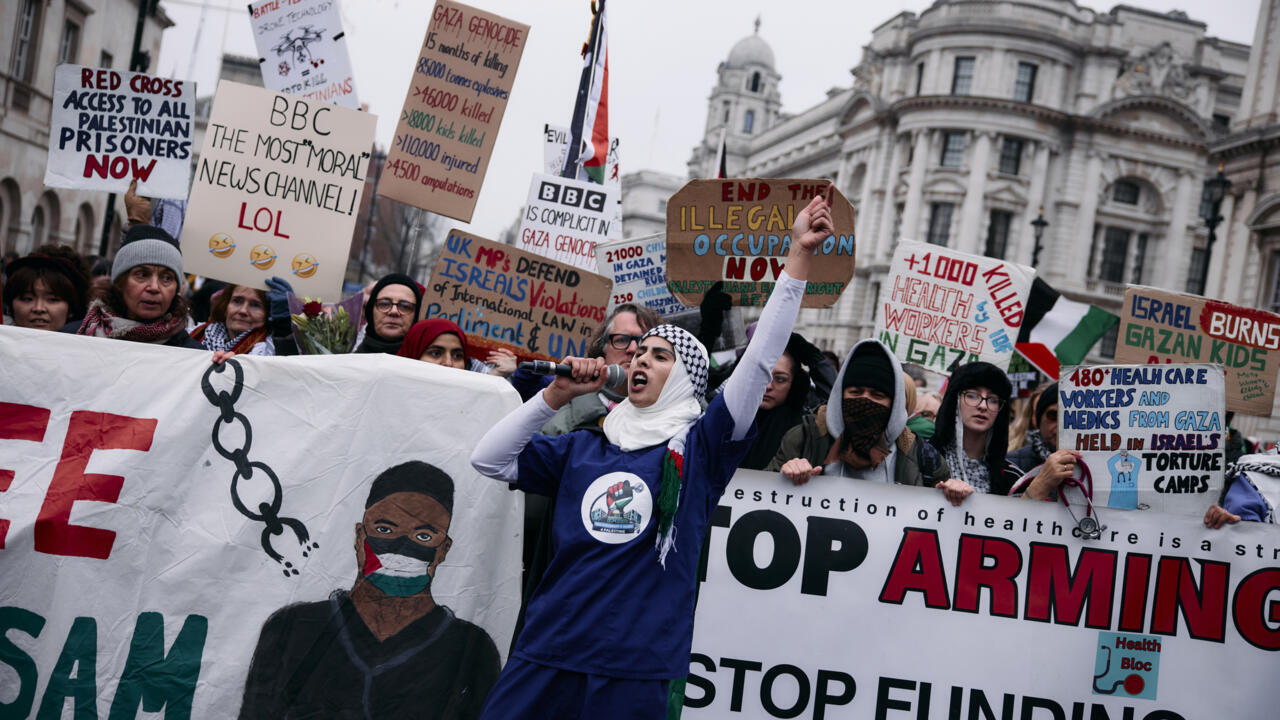
Pro-Palestine rally in London have been a central stage for demonstrating solidarity with Palestinians amid escalating conflicts in Gaza.
The latest protest on Saturday witnessed thousands of participants gathering at Whitehall, voicing their concerns and demands against Israel’s 15-month war in Gaza. Signs reading “Stop arming Israel” and “Free Palestine” adorned the crowd as demonstrators expressed their outrage and call for action.
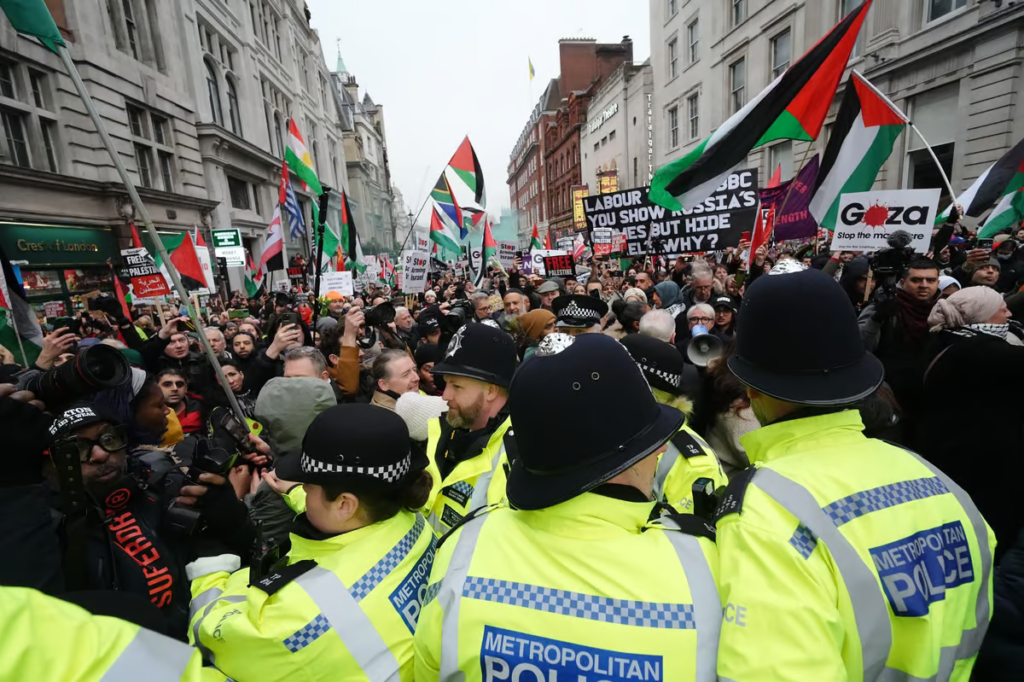
The rally took place a day after a ceasefire agreement was reached between Israel and Hamas, signaling a potential pause in the prolonged violence. However, the day ended with 77 individuals arrested by the Metropolitan Police, reflecting heightened tensions and controversies surrounding the event.
Tensions Escalate During Pro-Palestine rally in London
The protest began with participants congregating in Whitehall, but the atmosphere grew tense when the police prevented the march from progressing towards Trafalgar Square. Despite the blockade, some demonstrators reportedly broke through the police line, advancing toward the iconic London landmark. This act of defiance was met with strong police intervention.
Among the crowd were notable figures like former Labour leader Jeremy Corbyn and ex-shadow chancellor John McDonnell, whose presence underscored the political and social significance of the rally. Footage circulating on social media showed the demonstrators’ determination as they moved forward, despite the barriers placed by law enforcement.
Read : 33 Hostages, 737 Prisoners, 42 Days: Phase 1 of Israel-Hamas Gaza Ceasefire Deal
The Metropolitan Police justified their actions by citing the conditions imposed on the protest, which included restrictions on entering certain areas such as Portland Place. These measures were deemed necessary to prevent disruptions and maintain order, according to Met commander Adam Slonecki. However, the police’s decision to block the march and arrest participants drew sharp criticism from various groups and organizations.
Arrests and Controversies
The Metropolitan Police reported that 77 individuals were arrested during the rally, marking the highest number of arrests seen at a protest related to the Gaza conflict. The reasons for the arrests included breaching protest conditions, public order offenses, and displaying materials supporting banned organizations.
One of the high-profile arrests involved Chris Nineham, a leading figure in the Stop the War coalition and the chief steward of national Palestine marches. The coalition accused the police of unjustly targeting Nineham, alleging that officers used excessive force to detain him. Video footage and witness accounts described a scene where officers forcibly restrained Nineham, prompting other protesters to intervene.
🚨#BREAKING: 77 people have been arrested following today's pro-Palestinian demonstration in central London pic.twitter.com/dg7c0sv6mA
— World Source News 24/7 (@Worldsource24) January 18, 2025
Stop the War issued a strong statement condemning the arrest as an “unacceptable assault on civil liberties” and demanded Nineham’s immediate release. The Muslim Association of Britain also criticized the police’s handling of the protest, calling it an attack on democracy and freedom of assembly.
The police, however, maintained that their actions were necessary to address what they described as “the most significant escalation in criminality” during the protests. Commander Slonecki suggested that the breach of police lines and attempts to reach Portland Place were coordinated efforts to defy the imposed restrictions.
The Broader Context of the Conflict
The protests in London have been part of a broader movement demanding an end to the ongoing conflict in Gaza, which has claimed thousands of lives and caused widespread destruction. Since the outbreak of violence in October 2023, weekly demonstrations have become a regular feature across the UK, drawing attention to the humanitarian crisis faced by Palestinians.
The ceasefire deal reached between Israel and Hamas was a focal point of the latest rally. The agreement, ratified by the Israeli government, involves the exchange of hostages held by Hamas for Palestinian prisoners in Israeli jails and a six-week pause in the conflict.
While the ceasefire has been welcomed as a step towards reducing bloodshed, skepticism remains regarding its durability and long-term impact.
Speakers at the rally, including actor Khalid Abdalla, highlighted the significance of the ceasefire while cautioning against complacency. Abdalla referred to the ceasefire as a moment of respite in what he described as an ongoing genocide, emphasizing the need for vigilance and continued advocacy for Palestinian rights.
The protest also underscored broader issues of civil liberties and the right to dissent. The police’s decision to ban marches from certain areas, such as the BBC headquarters near a synagogue, sparked debates about the balance between public safety and freedom of expression.
The Palestinian Forum in Britain criticized the relocation of protests to less prominent locations as an attempt to stifle the movement, further fueling tensions between demonstrators and authorities.
The pro-Palestine protests in London serve as a microcosm of the larger global debate surrounding the Israel-Palestine conflict. They reflect the passion and frustration of individuals advocating for an end to violence and a resolution to decades of strife. However, the events of Saturday also highlight the challenges of managing large-scale demonstrations, particularly when they intersect with contentious political and social issues.
The arrests and controversies surrounding the latest rally are likely to fuel further debates about the rights of protesters and the role of law enforcement in such scenarios. As the situation in Gaza continues to unfold, the impact of these protests on public opinion and policy-making remains to be seen.