
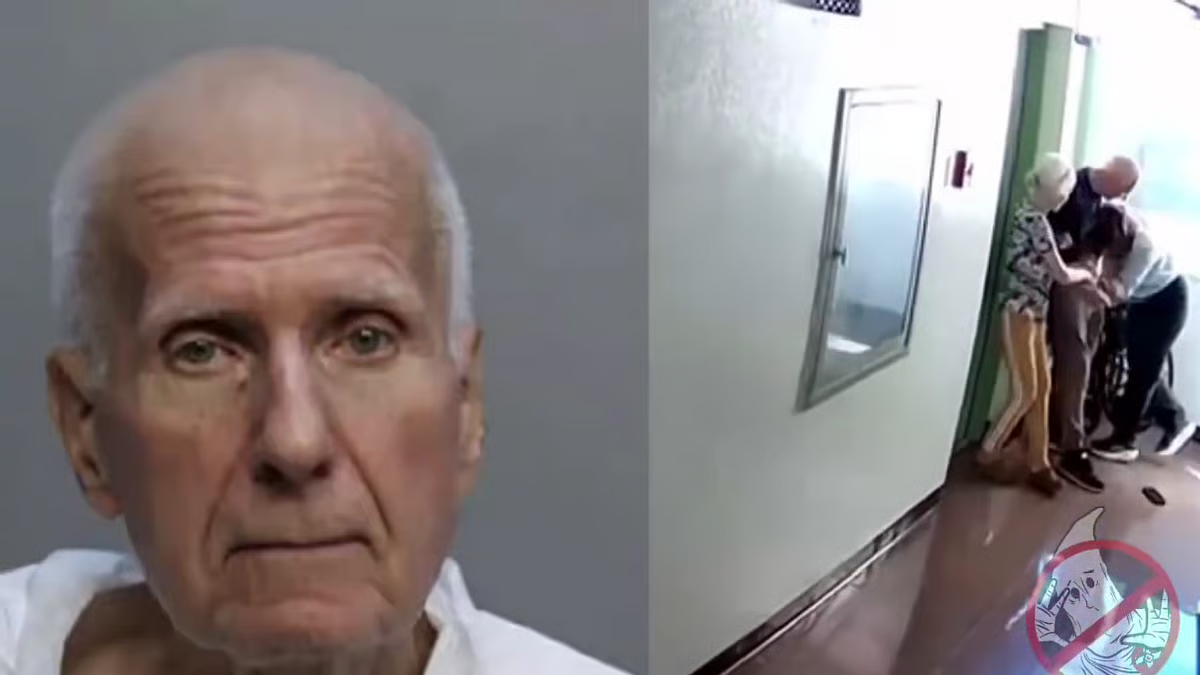
In a shocking incident that has left the tight-knit community of Miami Beach reeling, an 83-year-old resident of a senior housing complex allegedly stabbed a 71-year-old property manager during what was supposed to be a routine conversation about apartment maintenance. The attack, captured in chilling detail on surveillance footage, unfolded on August 4, 2025, at the Rebecca Towers, a public housing facility at 150 Alton Road in the South of Fifth neighborhood.
John Gula, a U.S. Navy veteran originally from Washington state, faces charges of attempted second-degree murder after lunging at Amelia Sola-Ortiz with a folding knife. This violent outburst not only highlights the vulnerabilities within senior living environments but also raises urgent questions about resident screening, mental health support, and workplace safety for those on the front lines of property management. As details emerge from police reports and witness accounts, the story serves as a stark reminder of how everyday interactions can spiral into tragedy in unexpected ways.
The Rebecca Towers, a 12-story building providing affordable housing for low-income seniors, has long been a sanctuary for retirees seeking the vibrant coastal lifestyle of Miami Beach without the financial strain. Constructed in the 1970s as part of the city’s public housing initiative, it houses over 200 residents, many of whom rely on the facility for community support and essential services. On that fateful Monday morning, the atmosphere in the building was typical—residents shuffling to elevators, staff handling daily inspections, and the distant hum of ocean waves filtering through open windows.
Amelia Sola-Ortiz, a dedicated asset manager for the Miami Beach Housing Authority, arrived for her shift around 10 a.m., her clipboard in hand and a list of units flagged for upkeep issues. Known among colleagues for her patience and professionalism, Sola-Ortiz had been with the authority for over a decade, often mediating disputes over everything from pest control to lease violations. Little did she know that her visit to unit 1004 would become the catalyst for one of the most harrowing events in the complex’s history.
John Gula, the occupant of that unit, had been a resident for several years, blending into the rhythm of senior life with his quiet demeanor and occasional chats with neighbors. Court records describe him as a military veteran with no prior criminal history in Miami-Dade County, a detail that has only deepened the bewilderment among those who knew him.
NEW: 83-year-old man arrested for st*bbing landlord at Miami Beach senior living complex
— Unlimited L's (@unlimited_ls) September 19, 2025
Property manager Amelia Sola Ortiz went to notify 83-year-old John Gula that he failed an inspection and discuss the condition of his apartment
Investigators said the two argued outside his… pic.twitter.com/39tbe7HSp6
Friends recall Gula as a man who spoke fondly of his Navy days, sharing stories of deployments and the discipline that shaped his life. Yet, beneath the surface, there were whispers of growing frustration—complaints about building rules, murmurs of isolation, and perhaps the toll of aging in a bustling urban setting. On this day, those tensions boiled over in a hallway confrontation that would forever alter the lives of everyone involved.
The Shocking Attack: A Routine Visit Turns Deadly
The incident began innocently enough, as pieced together from building security footage and the Miami Beach Police Department’s arrest report. Around 10:45 a.m., Sola-Ortiz approached John Gula’s door on the 10th floor, accompanied by his girlfriend, who had joined the discussion at the resident’s request. The purpose was straightforward: to address a recent failed inspection of Gula’s apartment.
Reports indicate the unit had accumulated clutter and maintenance issues—piles of unwashed dishes, scattered personal items, and potential health hazards like mold from unreported leaks—that violated housing authority standards. Sola-Ortiz, ever the diplomat, initiated the conversation in the doorway, explaining the need for immediate corrections to avoid further penalties. Gula, dressed in a U.S. Navy T-shirt and light-colored pants, stood with his arms crossed, his expression hardening as the exchange progressed.
Read : Father of Ukrainian Refugee Iryna Zarutska Who Stabbed on Train, Misses Daughter’s Funeral
What started as a verbal back-and-forth escalated rapidly within minutes. Surveillance video, later released to the public, captures the harrowing sequence: Gula’s hand dips into his pocket, emerging with a compact folding knife glinting under the fluorescent hallway lights. Without warning, he lunges forward, thrusting the blade twice into Sola-Ortiz’s torso. The first strike pierces her chest, eliciting a gasp that echoes faintly on the recording.
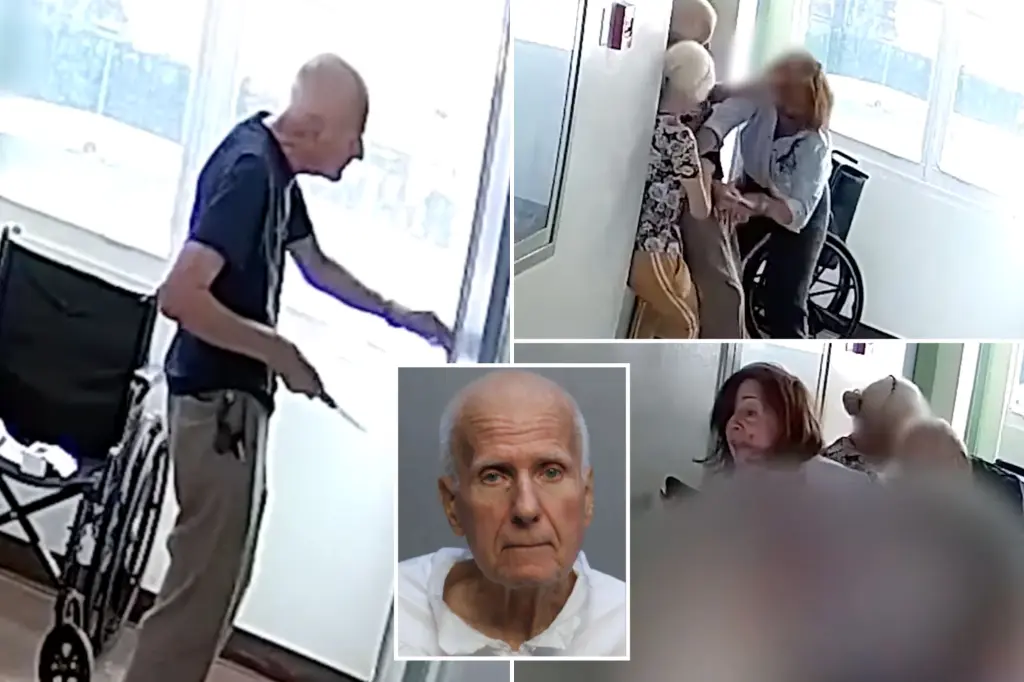
As she staggers back, clutching the wound, John Gula presses the attack, aiming for her upper body again. Blood begins to seep through her blouse, staining the beige carpet as she fights to defend herself. In a desperate bid for survival, Sola-Ortiz grapples with Gula’s wrist, wrenching the knife free and hurling it down the corridor, where it skitters across the floor like a discarded toy.
But the assault didn’t end there. Undeterred, John Gula reaches into his right pocket once more, producing a second folding knife. His girlfriend, visible in the footage as a blur of motion, lunges to intervene, wrapping her arms around his waist in a frantic attempt to pull him away. She shouts pleas for him to stop, her voice cracking with panic, but Gula twists violently, slashing toward Sola-Ortiz from behind.
The blade catches the back of her head, drawing a deep gash that sends fresh blood streaming down her neck. Neighbors, alerted by the commotion, crack their doors open, their faces pale with horror. One resident, a 78-year-old widow from the adjacent unit, later recounted to investigators how she froze in disbelief, watching the scene unfold like a nightmare in slow motion.
Sola-Ortiz, drawing on an inner reservoir of strength, breaks free and stumbles down the hall, banging on doors for help. She collapses into the apartment of a sympathetic witness on the same floor, who immediately dials 911. “She’s bleeding everywhere—hurry!” the caller screams into the phone, cradling Sola-Ortiz as she drifts in and out of consciousness.
Paramedics arrive within minutes, finding the property manager unresponsive on the floor, her chest heaving irregularly and a pool of blood spreading beneath her. The stab wound to her torso had nicked vital tissue, while the head injury caused profuse bleeding and possible concussion. Rushed to Jackson Memorial Hospital’s Ryder Trauma Center, she underwent emergency surgery to stabilize the injuries, spending several days in intensive care before her condition improved to stable.
Meanwhile, John Gula retreated to his girlfriend’s seventh-floor apartment, swapping his bloodied pants for a darker pair in a apparent attempt to evade detection. Police, guided by the witness and footage, apprehended him just 15 minutes later without resistance. Covered in Sola-Ortiz’s blood and reeking of adrenaline, he offered no immediate explanation, his eyes distant as officers read him his rights.
Aftermath and Arrest: Evidence Paints a Grim Picture
The swift police response transformed the serene Rebecca Towers into a crime scene, with yellow tape cordoning off the 10th-floor hallway and forensic teams combing for clues. A search warrant executed on Gula’s girlfriend’s apartment yielded damning evidence: Sola-Ortiz’s blood-spattered eyeglasses discarded on a side table, droplets of crimson staining the bathroom sink and shower drain, and Gula’s original light-colored pants submerged in a bucket of pinkish-red liquid—an amateurish effort to launder away the proof.
The girlfriend, who has not been charged, cooperated fully, telling detectives she had tried everything to stop the attack but was overpowered by Gula’s surprising vigor. John Gula was booked into the Turner Guilford Knight Correctional Center that afternoon, his mugshot capturing a man who looked every bit his 83 years—thinning white hair, weathered skin, and a gaze that betrayed no remorse. Prosecutors wasted no time, charging him with attempted second-degree murder, a first-degree felony carrying a potential life sentence if convicted.
At his initial appearance before a Miami-Dade judge, the courtroom was tense; the magistrate, citing the premeditated nature suggested by the second knife, ordered John Gula held without bond. “This was not a heat-of-the-moment lapse,” the judge intoned, “but a deliberate escalation that endangered lives.” Gula’s public defender has hinted at exploring mental health defenses, noting his client’s advanced age and veteran status, but no formal plea has been entered yet.

For Sola-Ortiz, the road to recovery has been arduous. Discharged after a week in the hospital, she returned home to her family in Miami, where she’s undergoing physical therapy for lingering pain in her chest and mobility issues from the head trauma. Colleagues at the housing authority have rallied around her, launching a private fundraiser to cover medical bills not insured by her plan. “Amelia is the heart of this place—she doesn’t deserve this,” one coworker shared anonymously. The incident has prompted an internal review at the authority, with questions swirling about how such a volatile resident slipped through routine wellness checks.
The Rebecca Towers community, meanwhile, grapples with a fractured sense of security. Group therapy sessions have been organized, and security patrols doubled, but the scar of that hallway violence lingers. Neighbors avoid the 10th floor, whispering about Gula’s past outbursts—minor ones, like heated arguments over laundry schedules—that now seem like ominous foreshadows.
Broader Implications: Safety in Senior Housing Under Scrutiny
This stabbing has ignited a broader conversation about the challenges of managing senior public housing in high-density urban areas like Miami Beach. Rebecca Towers, like many such facilities nationwide, serves a demographic prone to isolation, cognitive decline, and untreated mental health issues, exacerbated by limited funding for social services. Experts in elder care point out that failed inspections often stem from hoarding or depression, conditions that require compassionate intervention rather than confrontation.
“We need more training for staff on de-escalation and mental health first aid,” says a gerontology specialist familiar with Florida’s housing programs. “A simple knock on the door can turn deadly if underlying tensions aren’t addressed proactively.”
The attack also spotlights the risks faced by property managers, who often work alone in potentially volatile environments. Advocacy groups are calling for mandatory panic buttons, paired escorts for inspections, and stricter background checks that include psychological evaluations for residents. In Miami-Dade, where senior populations are booming—projected to hit 25% of residents by 2030—such reforms could prevent future tragedies. Gula’s veteran status adds another layer, prompting veterans’ organizations to urge better integration of VA resources into public housing, including PTSD screenings and counseling referrals.
As the legal proceedings unfold, with a preliminary hearing slated for late October, the Gula-Sola-Ortiz case stands as a cautionary tale. It underscores the fragility of trust in communal living and the human cost when systems fail to bridge the gap between policy and reality. For now, Miami Beach mourns a disrupted peace, hoping that from this darkness, brighter safeguards will emerge. Sola-Ortiz’s resilience inspires, a testament to the strength required not just to survive, but to rebuild in the face of unimaginable violence.