
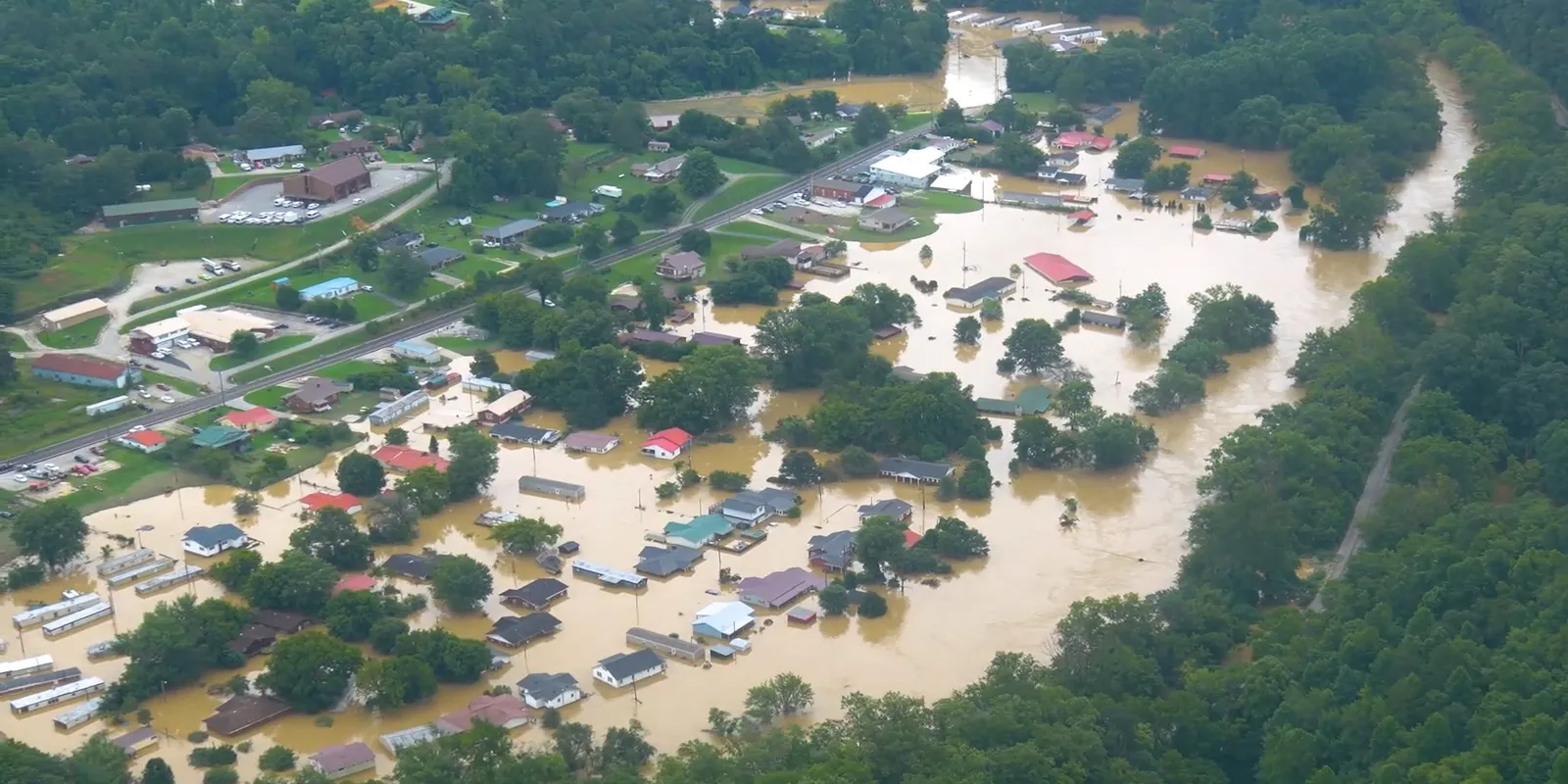
The state of Kentucky was left in mourning following the tragic death of 9-year-old Gabriel Andrews, a young boy who lost his life to floodwaters while simply trying to make it to his school bus.
His death has not only shattered the hearts of his loved ones and teachers but has also sparked a wave of public questioning and criticism surrounding the decision of local school officials to keep schools open in the face of extreme weather conditions.
As the community grieves the loss of an innocent child, serious concerns are being raised about preparedness, communication, and responsibility during weather emergencies.
This incident has become a focal point of emotional outcry and policy discussions. Gabriel’s passing was not only a personal tragedy for his family and friends but a poignant symbol of systemic failure.
His story has resonated far beyond the borders of Franklin County, prompting deep reflection on how communities should protect their most vulnerable members when nature becomes a threat.
Remembering Gabriel: The Kindest Soul in the Classroom
In the wake of this tragedy, Gabriel Andrews is being remembered not just as another victim of natural disaster, but as a deeply loved and cherished child whose presence brought joy and warmth to those around him. His teacher, Kasey Swails, expressed the profound grief that has engulfed her classroom and her heart.
In an emotional social media post, Swails referred to Gabriel Andrews as the “sweetest, kindest boy who was impossible not to love.” Her words painted the picture of a child full of innocence and energy, someone who loved basketball, admired police officers, and gave his best in everything he did.
For educators like Swails, students are more than just children in their care — they become family. Her heartbreak was palpable as she described how Friday marked the most devastating day in her teaching career.
Gabriel was more than a student to her — he was a light in the classroom, a source of smiles and laughter, and a loyal friend to his peers. She described him as a child who “loved basketball and anything to do with a police car, who tried his best at any task given him. Who was a friend to all.”
Read : First Time in Indian Military History: Two Classmates Will Serve as Army and Navy Chief Together
These personal reflections from those who knew Gabriel best emphasize the human cost of the decisions made by those in authority. Gabriel’s death is not just a statistical loss; it is a profound personal loss that has permanently impacted his classmates, teachers, friends, and family. For those who loved him, the floodwaters did not just wash away a life — they swept away a future filled with potential and promise.
A Community in Shock and Grief
Gabriel Andrews’s tragic death has shaken the entire community of Franklin County and beyond. Residents in Kentucky’s capital city were stunned by the news, with an outpouring of support and sorrow quickly emerging.
Kentucky Governor Andy Beshear expressed his condolences via social media, writing, “my heart breaks for this family.” The governor’s words echoed the grief of a state in mourning, stunned by the loss of such a young life.
In the hours following the incident, emergency responders worked tirelessly to locate the missing child after reports came in that he had been swept away by floodwaters.

His body was discovered about two hours later, a heartbreaking end to a search that had been filled with hope and desperation. For many in the community, this event felt preventable, and that pain only added to their heartbreak.
Candlelight vigils and memorials have since been organized in honor of Gabriel. People from different walks of life — parents, teachers, students, neighbors — have come together to remember him and support his grieving family.
His story has sparked an emotional outpouring of love and solidarity, with people placing flowers, stuffed animals, and handwritten notes near the site where he was found. It’s clear that Gabriel Andrews’s death has left a lasting scar on his community.
But amidst the mourning, frustration and anger have also begun to surface. The public is now asking critical questions: How could this have happened? Why was school not canceled when such dangerous weather was forecasted? And what can be done to prevent such tragedies in the future?
Rising Public Outrage: Why Weren’t Classes Canceled?
As more details emerged, attention quickly turned to the Franklin County school district’s decision to keep schools open on Friday, despite the presence of dangerous weather conditions and active flooding in the region.
Many surrounding school districts chose to cancel classes, citing concerns over student safety. But Franklin County proceeded with in-person classes — a decision that is now being harshly criticized.
Caitlin Green, a local parent, voiced her disbelief and frustration in an interview with Lexington’s WDKY television station. “You’re taking the chance on, you know, putting these kids on a bus through this weather, not knowing if they’re going to run into flooded waters,” she said.
Her words captured the thoughts of many parents who are now wondering how this tragedy could have been avoided if school had simply been called off for the day. The questions grew louder on social media, where community members demanded accountability and clarity from school officials.

Why wasn’t a decision made to cancel school when other districts clearly saw the risk? Why didn’t emergency alerts or weather warnings trigger a more cautious response? And most heartbreakingly, would Gabriel still be alive if different decisions had been made?
Franklin County schools Superintendent Mark Kopp addressed the situation, calling Gabriel Andrews’s death a “horrific tragedy.” He offered condolences and emphasized the closeness of the school community, stating, “We are more than a school system, we are a family at Franklin County Schools, and we share this loss together.”
But many felt his statement didn’t go far enough. There was no immediate acknowledgment of potential errors in judgment or indications that policies might be reevaluated going forward.
Furthermore, the district has not responded to numerous questions and comments from parents on social media. This silence has only intensified feelings of mistrust and disappointment. In the eyes of many, it appears that leadership is avoiding accountability — a perception that could damage community trust in the long run.
The loss of Gabriel Andrews has forced the Franklin County school district and other districts across the nation to confront a stark reality: emergency preparedness and student safety must always come first.
The rapid onset of flash flooding is not a new phenomenon, and weather forecasts had indicated strong storms were expected. In such circumstances, erring on the side of caution should be the norm — especially when the lives of children are at stake.
While nothing can bring Gabriel Andrews back, his death has become a sobering reminder of the importance of prioritizing child safety above all else. The pain of his loss must not be in vain. School districts across the country need to take a closer look at their emergency protocols, decision-making timelines, and communication strategies.

When it comes to severe weather, there is no room for hesitation or oversight. More stringent guidelines could be implemented, such as automatic school closures under specific weather alerts or coordination with local emergency services to assess road safety.
Better communication tools for notifying parents and caregivers about delays or closures could also help. Additionally, schools might consider increasing flexibility around attendance in severe weather conditions, allowing parents to keep children home without penalty when danger is suspected.
Above all, transparency and accountability are essential. When tragedies occur, communities deserve honest answers and a clear path toward improvement. Ignoring the concerns of grieving parents and citizens will only deepen the wounds left by such events.
Gabriel Andrews’ story is one of both immense heartbreak and urgent reflection. He was a bright light in the lives of many, a sweet and kind boy with dreams and joy that were abruptly cut short. The pain of losing him will linger for a long time, but it can also serve as a catalyst for change.
In honoring his memory, it is essential that communities, educators, and leaders take concrete steps to ensure that such a tragedy never happens again. Gabriel Andrews deserved a full life, and while that was taken from him, we owe it to his memory to make sure no other child walks into danger simply trying to go to school.