
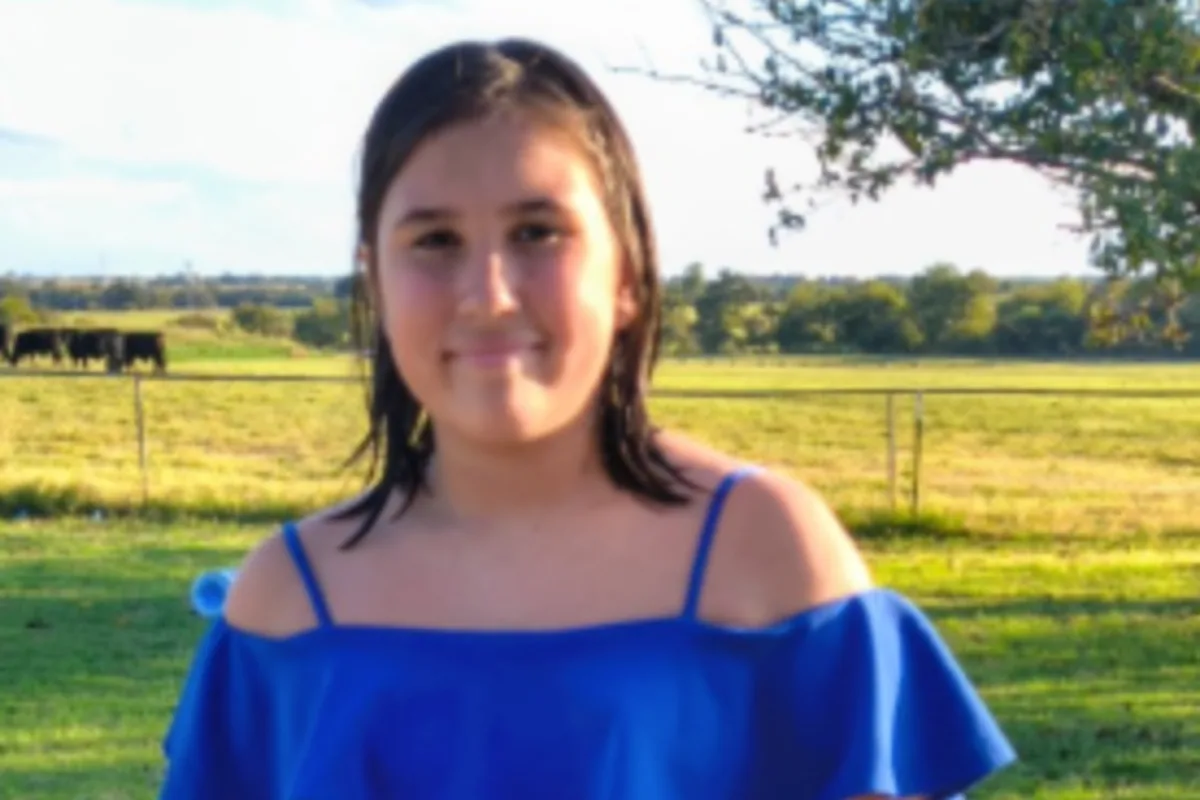
The tragic death of nine-year-old JackLynn Blackwell has once again drawn urgent attention to the dangers lurking behind viral social media trends. What began as an ordinary day for a family in Texas quickly turned into an unimaginable nightmare, leaving parents devastated and raising serious concerns about the influence of online content on young minds. JackLynn, described as vibrant, joyful, and full of dreams, lost her life after attempting what is widely known as the “blackout challenge,” a dangerous act that involves self-strangulation to achieve a brief sensation of euphoria. Her story is not just a personal tragedy but a stark warning about the growing risks children face in the digital age.
The incident underscores a broader issue that extends beyond a single family. With increasing access to smartphones and social media platforms at younger ages, children are being exposed to content that they may not fully understand or are emotionally equipped to handle. The consequences, as seen in this heartbreaking case, can be irreversible. JackLynn’s parents are now speaking out, hoping their loss can prevent similar incidents and encourage greater awareness among families worldwide.
A Family’s Loss and a Moment That Changed Everything
On February 3, what seemed like a quiet morning took a devastating turn. JackLynn Blackwell had been spending time at home, and nothing appeared out of the ordinary until her father noticed an unusual silence in the backyard. That silence, he later recalled, felt unsettling. When he went outside to check on her, he initially believed she was simply playing, as she often did in that area. But within moments, the reality became painfully clear.
He found his daughter unconscious, with a cord wrapped around her neck. In a desperate attempt to save her, he immediately removed the cord and began performing CPR, holding on to hope until emergency responders arrived. Despite his efforts, the outcome was tragic. The shock and helplessness of that moment remain deeply etched in his memory, marking what he described as the most terrifying experience of his life.
What makes the situation even more heartbreaking is the sequence of events leading up to it. Just before the incident, JackLynn had shown her grandmother a video of someone performing the same dangerous act. She had been warned not to try it, a reminder that children often encounter guidance but may not fully grasp the severity of the risks involved. Within a short span of time, curiosity and influence led to a decision that would cost her life.
Read : 12-Year-Old Boy Dies Attempting TikTok’s Deadly ‘Scarf Challenge’
For her parents, the loss goes beyond grief; it is the sudden absence of a child who was the center of their world. They described their family as “three amigos,” a close-knit unit that shared laughter, music, and everyday moments. JackLynn loved karaoke and dreamed of becoming a singer, filling their home with her voice and energy. That sense of togetherness has now been replaced by silence, a void that cannot be filled.
The Dangerous Reality of Viral Social Media Challenges
The “blackout challenge” is not a new phenomenon, but its persistence on social media platforms continues to pose a serious threat. The challenge involves restricting oxygen to the brain, often by choking or suffocation, to induce a temporary high. While some may perceive it as harmless experimentation, the reality is far more dangerous. Even a few seconds of oxygen deprivation can lead to unconsciousness, brain damage, or death.
Children and early teenagers are particularly vulnerable to such trends. At ages where curiosity is high and judgment is still developing, the appeal of viral content can outweigh the understanding of consequences. Many of these challenges are presented in a way that downplays the risks, making them appear as harmless or even entertaining activities. The repetition of such videos further normalizes the behavior, increasing the likelihood that impressionable viewers might attempt them.
Data from health authorities has shown that dozens of children have lost their lives in similar circumstances over the years. Most of the victims fall within a narrow age group, typically between nine and fourteen, highlighting a pattern that cannot be ignored. At this stage of development, the brain is still maturing, particularly in areas responsible for decision-making and risk assessment. This makes children more susceptible to imitation and peer influence, even when the activity is clearly dangerous.
NEW: Texas family speaks out after their 9-year-old daughter was found dead with a cord around her neck in a “blackout” social media challenge
— Unlimited L's (@unlimited_ls) March 20, 2026
The family says JackLynn Blackwell loved social media challenges
Her father, Curtis Blackwell, said, “She goes out to play like she… pic.twitter.com/3bWP9A13m1
The role of social media platforms in amplifying such content has also come under scrutiny. Algorithms designed to promote engagement often push trending videos to wider audiences, sometimes without adequate safeguards. While many platforms have policies against harmful content, enforcement can be inconsistent, allowing dangerous trends to resurface repeatedly. For parents and guardians, this creates an additional challenge: monitoring not just screen time, but the type of content children are consuming.
The accessibility of such videos adds another layer of concern. With just a few clicks, children can encounter content that encourages risky behavior, often without any warning or context. Unlike traditional media, where content is more regulated, social media operates at a speed and scale that makes complete oversight difficult. This environment can blur the line between entertainment and danger, especially for young viewers.
Raising Awareness and Preventing Future Tragedies
In the wake of their loss, JackLynn’s parents have chosen to speak out, hoping to prevent other families from experiencing similar heartbreak. Their message is clear: these challenges are not harmless games. They carry real and often fatal consequences. By sharing their story, they aim to raise awareness about the seriousness of the issue and encourage parents to have open conversations with their children.
One of the most important steps in prevention is communication. Children need to understand not only that certain actions are dangerous, but why they are dangerous. Simply telling a child not to do something may not always be enough. Explaining the risks in a way that resonates with their level of understanding can make a significant difference. Encouraging questions and maintaining a non-judgmental approach can also help children feel comfortable discussing what they see online.

Parental supervision remains a key factor, but it must evolve with the digital landscape. This includes being aware of the platforms children use, the type of content they engage with, and the trends that may be circulating. Setting boundaries around screen time and using parental controls can provide an added layer of protection, though they are not foolproof solutions.
Education systems and communities also have a role to play. Schools can incorporate digital safety into their curricula, teaching students about the risks associated with online challenges and the importance of critical thinking. Community awareness programs can further support parents by providing resources and guidance on navigating these issues.
At a broader level, there is growing debate about the responsibility of social media companies. Many believe that platforms should take stronger measures to identify and remove harmful content before it gains traction. This could include improved moderation systems, clearer reporting mechanisms, and proactive efforts to educate users about potential risks. While some steps have been taken in this direction, critics argue that more needs to be done to ensure the safety of younger audiences.
JackLynn’s story serves as a painful reminder of what is at stake. It highlights the need for a collective effort involving families, communities, and technology platforms to address the dangers posed by viral trends. Her parents’ call for accountability reflects a broader demand for change, one that prioritizes the well-being of children over the spread of harmful content.
The loss of a child is an unimaginable tragedy, and in this case, it was entirely preventable. By learning from this incident and taking proactive steps, there is hope that similar outcomes can be avoided in the future. JackLynn’s life, though cut short, has become a powerful catalyst for awareness, urging society to confront the risks of the digital world with greater urgency and responsibility.