
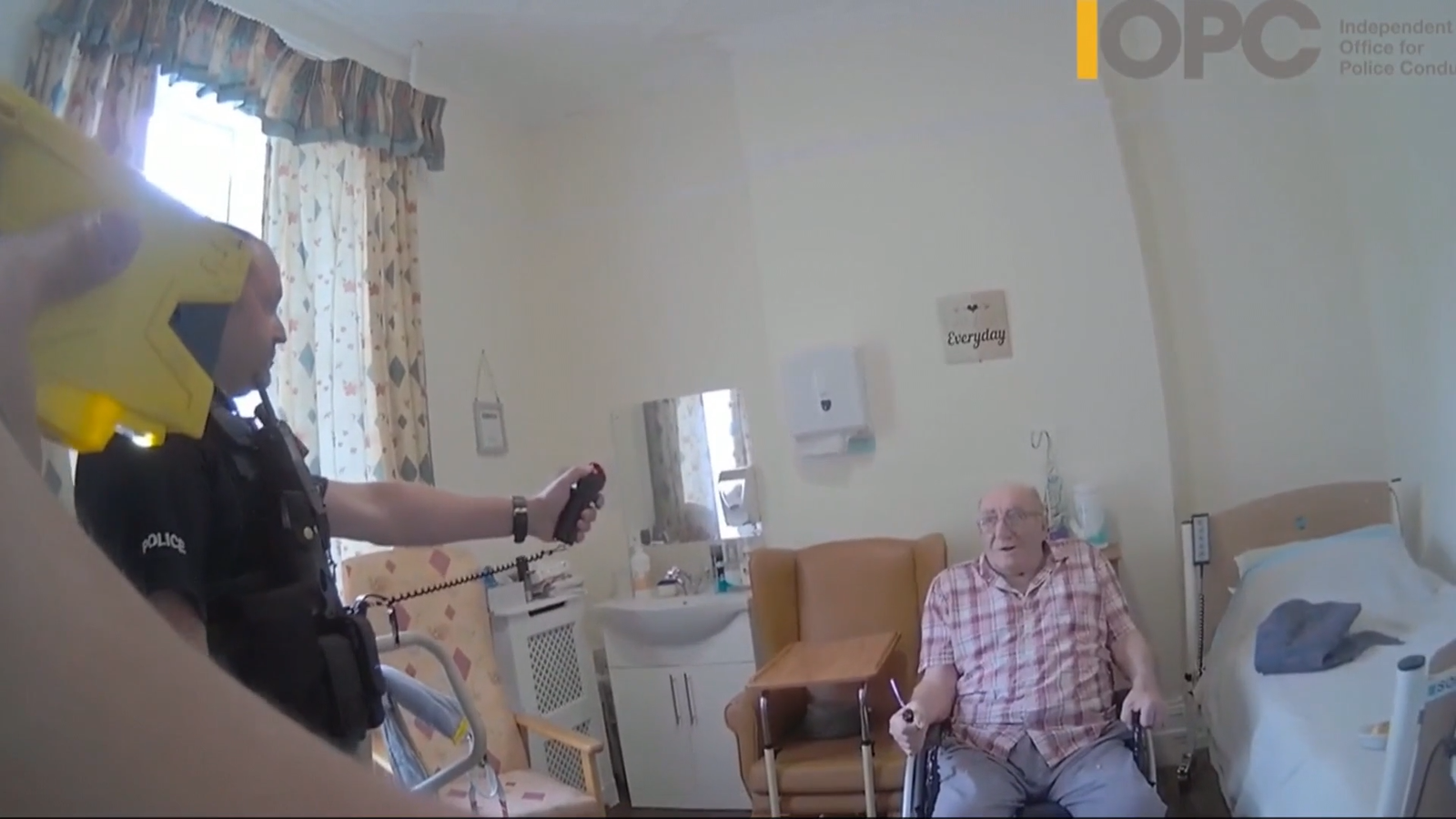
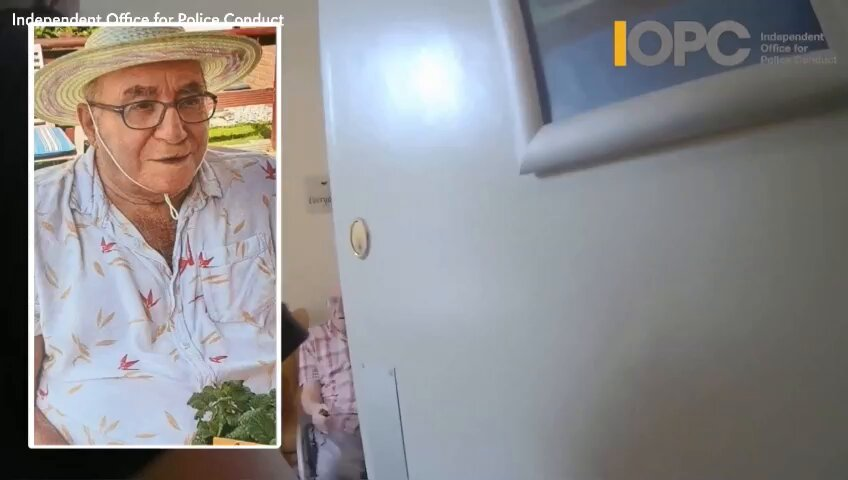
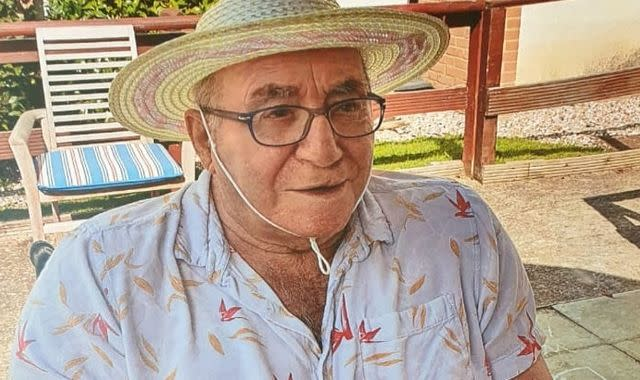
On June 21, 2022, a distressing incident unfolded at Park Beck Residential Care Home in East Sussex, UK, involving 92-year-old amputee Donald Burgess. Burgess, a wheelchair-bound resident who had lost his right leg below the knee, was involved in a violent encounter with police officers responding to reports that he had threatened a care home worker with a knife.
The confrontation, captured on body camera footage, ended with Burgess being pepper-sprayed and tasered by Police Constables Stephen Smith and Rachel Comotto. Tragically, Burgess passed away from COVID-19 three weeks later while recovering from injuries sustained during the incident.
The officers now face assault charges, with prosecutors arguing their use of force was “unnecessary and excessive.” This incident raises serious questions about police conduct, the treatment of vulnerable individuals, and the protocols surrounding the use of force in sensitive environments like care homes.
The Incident: A Violent Encounter in a Care Home
The events of June 21, 2022, began with a “grade one call”—the highest level of emergency—prompting Police Constables Stephen Smith and Rachel Comotto to respond to Park Beck Residential Care Home. According to reports, a care home worker had alleged that Donald Burgess attempted to stab them with a knife described as similar to a butter knife.
The body camera footage, later released by the Independent Office for Police Conduct, provides a chilling account of the encounter, which lasted just over four minutes but escalated rapidly.
Upon entering Burgess’s room, the officers found the 92-year-old in his wheelchair, holding the knife. The footage shows the constables initially attempting to de-escalate the situation, pleading with Burgess to drop the weapon. “You gonna put it on the ground for me?” Smith asked, while Comotto added, “We don’t want to hurt you.”
Despite their verbal efforts, Donald Burgess appeared confused or unaware of the gravity of the situation, possibly due to his age, physical condition, or cognitive state. The knife, described as resembling a butter knife, posed a limited threat given Burgess’s immobility and frailty.
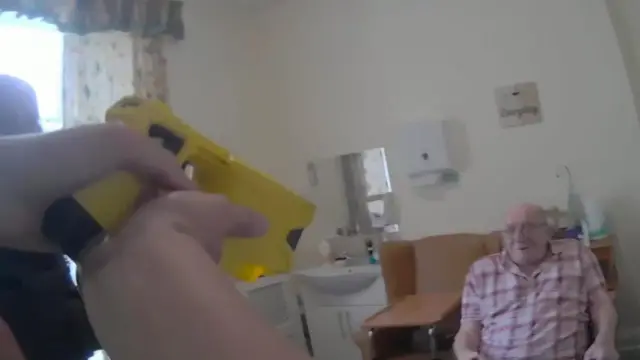
The situation deteriorated when Smith approached Burgess, who waved the knife in response. Smith then deployed nearly a full can of pepper spray, dousing Burgess’s face and mouth. As Burgess struggled, Comotto shouted, “Do it now! Drop the knife!” When Burgess failed to comply, Smith struck him with a baton, and Comotto ultimately tasered him.
Read : Wayne Wolff’s Leg Amputated After Knee Surgery Goes Horribly Wrong at UCI Medical Center
The footage captures Donald Burgess’s loud moan as his body seized from the electric shock, and the knife finally fell to the floor. The use of such aggressive tactics—pepper spray, a baton strike, and a taser—against a 92-year-old amputee in a wheelchair has sparked widespread outrage and scrutiny.
Footage shows the moment Donald Burgess, 92, was pepper sprayed and tasered by police officers.
— Brighton Argus (@brightonargus) May 19, 2025
At the first day of the Sussex Police officers’ trial, Southwark Crown Court was shown video lasting one minute and 23 seconds covering the entire incident. https://t.co/e0C9N0OIjb pic.twitter.com/RrPvA9xiNi
Burgess was subsequently taken to the hospital to treat injuries sustained during the encounter. While there, he contracted COVID-19 and passed away three weeks later. Although his death was attributed to the virus, the physical and emotional toll of the incident likely exacerbated his vulnerability.
The body camera footage, now central to the legal case against the officers, paints a troubling picture of a situation that many believe could have been handled with greater restraint and compassion.
The Legal Battle: Assault Charges and Questions of Excessive Force
Police Constables Stephen Smith and Rachel Comotto now face assault charges at Southwark Crown Court, with their trial drawing significant attention. Both officers have pleaded not guilty, arguing that their actions were justified given the perceived threat posed by Burgess’s knife.
However, prosecutor Paul Jarvis KC has argued that the officers’ response was disproportionate and unnecessary, particularly given Donald Burgess’s age, disability, and limited mobility. “It ought to have been obvious by the fact he had one leg that this was a man who wasn’t going to be mobile,” Jarvis told the jury. He further emphasized that Burgess was an “elderly, vulnerable man who may not have understood what was going on.”
The prosecution’s case hinges on the body camera footage, which vividly documents the escalation from verbal commands to physical force. The footage shows the officers’ initial attempts at de-escalation, but these efforts quickly gave way to aggressive tactics.
The use of pepper spray, a baton, and a taser against a wheelchair-bound nonagenarian has raised questions about whether the officers adhered to protocols for handling vulnerable individuals. Critics argue that alternative methods, such as calling for additional support or involving care home staff familiar with Donald Burgess, could have resolved the situation without violence.
The defense, however, is likely to argue that the officers were responding to a high-risk situation. A “grade one call” indicates an immediate threat to life or serious injury, and the presence of a knife, regardless of its size, could be perceived as dangerous.
The officers may claim they followed standard procedures to neutralize the threat and protect themselves and others in the care home. Yet, the prosecution contends that the officers failed to account for Donald Burgess’s physical and mental state, which should have informed a more measured response.
The trial is ongoing, and its outcome could set a precedent for how police interactions with vulnerable populations are judged. It also highlights the role of body cameras in ensuring accountability, as the footage has become a critical piece of evidence in evaluating the officers’ actions.
The case underscores the need for clear guidelines on the use of force, particularly in environments like care homes where residents may have complex needs and limited capacity to respond to police commands.
Broader Implications: Policing, Vulnerable Populations, and Systemic Issues
The incident involving Donald Burgess is not an isolated event but part of a broader conversation about policing practices, especially when dealing with elderly or disabled individuals. Care homes are unique environments where residents often have physical or cognitive impairments, requiring specialized approaches to conflict resolution.
The use of force against a 92-year-old amputee raises troubling questions about whether police are adequately trained to handle such situations and whether existing protocols prioritize de-escalation over aggression.
One critical issue is the lack of specialized training for officers responding to calls involving vulnerable populations. Elderly individuals, particularly those with mobility issues or cognitive impairments like dementia, may not respond to commands in the way officers expect. In Burgess’s case, his apparent confusion during the encounter suggests he may not have fully understood the officers’ instructions.
Training programs that emphasize empathy, patience, and alternative de-escalation techniques could prevent similar incidents in the future. For example, involving care home staff who know the resident’s history and behavior could provide valuable context and help defuse tense situations.
The incident also highlights the risks of using tools like pepper spray and tasers in close quarters or against vulnerable individuals. Pepper spray can cause severe respiratory distress, particularly in someone as frail as Burgess, while tasers pose risks of injury or cardiac complications in the elderly.
The decision to deploy these tools against a wheelchair-bound individual wielding a butter knife has fueled debate about whether such equipment should be restricted in certain contexts. Some advocates argue for stricter guidelines on when and how these tools are used, especially in non-threatening environments like care homes.
Furthermore, this case underscores systemic issues within care homes themselves. Staff shortages, inadequate training, and high-pressure environments can lead to situations where police are called to handle minor disputes that could be resolved internally.
The initial report that Donald Burgess attempted to stab a worker suggests a breakdown in communication or care that escalated to a life-altering confrontation. Improving staff training and support within care homes could reduce the need for police intervention in the first place.
The tragic outcome of Burgess’s death from COVID-19 adds another layer of complexity. While the virus was the direct cause of death, the physical and emotional trauma from the incident likely weakened his condition.
This raises questions about the duty of care owed to individuals after police interactions, particularly in medical settings. Ensuring that vulnerable individuals receive appropriate follow-up care could mitigate the long-term consequences of such encounters.
The case of Donald Burgess is a sobering reminder of the delicate balance between ensuring public safety and protecting the rights and dignity of vulnerable individuals. The body camera footage, while distressing, provides a crucial window into the events of June 21, 2022, and serves as a catalyst for examining police conduct.
As the trial of Constables Smith and Comotto continues, it will likely prompt broader discussions about how law enforcement interacts with elderly and disabled individuals. Reforms are needed to ensure that police are equipped to handle situations involving vulnerable populations with compassion and restraint.
This includes specialized training, clearer guidelines on the use of force, and stronger collaboration with care home staff. Additionally, care homes must address internal challenges to prevent minor incidents from escalating to the point of requiring police intervention.
Ultimately, Donald Burgess’s story is a tragedy that could have been avoided. His death, while caused by COVID-19, was preceded by a violent encounter that left lasting questions about justice, accountability, and the treatment of society’s most vulnerable. As the legal proceedings unfold, they offer an opportunity to reflect on how we can build a system that prioritizes de-escalation, empathy, and respect for all.