
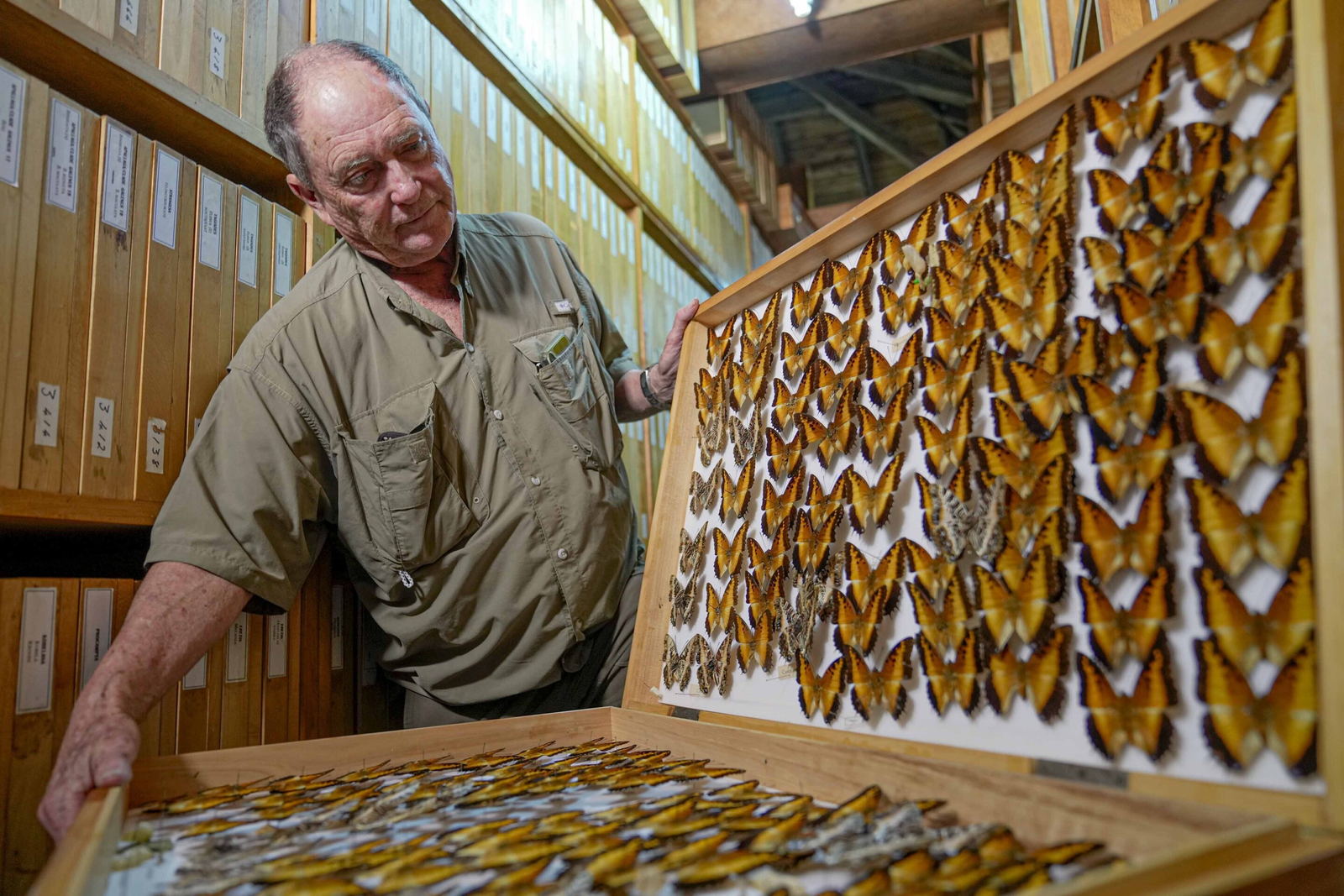
Steve Collins, a lifelong Butterfly Collector from Kenya, has amassed an extraordinary collection of over 4.2 million butterflies, making it possibly the largest in Africa.
His remarkable journey began in his childhood and has led to the establishment of the African Butterfly Research Institute, a haven for biodiversity preservation. Collins now seeks to secure the future of his collection, ensuring its significance endures for generations to come.
A Lifelong Passion for Butterflies
Steve Collins was born and raised in western Kenya, where his fascination with butterflies took root at an early age. Encouraged by his parents, who introduced him to butterfly trapping after a trip to the Congo, Collins started collecting butterflies at the age of five.
His passion quickly grew, and by his teenage years, he was traveling to countries like Nigeria to deepen his understanding of these delicate creatures.
Steve Collins’ career as an agronomist spanned two decades, but his dedication to butterflies remained unwavering. In 1997, he founded the African Butterfly Research Institute on his 1.5-acre property in a suburb of Kenya’s capital.
Read : 27 New Species Discovered in Peru Including Swimming Mouse and Blob-Headed Fish
The institute is surrounded by indigenous trees and flowering bushes, creating a natural habitat where hundreds of butterflies flutter freely.
Read : 12 Flowers You Must Plant in Your Garden to Attract Butterflies
Over the years, Steve Collins has meticulously cataloged his collection, which includes 1.2 million butterflies pinned in frames and another 3 million stored in envelopes. Each specimen is carefully preserved in dark spaces to prevent damage from insects, parasites, or predators.
The Importance of Preserving Africa’s Biodiversity
Steve Collins’ collection is more than a personal passion; it is a critical repository of Africa’s biodiversity. Julian Bayliss, an ecologist specializing in Africa, emphasizes the irreplaceable value of the collection.
Much of Africa’s natural habitat is under threat from deforestation, climate change, and urbanization, making these specimens invaluable for future research.
Butterflies serve as essential indicators of environmental health, and Steve Collins’ collection provides a historical record of Africa’s ecosystems over the past 60 years.

According to Scott Miller, an entomologist at the Smithsonian Institution, physical specimens like those in Collins’ collection can yield new insights as technology and scientific questions evolve.
However, the challenges of preserving this collection are immense. Africa’s vulnerability to climate change, marked by prolonged droughts and severe flooding, has further endangered butterfly habitats.
Digitizing the collection has been proposed as a solution to make it accessible to researchers worldwide while safeguarding its legacy.
Securing the Future of the Collection
As Collins approaches his later years, he is increasingly concerned about the sustainability of his life’s work. The costs of maintaining the collection are significant, with a 2009 budget for the institute estimated at $200,000 annually. Collins values the collection and its assets at $8 million, reflecting its scientific and historical importance.
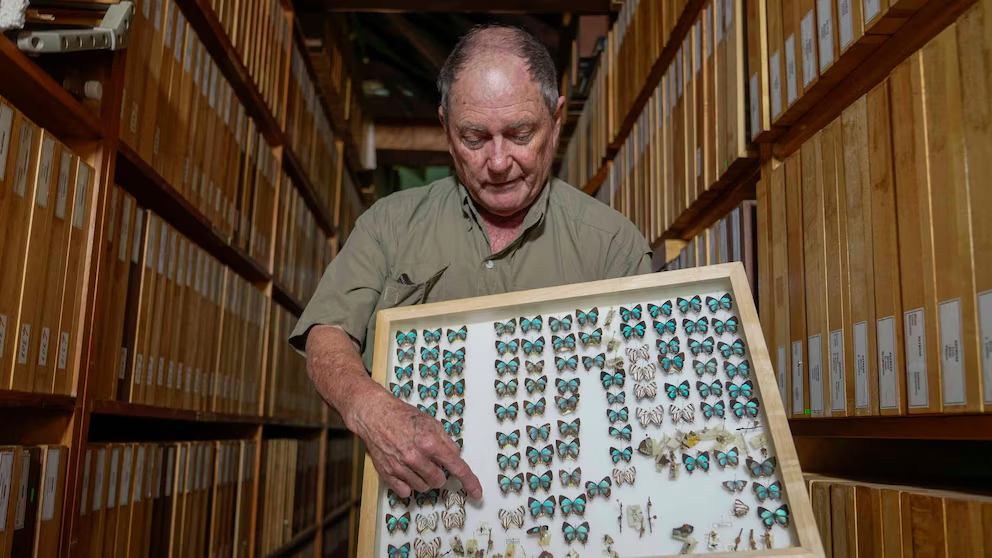
Collins hopes to transfer the collection to an institution or individual capable of preserving its legacy. He has kept his most prized specimen, valued at $8,000, hidden to prevent theft, highlighting the challenges of securing such a valuable resource.
Experts like Bayliss stress the need for a well-funded and secure institution to take over the collection, ensuring its continued relevance for research and conservation efforts.
Steve Collins’ story is a testament to the power of passion and dedication in the face of challenges. His butterfly collection not only represents a lifetime of work but also serves as a vital resource for understanding Africa’s environmental history. As he seeks to share his collection with the world, Collins underscores the importance of preserving biodiversity for the future.\