
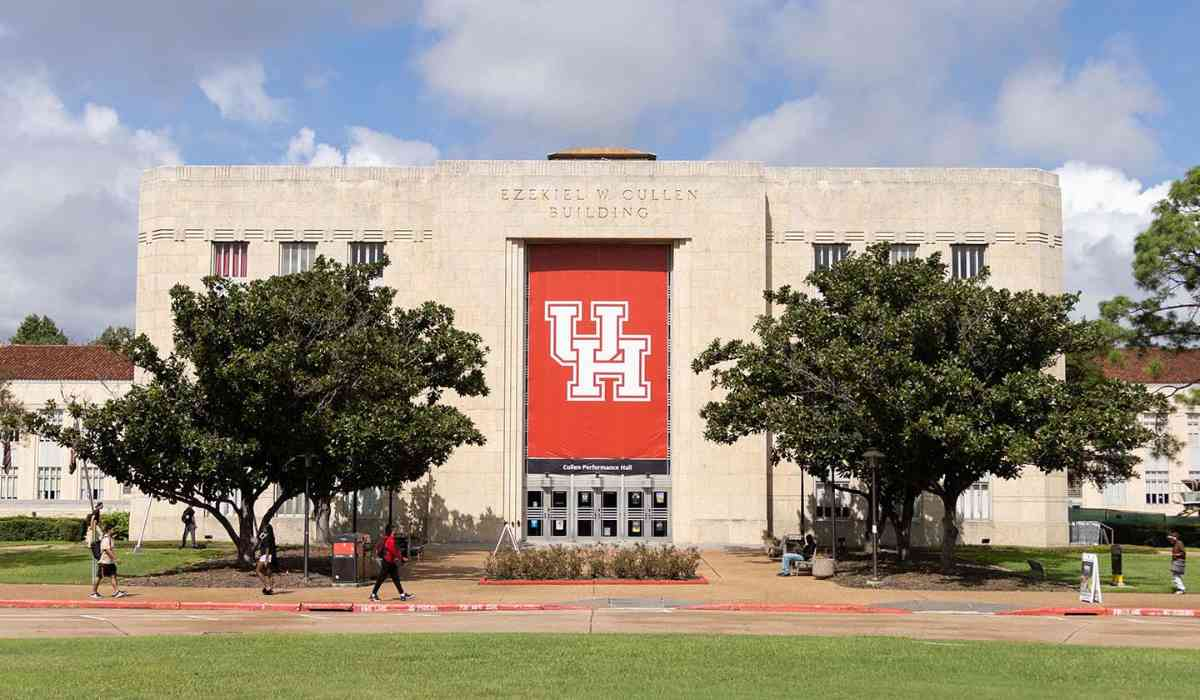
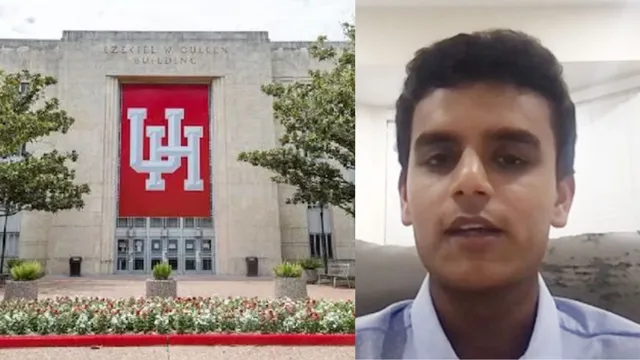
The University of Houston has recently come under scrutiny after an Indian-American student, Vasant Bhatt, accused a course taught by Professor Aaron Michael Ullrey of propagating a “Hinduphobic” narrative. The controversy has ignited a broader debate on academic freedom, religious studies, and the interpretation of Hinduism in Western institutions.
While the university has defended its curriculum, stating that academic terms can carry different meanings in academic settings compared to public discourse, the allegations have sparked discussions about bias in higher education.
Student’s Allegations and the University’s Response
Vasant Bhatt, a political science major at the University of Houston, raised concerns over the way Hinduism was portrayed in a course taught by Professor Ullrey. According to Bhatt, the professor described Hinduism as a political construct rather than an ancient religious tradition.
Bhatt argued that this narrative falsely depicted Hinduism as a tool of oppression used by Hindu nationalists in India, misrepresenting the faith and its history. One of the primary concerns Bhatt highlighted was the professor’s characterization of the term “Hindutva.”
In the course syllabus, Hindutva was described as a term used by Hindu nationalists to establish Hinduism as India’s official religion while marginalizing other religious communities. Bhatt contended that such an interpretation unfairly equated Hinduism with political nationalism, disregarding its diverse traditions and philosophical depth.
Read : Houston janitor Lucio Diaz Jailed For Urinating in Women’s Water Bottles
In response to the allegations, the University of Houston issued a statement affirming its commitment to academic freedom. The university stated that while it does not typically review individual lectures, it maintains oversight of its curriculum to ensure it meets academic and pedagogical standards.
It emphasized that religious studies courses use specific terminologies as analytical tools to understand various religious movements, including Christianity, Islam, Buddhism, and Hinduism. The university clarified that academic terms like “fundamentalism” are used in different contexts than in public discourse, which sometimes leads to misunderstandings.
Debate on Academic Freedom and Bias in Religious Studies
The controversy surrounding the course at the University of Houston highlights a larger issue of academic freedom and potential bias in religious studies. Many students and scholars argue that Western academia often approaches non-Abrahamic religions, particularly Hinduism, through a lens of colonial narratives and political constructs.
Critics claim that Hinduism is frequently subjected to interpretations that reduce it to a political ideology rather than a complex spiritual and cultural tradition with thousands of years of history.
Supporters of academic freedom argue that universities should have the liberty to explore complex and sometimes controversial topics. They maintain that scholarly analysis of religious movements, including those linked to political ideologies, is essential to a deeper understanding of history and society.
However, critics, including Bhatt, argue that such analysis should not misrepresent or distort the faith traditions of a community. Bhatt’s accusations reflect a growing sentiment among Hindu students and scholars who feel that Hinduism is often mischaracterized in academia, leading to broader concerns about Hinduphobia in educational institutions.
The University of Houston’s statement attempted to address these concerns by clarifying that academic discussions may differ from popular perceptions. However, this has not entirely resolved the debate, as many believe the university should take a more proactive approach in ensuring that religious studies courses do not perpetuate stereotypes or misinformation.
Impact and Broader Implications of the Controversy
The allegations against Professor Ullrey’s course have sparked discussions not only within the University of Houston but also across the academic community and social media platforms. Hindu advocacy groups and students have voiced concerns that such narratives contribute to a growing misunderstanding of Hinduism and its role in Indian society.
Some argue that this incident is part of a larger pattern in which Hinduism is scrutinized through a biased lens, while other religious traditions are examined with greater sensitivity and nuance.
In response to the controversy, several Hindu organizations have called for a reevaluation of how Hinduism is taught in universities, urging institutions to include diverse perspectives, particularly those from practicing Hindus. They argue that academic discourse should not dismiss traditional understandings of Hinduism in favor of purely political interpretations.

At the same time, the issue has raised questions about the role of students in shaping university curricula. While academic freedom is crucial, student feedback and concerns should also be taken into account to ensure that educational institutions foster an environment of inclusivity and respect for diverse beliefs. Universities must strike a balance between academic inquiry and sensitivity to the religious identities of their students.
As this debate continues, it remains to be seen how the University of Houston will address the concerns raised by Bhatt and others who share his viewpoint. The controversy serves as a reminder of the importance of critical engagement with religious studies and the need for a fair and balanced portrayal of all faiths in academic settings.
Regardless of the outcome, this case has brought attention to the broader conversation about religious representation in higher education and the responsibilities of universities in maintaining an unbiased and inclusive approach to teaching about different faith traditions.