
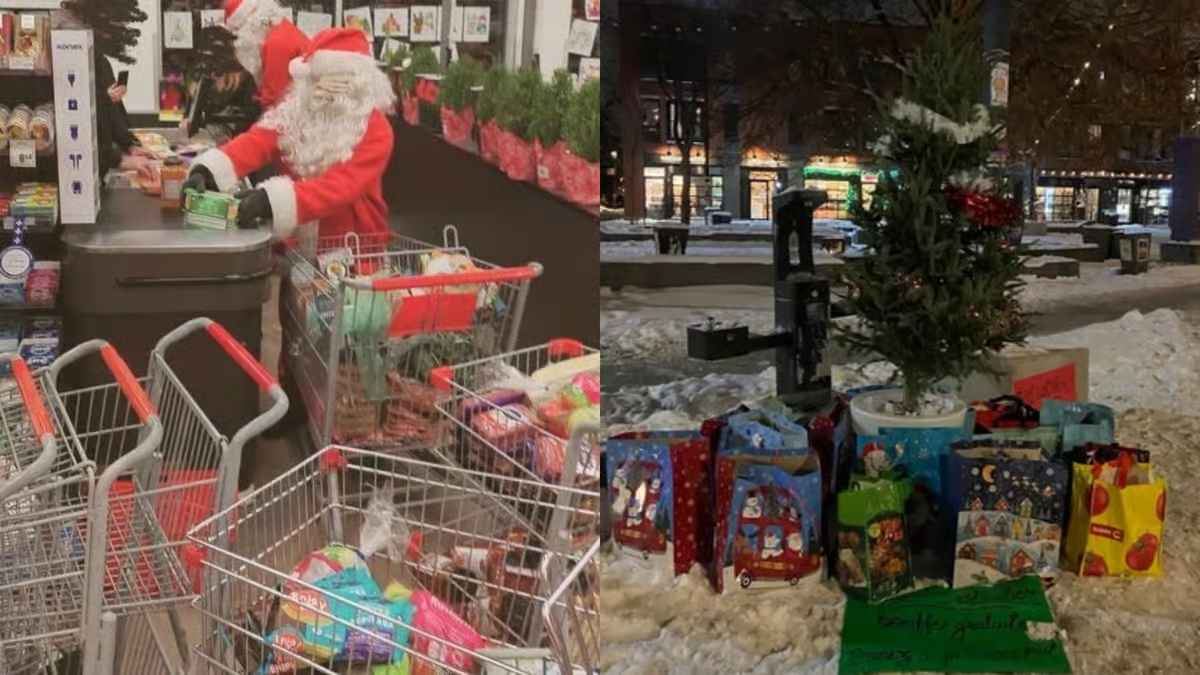
A holiday-themed act of activism unfolded in Montreal this week when a group of masked individuals dressed as Santa Claus and his elves allegedly entered a Metro grocery store and left with thousands of dollars’ worth of food without paying. The incident, which occurred shortly before Christmas, has drawn national attention in Canada, not only for its theatrical execution but also for the broader questions it raises about food insecurity, retail crime, and the rising cost of living.
While the group behind the action described it as a symbolic “food drive” aimed at helping those in need, grocery officials and police have characterized the event as a straightforward act of theft. The incident took place on Monday evening at approximately 9:15 p.m. at a Metro store located on Laurier Avenue in Montreal’s Plateau-Mont-Royal borough.
Photos and videos quickly circulated on social media, showing participants filling reusable shopping bags and carts with groceries before exiting the store en masse. According to the activist group that later claimed responsibility, the food was redistributed to community fridges and placed under a Christmas tree in a public square, framing the act as a form of protest against corporate control of basic necessities. Authorities, however, have emphasized that the motivations cited by the group do not alter the legal classification of the incident.
A Carefully Staged Holiday-Themed Heist
The group identifying itself as Robins des ruelles, translated as Robins of the Alley, said its members organized the action as a deliberate and symbolic protest. In an Instagram post following the incident, the group stated that four masked individuals dressed as Santa Claus, accompanied by a “swarm of elves,” entered the store and removed food items valued at roughly $3,000. The post suggested that the costumes were chosen to underscore the timing of the action and to evoke imagery associated with generosity and redistribution during the holiday season.
Images and video footage posted online show the group acting quickly but without apparent panic, moving through the aisles and loading groceries before exiting through the front doors. The participants appeared coordinated, suggesting the event was planned in advance rather than spontaneous. The group’s public statements framed the act as a response to what it described as corporate exploitation and the increasing difficulty many residents face in affording food.
In the same social media post, Robins des ruelles argued that a small number of corporations control access to basic needs and profit disproportionately while many people struggle to cover essentials. The group described large grocery chains as the “real bandits,” asserting that their profits amid rising food prices constitute a form of theft from the public. The language of the statement was explicitly political, positioning the action within a broader critique of capitalism and corporate power rather than as an isolated event.
Lundi soir, des activistes déguisés en père Noël et en lutins ont volé 3000 dollars d’aliments dans une épicerie Métro à Montréal pour les redistribuer grauitement à des personnes dans le besoin. #inflation #montreal #metro #epicerie pic.twitter.com/7JcI6QkhNu
— Axel Tardieu (@axeltardieu) December 17, 2025
Following the incident, the group said the food was redistributed across Montreal, primarily through community fridges that operate on a free-access model. Some items were reportedly left under a Christmas tree in Place Valois, a public space in the city, reinforcing the group’s attempt to connect the action with seasonal themes of sharing and charity. While the group did not release a detailed inventory of the items taken, the total value was estimated by store officials at approximately $3,000.
Response from Metro and Law Enforcement
Metro, one of Canada’s largest grocery chains, responded swiftly and firmly to the incident. In a statement to CBC News, Metro spokesperson Geneviève Grégoire rejected the group’s characterization of the act as a food drive, stating that regardless of intent, the incident constituted a criminal offense. She emphasized that retail theft has significant economic consequences and contributes to higher costs for businesses and consumers alike.
Grégoire noted that retail crime resulted in losses of $9.2 billion across Canada in 2024, highlighting the scale of the issue facing retailers nationwide. She also pointed out that food inflation is influenced by a complex range of factors, including global supply chain disruptions, volatility in commodity prices, changes in international trade conditions, and retail crime. By linking theft to broader economic pressures, Metro sought to counter the activists’ narrative that corporate practices alone are responsible for rising grocery prices.
In addition to addressing the incident itself, Metro highlighted its existing efforts to support food security initiatives. According to Grégoire, the company donated $1.15 million to food banks in 2025 and made additional contributions in the form of food donations. These figures were cited to demonstrate that the company already participates in formal, regulated efforts to assist vulnerable populations, contrasting with the unauthorized nature of the activists’ actions.
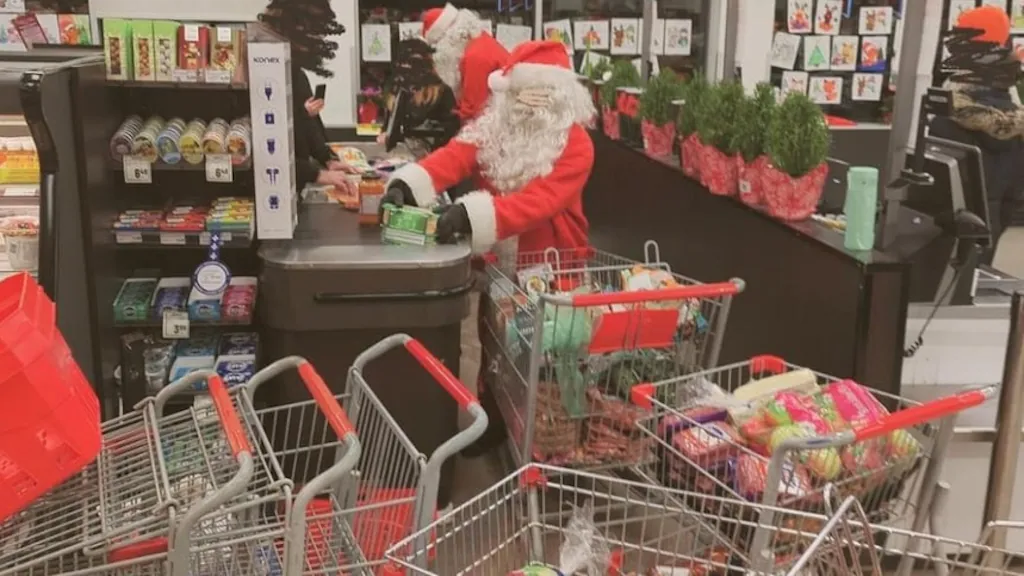
Montreal police confirmed that they are reviewing videos and other evidence related to the incident. As of Thursday, no arrests had been made, and investigators had not announced whether charges would be laid. Police have not publicly identified any suspects beyond the group’s own social media claims. The lack of immediate arrests suggests that authorities are still in the early stages of assessing the available footage and determining whether individuals involved can be identified.
The incident has also prompted discussion about store security and the challenges retailers face in preventing coordinated group thefts, particularly when actions are staged to attract public attention. While Metro did not disclose whether additional security measures would be implemented at the Laurier Avenue location, retail crime has been an ongoing concern across Canada, especially as grocery prices continue to rise.
Rising Food Prices and the Broader Economic Context
The timing of the incident coincided with the release of new data from Statistics Canada showing that grocery prices reached their highest inflation rate in nearly two years. In November, food costs rose by 4.7 percent year over year, significantly outpacing the overall inflation rate of 2.2 percent. These figures have intensified public concern about affordability, particularly for lower-income households that spend a larger proportion of their income on food.
Food inflation in Canada has been driven by multiple factors over the past several years. Global supply chain disruptions, lingering effects of the COVID-19 pandemic, climate-related impacts on agriculture, and geopolitical tensions affecting trade have all contributed to higher costs. Retailers have also faced increased operational expenses, including transportation, labor, and energy costs, which are often passed on to consumers.
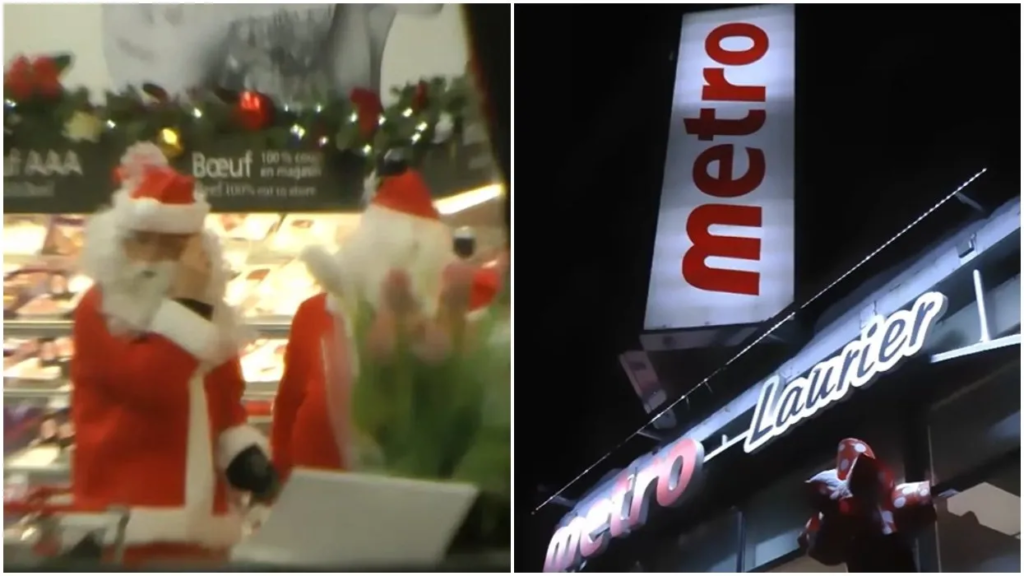
Activist groups such as Robins des ruelles have sought to capitalize on public frustration over these trends, framing their actions as direct interventions rather than symbolic protests. By redistributing food taken from a major grocery chain, the group aimed to draw attention to what it views as systemic inequality in access to essential goods. Supporters of such actions argue that they highlight gaps in social safety nets and the inadequacy of existing measures to address food insecurity.
Critics, however, contend that unauthorized redistribution undermines the rule of law and places an additional burden on retailers and their employees. Retail theft can lead to increased prices, reduced store hours, or even store closures in some neighborhoods, potentially worsening access to food rather than improving it. From this perspective, acts framed as activism may have unintended consequences that disproportionately affect the same communities they claim to support.
The Montreal incident reflects a broader pattern of increasingly visible and theatrical forms of protest aimed at economic issues. By using costumes associated with generosity and celebration, the group ensured that the action would attract attention and spark debate. The widespread circulation of images and videos suggests that the strategy was effective in generating public discussion, even as it exposed participants to potential legal consequences.
As police continue to review the case, the incident remains a focal point in ongoing conversations about food affordability, corporate responsibility, and the boundaries of protest. The contrasting narratives offered by the activists and the grocery chain illustrate the deep divisions in how such actions are interpreted, particularly during a period of heightened economic strain.
I’m really impressed along with your writing skills and also with the structure for your blog. Is this a paid theme or did you customize it your self? Anyway stay up the excellent quality writing, it’s uncommon to look a great blog like this one today..