
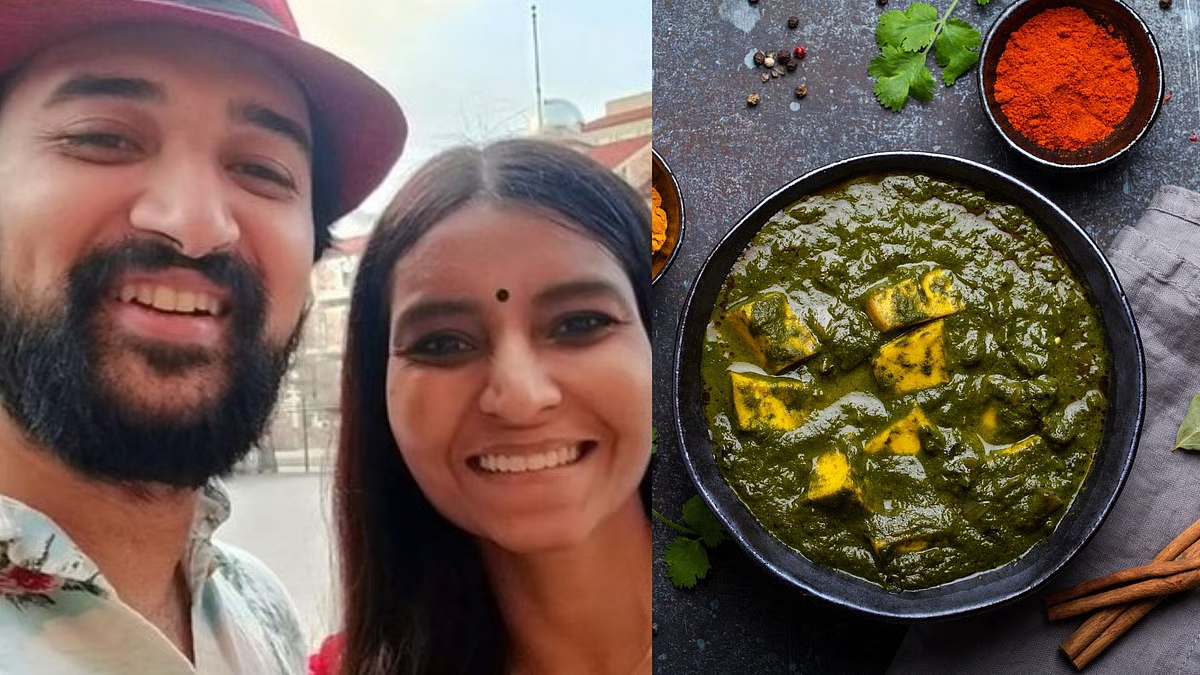
The $200,000 civil rights settlement secured by Indian doctoral students Aditya Prakash and Urmi Bhattacharyya against the University of Colorado Boulder has drawn national and international attention to issues of cultural bias, institutional power, and the lived realities of international students in the United States.
What began as a routine lunch break in a shared departmental kitchen evolved into a prolonged legal dispute that raised fundamental questions about whose cultures are considered acceptable within academic spaces. The case, rooted in a 2023 incident and resolved through a settlement in 2025, has since become a reference point in broader debates around food shaming, racialised perceptions, and the responsibilities of universities toward diverse student populations.
A Lunch Break That Exposed Cultural Fault Lines
The origins of the dispute trace back to September 5, 2023, when Aditya Prakash, then a PhD student in the Anthropology Department at the University of Colorado Boulder, reheated his homemade lunch of palak paneer in a departmental microwave. According to Prakash, a female staff member objected to the smell of the food and asked him not to use the microwave for meals like his. The remark, described as dismissive and exclusionary, struck at more than a disagreement over shared space. For Aditya Prakash, it reflected a judgement rooted in cultural perception rather than any objective standard.
Aditya Prakash maintained that the kitchen was a common facility intended for use by all staff and students, regardless of background. He later stated that descriptions of food as “pungent” or “unacceptable” are deeply influenced by cultural conditioning, noting that foods considered normal or appealing in one context are often stigmatised in another. In his account, the objection was not framed as a neutral request but as an implicit assertion that his cultural practices were inappropriate for the environment.
The incident quickly moved beyond a single interaction. Aditya Prakash alleged that after he defended his right to use the shared microwave, the staff member escalated the issue by reporting that she felt “unsafe.” This claim, he said, was both unfounded and disproportionate to the situation, yet it triggered a series of formal responses from the department. He was repeatedly called into meetings with senior faculty members, where the focus shifted from resolving a minor workplace disagreement to scrutinising his conduct and presence within the department.
Read : Republic of Congo: Interesting Facts, Reasons to Visit And Places to Go
For many observers, this escalation illustrated how power dynamics can amplify seemingly minor conflicts when cultural misunderstanding intersects with institutional authority. Rather than mediating the dispute or addressing cultural sensitivity, the response appeared, according to the students, to treat Aditya Prakash as a problem to be managed. The framing of discomfort as a safety concern further complicated the situation, introducing serious implications without corresponding evidence of threat or misconduct.
Escalation, Retaliation, and the Academic Stakes
The consequences of the incident extended to Urmi Bhattacharyya, Prakash’s partner and a fellow PhD student at the university. Bhattacharyya supported Aditya Prakash during the dispute, a decision that she later said placed her under similar scrutiny. She alleged that she was abruptly removed from her teaching assistant position without a clear explanation, a move that had both professional and financial implications. Teaching assistantships are not only a source of income for doctoral students but also a key component of academic training and career progression.
In addition to the loss of employment, the couple claimed that the department withheld their master’s degrees, which are often awarded as part of the doctoral track once specific academic milestones are met. According to their account, they had fulfilled the necessary requirements, yet the degrees were not conferred. This decision, they argued, was punitive and unrelated to academic performance, effectively using institutional processes as leverage in a personal and cultural dispute.

The cumulative effect of these actions, as described in their lawsuit, created what they characterised as a hostile academic environment. The stress of repeated meetings, uncertainty about their academic standing, and the potential derailment of years of work placed immense pressure on both students. For international scholars, such pressures are often compounded by visa restrictions, financial vulnerability, and limited recourse outside institutional frameworks.
Faced with what they perceived as systemic retaliation, Prakash and Bhattacharyya decided to pursue legal action. They filed a lawsuit in the US District Court for Colorado, alleging violations of their civil rights and arguing that the university’s response reflected deeper patterns of bias against international students and non-Western cultural practices. Central to their claim was the argument that food, as an expression of culture, should not become grounds for discrimination or exclusion within an academic setting that professes values of diversity and inclusion.
The lawsuit did not merely challenge the actions of individual staff or faculty members. It questioned whether the university had adequate safeguards to prevent cultural bias from influencing disciplinary and administrative decisions. By framing the dispute within the context of civil rights, the students positioned their experience as part of a broader issue affecting marginalised communities within higher education.
Settlement, Aftermath, and Broader Implications
In September 2025, the University of Colorado Boulder agreed to settle the case, paying $200,000 to Prakash and Bhattacharyya and formally awarding them their master’s degrees. The settlement brought an end to the legal proceedings without an admission of wrongdoing by the university, a common feature of such agreements. At the same time, it included a clause barring both students from future enrolment or employment at the institution, effectively closing the door on any continued academic association.
The financial settlement, equivalent to approximately ₹1.8 crore, was widely reported as a significant acknowledgment of the seriousness of the allegations. For many commentators, the awarding of the master’s degrees was equally important, as it represented formal recognition that the students had met academic requirements independent of the dispute. However, the prohibition on future association underscored the limits of such resolutions, highlighting how settlements can provide closure while also reinforcing separation.

Public reaction intensified after the settlement became known, particularly following an Instagram post by Bhattacharyya in which she described the emotional and psychological toll of the experience. In her statement, she framed the legal battle as a fight for the freedom to exist authentically within institutional spaces, emphasising that her identity, accent, and cultural background should not render her vulnerable to exclusion. Her words resonated widely, especially among international students and scholars who recognised similar patterns in their own experiences.
The case has since been cited in discussions about food shaming, a phenomenon in which individuals are mocked, marginalised, or penalised for the foods they eat, often along cultural or racial lines. In multicultural environments like universities, shared spaces such as kitchens and cafeterias become sites where inclusion is either practised or undermined. When institutional responses privilege the comfort of some groups over the rights of others, they risk reinforcing hierarchies that contradict stated commitments to diversity.
Beyond the specific details, the settlement has prompted renewed scrutiny of how universities handle complaints involving cultural difference. Critics argue that discomfort should not be conflated with danger, and that administrators must be careful not to legitimise biased perceptions through formal processes. Supporters of the students’ position contend that institutions have a duty to educate staff and faculty on cultural competency, particularly in settings with significant international populations.
At the same time, the case illustrates the precarious position of international students within legal and academic systems. While Prakash and Bhattacharyya ultimately secured a settlement, the personal cost was substantial, including the loss of their academic trajectory at the university. Their experience raises questions about how many similar disputes go unchallenged due to fear, lack of resources, or uncertainty about legal rights.
As conversations around diversity, equity, and inclusion continue to evolve, the outcome of this case serves as a reminder that inclusion is not merely a matter of policy statements but of everyday practices and responses. The dispute over reheating palak paneer may appear trivial in isolation, yet its escalation revealed how deeply ingrained assumptions can shape institutional behaviour. For universities seeking to attract and retain global talent, the lessons extend beyond legal compliance to the cultivation of environments where cultural difference is accommodated rather than problematised.