
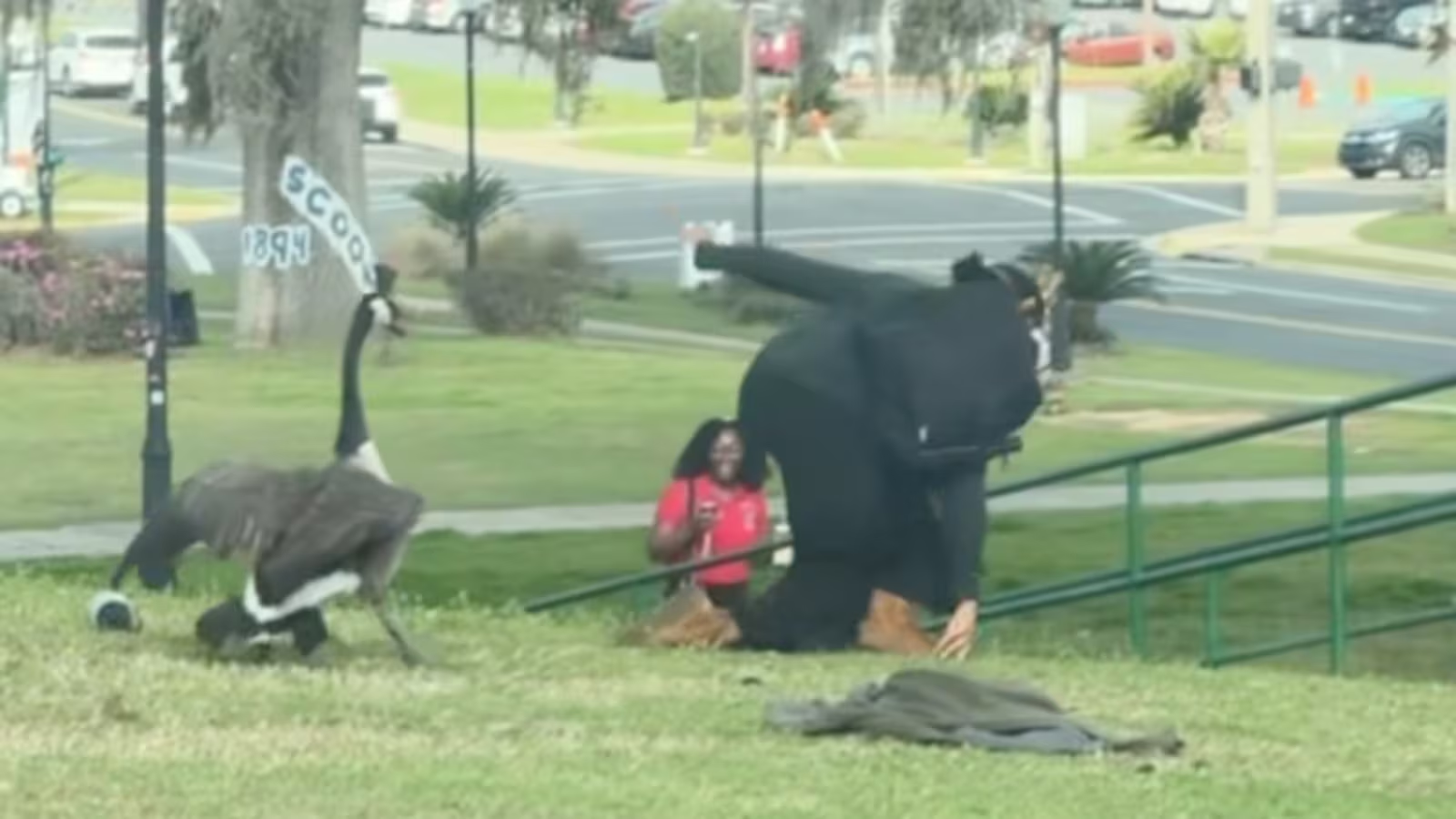
An ordinary day on a college campus turned into an unusual spectacle when an aggressive goose began chasing and attacking students near the journalism building at Florida A&M University. What might have seemed like a humorous or harmless encounter quickly escalated into a chaotic situation as multiple students were forced to run, dodge, and retreat from the territorial bird.
The incident, captured on video and shared widely online, sparked widespread amusement, curiosity, and concern. While encounters with wildlife on college campuses are not uncommon, the intensity of this particular goose’s behavior stood out. The viral footage shows the bird pacing along a sidewalk, aggressively confronting anyone who dared to walk past.
Students attempting to cross the area found themselves targeted by the determined bird, which appeared intent on defending its territory. As the clip circulated across social media platforms, viewers were both entertained and surprised by the goose’s boldness. The situation highlighted the unpredictable nature of wildlife interactions in public spaces and raised questions about how universities manage animals that share their campuses with students.
The Viral Encounter That Captured Attention
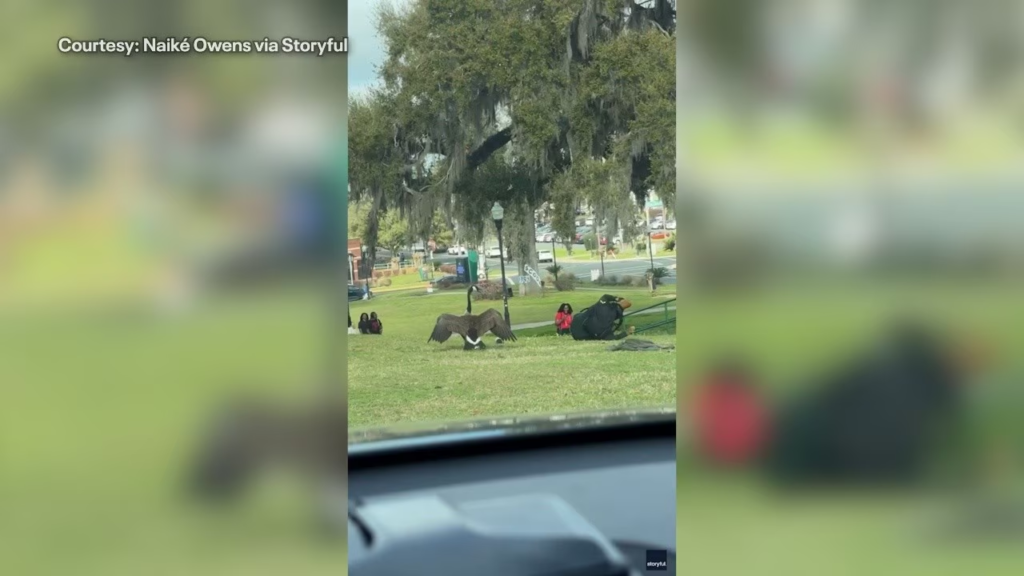
The viral video at the center of the story was filmed on March 3 outside the university’s journalism school. In the footage, the goose is seen pacing back and forth along a sidewalk, seemingly guarding the area like a vigilant sentinel. Students approaching the path quickly realize the bird is not in a welcoming mood. Instead of simply waddling away or ignoring passersby, the goose actively pursues anyone who steps too close.
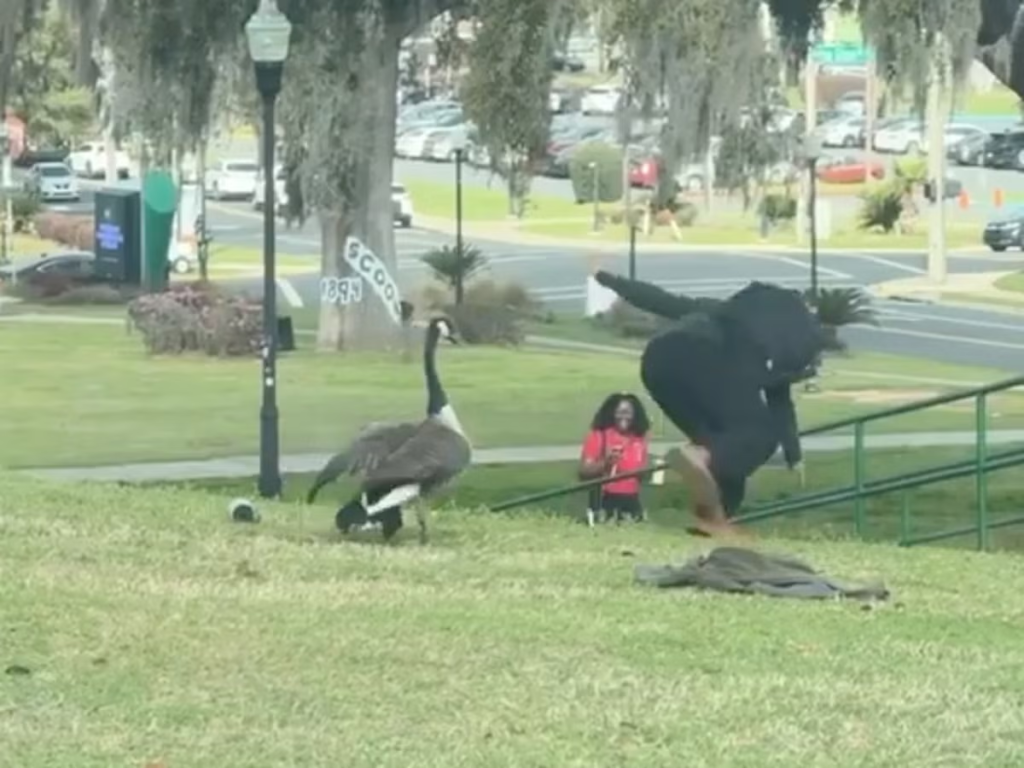
At one point in the video, a student attempts to walk by but is immediately chased. The student runs down a nearby hill in an effort to escape while the goose follows closely behind, flapping and accelerating with surprising determination. Observers can be heard reacting from a nearby car where the video was recorded. The person filming describes how the bird had already attacked another student moments earlier, even pulling at her hair during the encounter.
The tension in the video grows as another student cautiously approaches the same path. The goose remains alert, watching every movement. When the student steps forward, the bird launches another attack, rushing toward the individual and causing them to fall while trying to escape. The moment is chaotic, with nearby students scattering to avoid becoming the next target.
Despite the stressful experience for those involved, the video quickly became popular online. Viewers across social media platforms reacted with a mixture of laughter and disbelief, turning the aggressive goose into an unlikely viral star. The clip gained traction not only because of the unusual behavior but also because it captured genuine reactions from students who were clearly unprepared for a confrontation with a hostile bird.
Read : Top 10 Impossibly Unaffordable Cities in the World in 2024: Hong Kong Tops the List
The widespread sharing of the footage turned the incident into a talking point far beyond the university community. For many viewers, the idea of a goose taking control of a campus walkway seemed almost comedic. Yet for the students directly involved, the encounter was far less amusing in the moment. Being chased or attacked by an animal, even a relatively small one like a goose, can be frightening and unpredictable.
Why Geese Can Become Aggressive
While the video might appear unusual, aggressive behavior from geese is not unheard of. Wildlife experts often explain that geese can become particularly territorial during certain times of the year, especially during nesting and breeding seasons. When a goose feels that its nest, mate, or territory is threatened, it may respond with defensive aggression. Geese are known for being protective animals. If a nest is nearby, the bird may perceive passing humans as potential threats even when people are simply walking by.
The defensive instincts of the animal can lead it to chase, hiss, flap its wings, or even physically attack anyone who enters what it considers its territory. Many campuses, parks, and lakes across the country provide ideal habitats for geese. Large open lawns, water sources, and minimal natural predators make university grounds particularly appealing environments. Over time, geese may grow accustomed to human presence but still maintain their territorial instincts. The behavior seen in the Florida A&M incident may have been driven by these natural protective tendencies.
If the goose had a nest nearby or was guarding a mate, it might have viewed the steady flow of students as repeated intrusions. What appeared to students as an unprovoked attack could have been, from the bird’s perspective, a defensive response. Another factor that sometimes contributes to aggressive goose behavior is habituation. When animals become accustomed to humans feeding them or frequently approaching them, they may lose their natural caution. This can sometimes lead to bolder and more confrontational behavior.
In such cases, the animal may approach people expecting food or react aggressively when it feels challenged. Wildlife experts often advise maintaining distance from geese and avoiding direct confrontation. Running can sometimes trigger a stronger chase response, while calm and slow movement away from the animal may reduce the likelihood of escalation. However, in a sudden encounter like the one captured in the viral video, students may not have time to think through such strategies.
The goose’s behavior in the video, including puffing its chest and pacing the walkway, is consistent with defensive posturing commonly observed in geese. These displays are intended to warn potential threats before physical contact occurs. Unfortunately for the students, the warnings quickly turned into active pursuit.
Campus Wildlife and Safety Concerns
Encounters between students and wildlife are not rare on college campuses. Universities often occupy large areas with trees, water features, and open lawns, making them attractive habitats for many species. Birds, squirrels, raccoons, and other animals frequently coexist with campus communities, usually without causing significant problems. However, when animals display aggressive behavior, it can quickly become a safety concern. Even a relatively small animal like a goose can cause injuries if it scratches, bites, or knocks someone down.
In crowded areas with constant pedestrian traffic, an aggressive animal can disrupt normal activities and create anxiety among students and staff. In the Florida A&M incident, the goose reportedly attacked multiple individuals on the same day before the viral video was recorded. Such repeated behavior suggests the bird may have been actively defending a specific territory on campus. Students attempting to use the walkway were forced to change their routes or wait for an opportunity to pass safely. Universities often rely on campus safety teams or wildlife management services to handle situations involving aggressive animals.
These responses can include monitoring the animal, placing warning signs, or relocating it if necessary. The goal is typically to ensure both human safety and the well-being of the animal. Managing wildlife on campuses can be complicated because many species are protected under various regulations. Relocation or intervention must often follow specific guidelines to avoid harming the animal or disrupting local ecosystems. In many cases, officials first attempt non-invasive solutions such as creating buffer zones or advising students on how to avoid the area temporarily.
The viral goose incident also sparked broader conversations about how people interact with wildlife in shared environments. While humorous videos often capture attention online, they also highlight the importance of understanding animal behavior and respecting natural habitats. Animals that appear amusing in short clips may still pose real risks when humans approach too closely. For students at the university, the experience likely became a memorable story to share with friends and classmates.
College life often includes unexpected moments, and few could have predicted that a goose would temporarily dominate a campus walkway. The video captured a mixture of fear, surprise, and disbelief that resonated with viewers across the internet. It remains unclear whether the same goose continues to patrol the area where the encounters occurred. Situations like this often resolve themselves once nesting season passes or when the animal moves to a different location. Until then, students may remain cautious when walking near the site of the viral confrontation.
The incident serves as a reminder that campuses are not only places for learning but also shared environments with wildlife. While most animals coexist peacefully with human activity, occasional conflicts can arise when territorial instincts collide with daily routines. In this case, one determined goose briefly transformed a quiet sidewalk into the stage for an unforgettable viral moment.