
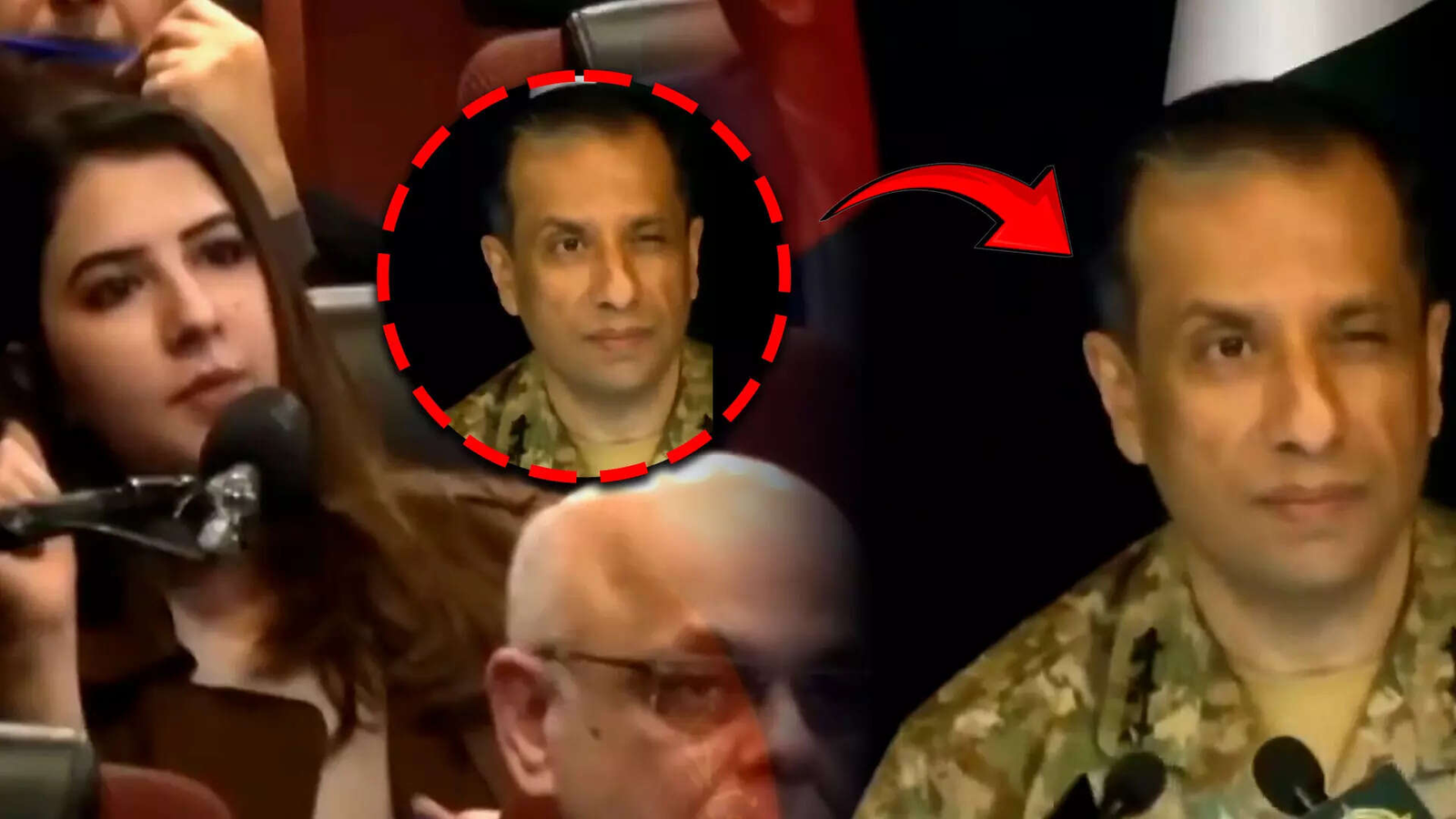
The circulation of a brief video clip from a recent Pakistan Army press briefing has triggered intense online debate, focusing not on policymaking or security updates but on a momentary facial gesture by DG ISPR Lt Gen Ahmed Sharif Chaudhry. As the clip spread across X and other platforms, it quickly sparked criticism, sarcasm, and polarized reactions from both supporters and detractors of the military establishment.
The central claim arises from a short exchange in which Chaudhry, while responding to a question posed by journalist Absa Komal regarding jailed former prime minister Imran Khan, appears to wink. What may have been intended as a casual or rhetorical gesture ignited controversy, drawing attention to issues of professional conduct, gender dynamics in media interactions, and the broader political environment in Pakistan.
The episode has since become a point of discussion on the region’s charged social media landscape, prompting questions about how such interactions unfold, what context may have been lost in virality, and why public sensitivity remains exceptionally high around the ISPR’s communication style. Subsequent analysis of the video, its timing, and public reactions highlights a multilayered situation. It underscores not only the scrutiny placed on state institutions but also the divisive political moment in which even small gestures can become symbolic flashpoints.
The incident has also reignited conversations about the DG ISPR’s previous remarks during Operation Sindoor, his rhetorical tone in press interactions, and shifting perceptions of military communication. Against this backdrop, a deeper look at the event provides a clearer understanding of what transpired, how the clip gained momentum, and why it stirred such a significant response from viewers across Pakistan and India.
Immediate Context and the Viral Moment
The video was recorded during an official media briefing where Absa Komal questioned Ahmed Sharif Chaudhry about statements describing Imran Khan as a national security threat, anti-state actor, and allegedly aligned with external agendas. Before proceeding with his response, Chaudhry added a fourth term of his own, calling Khan a “zeheni mareez,” or mental patient. It was at this point that he appeared to deliver a subtle wink in the direction of the journalist. The brevity of the gesture made it easy for viewers to isolate, loop, and interpret in ways detached from the full exchange.
The clip began circulating rapidly on X, with users claiming the gesture reflected a “new low” in professionalism for a spokesperson of the Pakistan Army. Several users framed it as an inappropriate interaction with a female journalist, questioning whether such conduct aligned with the decorum expected from a senior figure addressing national security issues. Some comments implied flirtation, others accused the spokesperson of dismissiveness, and many argued that the gesture undermined the seriousness of the topic under discussion. Critics highlighted that military briefings are traditionally formal settings, intended to convey institutional positions rather than casual personal signals.
Reports circulating online accuse DG ISPR Ahmed Sharif Chaudhary of inappropriate behaviour toward a female journalist. Serious concern for women’s dignity.#WomenSafety #RespectWomen pic.twitter.com/MCgrFWPUkd
— Zoya (@zoyaakhtar553) December 9, 2025
However, the polarized responses also revealed how perception can be shaped by political alignments. Supporters of the military establishment tended to dismiss the controversy as exaggerated, arguing that social media users were misinterpreting an innocuous expression. Others viewed the gesture as rhetorical—part of a broader communication style in which Chaudhry occasionally employs sarcasm or sharp phrasing when referencing political controversies. Yet, the combination of the subject matter, the gendered dynamic of the exchange, and the current political climate amplified the incident beyond what might ordinarily be expected for such a fleeting action.
Another important contextual layer is Chaudhry’s established communication persona. During the period surrounding Operation Sindoor, his confident and confrontational tone in briefings drew strong reactions, particularly in India. In those briefings, he asserted that Pakistan does not target civilians and warned that any future cross-border operations by India would be met with broader strikes. This established a public image of a spokesperson who engages with heightened rhetoric, making the viral wink appear to some observers as part of a pattern of provocative presentation rather than an isolated incident.
Public Reactions, Media Discourse, and Gendered Interpretations
The online discussion around the wink quickly evolved from critique of an individual’s conduct to a broader conversation about the culture of press briefings in Pakistan. Female journalists in particular have increasingly spoken about implicit biases and unprofessional behavior they sometimes encounter while covering political and security institutions. For many, the gesture symbolized a lack of seriousness in responding to a question that was both legitimate and significant in the political context. Although Komal herself did not publicly frame the incident as inappropriate, social media users projected wider concerns about professional boundaries.
Read : COVID-19 Whistleblower Journalist Zhang Zhan Sentenced to Four More Years In Jail
This fed into a secondary discourse: the relationship between public expectations and the representational role of the DG ISPR. The office is viewed not just as an information channel for the military but as a symbolic institution whose tone shapes national conversations. Critics argued that even if the gesture was unintended, the onus lies with the office to maintain strict composure, especially in interactions involving female journalists. Others countered that the outrage was disproportionate compared to the actual moment captured in the clip.
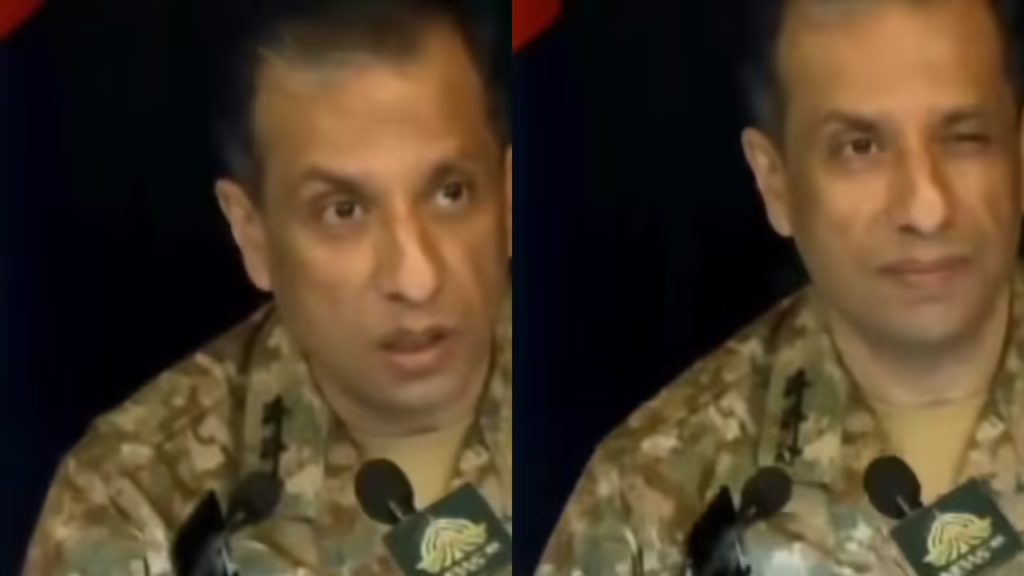
The gendered component of the debate deepened the controversy. Users noted that the same gesture might not have attracted as much attention had it occurred in response to a male journalist, but the dynamic of a senior male official winking at a female reporter reshaped how the clip was perceived. Memes, satirical posts, and commentaries flooded platforms, framing the event in ways that amplified the perception of impropriety. Phrases like “funeral of professionalism” became emblematic of the criticism, while comparisons to past DG ISPR figures highlighted a perceived erosion of the strictly formal image traditionally associated with the role.
The debate also took on a geopolitical dimension, as Indian users reposted the video with commentary referencing Chaudhry’s earlier statements during Operation Sindoor. For many, the wink served as a symbolic counterpoint to the assertive, confrontational persona he had previously projected. It became material for sarcasm, political memes, and commentary linking defense communication with the political turbulence surrounding Imran Khan’s imprisonment.
Yet, it is also essential to recognize that viral media tends to magnify moments without regard for intention. A press briefing lasts for extended periods, but a one-second clip extracted from it can redefine the entire interaction. The tone of the exchange, the environmental context, the direction of the speaker’s gaze, and even camera angles can significantly alter interpretation. Some observers argued that the wink may not have been directed specifically at the journalist but was a general expression accompanying sarcasm. Nonetheless, the mode of public consumption—shaped by loops, zoom-ins, and memes—locked the interpretation into a narrative of inappropriate behavior.
Broader Implications for Media-Military Relations
The fallout from the viral video goes beyond the moment itself and speaks to evolving expectations around military-media relations in Pakistan. Over the years, the ISPR has occupied a central position in shaping public communication, especially on matters of national security, internal politics, and regional tensions. This role has intensified amid political polarization and the scrutiny surrounding Imran Khan’s imprisonment, making every public appearance by the DG ISPR a focal point of national attention.
At the same time, Pakistan’s media environment is increasingly fragmented, with social platforms creating echo chambers where political interpretations often overshadow factual context. The incident is a case study in how symbolic gestures can become part of larger political narratives. For critics of the military establishment, the wink represented arrogance, gender insensitivity, or casual disregard for professionalism. For supporters, it was a fabricated controversy aimed at undermining institutional credibility.
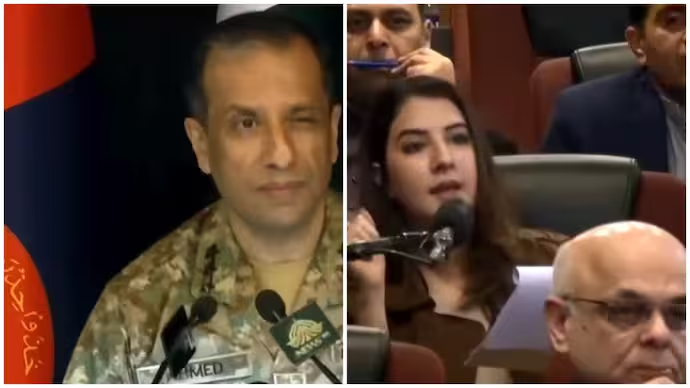
Beyond political alignments, the episode invites reflection on the responsibilities carried by individuals occupying high-visibility institutional roles. Public communication from military leadership often requires carefully calibrated expressions, especially in regions where civilian-military relations are closely scrutinized. Even unintended gestures can be interpreted through ideological lenses, making self-awareness an integral part of public communication strategy.
The handling and interpretation of the clip also highlight challenges for journalists navigating high-pressure environments where institutional hierarchies may influence the tone of interactions. While Komal maintained her professional posture throughout the exchange, the viral framing shifted attention away from the substance of her question—a question that dealt with the critical topic of labeling political figures as security threats. The controversy therefore indirectly overshadowed an important discussion about rhetoric surrounding Imran Khan and how state agencies frame political dissent.
Additionally, the broader social response underscores how digital virality can undermine nuanced engagement. The transformation of a formal press briefing into a moment of online sensationalism reflects the increasing difficulty institutions face in managing their public image. Even before the video gained traction, the DG ISPR’s communication approach had been under scrutiny in light of his firm statements on regional security operations. The wink added a personal dimension that many interpreted as incompatible with the gravity expected of a national security spokesperson.
In the end, the incident encapsulates a convergence of themes: gendered expectations, political polarization, institutional image, and the accelerating influence of social media on public discourse. While some may view the uproar as disproportionate to the gesture itself, the broader reactions demonstrate the heightened sensitivity surrounding interactions between state representatives and journalists in Pakistan’s current political climate. The clip’s virality underscores how even small moments can evolve into national conversations, especially when they occur at the intersection of power, politics, and public perception.
Just stumbled upon fortunemouse4 and gotta say, I’m impressed. The site is slick and easy to navigate. Looking forward to seeing what else they have to offer! Check it out fortunemouse4, you might just get lucky.