
In the ever-evolving landscape of global cinema, where artistic integrity often clashes with cultural and regulatory boundaries, a recent controversy has ignited fierce debate. The Australian body-horror film Together, directed by Michael Shanks and starring real-life couple Dave Franco and Alison Brie, has become the center of an international uproar. The film’s Chinese distributor, Hishow, a Chengdu-based company, allegedly used artificial intelligence to alter a key scene depicting a same-sex wedding, transforming the gay couple into a heterosexual pair.
This unauthorized edit, uncovered during early screenings in China, has drawn sharp condemnation from the film’s global distributor, Neon, as well as from viewers, critics, and LGBTQ+ advocates worldwide. As of September 25, 2025, the film’s wide release in China remains indefinitely postponed, highlighting the stringent censorship practices that govern the country’s massive film market.
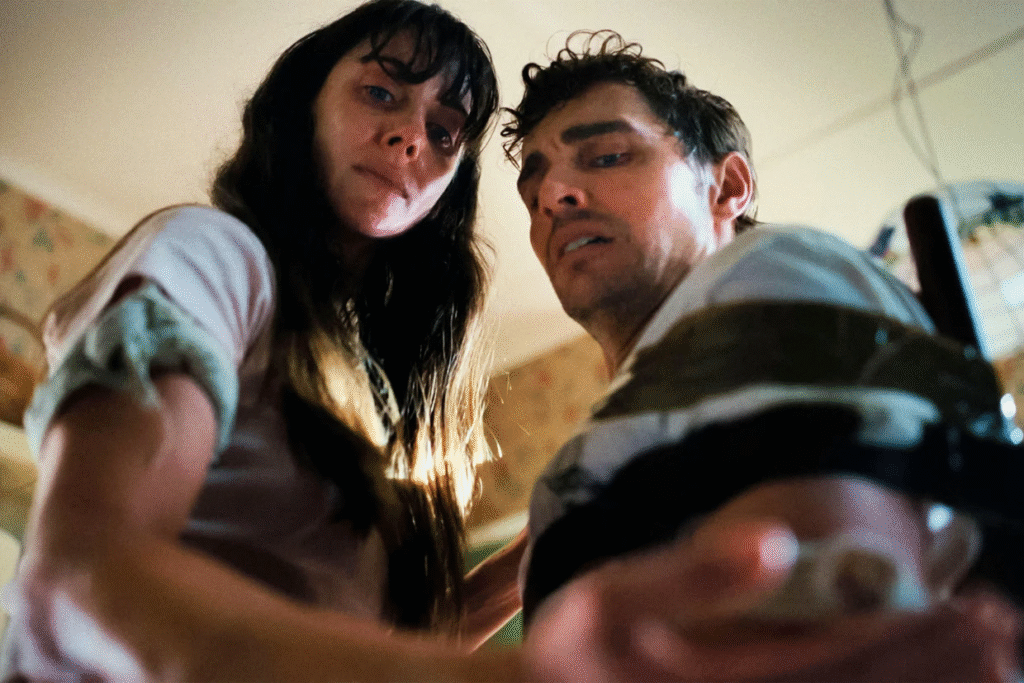
Together itself is a critically acclaimed indie horror that explores themes of love, codependency, and bodily autonomy. Premiering at the Sundance Film Festival in January 2025, the movie follows Franco and Brie’s characters—a strained couple who relocate to the countryside in an attempt to mend their relationship—only to encounter a supernatural force that begins physically merging their bodies.
The narrative weaves in peripheral characters, including a gay male couple whose wedding scene serves as a poignant counterpoint to the protagonists’ unraveling union. With a 90% approval rating on Rotten Tomatoes based on critic reviews, the film has grossed over $32 million worldwide, including a strong $6.7 million opening weekend in the U.S. in July 2025. Its blend of psychological tension and visceral body horror has been praised for its innovative storytelling and emotional depth, making the alteration in China all the more egregious to fans who see it as a betrayal of the film’s inclusive spirit.
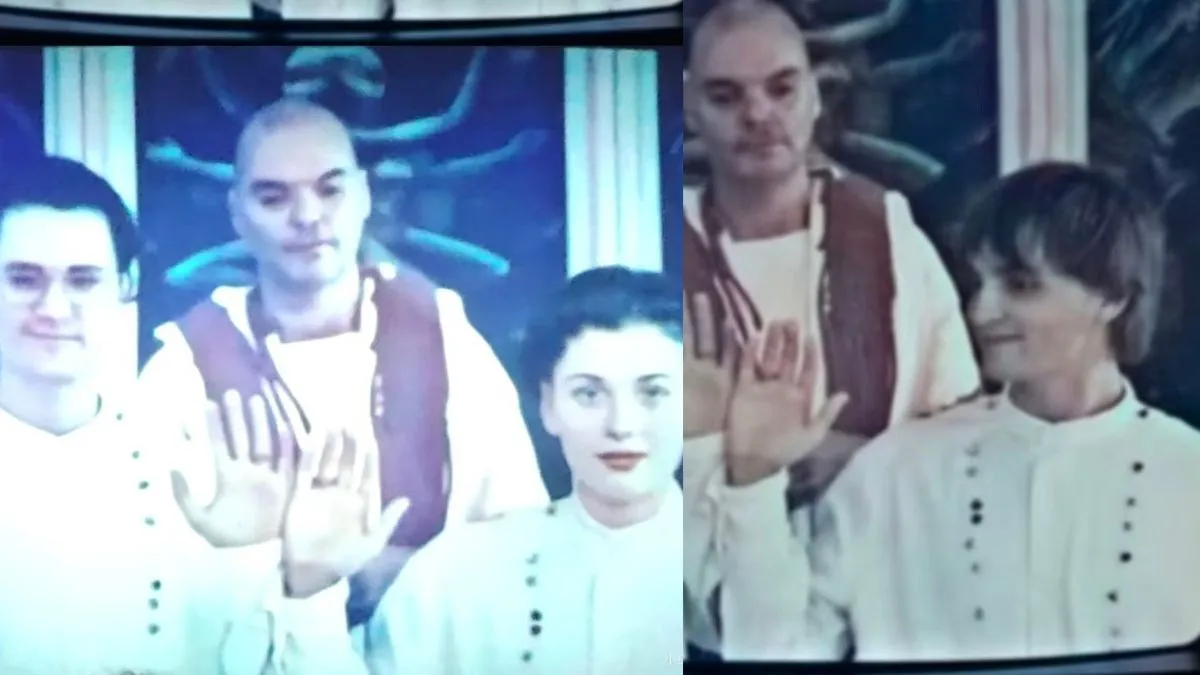
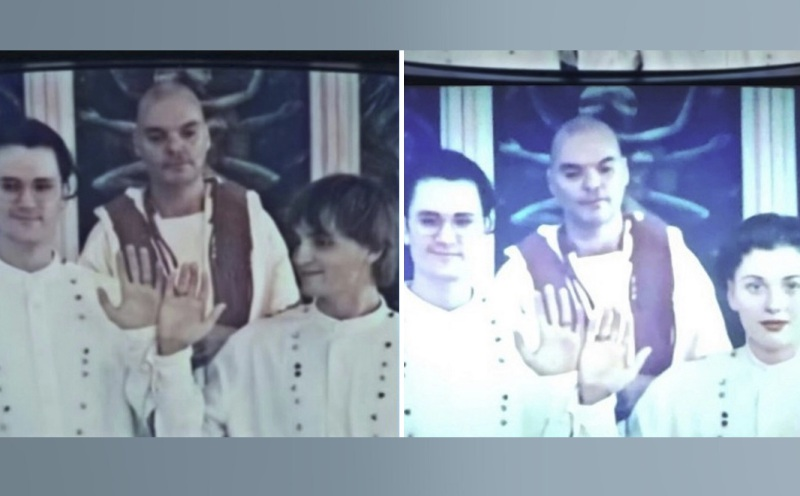
The incident unfolded on September 12, 2025, when select cinemas in mainland China hosted advance screenings of Together ahead of its planned wide release on September 19. Attendees quickly noticed discrepancies between the version they watched and clips circulating online from the international cut. In the original film, the wedding scene features two men exchanging vows, a brief but meaningful moment that underscores the story’s exploration of diverse relationships.
However, in the Chinese screenings, one man’s face had been digitally swapped with that of a woman, effectively rewriting the couple as straight. Side-by-side screenshots shared on platforms like Weibo and Douban went viral almost immediately, sparking widespread outrage among Chinese netizens who decried the change as disrespectful and creatively bankrupt. Eyewitness accounts from anonymous viewers confirmed the edit’s existence. One attendee told reporters that the alteration was “immediately obvious,” with the AI-generated face appearing unnaturally seamless yet jarringly out of place in the scene’s emotional context.
Read : Gay Makeup Artist Andry Jose Hernandez Romero Deported to Brutal Salvadoran Prison
Other modifications were spotted as well, including the addition of steam to obscure nudity in a shower scene featuring the male lead, a common tactic to comply with China’s strict guidelines on sexual content. Social media erupted with sarcasm and fury: a user on RedNote (a Chinese equivalent to TikTok) labeled the face swap “absolutely inappropriate,” arguing it “defiles the original work” by diluting the story’s nuances. Another on Douban quipped, “That’s great! We can re-release Brokeback Mountain, God’s Own Country, Lan Yu, and Happy Together, and use AI to remake them into heterosexual romances with just one click.”
An Australian horror film “Together”, was digitally altered to remove a same-sex wedding scene and turn it into a heterosexual one before its release in mainland China on September 12, 2025 pic.twitter.com/0G9N9RxIiG
— WaltzingRNLilydale (@rn_lilydale) September 27, 2025
These reactions underscore a growing frustration among younger Chinese audiences, who, despite official crackdowns, show increasing support for LGBTQ+ representation—a 2024 survey found that over half of respondents believed such identities should be accepted in society. The backlash intensified when Neon, the U.S.-based company responsible for the film’s global distribution, issued a strongly worded statement on September 24, 2025. “Neon does not approve of Hishow’s unauthorized edit of the film and have demanded they cease distributing this altered version,” the company declared, emphasizing that the changes violated the artistic vision of director Shanks and the production team.
Deadline reported that Neon had directly confronted Hishow, insisting that any further screenings of the modified cut be halted immediately. Hishow, which has not publicly responded to requests for comment, appears to have anticipated the fallout; just one day before the scheduled wide release, state-owned China Film Group Corp. announced a postponement due to “a change in the film’s distribution plan,” with no new date forthcoming. As of now, Together remains shelved in China, a casualty of the very censorship it inadvertently challenged.
The Broader Context of Censorship in Chinese Cinema
This scandal is far from an isolated incident in China’s tightly controlled entertainment industry, where the National Radio and Television Administration (NRTA) wields absolute authority over what reaches audiences. Films imported for theatrical release must undergo rigorous pre-screening, with censors empowered to demand cuts to anything deemed “politically sensitive,” “morally harmful,” or contrary to “socialist core values.” LGBTQ+ content, in particular, has been a frequent target since 2016, when regulators banned depictions of “abnormal sexual behavior” in movies and TV shows. The result? A landscape where queer stories are either outright prohibited or surgically excised to fit heteronormative molds.
Historical precedents abound. In 2019, the Chinese release of Bohemian Rhapsody, the Freddie Mercury biopic, was gutted of nearly two minutes, including gay kisses, discussions of Mercury’s sexuality, and a drag-themed music video scene from “I Want to Break Free.” More recently, Christopher Nolan’s Oppenheimer (2023) saw a nude scene with Florence Pugh digitally altered to dress her in a black robe, while Lightyear (2022) had a same-sex kiss removed entirely.
Experts like Chris Berry, a professor of film studies at King’s College London, note that such edits are standard fare to secure approval, but the use of AI in Together marks a disturbing escalation. “This isn’t how it’s usually done,” Berry observed, pointing out that traditional cuts involve trimming footage rather than fabricating new realities. Jason Coe, a film and media studies lecturer at the University of Hong Kong, went further, interpreting the wedding scene alteration as a “clear stance” from the government: a “red line” that LGBTQ+ visibility cannot cross without consequence.
Hishow’s decision, whether self-imposed or mandated by authorities, reflects the high stakes of the Chinese market—valued at over $7 billion annually and home to the world’s largest cinema audience. Distributors often bend to these pressures preemptively to avoid outright bans, but the AI intervention here crossed into uncharted ethical territory.
By not just removing the gay element but actively “straightwashing” it, Hishow didn’t merely comply; it rewrote the narrative, potentially confusing viewers and undermining the film’s thematic coherence. No spoilers needed, but the supernatural “merging” motif in Together gains layers of irony when a same-sex bond is forcibly heterosexualized—does the horror lie in the couple’s fusion, or in the erasure of their authenticity?
Global Backlash and Implications for AI in Film
The international response has been swift and unequivocal, amplifying voices from Hollywood to Hong Kong. LGBTQ+ outlets like Out and Them.us framed the edit as yet another erasure of queer representation, with writers decrying it as “disrespectful to the LGBT community” and a “challenge to audience tolerance.” On platforms like X (formerly Twitter), hashtags such as #TogetherCensorship trended briefly, with users sharing memes juxtaposing the original and altered scenes alongside captions like “AI: Because nothing says ‘progress’ like turning Adam and Steve into Adam and Eve.”
Director Michael Shanks, reached for comment, expressed dismay but deferred to Neon, stating that the changes “betray the heart of the story we set out to tell.” Beyond outrage, the controversy has sparked deeper discussions about AI’s role in media manipulation. While tools like deepfakes have long raised alarms for misinformation and non-consensual porn, their deployment in mainstream cinema feels like a dystopian tipping point.
Film scholars warn that cost-effective AI edits could normalize “on-demand” censorship, allowing distributors to tailor content per market without consulting creators. In China, where state surveillance already permeates daily life, this technology could extend to real-time alterations in streaming or even user-generated content. “It’s faster and better than taking Chinese medicine!” one sarcastic Douban commenter joked, but the punchline hides a grim truth: unchecked AI risks commodifying art into propaganda.
For the LGBTQ+ community, the stakes are personal. As global attitudes shift—evidenced by the film’s positive reception in the West—these edits reinforce isolation in one of the world’s most populous nations. Advocacy groups argue that such moves not only stifle visibility but also perpetuate harmful stereotypes, signaling to queer youth that their stories are unworthy of unfiltered telling. Neon’s firm stance offers a glimmer of resistance, pressuring Hishow to reconsider, but without transparency from Chinese regulators, similar incidents seem inevitable.