
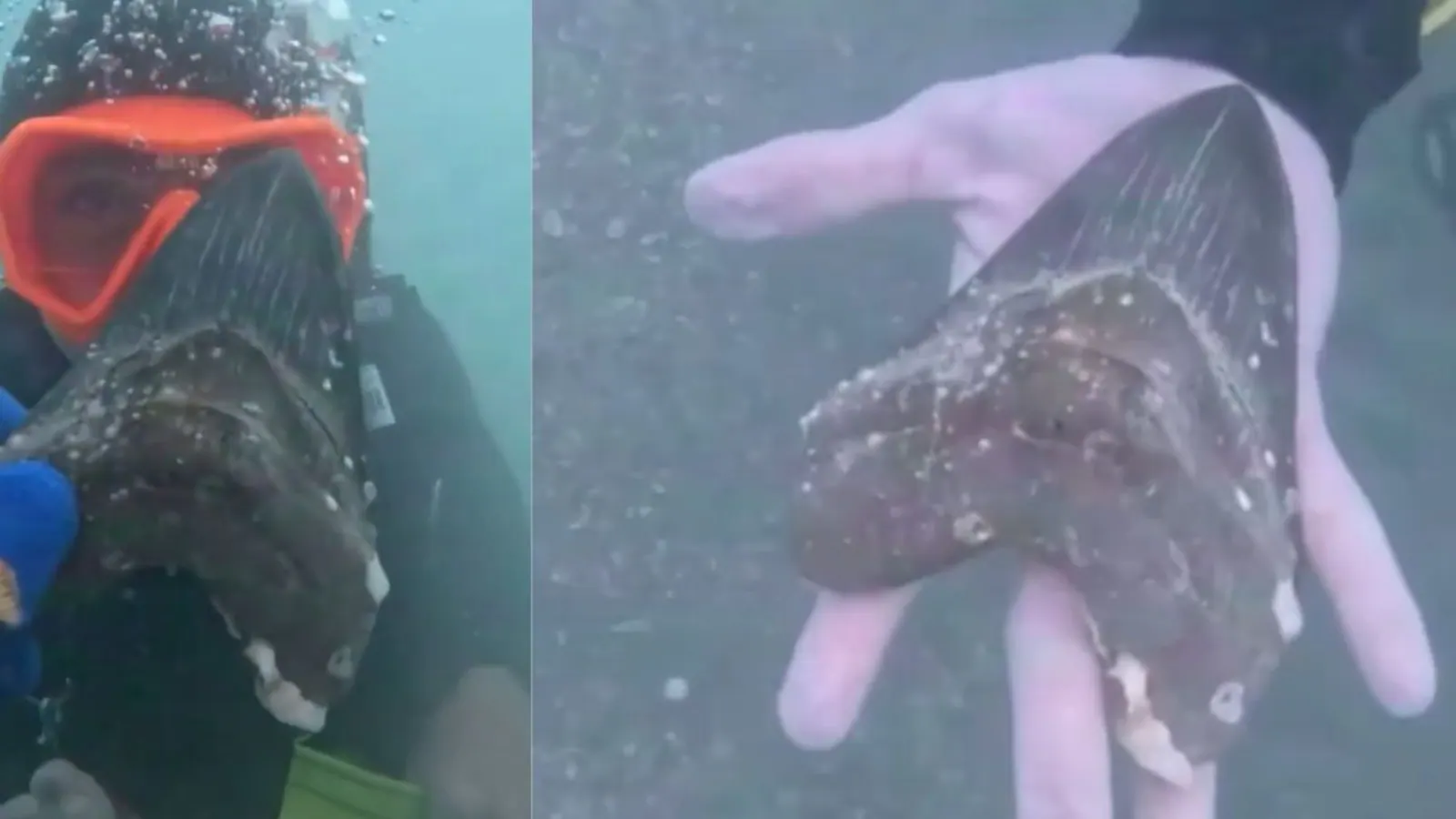
The depths of the ocean continue to guard remnants of a distant past, occasionally revealing extraordinary pieces of history to those who venture beneath the surface. In a remarkable discovery off the coast of Florida, a 16-year-old diver, Aiden Andrews, uncovered a rare six-inch tooth belonging to the prehistoric giant known as the megalodon.
Such finds are uncommon not only because of their age but also due to their size and condition, making this particular discovery a subject of fascination for scientists and fossil enthusiasts alike. The moment, captured on video during a dive near Manasota Key, has drawn widespread attention, highlighting both the thrill of underwater exploration and the enduring mysteries of ancient marine life.
A Rare Find Beneath the Ocean Floor
Fossilized shark teeth are among the most commonly discovered remnants of ancient marine creatures, yet specimens of exceptional size remain rare and highly prized. The six-inch megalodon tooth found by Aiden Andrews stands out due to its impressive dimensions, placing it among the larger examples ever recovered. While smaller teeth are frequently collected along coastal regions, a specimen of this scale offers a more detailed glimpse into the biology and feeding habits of one of history’s most formidable predators.
The ocean floor near Florida’s Gulf Coast is known for its rich deposits of prehistoric fossils, shaped by millions of years of geological activity. Currents, sediment shifts, and erosion gradually uncover these hidden relics, making the area a favored location for divers and fossil hunters. However, even in such fertile grounds, discovering a tooth of this magnitude requires a combination of patience, skill, and luck. The rarity lies not just in the size but also in the preservation of the tooth, which has withstood immense pressure and environmental changes over millions of years.
For Andrews, the experience was both unexpected and exhilarating. The underwater environment demands focus and careful observation, and identifying a fossil among rocks and debris is no simple task. The discovery illustrates how even amateur divers can contribute to the broader understanding of natural history. Each fossil uncovered adds to the growing record of life that once thrived in ancient oceans, offering tangible evidence of creatures that no longer exist but continue to captivate scientific curiosity.
The Megalodon: Apex Predator of Prehistoric Seas
The megalodon, one of the largest and most powerful predators to have ever existed, dominated the world’s oceans millions of years ago. Estimated to have lived between 23 million and 3.6 million years ago, this massive shark could grow up to 60 feet in length, dwarfing modern sharks in both size and strength. Its name, meaning “big tooth,” reflects the most commonly found evidence of its existence, as its skeleton was primarily composed of cartilage, which rarely fossilizes.
Teeth are therefore the primary source of information for researchers studying this ancient predator. These teeth, often serrated and robust, were designed for cutting through large prey, including whales and other marine mammals. The size of a tooth can provide valuable clues about the overall size and age of the individual shark, as well as insights into its diet and hunting behavior. A six-inch tooth suggests an especially large specimen, potentially offering data that helps refine estimates of megalodon growth patterns and ecological dominance.
Read : James Hetfield Proposes to Girlfriend Adriana Gillett Underwater During Shark Dive
The presence of megalodon fossils in regions like Florida also sheds light on the ancient marine environments that once existed there. Warm, shallow seas once covered much of the area, creating ideal conditions for large predators to thrive. Over time, geological changes transformed these environments, leaving behind fossilized traces buried beneath layers of sediment. Discoveries like Andrews’ tooth serve as reminders of how dramatically Earth’s ecosystems have evolved.
Read : The Mystique of Geisha: A Closer Look at Japan’s Timeless Artisans
Scientific interest in the megalodon extends beyond its size. Researchers continue to explore questions about its extinction, with theories ranging from climate change to shifts in prey availability. Each new fossil contributes incremental knowledge, helping scientists piece together the life and eventual disappearance of this iconic species. While a single tooth may seem like a small fragment, it holds within it a wealth of information waiting to be analyzed and understood.
Scientific Importance and Future Possibilities
The discovery of a large, well-preserved megalodon tooth is more than just an exciting moment for a young diver; it represents a valuable addition to the scientific record. Paleontologists rely heavily on such finds to study species that left behind limited physical evidence. Because megalodon skeletons rarely fossilize, teeth become critical tools for reconstructing their anatomy, behavior, and evolutionary history.
Read : Snorkeler Bitten by Shark While Snorkeling on Great Barrier Reef
A tooth of this size can help researchers better understand variations within the species. Differences in shape, thickness, and wear patterns may reveal how individual sharks adapted to their environments or how their feeding strategies evolved over time. By comparing this tooth with others from different regions, scientists can identify patterns that might indicate migration routes or population diversity within ancient oceans.
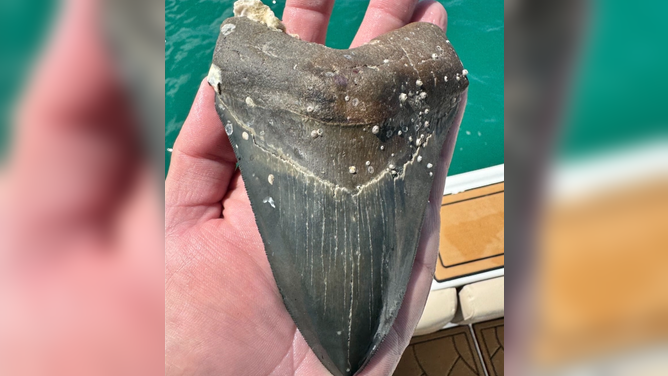
The fact that the discovery was recorded on video adds another layer of significance. Visual documentation of fossil finds in their original environment provides context that is often lost once the specimen is removed. It allows researchers to examine the surrounding sediment, the positioning of the fossil, and the conditions under which it was found. Such details can offer clues about how the tooth was deposited and preserved, contributing to a deeper understanding of fossilization processes.
Currently, the tooth remains in the custody of Andrews and his family, though finds of this nature are often shared with experts for further examination. In some cases, significant fossils are donated or loaned to museums, where they can be studied in detail and displayed for public education. Whether this particular tooth remains a personal keepsake or becomes part of a larger scientific collection, its discovery has already made an impact by drawing attention to the importance of amateur contributions to paleontology.
The broader implications of this find extend to inspiring future exploration and research. Stories like this encourage young enthusiasts to engage with science, demonstrating that meaningful discoveries are not limited to professionals working in laboratories. The ocean remains one of the least explored frontiers on Earth, and countless fossils likely remain hidden beneath its surface, waiting to be uncovered.
As interest in marine fossils continues to grow, advancements in diving technology and research methods may lead to even more significant discoveries. Each new find builds upon existing knowledge, gradually revealing a clearer picture of life in prehistoric oceans. The six-inch megalodon tooth discovered by Aiden Andrews stands as a testament to the enduring allure of exploration and the vast, untapped history lying beneath the waves.