

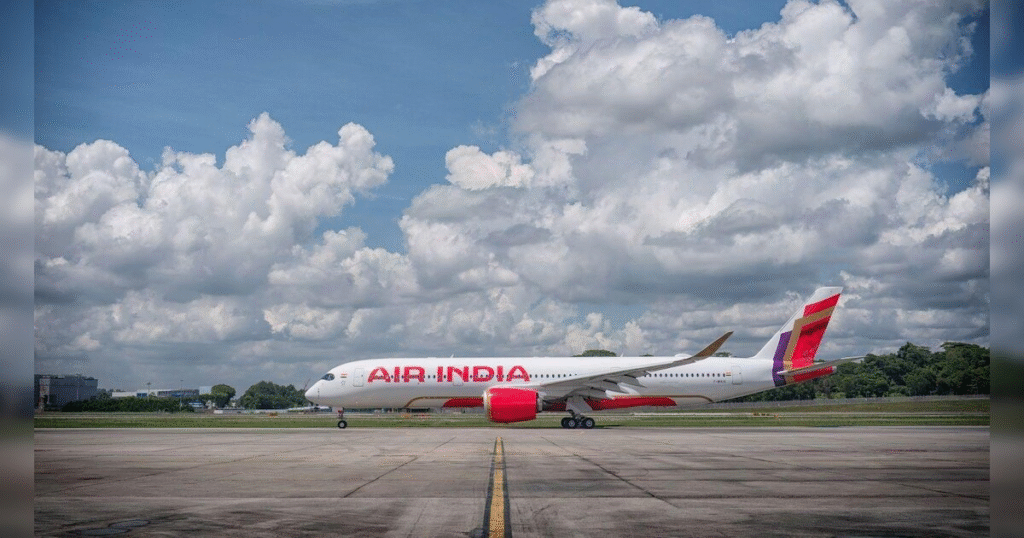
In the high-stakes world of international aviation, where every minute counts and safety protocols are non-negotiable, a simple navigational mishap at London’s Heathrow Airport turned into a major operational hiccup for Air India. On September 21, 2025, Flight AI 162, bound for New Delhi, had to abruptly return to the gate moments after pushback when the crew discovered that one passenger, despite having their boarding pass scanned and being marked as onboard, was nowhere to be found on the aircraft.
This incident, which delayed the flight by an additional 45 minutes on top of its existing lag, highlights the razor-thin margins between routine departures and procedural necessities in modern air travel. As airlines worldwide grapple with increasing passenger volumes and tightening security measures, such events serve as stark reminders of the human element in an otherwise automated process. The flight, operated by Air India—a Tata Group-owned carrier that has been undergoing significant fleet modernization and service enhancements in recent years—was already running behind schedule when the drama unfolded.
Scheduled to depart from Terminal 2 at Heathrow around midday local time, AI 162 carried a full load of passengers eager to return to India, many of whom were likely business travelers or families wrapping up visits to the UK. The aircraft, a Boeing 787 Dreamliner known for its efficiency on long-haul routes, had completed boarding procedures without apparent issues. Gate agents scanned boarding passes, cabin crew conducted headcounts, and the plane pushed back from the stand, beginning its taxi toward the runway.
It was during this initial rollout that the flight attendants performed a final reconciliation of passenger manifests against the physical count. To their surprise, the numbers didn’t add up: one individual was listed as having boarded, but the seat remained empty. This discrepancy triggered an immediate alert to the cockpit, prompting Captain and First Officer to halt the taxiing process and request a return to the gate. Passengers on board, strapped in and anticipating takeoff, were informed of a brief technical delay—a standard euphemism in aviation to avoid unnecessary alarm.
Read : Thai Woman Gives Birth on Air India Express Flight from Muscat to Mumbai
In reality, the situation was far from technical; it was a classic case of human error amplified by the unforgiving precision of digital check-in systems. Air India quickly issued a statement acknowledging the episode, emphasizing that the return was executed in full compliance with international aviation standards.
Read : Air India Becomes World’s No. 1 Airline in Losing Luggage: 50,001 Bags Lost in Last 30 Days
“Flight AI 162, operating from London (Heathrow) to Delhi on September 21, 2025, returned to the gate shortly after pushback because a passenger who, despite having their boarding pass scanned and being marked as boarded, failed to board the aircraft,” the spokesperson explained. The airline’s prompt disclosure helped quell speculation, but it also sparked questions about how such a glitch could occur in an era of biometric scanners and AI-assisted passenger tracking.
The Passenger’s Navigational Mishap: A Simple Error with Big Consequences
At the heart of this incident lies a seemingly innocuous mistake by the missing passenger, whose identity has not been disclosed out of privacy considerations. According to Air India’s detailed account, the individual had successfully navigated the pre-boarding checks: they presented their boarding pass at the gate scanner, which beeped affirmatively and updated the system to reflect their presence. However, instead of proceeding down the jet bridge to the aircraft, the passenger veered off course, mistakenly entering the arrivals area of the terminal rather than the designated departure pathway.
Heathrow’s Terminal 2, a sprawling hub designed by Luis Vidal Architecture and opened in 2014, is a marvel of modern efficiency, handling over 20 million passengers annually with seamless flows between international gates. Yet, its complexity—marked by multiple levels, escalators, and signage in multiple languages—can overwhelm even seasoned travelers. The arrivals zone, bustling with customs queues and baggage claim carousels, is just a short walk from certain departure gates, separated only by partitions and directional cues.
In the post-scan phase, when passengers are funneled toward the jet bridge, a momentary distraction—perhaps a glance at a phone, a detour to a restroom, or simple fatigue from a long day—could easily lead to such a wrong turn. This error wasn’t immediately apparent because the scanning technology, while advanced, relies on sequential logic: a successful scan assumes the passenger continues to the plane. Modern systems, including those used by Air India, integrate RFID chips in boarding passes and sometimes facial recognition, but they don’t actively track physical movement beyond the gate threshold.
As a result, the manifest updated in real-time, and the aircraft’s load sheet was certified as complete. The passenger, meanwhile, likely realized their mistake upon reaching the arrivals hall, but by then, the doors had closed, and the plane was committed to departure procedures. Reports from airport sources indicate that security personnel located the individual shortly after the aircraft’s return, detaining them briefly for questioning to rule out any intentional foul play. No suspicious activity was found; it was confirmed as an honest blunder.
The passenger was rebooked on a subsequent flight, but not without facing the logistical fallout of missed connections and potential itinerary disruptions. This episode underscores a broader challenge in aviation: balancing speed with vigilance. With over 1,200 daily flights at Heathrow alone, minor confusions like this are rare but not unheard of, often exacerbated by jet lag, unfamiliar layouts, or the stress of international travel.
Security Protocols in Action: Why the Return Was Non-Negotiable
The decision to taxi back to the gate, though inconvenient, was driven by ironclad global security mandates that prioritize passenger and aircraft safety above all else. Under regulations set by the International Civil Aviation Organization (ICAO) and enforced by bodies like the UK’s Civil Aviation Authority (CAA) and India’s Directorate General of Civil Aviation (DGCA), no aircraft may depart with unchecked baggage belonging to a no-show passenger. The rationale is straightforward and rooted in post-9/11 realities: unaccompanied luggage could harbor explosives or other threats, posing an unacceptable risk mid-flight.
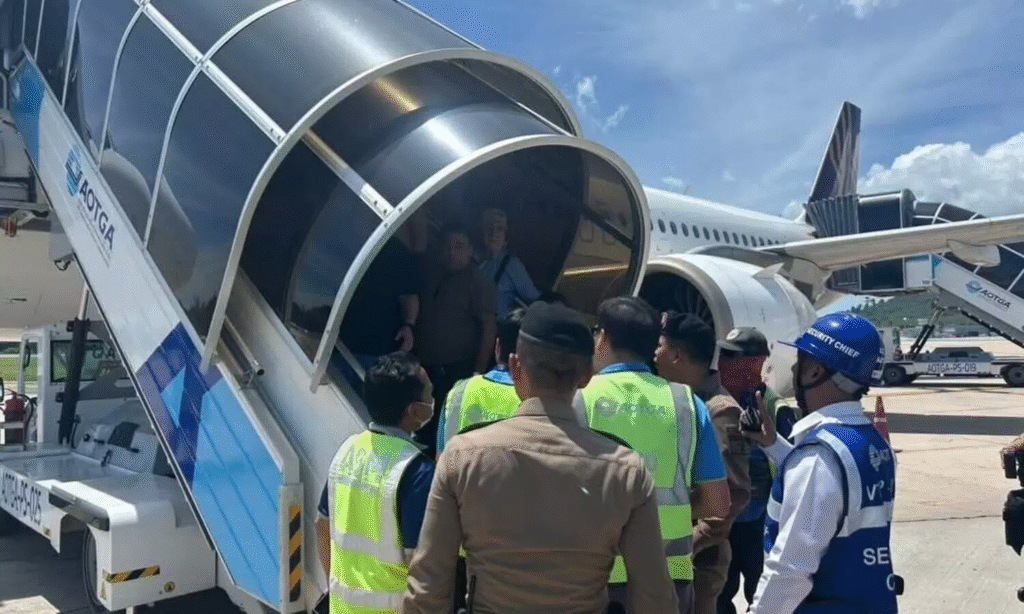
In this case, the passenger’s checked bags had already been loaded into the cargo hold during the baggage handling phase, which occurs well before boarding. Air India’s ground crew, operating under strict timelines, had palletized and secured the luggage without issue. But when the onboard count revealed the absence, the crew had no choice but to initiate the offload protocol. Returning to the gate allowed ramp agents to swiftly identify and remove the bags— a process that typically takes 10 to 20 minutes but can extend if manifests need cross-verification. The aircraft’s doors were reopened, a boarding bridge reattached, and the baggage extracted under the watchful eyes of security teams.
Air India’s spokesperson reiterated this in their statement: “As per standard security protocols, the aircraft returned to offload the passenger’s baggage and, subsequently, departed with a delay.” This adherence to procedure not only complied with law but also protected the airline from potential fines or audits. The total delay accrued to about 90 minutes, pushing the flight’s arrival in Delhi to well into the early hours of September 22. For the 250-plus passengers on board—exact numbers weren’t specified, but typical for a 787—the wait meant extended time in a confined space, with crew distributing water and updates to maintain calm.
This isn’t the first time such protocols have upended schedules. Similar incidents have occurred across carriers, from a 2023 United Airlines flight in the US that returned for a forgotten passport to a 2024 Emirates case in Dubai involving a mismatched manifest. In each instance, the return underscored the “fail-safe” nature of aviation: better a grounded plane than a compromised one. For Air India, which has invested heavily in safety training post its merger with Vistara, this event reinforces the efficacy of its systems while exposing areas for tech upgrades, like geofenced tracking post-scan.
Broader Implications: Lessons for Travelers and the Airline Industry
While the Heathrow incident resolved without further incident—the flight eventually touched down safely in Delhi—the ripple effects extend far beyond that single route. For Air India, already navigating a transformative phase under Tata’s stewardship, this serves as a case study in operational resilience. The carrier has been ramping up international frequencies, with London-Delhi being a flagship corridor serving over 100,000 passengers monthly. Delays like this can erode customer trust, especially amid competition from rivals like British Airways and Virgin Atlantic, who tout punctuality as a selling point.
From a passenger perspective, the event is a cautionary tale. In an age of mobile check-ins and contactless gates, over-reliance on technology can breed complacency. Travelers are advised to double-check signage post-scan, use airport apps for real-time navigation, and engage staff if unsure. Heathrow, in particular, has enhanced its wayfinding with digital kiosks and multilingual announcements, but human factors remain unpredictable. The detained passenger’s experience—questioning by security, followed by rebooking—highlights the potential for stress, underscoring the need for empathy in airline responses.
Looking ahead, this mishap could accelerate innovations in boarding tech. Concepts like blockchain-verified manifests or AI-monitored jet bridges are in pilot stages at some hubs, promising to flag discrepancies before pushback. For regulators, it reaffirms the balance between efficiency and security: protocols that once seemed overly rigid now prove their worth in preventing escalations. As global air traffic rebounds to pre-pandemic peaks, with IATA forecasting 4.7 billion passengers in 2025, such stories remind us that aviation’s greatest strength—its predictability—hinges on meticulous detail.
In the end, the Air India return to gate was less a scandal than a success of safeguards. It delayed a flight but preserved safety, turning a potential vulnerability into a testament to the industry’s rigor. As we board our next journey, it’s a nudge to stay alert: in the skies, as on the ground, one wrong turn can ground us all.
References:
Best legal steroid stack
References:
https://jom.gg/@leilatimbery9
References:
Male bodybuilders on steroids
References:
https://datemyfamily.tv/@jeremyeubanks
References:
Definition of steroids
References:
http://47.92.23.195:8418/elijahcobb1158
References:
Top 10 anabolic steroids
References:
https://suprasage.com/junkomchugh17
References:
How do steroids work?
References:
https://interior01.netpro.co.kr:443/bbs/board.php?bo_table=free&wr_id=270