
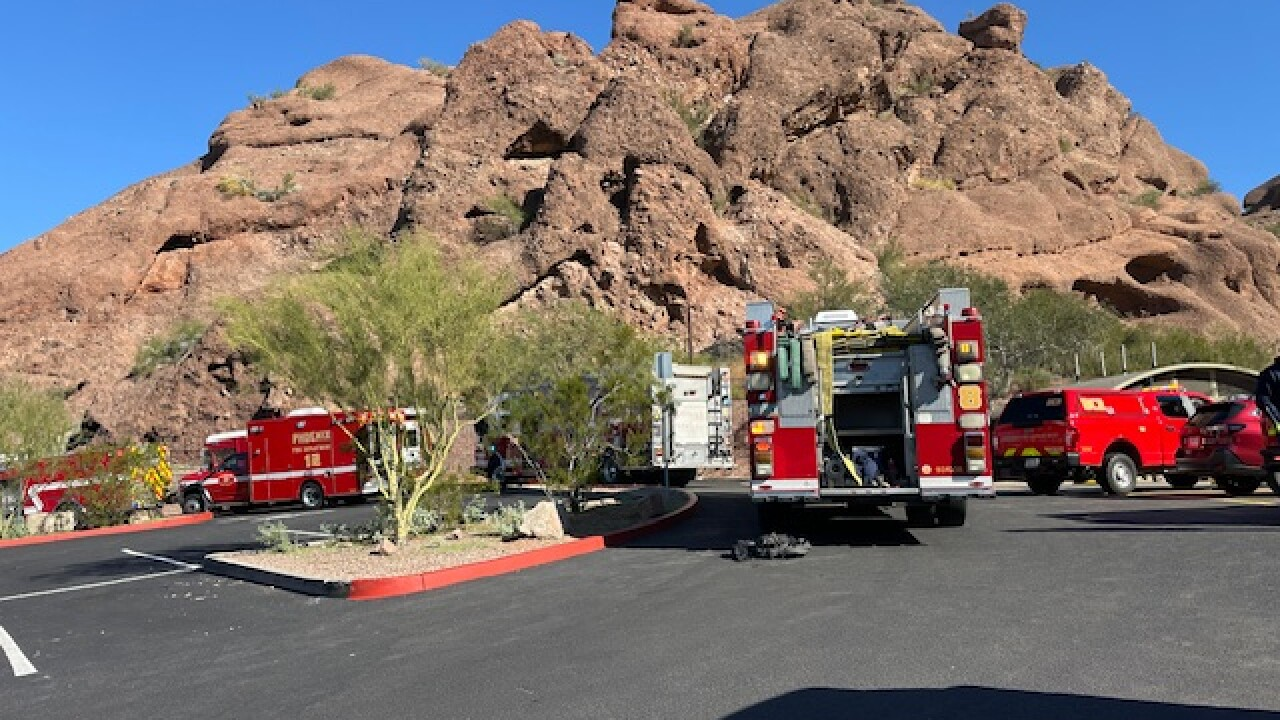
A female hiker was rescued from Camelback Mountain’s Echo Canyon Trail on Saturday morning after suffering a leg injury that left her unable to descend the steep and rugged terrain on her own. The incident prompted a technical rescue response from the Phoenix Fire Department, highlighting the ongoing challenges faced by emergency crews operating in one of the region’s most popular yet physically demanding hiking areas.
The rescue took place late in the morning, a time when trail activity is often high, particularly on weekends, and required the coordinated use of ground personnel and an aerial extraction to ensure the hiker’s safe removal from the mountain. Authorities later confirmed that the woman was transported to a nearby hospital in stable condition for further medical evaluation and treatment.
Camelback Mountain, located in central Phoenix, is widely known for its challenging trails, including Echo Canyon, which attracts thousands of hikers each year. Despite its popularity, the trail’s steep elevation gain, uneven rock surfaces, and limited shade can make even routine hikes hazardous, particularly when injuries occur. Saturday’s rescue serves as another example of the risks associated with hiking in demanding terrain and the critical role of specialized rescue teams in responding to emergencies that cannot be resolved through standard evacuation methods.
Emergency Response on Echo Canyon Trail
According to the Phoenix Fire Department, emergency crews were dispatched to Camelback Mountain around 10:45 a.m. after receiving reports of an injured hiker on the Echo Canyon Trail. Callers indicated that a woman had sustained a leg injury and was unable to continue her descent. Given the trail’s narrow passages and steep inclines, responders recognized early on that the situation would likely require a technical rescue rather than a simple assisted walk-down.
Firefighters and technical rescue personnel made their way up the trail to locate the injured hiker. She was found approximately one mile up Echo Canyon Trail, a section known for its sharp elevation changes and rocky footing. Upon assessment, crews determined that the woman had injured her lower extremity to the extent that walking down the trail would not be safe or feasible.
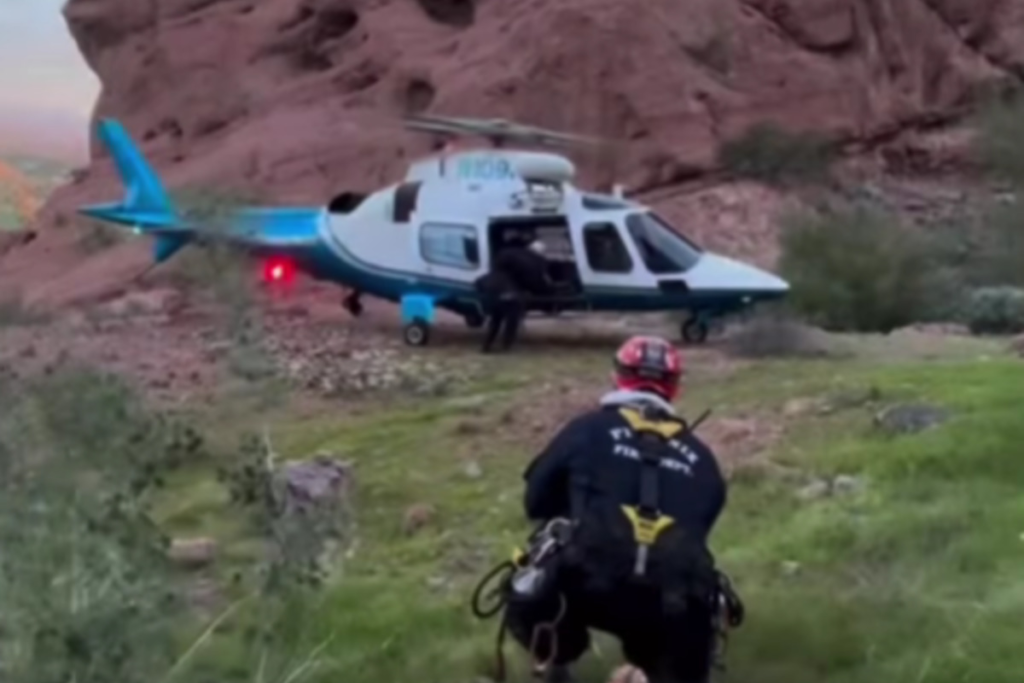
Carrying her down by hand would have posed significant risks both to the patient and to rescuers due to the trail’s conditions. Given these factors, Phoenix Fire officials made the decision to request aerial assistance. The department deployed its Firebird 10 helicopter, a specialized aircraft used for rescues in hard-to-reach or hazardous locations. The helicopter was able to reach the site and perform a controlled extraction, lifting the injured hiker off the mountain and transporting her away from the trail.
Read : Teardrop Island Tales: Discovering the Beauty of Sri Lanka’s Landscapes
Fire officials confirmed that the airlift allowed for a faster and safer evacuation than a ground-based rescue would have permitted under the circumstances. Following the extraction, the hiker was evaluated by medical personnel and transported to a nearby hospital. Authorities stated that she was in stable condition and was taken for further treatment related to her leg injury. No additional details about the nature of the injury or the woman’s identity were released.
Role of Phoenix Fire Department and Air Rescue Operations
The Phoenix Fire Department regularly responds to rescue calls on Camelback Mountain, particularly on Echo Canyon and Cholla trails, which are considered among the most difficult in the area. These rescues often involve hikers who become injured, dehydrated, or exhausted and are unable to safely complete their hikes. In many cases, air rescue becomes the most effective option, especially when patients cannot be moved without risking further injury.
Firebird 10, the helicopter used in Saturday’s rescue, is equipped for a variety of emergency operations, including mountain rescues, medical evacuations, and wildfire support. Its use requires careful coordination between pilots, rescue technicians, and ground crews to ensure safe conditions for both the patient and responders. Weather conditions, wind patterns, and visibility all factor into the decision to conduct an airlift, as does the patient’s medical status.
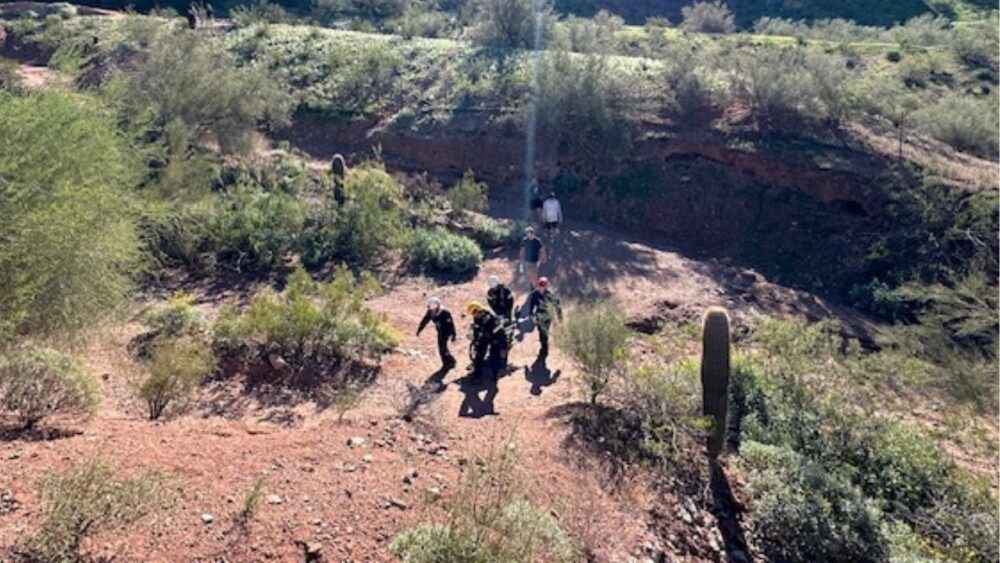
Phoenix Fire officials have emphasized that aerial rescues are not undertaken lightly. They are reserved for situations where ground evacuation would be excessively dangerous or time-consuming. In this case, the hiker’s inability to bear weight on her injured leg and the location of the incident justified the use of the helicopter. The successful extraction underscored the importance of maintaining well-trained technical rescue teams capable of operating in complex environments.
Rescue operations on Camelback Mountain often draw attention due to the visibility of helicopters and the popularity of the trails involved. While the department does not release specific cost figures for individual rescues, such operations require significant resources, including personnel, equipment, and aircraft. Fire officials consistently remind hikers that preparation, awareness of physical limits, and attention to trail conditions can reduce the likelihood of emergencies requiring such interventions.
Camelback Mountain Safety and Hiking Conditions
Camelback Mountain rises prominently above the Phoenix metropolitan area and is a major destination for both residents and visitors. Echo Canyon Trail, in particular, is known for its steep ascent, handrails, and sections that require scrambling over rocks. While the trail is relatively short in distance, it gains elevation quickly, making it physically demanding even for experienced hikers.
Injuries on the mountain can occur for a variety of reasons, including slips on loose gravel, missteps on uneven rock surfaces, or strain caused by the steep climb. Leg injuries are among the most common issues encountered by rescue crews, as they can immediately limit a hiker’s ability to descend safely. When such injuries occur high on the trail, self-rescue is often not an option.
Emergency responders have repeatedly urged hikers to take precautions before attempting Camelback Mountain trails. These include wearing appropriate footwear with good traction, carrying sufficient water, starting hikes early to avoid peak heat, and being mindful of personal fitness levels. While Saturday’s incident occurred during the late morning hours, conditions on the mountain can change rapidly, and even moderate temperatures do not eliminate the risk of injury.
The Echo Canyon Trail is regularly patrolled, and signage warns hikers about the trail’s difficulty. Despite these warnings, rescue calls remain frequent, particularly on weekends and holidays when trail traffic increases. Fire officials note that timely reporting of injuries and clear communication about a hiker’s location can significantly improve response times and outcomes.
Saturday’s rescue concluded without further complications, and the injured hiker was safely transferred to medical care. While no additional incidents were reported in connection with the operation, the event serves as a reminder of the inherent risks associated with hiking in steep desert terrain and the vital role played by emergency responders in ensuring public safety.