

The sentencing of Akanksha Adivarekar has brought legal closure to one of the most disturbing child homicide cases to come before an English court in recent years. Adivarekar, a 37-year-old former medical consultant who described herself online as a “pen influencer,” was ordered to be detained indefinitely in a secure mental health hospital under the UK Mental Health Act after admitting to killing her four-year-old son, Agustya Hegishte.
The decision reflects a judicial finding that her actions were driven by a severe mental health crisis rather than criminal intent formed with full responsibility. While the hospital order removes her from prison, it does not diminish the gravity of the crime or the permanent loss suffered by Agustya’s family. Instead, the ruling underscores the court’s conclusion that treatment, supervision, and restriction are necessary to protect both the public and Adivarekar herself.
The killing occurred in June 2025 at the family’s home in Maidenhead, England, a quiet residential area where no prior concerns had been raised about the child’s welfare. Investigators and medical experts later agreed that the act was sudden, unplanned, and linked to an acute psychiatric episode. By the time the case reached sentencing at Reading Crown Court in December, the focus of proceedings had shifted away from punishment and toward long-term psychiatric care, reflecting the complex intersection of criminal law and mental illness that defined the case.
The killing of Agustya Hegishte and events that followed
On June 10, 2025, Akanksha Adivarekar climbed into bed with her four-year-old son while he was asleep and stabbed him repeatedly in the neck. Prosecutors stated that Agustya was stabbed 11 times and died at the scene. The attack occurred without warning and without any evidence of prior abuse, neglect, or hostility toward the child. Emergency services were not immediately called to the family home. Instead, after the killing, Adivarekar drank bleach in what authorities described as an apparent suicide attempt.
Still wearing a blood-soaked nightgown, she then left the house and made her way to a nearby hospital, where she sought medical assistance. Hospital staff described her demeanor as detached and “zoned out” when she arrived at the emergency department. She told staff that she had killed her son to “end his suffering,” a statement later cited by prosecutors as evidence of her disordered thinking at the time. Due to the severity of her injuries from ingesting bleach, she underwent life-saving surgery shortly after arriving at the hospital.
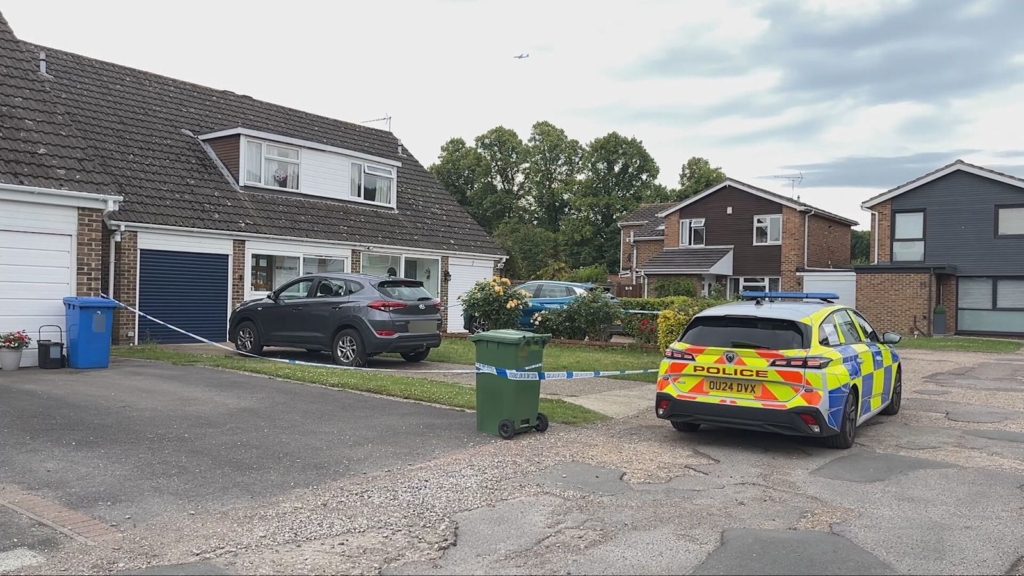
Police were alerted once hospital staff became aware of her statements and appearance. Officers later discovered Agustya’s body at the family home. Thames Valley Police launched a homicide investigation, which quickly established that there were no prior safeguarding concerns involving the child. Friends, neighbors, and professionals who had interacted with the family described a stable household, with Akanksha Adivarekar previously presenting as a caring and attentive mother.
In the hours and days following her admission to hospital, Adivarekar’s mental state reportedly fluctuated. According to media reports cited during court proceedings, she at one point blamed her husband for their son’s death, before later attempting to ingest bleach again while still hospitalized. Medical staff intervened, preventing further harm. These incidents formed part of the psychiatric evidence later presented to the court, illustrating the severity and persistence of her mental health crisis.
Initially, Akanksha Adivarekar was charged with murder, reflecting the deliberate and fatal nature of the act. However, as psychiatric assessments progressed, her legal position changed. Expert evaluations concluded that she had been suffering from a severe manic episode at the time of the killing, significantly impairing her ability to form rational judgment or control her actions. This medical evidence would ultimately shape both her plea and her sentence.
Court proceedings and the plea of diminished responsibility
The case came before Reading Crown Court, where prosecutors and defense counsel agreed that the appropriate legal resolution involved a plea of manslaughter by reason of diminished responsibility. Under English law, this plea acknowledges that the defendant committed the act causing death but that their mental functioning was substantially impaired at the time, reducing their culpability from murder to manslaughter.
Akanksha Adivarekar formally pleaded guilty to manslaughter on December 3, 2025. The plea was accepted by the court following detailed submissions from psychiatric experts, who described a profound mental health breakdown marked by delusional beliefs, emotional detachment, and impaired reasoning. The court was told that there was “no rational motive” for the killing and that Adivarekar’s actions were inconsistent with her prior behavior and relationship with her son.
During sentencing proceedings held the following week, Judge Michael Grieve KC addressed both the legal and human dimensions of the case. He emphasized that the law required the court to distinguish between punishment and treatment when a defendant’s mental illness played a decisive role in a fatal offense. Citing the medical evidence, the judge concluded that imprisonment would serve no therapeutic purpose and would fail to address the underlying risk posed by untreated psychiatric illness.
The court therefore imposed a hospital order with restrictions under the Mental Health Act. This type of order allows for the defendant to be detained in a secure psychiatric facility for treatment, with release subject to approval by the Secretary of State or a mental health tribunal. The restrictions mean that Akanksha Adivarekar cannot be discharged without formal oversight, even if clinicians believe her condition has stabilized.
In delivering the sentence, Judge Grieve told Adivarekar that she required “treatment, not punishment.” He also noted that the psychological burden of her actions would be lifelong, describing the suffering she would carry as an inherent consequence of the crime. The judge acknowledged the absence of any previous welfare concerns regarding Agustya and recognized that, prior to the onset of her manic episode, Akanksha Adivarekar had a “normal, loving relationship” with her child.
Thames Valley Police confirmed in a statement that the guilty plea and sentencing marked the conclusion of a complex investigation. Detective Inspector Rob Underhill described the case as challenging, both professionally and emotionally, and reiterated the force’s sympathy for Agustya’s family. Prosecutors did not seek a punitive prison sentence, aligning their position with the psychiatric findings presented to the court.
Family impact, judicial reasoning, and broader implications
One of the most striking aspects of the sentencing hearing was the statement given by Adivarekar’s husband, who was not named in court. In emotional testimony, he spoke of the dual loss he had suffered, describing the death of his son and the effective loss of his wife to mental illness. He told the court that his pain was “indescribable” and expressed forgiveness toward Akanksha Adivarekar, stating that he hoped she would live a “good, respectable life” after receiving treatment. For him, he said, that outcome would represent real justice for both his son and their family.
The judge acknowledged the husband’s words, noting the extraordinary emotional burden placed on families in cases involving severe mental illness and violence. While the court’s primary responsibility was to determine a lawful and appropriate sentence, the statements highlighted the lasting human consequences that extend far beyond legal proceedings.

From a legal perspective, the case illustrates the operation of diminished responsibility within the English justice system. The doctrine allows courts to respond flexibly when mental illness fundamentally alters a defendant’s capacity at the time of an offense. In such cases, the goal is not retribution but public protection and medical intervention. Hospital orders with restrictions are among the most severe non-prison disposals available, reflecting both the seriousness of the offense and the ongoing risk assessment required.
The case also raises broader questions about the identification and management of severe mental illness, particularly in individuals who may otherwise appear high-functioning. Akanksha Adivarekar was a former medical consultant and maintained an online presence that suggested professional engagement and stability. There was no evidence presented that child protection services or medical professionals had identified warning signs before the killing. The suddenness of the episode underscores the challenges faced by healthcare systems in predicting rare but catastrophic psychiatric breakdowns.
For law enforcement and prosecutors, the investigation required balancing evidentiary rigor with sensitivity. Thames Valley Police emphasized that their thoughts remained with Agustya’s family and expressed hope that the outcome would allow them space to grieve privately. The decision not to pursue a murder conviction after psychiatric evidence emerged reflects established legal standards, rather than discretionary leniency.
Ultimately, the hospital order ensures that Akanksha Adivarekar will remain under strict supervision while receiving psychiatric treatment, potentially for many years. Release, if it occurs at all, will depend on sustained medical improvement and formal approval processes designed to safeguard the public. The court’s ruling does not offer resolution in any emotional sense, nor can it restore the life lost. It instead represents the legal system’s attempt to respond proportionately to a crime shaped by profound mental illness, while recognizing the permanent and irreparable harm done to a child who had no ability to protect himself.
Just spent a little time on 70bet2. It’s a pretty chilled-out vibe. If you are into the betting scene, you should visit our website now 70bet2! See whether you can win!