

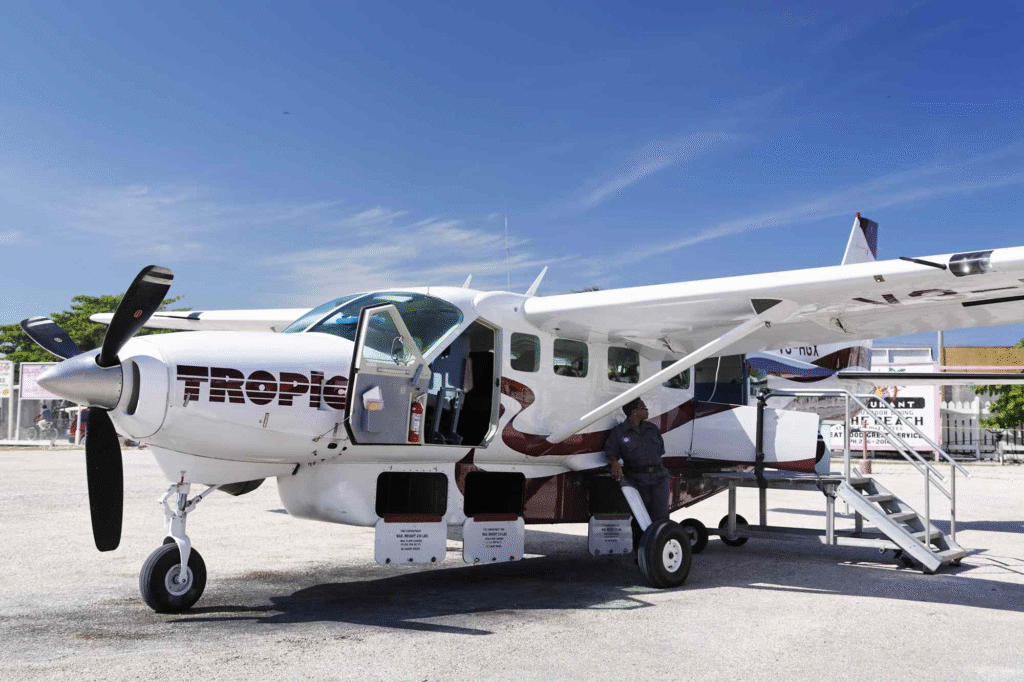
On April 17, 2025, a US Citizen Tried to Hijack Aircraft in Belize ended in his death when a passenger shot him mid-air. The small Cessna Caravan, carrying 14 passengers and two crew members, was en route from Corozal to San Pedro when the assailant, armed with a knife, sparked chaos shortly before takeoff.
The Chaos Aboard Tropic Air’s Flight
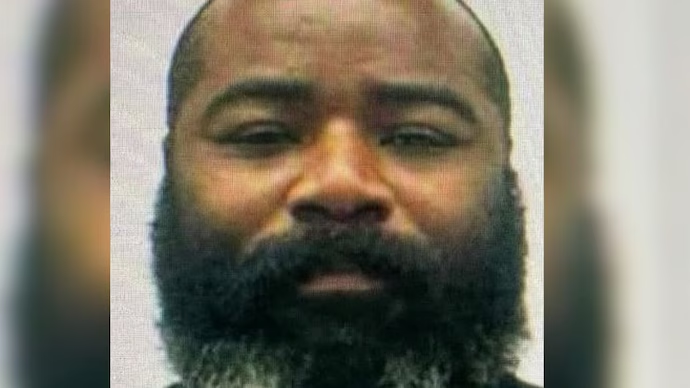
The incident began around 8:30 AM local time at Corozal Municipal Airport, a small airstrip near Belize’s border with Mexico. The hijacker, identified as 49-year-old Akinyela Sawa Taylor from California, boarded the Tropic Air Cessna Caravan and, shortly before takeoff, brandished a knife.
Reports indicate Taylor stabbed three people—the pilot, Howell Grange, and two Belizean passengers, Fitzgerald Brown and Jair Castañeda—causing panic among the 14 passengers, which included two Americans. Taylor demanded more fuel and ordered the pilot to fly him out of Belize, possibly to Mexico or the United States, though his exact destination remains unclear.
The plane took off but circled erratically over Belize’s airspace for nearly two hours, tailed by a police helicopter as fuel levels dwindled dangerously low. Belizean authorities declared a state of emergency at Philip S.W. Goldson International Airport in Ladyville, where the plane eventually landed around 10:12 AM.
During the ordeal, a passenger—later identified as Fitzgerald Brown, one of the stabbing victims—used a licensed firearm to shoot Taylor in the chest. Taylor was rushed to a hospital but was pronounced dead on arrival.
Read : Ryanair Flight Bound for Germany Was Grounded for Two Days in Rome as Stray Cat Hijacked It
Brown, critically injured with stab wounds to his back and lungs, was hailed as a hero by Belize Police Commissioner Chester Williams. The pilot and the other injured passenger were also hospitalized, with injuries described as serious but survivable.
The pilot’s composure under pressure was widely praised. Tropic Air CEO Maximillian Greif called his actions “nothing short of heroic,” noting that rigorous training enabled him to navigate the crisis and land safely despite his injuries. Passengers were evacuated swiftly upon landing, and medical teams treated the wounded. The incident, which could have resulted in a mass casualty event, was contained due to the quick thinking of the pilot and Brown’s decisive intervention.
Unanswered Questions About Taylor’s Motives and Access
Akinyela Sawa Taylor’s background and motives remain shrouded in mystery, raising critical questions about how the incident unfolded. Authorities describe Taylor as a former teacher and football coach at McCluer North High School in Florissant, Missouri, though he no longer worked there. Some reports claim he was a U.S. military veteran, but U.S. officials, including the U.S. Embassy in Belize, could not confirm this, casting doubt on the claim.
Taylor had reportedly entered Belize earlier that week as a tourist but was denied entry over the weekend, possibly at the northern border. How he managed to re-enter the country and board a domestic flight is under investigation by Belizean police and the Department of Civil Aviation.
More alarmingly, Taylor boarded the plane with a knife, exposing significant security gaps at Belize’s smaller airstrips. Commissioner Williams admitted that facilities like Corozal Municipal Airport lack robust passenger screening, a vulnerability that allowed Taylor to bring a weapon onboard.
This breach has prompted calls for a review of domestic aviation security protocols in Belize, a country heavily reliant on tourism and small-scale air travel. The U.S. Embassy is assisting with the investigation, but spokesperson Luke Martin stated that no details on Taylor’s motivations were available as of April 17, 2025.
Speculation about mental health issues or personal grievances has surfaced, but without concrete evidence, these remain unverified. The lack of clarity underscores the need for a thorough probe into Taylor’s actions and the systemic failures that enabled them.
The incident’s timing, just days after Taylor’s denied entry, suggests possible premeditation, but the absence of a clear motive complicates the narrative. Was Taylor fleeing legal issues, seeking to make a statement, or acting under other pressures?
The investigation must address these questions while scrutinizing how someone with a recent border rejection could access a flight undetected. The fact that Taylor’s identity was confirmed via a U.S. passport found on him adds another layer of intrigue, as it’s unclear how he navigated Belize’s immigration controls.
Implications Implications for Aviation Security and Public Response
The Belize hijacking is a stark reminder of the persistent threat to aviation security, even in an era when hijackings have become rare. According to the Aviation Safety Network, only a handful of hijackings have occurred globally since 2020, making this incident a significant outlier.
The event has reignited debates about arming passengers, balancing security with practicality, and addressing vulnerabilities in smaller airports. In Belize, where tourism drives the economy, ensuring safe air travel is paramount.
The grounding of flights at Philip S.W. Goldson International Airport during the crisis disrupted operations, with staff reporting unprecedented shock. A source at the airport told Newsweek, “We’ve never experienced anything like this,” reflecting the incident’s impact on the local aviation community.
Public response has been mixed, with admiration for the pilot and Fitzgerald Brown tempered by concerns over lax security. Belizean authorities have pledged to strengthen screening at regional airstrips, but implementing such measures in a resource-constrained environment poses challenges.
Internationally, the incident has drawn attention to the risks of knife attacks in confined spaces like aircraft, where even a single armed individual can cause chaos. U.S. State Department spokesperson Tammy Bruce called the event “horrifying” but expressed relief that it did not become a mass casualty event, crediting the passengers and crew.
However, the fact that a licensed firearm resolved the crisis has sparked debate about concealed carry policies in aviation contexts, with some praising Brown’s actions and others questioning the risks of firearms onboard.
The incident also highlights the role of real-time communication in crisis management. Police were in contact with a passenger via text messages during the flight, receiving updates that informed their response.
This underscores the importance of technology in modern aviation security, though it also raises questions about why such communication didn’t lead to earlier intervention. The police helicopter’s presence ensured a rapid response if the plane had crashed, but the reliance on a passenger’s firearm to neutralize the threat suggests gaps in onboard security measures.
As investigations continue, the focus will likely shift to preventing similar incidents. Belize’s tourism industry, which relies on its reputation as a safe destination, cannot afford repeated breaches. For the global aviation community, the event serves as a case study in crisis response, highlighting both heroism and vulnerabilities.
The bravery of the pilot, Howell Grange, and passenger Fitzgerald Brown averted disaster, but the fact that Taylor boarded with a knife and nearly succeeded in his demands exposes systemic issues that demand urgent attention.
The attempted hijacking of Tropic Air’s flight on April 17, 2025, was a rare but sobering reminder of the fragility of aviation security. While the quick actions of a wounded pilot and a courageous passenger prevented a tragedy, the incident raises critical questions about airport security, passenger screening, and the management of threats in small aircraft.
As Belize and the U.S. collaborate to uncover Taylor’s motives and the lapses that enabled his actions, the world watches, hoping for answers and stronger safeguards to ensure such an event remains an anomaly.