
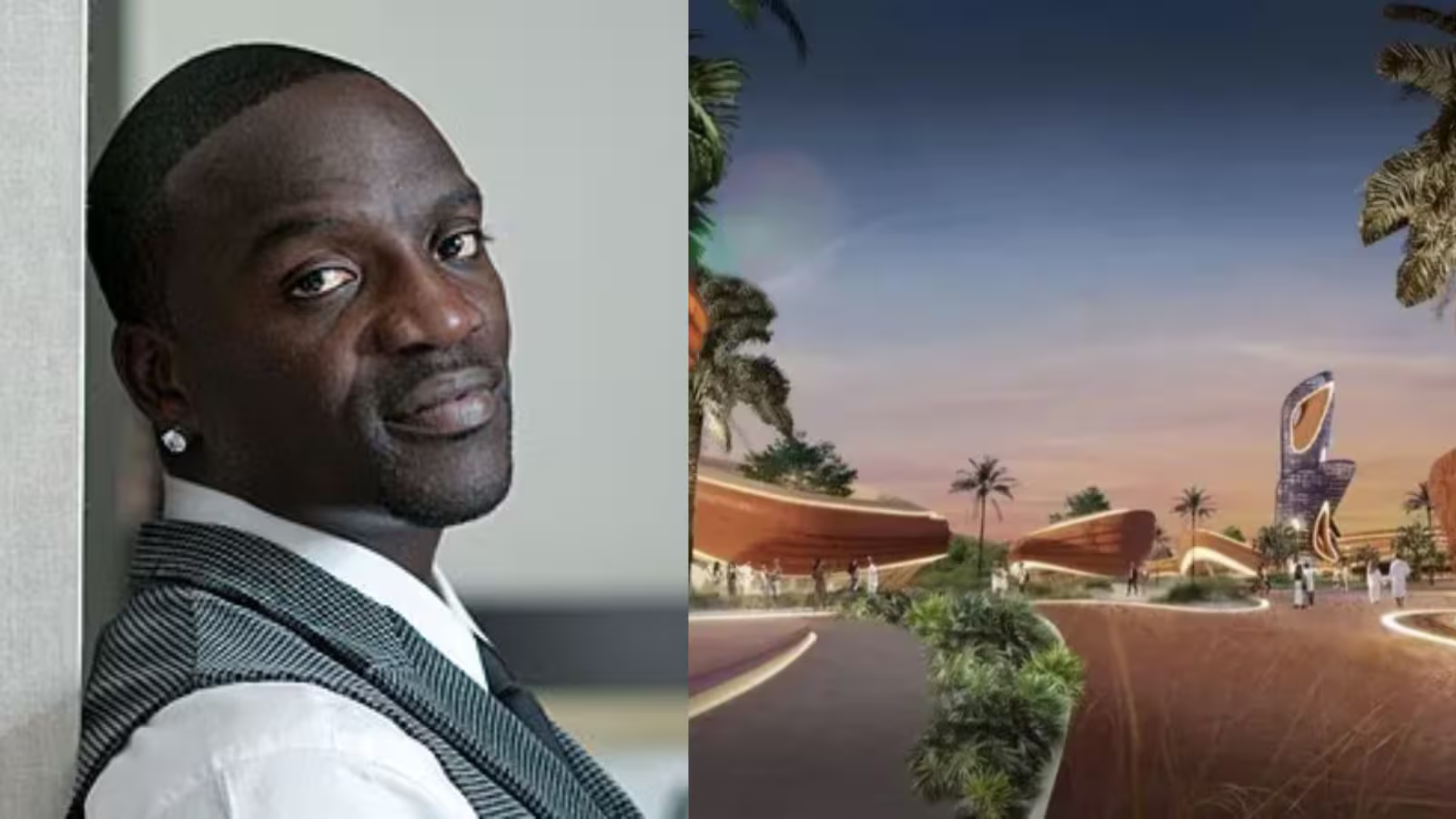
In 2018, internationally renowned singer Akon captured global headlines with a visionary project that aimed to blend innovation, sustainability, and Pan-African pride into a $6 billion smart city in his ancestral homeland, Senegal. Dubbed “Akon City,” this ambitious undertaking was to be a revolutionary urban utopia, modeled after the technologically advanced fictional nation of Wakanda from the Marvel Cinematic Universe.
Designed to run entirely on renewable energy and featuring its own cryptocurrency, Akoin, the city was promised to be a beacon for the African diaspora and a symbol of what the future of Africa could look like. However, five years later, the dream has dwindled into a dusty mirage.
Despite initial excitement, investment claims, and a groundbreaking ceremony attended by government officials and international media, Akon City never moved beyond a symbolic start. The 800-hectare plot in Mbodiene, around 100 kilometers from Dakar, remains largely empty except for one half-constructed reception building.
The infrastructure that was supposed to transform this coastal village into a futuristic metropolis — including roads, power lines, housing, and commercial centers — has failed to materialize. Locals, once filled with hope, now express frustration and skepticism as the grand promises of development fade into silence.
The Vision of Akon City: A Futuristic African Dream
At its announcement, Akon City was hailed as a game-changer for Africa. Akon, whose full name is Aliaune Thiam, envisioned a smart city that would revolutionize urban development on the continent. Inspired by his Senegalese heritage and his desire to give back to Africa, he promised a high-tech hub that would not only attract tourists and businesses but also empower local communities.
Architectural designs presented stunning renderings of curved glass skyscrapers, ultra-modern hospitals, green energy facilities, and smart schools. The city was to include a police station, a university, a shopping district, and a waste management center — all operating under the principles of sustainability and digital innovation. A key feature was Akoin, a cryptocurrency created specifically for the city to drive financial inclusion, reduce reliance on traditional banking systems, and help Africans take control of their economic futures.
"My biggest mistake was – I promoted it heavily before I got it started."
— @𝗼𝗻𝗲𝗷𝗼𝗯𝗹𝗲𝘀𝘀𝗯𝗼𝘆 (@OneJoblessBoy) May 2, 2025
Akon speaks about his planned $6 billion futuristic metropolis, Akon City. pic.twitter.com/Y4gJaQiYgN
The concept tapped into an era of renewed Pan-African consciousness and seemed to offer a powerful counter-narrative to stories of underdevelopment and dependency that often dominate discussions about Africa. For many, Akon City symbolized a bold reclamation of identity and technological empowerment. Even the Senegalese government, led by President Macky Sall, expressed support, seeing potential for job creation, tourism, and international investment.
But as time passed, the buzz around the project began to fade. Critics questioned whether the ambitious concept was ever truly feasible in a region still grappling with basic infrastructure needs. Doubts grew about funding transparency, realistic timelines, and the long-term viability of Akoin.
Empty Promises: The Reality on the Ground in Mbodiene
Today, the landscape in Mbodiene tells a starkly different story than what was once promised. According to the BBC, the site remains barren except for an incomplete reception building, symbolizing the extent of physical progress made since the project’s announcement. With no visible signs of construction such as roads, power grids, or housing, it’s hard to believe that this land was once earmarked for a futuristic megacity.
Local residents, who had been told they would benefit from new jobs, development, and global attention, now speak of disappointment. “We were promised jobs and development,” one resident shared with the BBC. “Instead, nothing has changed.” The lack of engagement with the community and unfulfilled promises have created a lingering sense of betrayal.
The situation mirrors the challenges faced by many mega-projects in Africa and around the world: the gap between visionary thinking and ground-level execution. While dreams can inspire, they must be grounded in practical implementation, sustainable financing, and inclusive governance.

Another critical component of the project, the Akoin cryptocurrency, has also struggled. Marketed as the backbone of Akon City’s economy, it has faced numerous setbacks, including volatility, unclear usage, and poor investor returns. Even Akon himself admitted in a candid BBC interview: “It wasn’t being managed properly — I take full responsibility for that.”
The cryptocurrency’s decline added another blow to investor confidence, especially as Akoin was meant to fund parts of the project and power its economic systems. Without clear application or return, many investors began pulling out, casting further shadows on Akon City’s viability.
From Sci-Fi Dream to Practical Development
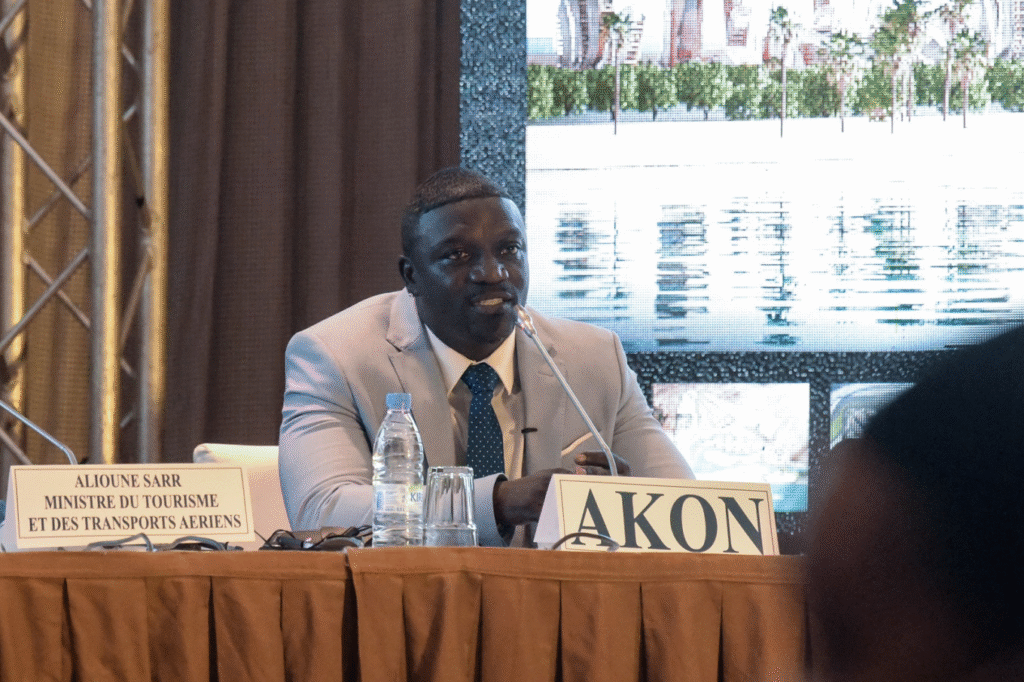
After years of setbacks and minimal progress, the project has reportedly been shelved in favor of a more practical development plan. According to recent reports from the BBC, the focus is shifting toward achievable goals that are better aligned with local needs and resources. While the original dream may have faded, there is still potential for meaningful development — just not on the scale or grandeur originally envisioned.
For Akon, this pivot represents both a moment of accountability and an opportunity for course correction. He remains a prominent advocate for African development, having already contributed to projects that brought solar energy to rural communities across the continent through his earlier initiative, Akon Lighting Africa. However, Akon City’s collapse serves as a cautionary tale of how celebrity influence and ambition must be balanced with deep understanding, meticulous planning, and real community engagement.
Some urban planning experts now see value in scaling back and refocusing on community-oriented goals — building schools, healthcare centers, or clean energy facilities that are achievable and beneficial. These may lack the glamour of sci-fi skyscrapers but could have a more lasting impact on the local population.
The experience also highlights the need for transparency in fundraising and investment. Many who supported the project financially are now asking for clarity on how funds were used, whether promises of returns were realistic, and what mechanisms were in place to protect stakeholders.
As megaprojects across the globe increasingly face scrutiny for environmental, financial, and social risks, the fate of Akon City adds to the growing list of cautionary tales. Vision alone is not enough. Implementation, trust, and tangible impact are what truly drive change.
In the end, Akon’s dream to build a futuristic African city may not have materialized, but the story is far from over. If lessons are learned and the shift toward realistic, community-based development continues, perhaps some of the original goals can still be achieved — not in the sky-high towers of Wakanda, but in the quiet, steady growth of homes, clinics, schools, and power lines that genuinely uplift communities.
Akon City’s tale is a reminder that the future of Africa lies not just in dreams, but in actions rooted in the lived realities of its people.