
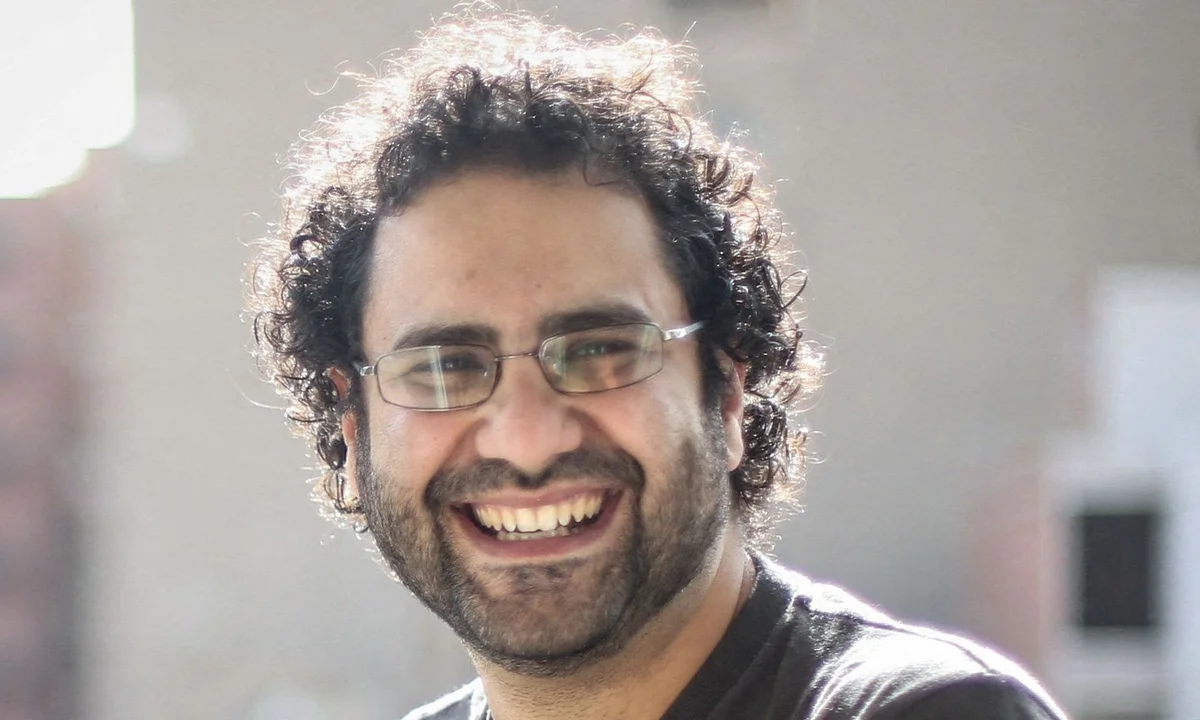
Alaa Abd El-Fattah’s arrival in the United Kingdom on Boxing Day marked the end of one of the most closely followed human rights cases involving Egypt in recent years. For more than a decade, he had been a symbol of resistance to authoritarianism in his home country, repeatedly jailed under successive Egyptian governments and adopted as a cause célèbre by international human rights organisations.
Yet within days of his return to Britain, the focus shifted dramatically. Old social media posts dating back to 2010 resurfaced, triggering political controversy and renewed debate over free speech, citizenship, and the limits of political forgiveness. As calls emerged from parts of the British political spectrum to strip him of his citizenship or deport him, the case has become a test of how the UK balances its stated commitment to human rights with domestic political pressures.
From Revolutionary Voice to International Prisoner of Conscience
Alaa Abd El-Fattah first rose to prominence during the wave of political upheaval that swept Egypt in the early 2010s. A software developer by training and a prolific blogger by inclination, he was already known within activist circles before the 2011 Arab Spring, using online platforms to criticise police brutality, corruption, and the entrenched power of the Egyptian security state. When mass protests erupted against Hosni Mubarak’s rule, Abd El-Fattah emerged as one of the most visible civilian voices demanding democratic reform and accountability.
Following Mubarak’s fall, hopes for lasting political change in Egypt were short-lived. The turbulent years that followed saw military rule, the brief presidency of Mohamed Morsi, and eventually the consolidation of power under Abdel Fattah el-Sisi. Throughout this period, Abd El-Fattah remained an outspoken critic of repression, repeatedly clashing with authorities. He was arrested multiple times, charged under a range of laws related to protests, spreading false news, and national security, and spent long periods in prison under harsh conditions.
International organisations, including Amnesty International and Human Rights Watch, designated him a prisoner of conscience, arguing that his detention violated international law and amounted to punishment for peaceful political expression. United Nations investigators later concluded that his imprisonment breached Egypt’s international obligations, lending further weight to claims that he was unfairly detained.
During his incarceration, Alaa Abd El-Fattah became a rallying point for campaigners in the UK and elsewhere. His family, particularly his mother, who was born in Britain, lobbied relentlessly for his release. British politicians across party lines raised his case in Parliament, and successive governments applied diplomatic pressure on Cairo. In December 2021, he was granted British citizenship under the Conservative government led by Boris Johnson, a move that strengthened the UK’s ability to argue for consular access and intervention.
Alaa Abd El-Fattah should NEVER have been given a passport, let alone welcomed “delightfully” by Keir Starmer to Britain.
— Alex Armstrong (@Alexarmstrong) December 28, 2025
He called us ‘dogs and monkeys’ and said WORSE tweets than some people are in prison for.
DEPORT and strip his citizenship. pic.twitter.com/m8i0P3pecQ
Despite this, his detention continued until September this year, when he was pardoned by President el-Sisi and released. His departure from Egypt and arrival in the UK were widely framed as a victory for sustained international advocacy and a reaffirmation of Britain’s commitment to protecting citizens unjustly detained abroad.
Citizenship, Controversy, and the Politics of Old Tweets
The narrative surrounding Abd El-Fattah shifted abruptly after his arrival in the UK, when historic tweets dating back to 2010 resurfaced online. The posts appeared to show him expressing support for violence against Zionists and hostility towards police. Though written more than a decade ago, during a period of intense regional conflict and political unrest, the language in the tweets prompted condemnation from across the British political establishment.
Conservative and Reform UK figures were quick to argue that the content of the posts rendered him unfit for British citizenship. Some went further, calling for his citizenship to be stripped and for him to be deported. The controversy placed Downing Street under immediate pressure to justify its handling of the case and to clarify whether the Government would consider revoking his nationality.
Read : Activists Dressed as Santas and Elves Steal $3,000 Worth of Groceries from Metro Store
The Prime Minister’s official spokesman defended the decision to welcome Abd El-Fattah to the UK, stating that the Government would do so for any British citizen unfairly detained abroad. At the same time, No 10 made clear that it considered the historic tweets to be abhorrent and unacceptable. Sir Keir Starmer was reportedly unaware of the posts until after Abd El-Fattah had entered the country, a point emphasised in briefings to underline that there had been no attempt to overlook or excuse them.
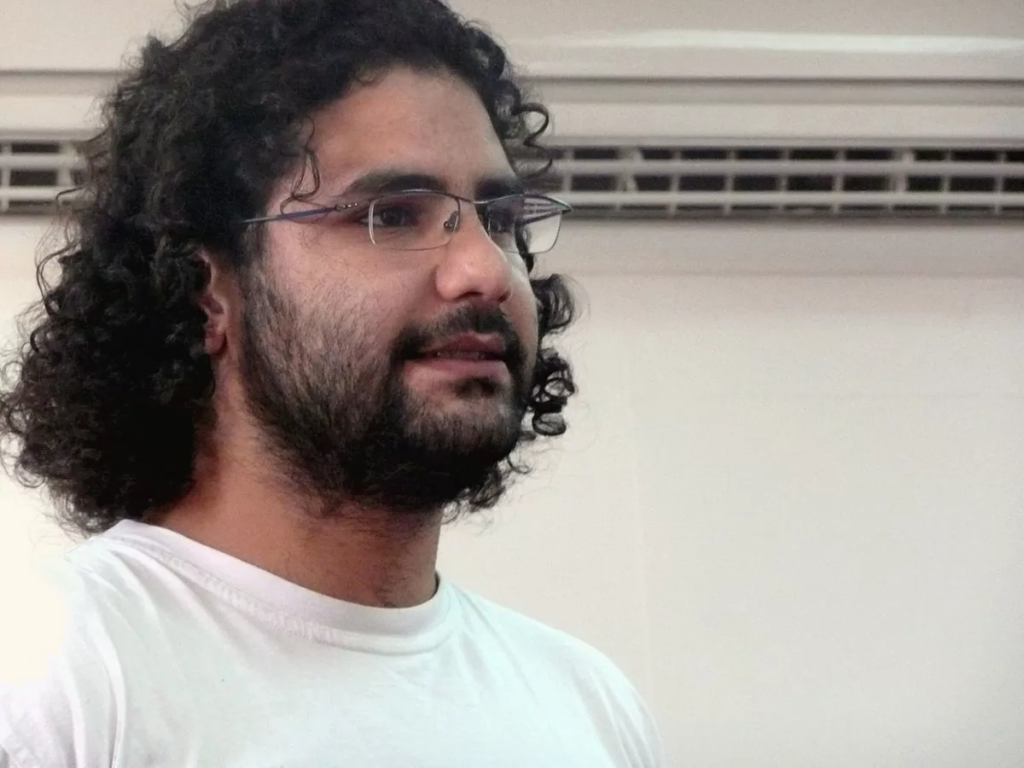
Legally, the scope for stripping Alaa Abd El-Fattah of his citizenship appears limited. Government officials have indicated that established case law restricts deprivation of citizenship to cases involving fraud in the acquisition process or serious threats to national security, such as terrorism. On the basis of current information, there is understood to be no legal pathway to deport him, despite the political pressure.
Alaa Abd El-Fattah himself issued a public apology, describing the tweets as expressions of anger from his youth and acknowledging the pain they could cause. He said he understood how shocking and hurtful the comments were and expressed particular regret for posts written during online confrontations without regard for how they would be received by others. Downing Street characterised the apology as fairly fulsome, suggesting that the Government considered the matter addressed from its perspective.
Opposition figures have not been persuaded. Conservative shadow home secretary Chris Philp dismissed the apology as insincere and renewed calls for the Home Secretary to act. Reform UK criticised the Conservatives for failing to scrutinise Abd El-Fattah’s social media history more thoroughly when they supported his case, pointing to the involvement of senior figures in earlier diplomatic efforts on his behalf. The episode has thus become a proxy battleground for broader arguments about immigration, citizenship standards, and political accountability.
Human Rights, Redemption, and the Limits of Political Forgiveness
Beyond the immediate political dispute, Abd El-Fattah’s case raises deeper questions about how democratic societies assess past speech and personal evolution. Supporters argue that focusing narrowly on decade-old tweets risks ignoring the broader arc of his life and work. They point to his transformation from an angry young activist into an internationally recognised advocate for human rights, dignity, and freedom of expression.
Labour MP John McDonnell, who raised Abd El-Fattah’s plight in Parliament multiple times during his imprisonment, framed the controversy in these terms. He described the activist as having been on a political journey, noting that the offensive tweets were exposed years ago and did not define the person he later became. For McDonnell and others, Abd El-Fattah’s writings, activism, and personal sacrifices demonstrate a commitment to universal rights that outweighs his past mistakes.
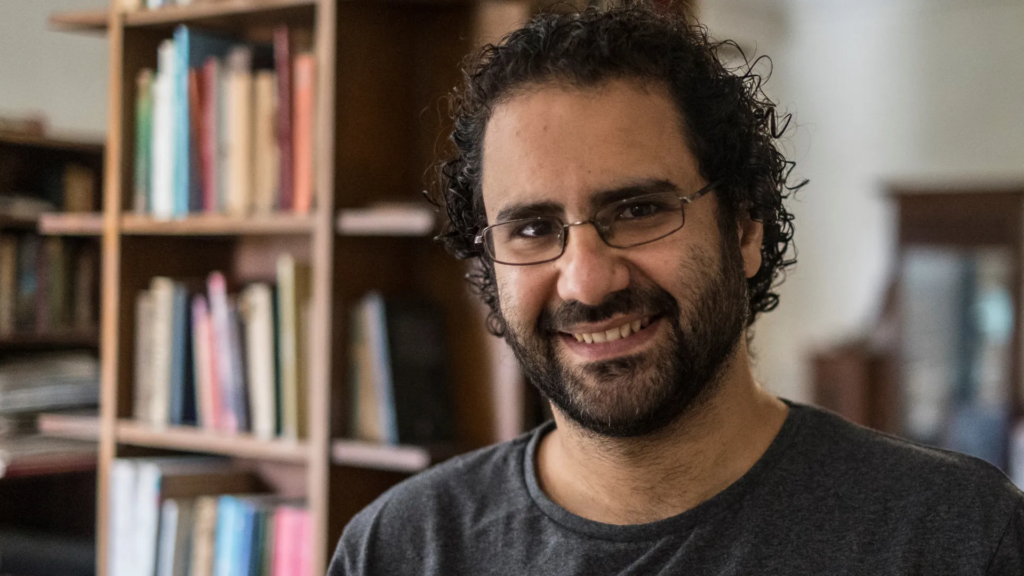
This argument resonates with a long-standing human rights principle: that individuals are capable of change and should not be permanently defined by earlier expressions made in radically different contexts. Abd El-Fattah’s supporters also note that his tweets were written at a time marked by wars in Iraq, Lebanon, and Gaza, and by widespread police violence in Egypt, circumstances that fuelled intense anger among many young activists in the region.
Critics counter that public figures must be held accountable for all their statements, regardless of when they were made, particularly when those statements appear to endorse violence. They argue that granting citizenship entails an implicit endorsement of values incompatible with such rhetoric, and that apologies issued after controversy breaks may not fully address the harm caused.
The British Government has attempted to navigate a middle path, condemning the tweets while maintaining its position that Abd El-Fattah’s citizenship and return to the UK are matters of principle rather than endorsement. The Foreign Office is reportedly reviewing aspects of how the case was handled, suggesting an awareness of the political sensitivity involved.
As Abd El-Fattah begins a new chapter of his life in Britain, the controversy surrounding his arrival is unlikely to fade quickly. His case sits at the intersection of human rights advocacy, national politics, and the evolving norms of accountability in the digital age. Whether he ultimately comes to be seen primarily as a symbol of unjust imprisonment or as a lightning rod for debates over free speech and citizenship will depend not only on political decisions, but on how society chooses to weigh past words against present actions.
Good site! I really love how it is easy on my eyes and the data are well written. I am wondering how I might be notified when a new post has been made. I’ve subscribed to your RSS which must do the trick! Have a great day!
Does your site have a contact page? I’m having problems locating it but, I’d like
to shoot you an e-mail. I’ve got some creative ideas for your blog you might be
interested in hearing. Either way, great site and I look forward to seeing it grow over time.
I’ve read several just right stuff here. Definitely price bookmarking for
revisiting. I wonder how a lot effort you put to create
this sort of wonderful informative web site.
Would love to incessantly get updated outstanding blog! .