
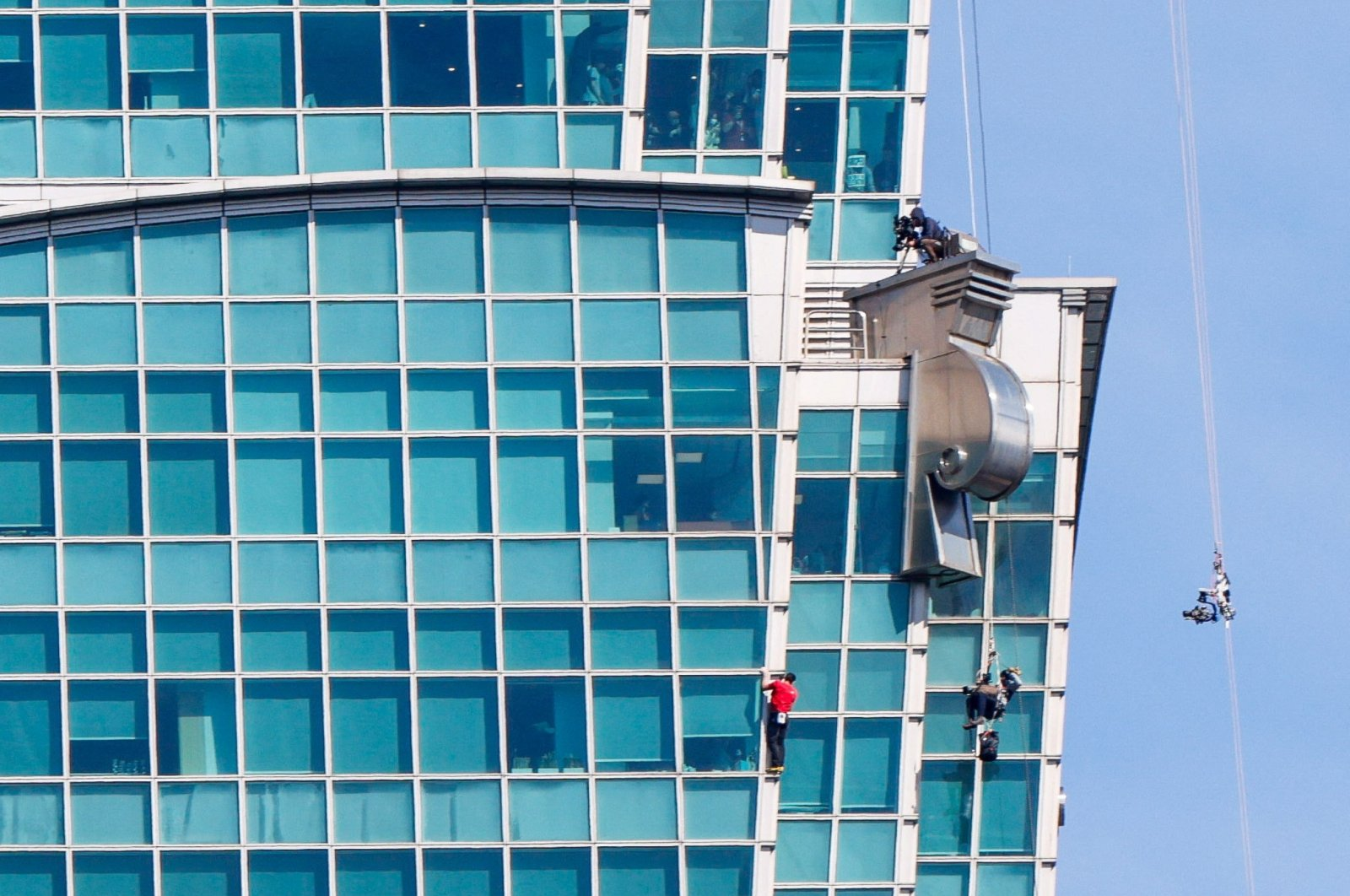
Alex Honnold, one of the world’s most renowned and controversial climbers, has once again pushed the boundaries of human endurance and mental discipline by scaling Taipei 101, a 101-story skyscraper in Taiwan, without ropes, harnesses, or any form of safety equipment. Rising 508 meters above Taipei’s skyline, the steel-and-glass tower is among the tallest buildings ever climbed without protection.
Honnold’s ascent, completed in one hour and 31 minutes, was not only a physical feat but also a carefully calculated act that combined years of experience, meticulous preparation, and unwavering focus. Broadcast live by Netflix, the climb captured global attention and reignited debate about the risks and rewards of free solo climbing in the modern era.
A Landmark Climb on One of the World’s Tallest Buildings
Taipei 101 is an architectural icon, designed to resemble a stalk of bamboo and engineered to withstand earthquakes and typhoons. Unlike natural rock faces, the skyscraper presents a complex vertical environment made of smooth glass panels, steel beams, concrete surfaces, and structural ledges not intended for climbing. Scaling such a building without protective gear introduced a unique set of challenges that differed sharply from Honnold’s previous ascents of natural rock formations.
The climb had originally been scheduled for Saturday but was postponed due to wet weather, which would have made the glass and metal surfaces dangerously slick. Conditions improved by Sunday, allowing Alex Honnold to begin his ascent in Taiwan’s capital under clearer skies. Still, wind and heat posed ongoing risks throughout the climb, factors that even slight miscalculations could have turned catastrophic at extreme heights.
Alex Honnold’s progress up the tower was streamed live on Netflix, though executives confirmed a short broadcast delay was in place in case of an accident. Netflix executive Jeff Gaspin acknowledged the gravity of the situation before the climb, stating that no one expected or wanted to witness a worst-case scenario. The precaution underscored the inherent danger of free solo climbing, especially on a skyscraper rising more than half a kilometer above ground.
Despite the risks, Honnold moved steadily upward, navigating ledges, window frames, and architectural seams with controlled precision. As he neared the upper floors, spectators inside the building could be seen cheering and waving through the glass, particularly around the 89th floor, where fans came face to face with the climber separated only by windows. The moment, later shared on social media, highlighted both the surreal nature of the climb and Honnold’s ability to remain focused amid distractions.
My free solo ascent of Taipei 101 in Taiwan is coming up soon – and you can watch it LIVE on @netflix. January 23 @ 8 PM ET / 5 PM PT. Exciting!! pic.twitter.com/uarDl92hAR
— Alex Honnold (@AlexHonnold) January 15, 2026
When he finally reached the summit, Honnold was greeted by his wife, who had watched anxiously from above, concerned about the wind and heat conditions during the ascent. His celebration was understated. Asked about the achievement, Honnold summed up the experience with a single word: “Sick.”
Breaking Records and Rewriting Urban Climbing History
Honnold’s time of one hour and 31 minutes not only marked a successful free solo ascent but also shattered the previous record for climbing Taipei 101. The only other person known to have scaled the tower was French climber Alain Robert, often referred to as “Spiderman,” who completed the climb in four hours using ropes and a harness. Robert’s ascent took place when Taipei 101 was the tallest building in the world, and even with safety equipment, it was considered a daring and highly dangerous act.
By completing the climb without any protective gear and in less than half the time, Honnold significantly raised the benchmark for urban climbing. His ascent demonstrated how advancements in training, route planning, and mental conditioning have transformed what is possible in extreme climbing disciplines. Yet it also highlighted the fine margin between success and disaster that defines free solo climbing.
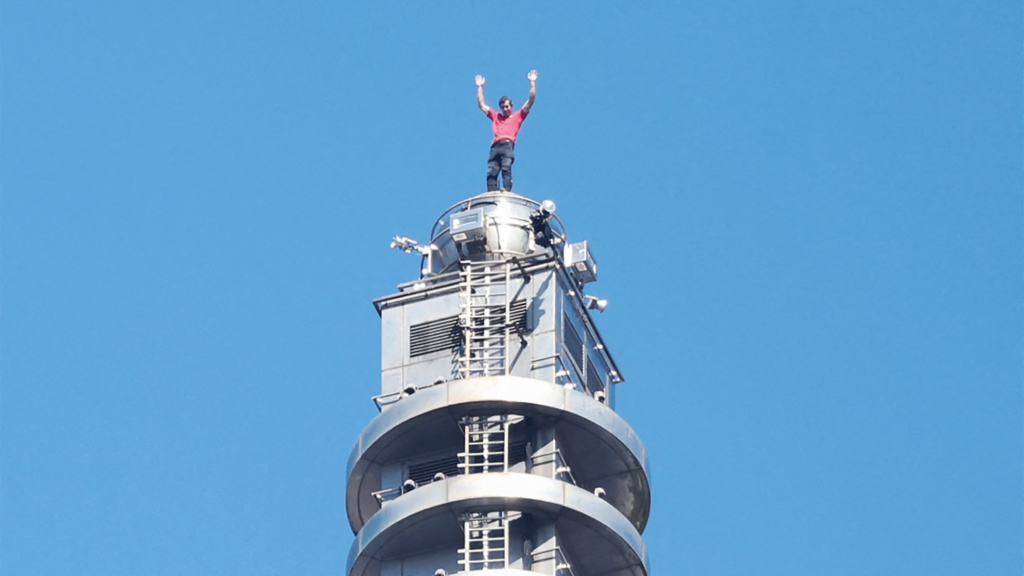
Taiwan’s Vice-President Hsiao Bi-khim publicly congratulated Honnold, expressing both admiration and apprehension. In a post on X, she admitted that watching the climb made her feel physically uneasy, reflecting a sentiment shared by many viewers around the world. The reaction underscored the dual nature of such feats: awe-inspiring on one hand, deeply unsettling on the other.
Urban climbs like this differ fundamentally from traditional rock climbing. Natural rock faces offer texture, cracks, and variations shaped by geology, while skyscrapers are engineered for human use, not ascent. Smooth surfaces, repetitive structures, and exposure to urban elements such as wind tunnels between buildings create hazards that require specialized strategies. Honnold’s successful navigation of these factors further cemented his reputation as a climber capable of adapting his skills to radically different environments.
A Career Defined by Calculated Risk and Mental Precision
Alex Honnold rose to international fame as the first person to climb El Capitan in Yosemite National Park without ropes or safety gear. The 915-meter granite monolith is one of the most formidable rock faces in the world, and Honnold’s free solo ascent became the subject of the Academy Award–winning documentary Free Solo. That climb, like the Taipei 101 ascent, was the result of years of preparation, route memorization, and psychological conditioning.
Read : World’s Tallest Mount Everest is Still Getting Taller
Throughout his career, Honnold has emphasized that free solo climbing is not about recklessness but about eliminating uncertainty. He is known for practicing routes repeatedly with ropes, analyzing every handhold and foothold, and waiting patiently for ideal conditions before committing to a solo attempt. This methodical approach has allowed him to perform climbs that many consider impossible while maintaining a remarkably low margin for error.
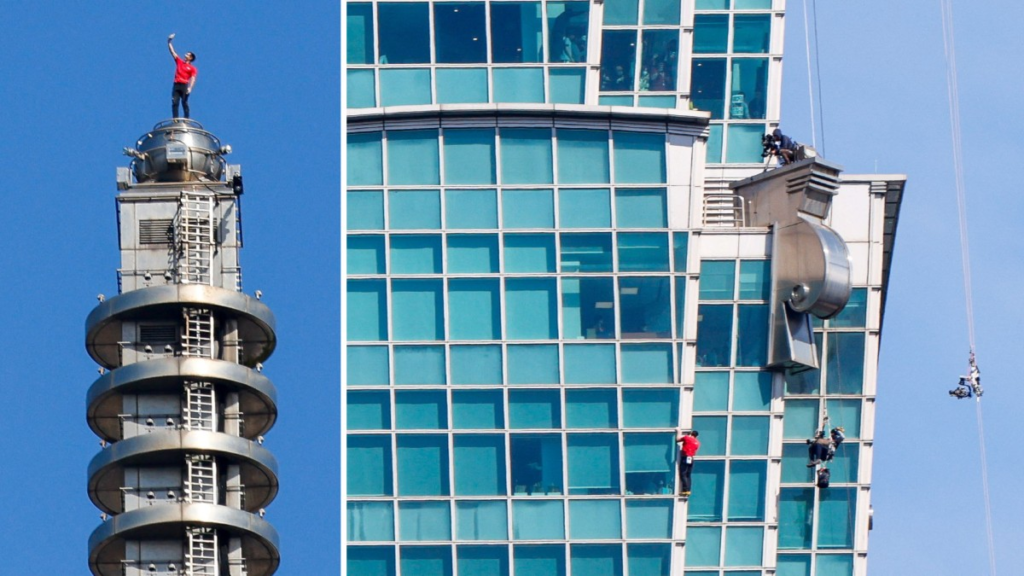
The Taipei 101 climb followed the same philosophy. Although it appeared spontaneous and daring to viewers, it was preceded by extensive planning and assessment. Every movement was deliberate, every pause calculated. The presence of a live audience and global broadcast added pressure, yet Honnold’s demeanor remained calm and controlled throughout the ascent.
His achievements have sparked ongoing debate within the climbing community and beyond. Supporters argue that Honnold represents the pinnacle of human potential, demonstrating what is possible when physical ability, mental discipline, and preparation align. Critics, however, question the ethical implications of promoting activities where a single mistake can result in death, particularly when such feats are broadcast to millions.
Despite the controversy, Honnold’s influence on climbing culture is undeniable. He has expanded public awareness of the sport, inspired countless climbers to pursue their own challenges, and reshaped perceptions of risk and achievement. His climbs are often framed not as acts of bravado but as expressions of mastery, where fear is acknowledged and managed rather than ignored.
The free solo ascent of Taipei 101 stands as one of the most remarkable moments in Honnold’s career. It bridged the worlds of natural rock climbing and urban architecture, combining athleticism, mental resilience, and modern media in a single event. As skyscrapers continue to rise and the limits of human performance are tested in new ways, Honnold’s climb will remain a defining example of what can be achieved through precision, preparation, and an unwavering commitment to pushing the boundaries of possibility.