
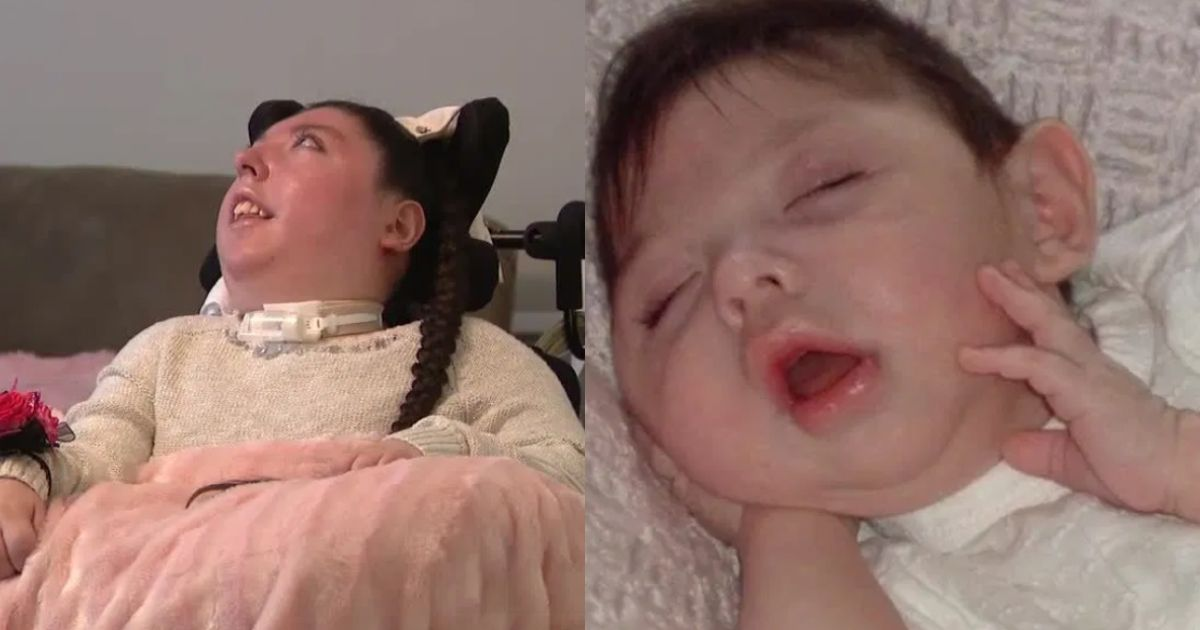
Alex Simpson’s 20th birthday has drawn attention not only for its emotional significance but also for the extraordinary circumstances surrounding her life. Born in Omaha, Nebraska, with a condition called hydranencephaly, Alex was not expected to survive beyond early childhood. Her parents, Shawn and Lorena Simpson, were told shortly after her birth that she had no functional brain tissue except for a small portion of her cerebellum about the size of a fingertip.
Medical professionals informed the family that their daughter’s lifespan would likely be measured in months, perhaps a few years at most. Yet two decades later, Alex Simpson continues to live at home with her family, demonstrating a reality that far exceeds the grim predictions once delivered to her parents. Her story has become one of resilience, attentive caregiving, and a deeper conversation about the unknown capacities of human development and perception.
Hydranencephaly, the condition Alex was diagnosed with, is uncommon and severely life-limiting. It occurs in approximately one in 5,000 to one in 10,000 pregnancies and is typically fatal in infancy. Infants diagnosed with the condition lack major portions of the brain, including the cerebral hemispheres responsible for sensory interpretation, motor function, speech, learning, memory, and conscious thought.
Despite this, Alex’s family describes her as perceptive, present, and deeply connected to those who care for her. They say she cannot see or hear in the conventional sense, but she responds to voices, touch, and emotional environments. For her family, these subtle reactions form the heart of their relationship with her, shaping the way they understand communication, awareness, and love.
From the beginning, her parents were faced with difficult decisions. When first learning about her condition, they confronted not only the fear of losing their child but also the uncertainty of how to care for someone who did not fit into any standard medical framework. Shawn explains that faith played an essential role in navigating those early days, helping them decide to bring Alex home, care for her themselves, and allow her life to unfold naturally instead of focusing on limits or expectations.
Read : How Food Blogger Natasha Diddee Survived Without a Stomach for 12 Years
Lorena describes their daughter as a fighter, a child who continually demonstrates persistence even without the ability to speak or move in conventional ways. For the Simpsons, Alex Simpson’s continued life is more than a medical anomaly; it is the culmination of years of patience, caregiving, and emotional resilience.
Understanding Hydranencephaly and Its Challenges
Hydranencephaly is a rare neurological condition that develops during fetal formation, usually when the cerebral cortex fails to develop properly or is destroyed due to restricted blood flow early in pregnancy. In most cases, the brain’s outer tissue, which enables memory, language, decision-making, and voluntary motion, is replaced by cerebrospinal fluid. Because of this, infants born with the condition are often considered medically incompatible with long-term survival.
Many do not live beyond infancy due to complications such as seizures, respiratory difficulties, and failure to thrive. For those who do survive longer, mobility, communication, and cognitive functions are severely limited. Alex Simpson’s case stands as one of the more remarkable exceptions. Her survival suggests that the human brain and nervous system may have adaptive capacities that are not yet fully understood.
Read : Christian Musician Jon Paul Sheptock, Born Without Arms, Arrested for Child Pornography Possession
Doctors describe the cerebellum, the part of the brain Alex has retained, as primarily responsible for regulating movement and coordination rather than conscious thought. Yet her parents and brother describe behaviors that suggest awareness. They speak of her ability to respond to touch, turn her eyes when familiar voices enter the room, and react differently depending on the emotions of the people around her.
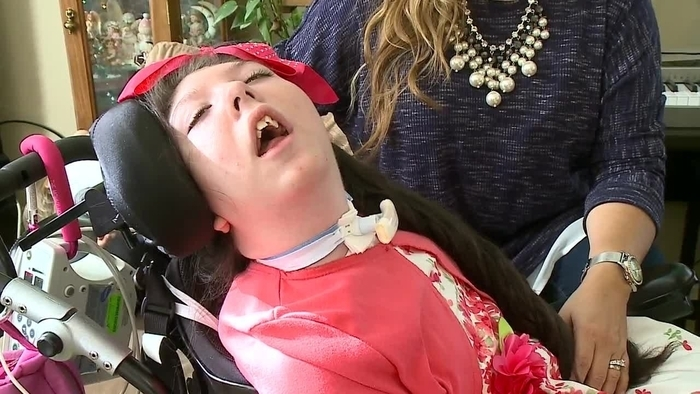
While medical professionals often caution against attributing meaning to reflexive neurological responses, for the family, these patterns are deeply meaningful. Daily care for Alex requires vigilance and patience. She cannot move independently or communicate through speech. Much of her life is structured around comfort, physical support, and medical monitoring.
She requires specialized feeding, frequent repositioning to prevent pressure complications, and close observation to ensure her breathing and posture remain stable. Yet her parents describe caregiving not as a burden but as a form of relationship that centers presence, attention, and quiet connection. Their perspective challenges common assumptions about disability, dependence, and what it means to live a meaningful life.
Family Bonds and Emotional Connection
Alex Simpson’s family emphasizes that her continued life has been supported through emotional connection as much as medical care. Shawn and Lorena describe the power of touch, closeness, and familiar voices in maintaining her sense of comfort. They say she responds to them not through words or gestures but through eye movements, changes in breathing, and calmness in their presence. These interactions form the foundation of their understanding of her emotional world.
Her younger brother, SJ, has grown up with Alex as a central part of his identity. Now 14, he describes her not as someone defined by her disabilities but as his sister, someone he feels proud to speak about. When introducing his family to others, he says he always begins with Alex Simpson, as though she is the core around which the rest of the family is organized. He believes she can sense stress or tension in the environment, reacting when people around her are upset even when no words are spoken. This perception, even if not neurologically understood, shapes the way the family relates to her and to one another.
The emotional environment of the household has, over time, shaped their approach to daily life. Instead of planning far ahead, they focus on the present, responding to Alex’s needs moment by moment. This has created a rhythm of caregiving that emphasizes closeness and continuous awareness of subtle changes in her condition. Lorena explains that they have learned to interpret small gestures, eye positions, or physical stillness as expressions of comfort or distress. These patterns form a kind of language, quiet and unique to their family.
The family also acknowledges the support of their broader community, including friends, medical professionals, and extended family members who have accompanied them throughout the years. Celebrating Alex’s 20th birthday was not simply a recognition of time passed, but a reflection of collective emotional endurance. For the Simpsons, the milestone stands not as evidence of victory but as affirmation of commitment: a continuing relationship with their daughter in whatever form her life takes.
Rethinking Life Expectancy and Human Potential
Alex Simpson’s survival raises questions that extend beyond her individual story. Her case suggests that medical prognoses, particularly for rare conditions, may not fully account for the variability of human development or the impact of caregiving and emotional connection. In many cases of hydranencephaly, families face pressure to limit intervention based on expected outcomes. The Simpsons’ decision to continue active caregiving reflects an understanding of quality of life defined not by cognitive capacity or independence but by relational presence.
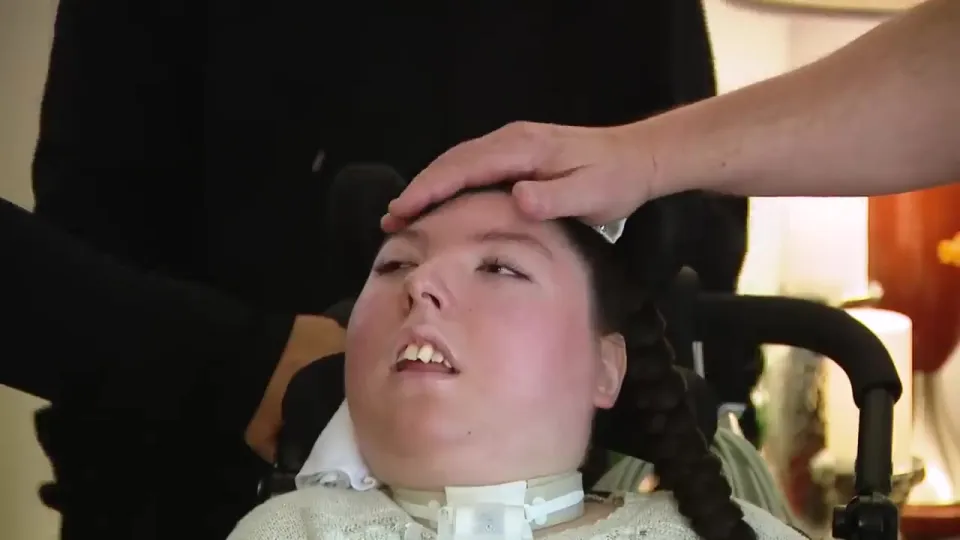
Her story also challenges broader cultural assumptions about disability. Much of modern life is structured around productivity, communication, and visible independence. Individuals who cannot participate in these ways are often understood as lacking agency or awareness.
Alex Simpson’s family rejects such interpretations, arguing instead that her presence calls for a different understanding of personhood. In their view, meaningful human life does not require the abilities that society typically prioritizes. Instead, they focus on the capacity to be cared for and to respond to care in return, even if those responses are subtle or unconventional.
The medical community continues to study rare cases like Alex’s to better understand the development of the brain and nervous system. While her condition remains incurable and irreversible, her long-term survival contributes to research on neurological plasticity and the potential role of the brainstem and cerebellum in supporting life-sustaining functions. These questions remain largely unresolved, yet they underscore how much remains unknown about the human body and the complexities of consciousness.
Alex Simpson’s 20th birthday marks a milestone few expected to see. Her life has unfolded in ways that defy prediction and challenge assumptions. For her family, the years have been defined not by limitations but by presence, care, and enduring connection.