
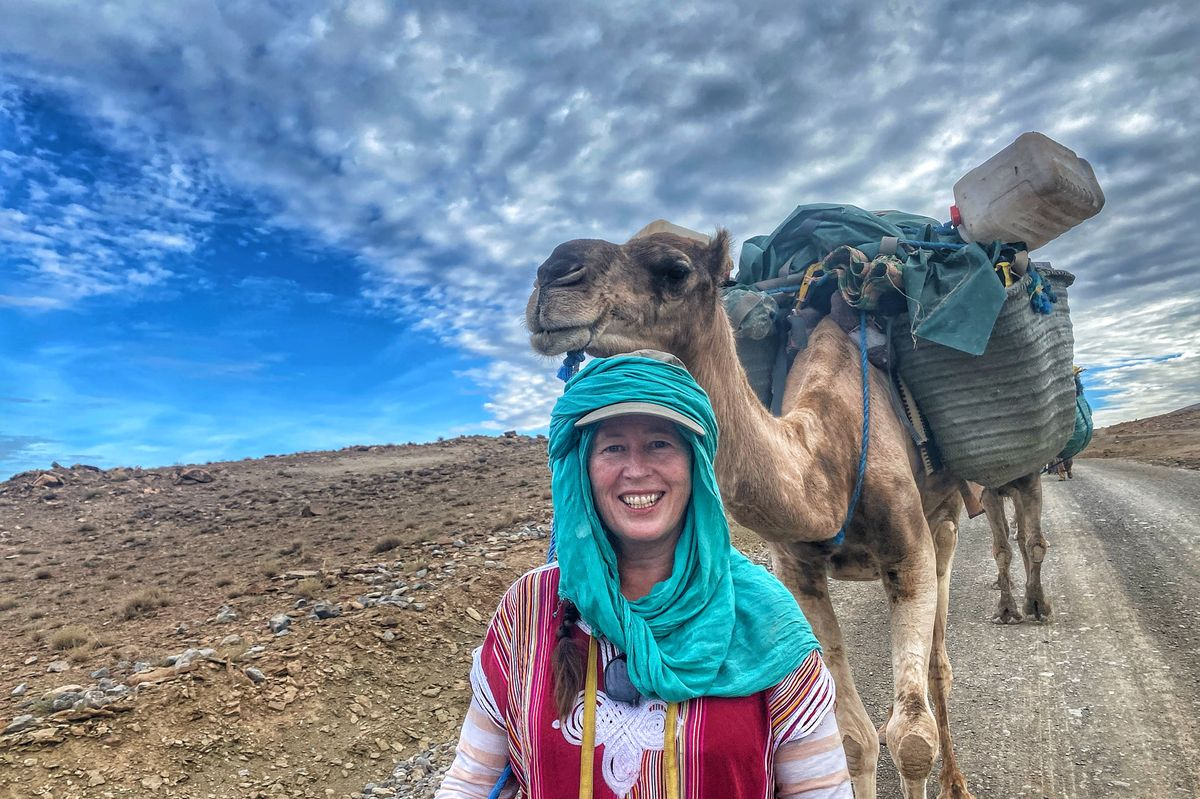
Alice Morrison’s achievement in walking the full length of Saudi Arabia from north to south entirely on foot stands as one of the most remarkable modern expeditions undertaken in the Middle East. Concluding at 10.30am Saudi time on 15 December in Najran, near the Saudi-Yemen border, the journey marked the culmination of 2,195 kilometres covered over 112 days. At 62 years old, the Scottish writer and television presenter from Edinburgh completed a feat that combined physical endurance, logistical complexity, and cultural engagement on an unprecedented scale.
Accompanied by her two camels, Juicy and Lulu, and supported by a small specialist team, Morrison’s expedition was carefully planned and executed across two winter seasons to account for extreme heat and the observance of Ramadan. Beyond the raw numbers and records, the walk offered a detailed, ground-level encounter with Saudi Arabia’s landscapes, people, and evolving social fabric, challenging long-held assumptions and opening new perspectives on the country.
Who Is Alice Morrison and How Did Her Career Shape This Expedition
Alice Morrison is an experienced long-distance walker, travel writer, and television presenter whose career has been defined by endurance travel and deep cultural exploration. Before embarking on her Saudi Arabia expedition, she had already established a reputation for undertaking demanding journeys across challenging terrain. She is the author of four travel books, each rooted in extended expeditions that combine physical travel with historical and social inquiry. Her work often emphasizes slow travel as a method of understanding place, allowing landscapes and communities to be encountered without the mediation of vehicles or rigid itineraries.
Morrison’s background in television and writing has shaped her approach to exploration. Rather than framing expeditions purely as athletic challenges, she consistently positions them as narrative journeys that document human interaction, history, and environment. This perspective informed her decision to walk every step of Saudi Arabia from north to south, resisting shortcuts or mechanized support that might dilute the integrity of the route. Walking, in her view, is both a method of movement and a way of thinking, forcing attention to detail, patience, and sustained engagement with the terrain.
Her age is also a notable aspect of the expedition. At 62, Morrison’s journey challenges conventional assumptions about endurance exploration being the domain of younger adventurers. Her achievement underscores the role of experience, preparation, and mental resilience in long-distance expeditions. Rather than presenting age as an obstacle, Morrison has framed it as a source of strength, providing perspective, discipline, and emotional endurance developed over decades of travel.
'This morning, I became the first documented person to walk from north to south across Saudi Arabia – every step.' |✍️ Writes Alice Morrison
— Telegraph Travel (@TelegraphTravel) December 15, 2025
🔗 Read all about Alices journey across Saudi Arabia at the link below https://t.co/gHJjhG6fUx#SaudiArabia #Challenge pic.twitter.com/fMV6MBytct
The decision to split the expedition across two winter seasons reflects both practical planning and regional knowledge. Saudi Arabia’s climate, with summer temperatures that can exceed safe limits for prolonged walking, necessitated a seasonal approach. Ramadan further shaped the timing, as the rhythm of daily life changes significantly during the holy month. By beginning on 1 January and structuring the journey around environmental and cultural realities, Morrison demonstrated a respect for local conditions that aligns with her broader travel philosophy.
The Journey Across Saudi Arabia: Distance, Challenges, and Daily Realities
The route Alice Morrison followed took her through six Saudi provinces: Tabuk, Medina, Mecca, Al Baha, Aseer, and Najran. Each region presented distinct geographical and climatic conditions, ranging from arid deserts and rocky plains to mountainous terrain and greener highlands in the south. Covering an average distance equivalent to a half-marathon each day, Morrison maintained a steady pace that balanced endurance with sustainability over the course of 112 walking days.
Heat was one of the most persistent challenges. Temperatures regularly reached 39°C and above, forcing early starts to avoid the most dangerous hours of the day. These conditions required careful hydration planning, route management, and constant monitoring of physical health. The cumulative effect of heat on the body over weeks of walking added a layer of difficulty beyond the raw distance covered.
Read : Unimaginable! 18 Members of Hyderabad Family Killed in Saudi Arabia Bus Crash
Physical injuries were an unavoidable part of the expedition. During the first section, Morrison suffered severe blisters that bled into her shoes, a problem that threatened her ability to continue. The issue was not limited to her alone. Lulu, one of the camels accompanying the expedition, also developed blisters, highlighting the strain placed on all participants, human and animal alike. Morrison’s response, fashioning a protective shoe for the camel, illustrates the improvisation often required in long-distance expeditions, where veterinary care and equipment are not always readily available.
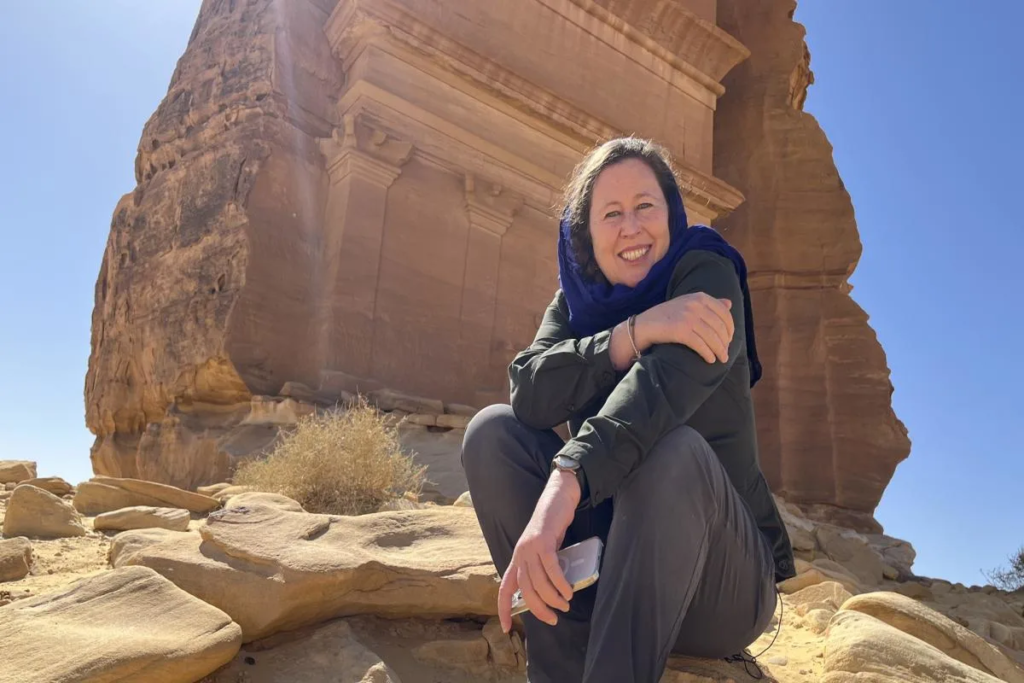
The camels, Juicy and Lulu, played both practical and symbolic roles in the journey. They carried supplies and provided companionship, but they also connected the expedition to regional traditions of desert travel. Their presence attracted attention and curiosity from locals, often serving as an icebreaker that facilitated conversation and hospitality. Morrison has noted their ability to inject humour into difficult days, particularly as they searched persistently for food along the route.
Mentally, the journey demanded sustained focus and determination. Morrison has described moments of exhaustion, pain, and frustration when the goal itself became the primary motivator. Walking every step from north to south left little room for compromise, reinforcing the psychological discipline required to continue when motivation waned. This mental endurance, she has suggested, was as significant as the physical strength needed to complete the journey.
Cultural Encounters, Personal Reflections, and the Legacy of the Expedition
One of the defining aspects of Morrison’s expedition was the reception she received from people across Saudi Arabia. She has consistently emphasized the hospitality of locals as a critical factor in sustaining the journey. Offers of food, water, shelter, and conversation provided not only practical support but also emotional encouragement during difficult phases of the walk. These interactions reinforced her belief in walking as a means of human connection, allowing encounters to unfold organically rather than through formal arrangements.
Read : Truth Behind Viral Video of Indian Man Stranded in Saudi Desert Pleading for PM Modi’s Help
A particularly striking element of Morrison’s reflections concerns the women she met along the way. She has spoken of encountering women who are actively shaping social and cultural change within Saudi society, often in subtle but significant ways. These experiences challenged her preconceptions and offered insight into a country undergoing transformation beyond the headlines. Rather than presenting a singular narrative, Morrison’s observations highlight diversity and complexity, shaped by region, generation, and personal circumstance.
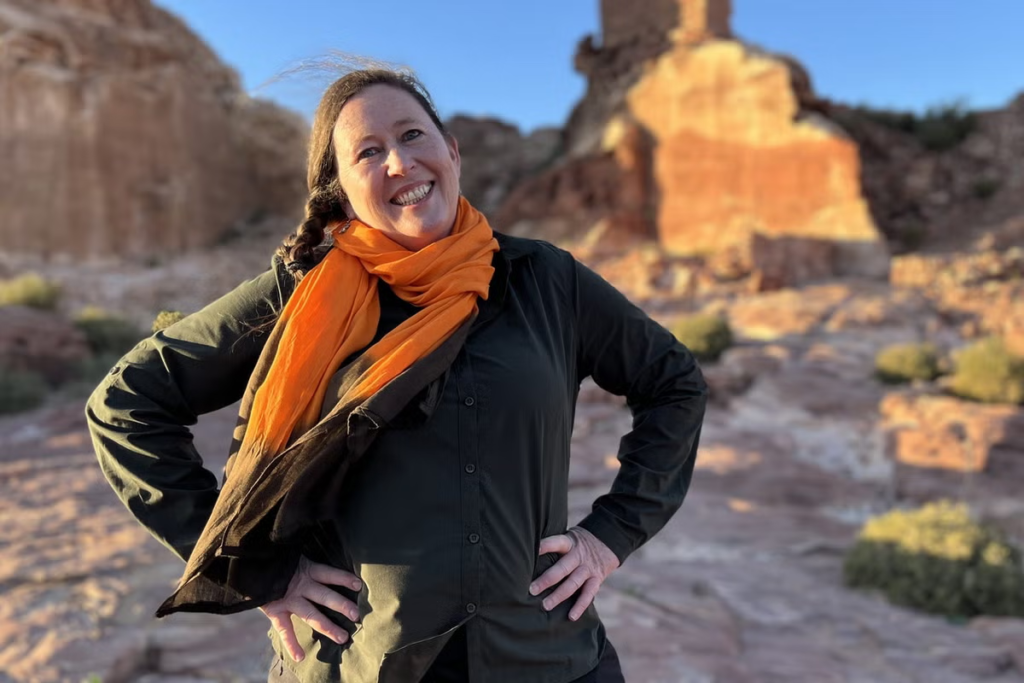
The expedition team itself reflected an international collaboration, with members from Saudi Arabia, Scotland, Sudan, Yemen, and Ireland. Morrison has credited this diverse group with maintaining morale and operational continuity throughout the journey. The shared effort, marked by humour and determination, underscored the collective nature of an expedition often described in individual terms. While Morrison walked every step, the success of the journey depended on coordination, trust, and mutual support.
For Morrison, the act of walking became both exploration and meditation. She has described the journey as a way to experience every detail of the landscape, from subtle changes in terrain to shifts in architecture and vegetation. This immersive approach allowed her to observe Saudi Arabia as a continuous whole rather than a series of disconnected regions. The slow pace encouraged reflection, reinforcing her long-held belief that walking fosters a deeper understanding of place.
The legacy of the expedition extends beyond the completion of the route. Morrison has confirmed that she will be writing another book based on this journey, adding to her body of travel literature. She is also working on a film documenting the expedition, which will provide a visual record of the landscapes, people, and daily realities encountered along the way. Together, these projects will ensure that the significance of the journey reaches audiences beyond those who follow endurance travel closely.
Alice Morrison’s walk across Saudi Arabia represents a convergence of personal challenge, cultural engagement, and meticulous planning. As the first person to complete the route entirely on foot from north to south, she has set a benchmark for future explorers while also offering a nuanced portrait of a country often viewed through narrow lenses. Her journey stands as an example of how endurance travel, when approached with respect and curiosity, can contribute meaningfully to cross-cultural understanding and contemporary exploration.
Looking for a site with a massive game collection? Afunjogo has it all! Slots, live casino, sports… tons of options! Check out afunjogo