
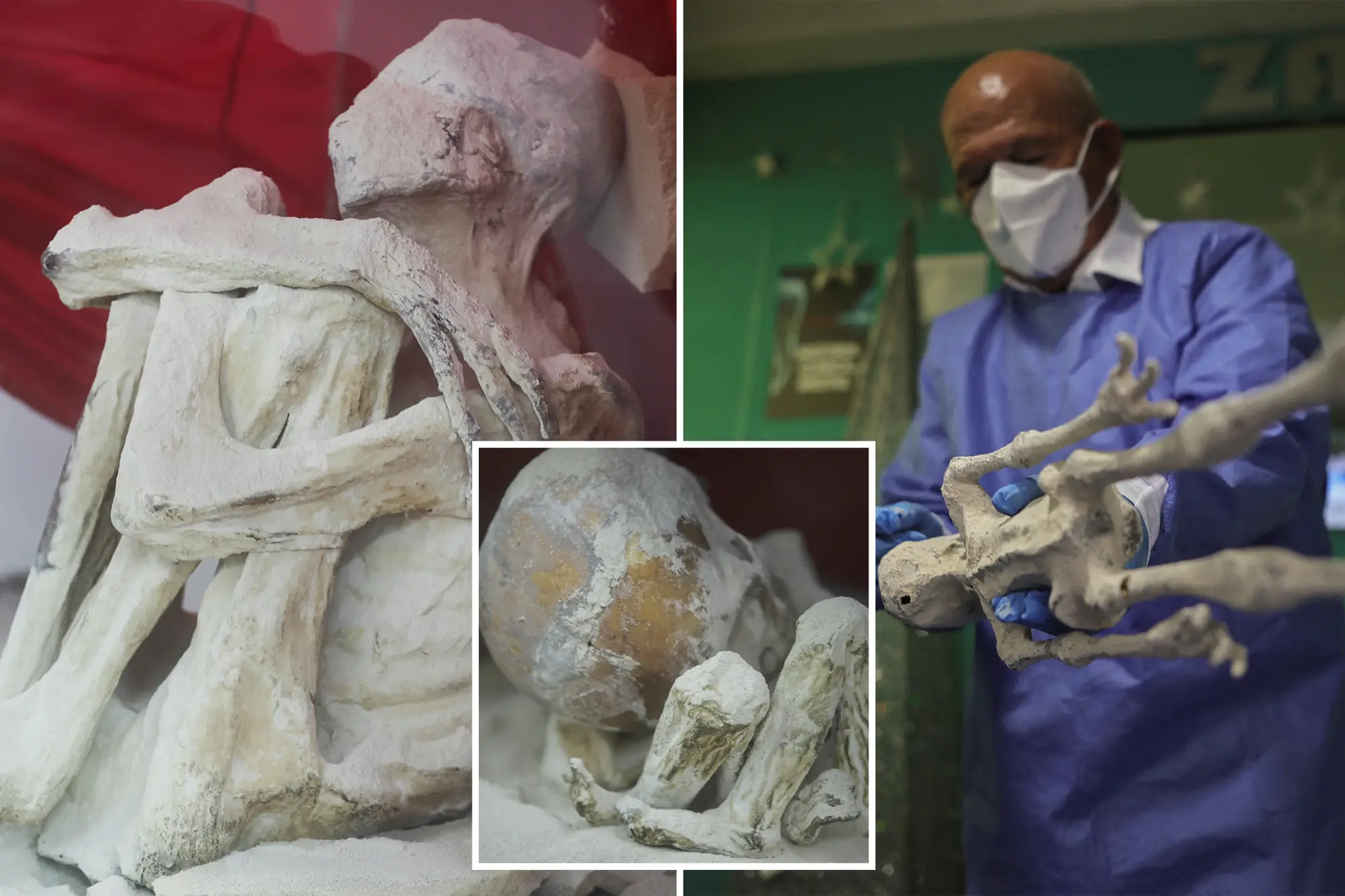
The alien mummies found in Peru’s Nazca desert have long captured the imagination of the public, media, and scientific community alike. Characterized by their elongated skulls, three-fingered hands, and unusual physical features, these mummified bodies were initially hailed by some as possible extraterrestrial beings.
Since their discovery in 2017, the mummies have sparked intense debate about their origin and authenticity. However, recent investigations by leading forensic experts reveal a far darker and more human story — these mysterious beings may have suffered violent, torturous deaths before ultimately succumbing.
Unraveling the Mystery: The Discovery and Initial Controversy
The alien mummies were first uncovered in the Nazca desert of southern Peru, an area already famous for its ancient Nazca Lines, geoglyphs etched into the earth that have baffled researchers for decades. The discovery was made public by journalist and ufologist Jaime Maussan, whose efforts brought these mummies to international attention in 2017 and later at an exhibition in Mexico in 2023.
What immediately set these mummies apart from typical human remains were their unusual physical characteristics. They had elongated skulls far beyond what is seen in normal human variation, only three fingers and toes instead of five, and smaller-than-average stature.
Initial DNA analyses suggested that while they were part-human, they also exhibited genetic markers from an “unknown species,” a claim that heightened speculation about their extraterrestrial origins. This prompted Mexico’s first-ever congressional hearing on unidentified flying objects (UFOs) and related phenomena, further fueling public intrigue.
Read : Alien Took Away His Organs! Jaime Adrian Claims After Murdering 74-Year-Old Father
However, these claims were met with skepticism from many scientists and forensic experts. Critics argued that the mummies could be elaborate fabrications, suggesting they might be constructed from animal bones, paper, and glue, essentially detailed dolls designed to deceive. Such accusations cast a shadow of doubt over the discovery, with many in the academic community refusing to accept the mummies as genuine.
🚨 Video showing CT-scans of tridactyl humanoid "Non-Human" body with elongated skull found in Nazca with Tridactyl Non Human fetus inside womb.
— T R U T H P O L E (@Truthpolex) June 27, 2024
These "Alien" mummies were verified to be authentic by multiple Universities and recently by Doctors/Scientists in U.S.#Ufotwitter pic.twitter.com/EyhVRZCziP
Recent developments, however, paint a different picture. Advances in forensic analysis, including detailed CT scans and autopsies conducted by a team of respected experts, indicate that the mummies are indeed authentic human remains. Not only that, but they appear to have lived over 1,200 years ago, firmly rooting them in historical context rather than otherworldly myths.
Signs of Torture: Evidence from Forensic Examinations
What is most disturbing about the new research is the revelation that these beings may have endured violent and torturous deaths. Three of the mummies—named Maria, Montserrat, and Antonio—have been examined in detail, revealing injuries that strongly suggest they were victims of intentional harm.
Dr. Jose Zalce, a prominent forensic expert and former director of the Mexican Navy Medical Department, led the analysis of 21 mummified bodies, focusing particularly on Maria and Montserrat. Maria, a female who stood about 5 feet 6 inches tall and was between 35 and 45 years old at the time of death, showed signs of extreme trauma.
Her lower pelvis bore deep cuts and bite marks, while her skin and fat in that region had been deliberately removed. Two of her tailbone vertebrae were fractured, and there were multiple small puncture wounds stretching from her tailbone to her hip. Perhaps most chilling was the presence of a zigzag-shaped wound, interpreted as a fatal injury caused by falling onto sharp rocks, which could suggest she was either pushed or forced to fall from a cliff.
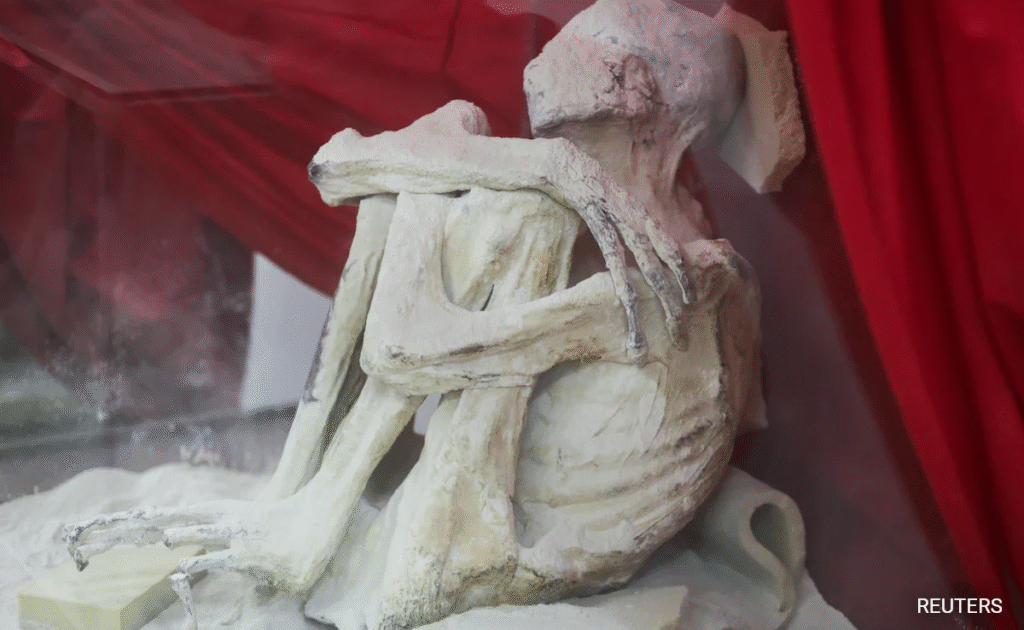
Montserrat, who was younger—estimated to be between 16 and 25 years old—displayed equally severe injuries. CT scans revealed a puncture wound between her fifth and sixth ribs and multiple fractures, including breaks in her scapula and ribs.
The trauma appeared to be prolonged and intense, implying sustained abuse before death. Despite her injuries, some of Montserrat’s internal organs, including the heart, liver, and intestines, remained intact—unusual for mummified remains and an indicator that the body was preserved soon after death.
Antonio, another key mummy examined by Dr. David Ruiz Vela, former president of Peru’s Medical Association, also showed signs of violent demise. Antonio’s chest had a fatal stab wound that pierced through his ribs and penetrated his chest cavity, damaging vital organs such as the liver. The severity of the wound made it clear that his death was caused by a brutal attack, likely intentional and lethal.
Together, these findings provide a grim narrative: rather than peaceful or natural deaths, these mummies were subjected to violent acts—possibly torture and murder—before they died. This adds a profound human tragedy to the mystery, raising questions about who these beings were, why they were targeted, and what cultural or historical context might explain their fate.
Implications and Questions for Future Research
The discovery that these mummies were likely murdered challenges many of the initial assumptions about their origins and nature. While the possibility of extraterrestrial links has been largely dismissed in light of new evidence, the mummies remain extraordinary for their unique anatomy and the brutal circumstances of their deaths.
One pressing question is the identity and origin of these beings. The combination of human and “unknown” genetic markers hints at a population or subgroup that is not well documented in current historical or archaeological records.
Some researchers speculate that the elongated skulls and three-fingered hands might be the result of a genetic mutation, developmental anomaly, or ancient cultural practices such as cranial deformation, which was common in some pre-Columbian societies. However, the presence of only three digits remains unexplained and is not typical of known human variations.
Another line of inquiry concerns the cause of their violent deaths. Were these individuals victims of ritual sacrifice, warfare, or social persecution? The severity and nature of the injuries suggest targeted and deliberate violence, rather than accidental injury or natural causes.
It is possible that these beings were considered outsiders, cast out or hunted due to their differences. Alternatively, the trauma might have been inflicted as part of a ritualistic or punitive practice, a grim testament to the darker aspects of ancient societies.
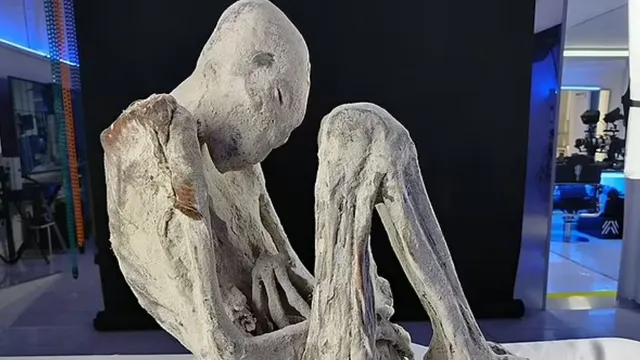
The authenticity and preservation of these mummies also invite further study. Their remarkably well-preserved internal organs suggest advanced mummification techniques, which could provide insights into the cultural and technological capabilities of the people who created them.
If these mummies are over 1,200 years old, they represent a significant archaeological find that could reshape our understanding of human history in the Nazca region and beyond. Scientists and researchers around the world will undoubtedly continue to analyze these remains using cutting-edge technology and interdisciplinary methods.
DNA sequencing, radiocarbon dating, and forensic pathology will be crucial tools in unraveling the full story behind these enigmatic figures. Additionally, exploring the historical and cultural context of the Nazca desert area, known for its mysterious geoglyphs and rich pre-Columbian history, may shed light on who these individuals were and why they suffered such tragic ends.
The revelation that the so-called “alien” mummies of Peru’s Nazca desert were likely tortured and murdered before their deaths transforms what was once a sensational story of possible extraterrestrial life into a haunting tale of human suffering and mystery. While initial claims of alien origins have faced skepticism, recent scientific investigations confirm the mummies’ authenticity and paint a disturbing picture of violence and trauma.
These findings not only highlight the need for further scientific research but also call for a more nuanced understanding of ancient cultures and the complex histories they carry. Far from being relics of another world, these mummies represent real lives lost under brutal circumstances—reminders of the fragility and resilience of human existence through the ages.
As experts continue to study these extraordinary remains, the story of the Nazca mummies will likely evolve, offering new clues and perhaps answers to one of the most intriguing archaeological mysteries of our time.