
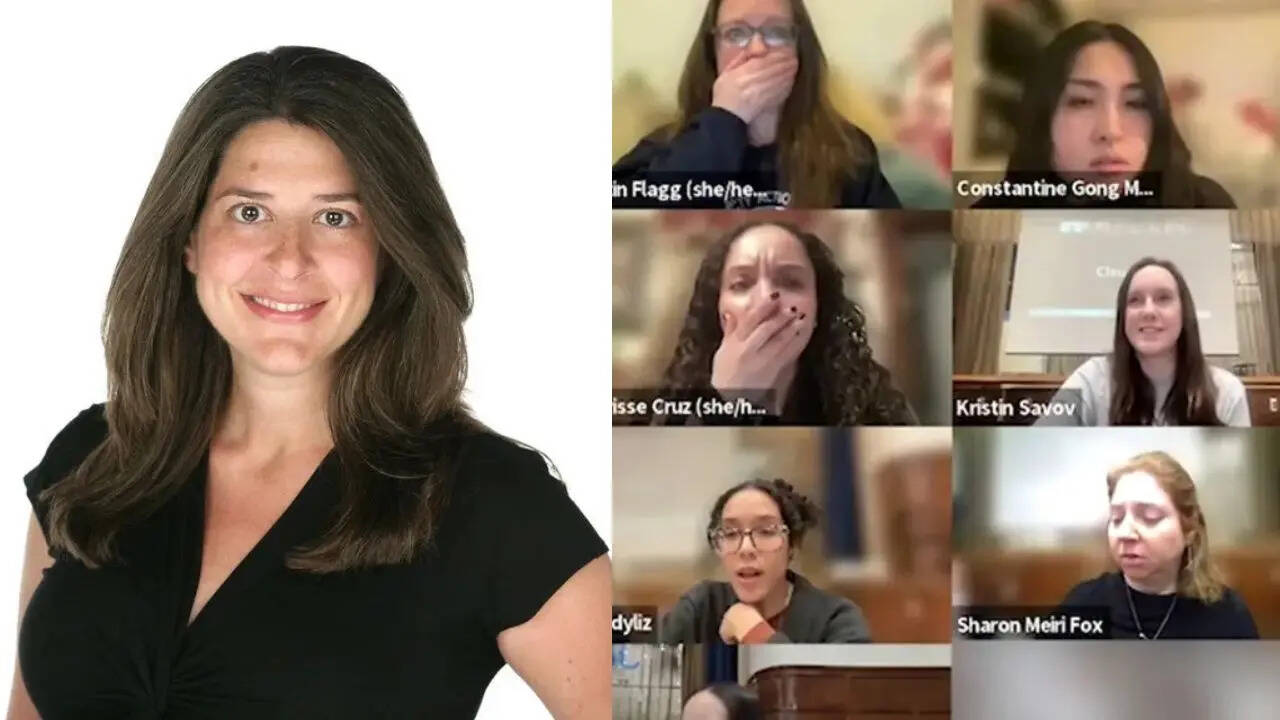
Allyson Friedman, an associate professor at Hunter College in New York City, has come under intense scrutiny following remarks she made during a public Community Education Council meeting that were widely condemned as racist. The controversy erupted after her microphone remained live during a Zoom session on February 10, capturing comments she made while a Black eighth-grade student was speaking about concerns regarding the potential closure of her Upper West Side school.
The incident quickly drew public backlash, prompted political condemnation, and reignited debates over accountability within higher education institutions. As calls mounted for disciplinary action, Allyson Friedman issued a public apology, maintaining that her words were taken out of context and did not reflect her personal beliefs. The episode has since become a flashpoint in broader conversations about race, free speech, and institutional standards within academia.
The Hot Mic Incident That Triggered National Attention
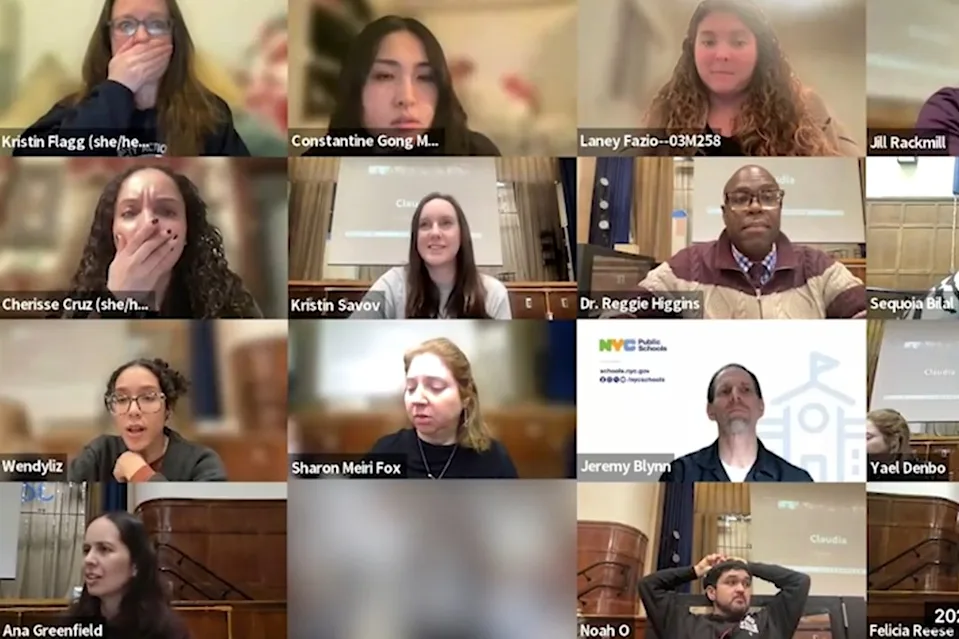
The controversy began during a virtual Community Education Council meeting attended by parents, students, and educators. As a Black middle school student addressed the council to express concerns about her school’s future, Allyson Friedman’s microphone reportedly captured her making disparaging remarks. Among the statements attributed to her were comments suggesting that certain individuals were “too dumb to know they’re in a bad school” and an offensive reference invoking a historically racist trope about segregation.
The remarks were perceived as demeaning and racially charged, especially given the context in which they were made — while a child was speaking publicly about her educational environment. The comments were swiftly circulated and widely condemned. Critics described the language as deeply offensive and emblematic of the very systemic biases that continue to affect Black students in educational settings.
The fact that the remarks were made during a forum intended to empower students amplified the outrage. Observers noted that such spaces are meant to provide young people with the opportunity to speak openly about their concerns, particularly in matters affecting their schools and communities. The intrusion of racially charged commentary during that moment struck many as both inappropriate and harmful.
Allyson Friedman, an associate professor at Hunter College, is under fire after her mic was left on during a ‘racist rant’ on a Zoom call, leaving students and education officials profoundly disturbed. 😳
— Rain Drops Media (@Raindropsmedia1) February 23, 2026
pic.twitter.com/K4MUvbWf6B
In the days that followed, the incident gained broader attention beyond the immediate school community. Media outlets reported on the controversy, and public officials weighed in with strong criticism. The episode quickly moved from a local dispute to a citywide issue, highlighting tensions around race, accountability, and institutional response in New York’s academic landscape.
Public Backlash and Political Condemnation
The reaction from public officials and community leaders was swift and unequivocal. New York City Council member Chi Ossé publicly called for Allyson Friedman’s dismissal, arguing that institutions must apply consistent standards when addressing different forms of speech and conduct. His remarks underscored concerns about whether universities enforce disciplinary measures uniformly, particularly when issues of race are involved. He pointed to prior instances in which institutions acted quickly on other political controversies, suggesting that failure to respond decisively in this case would reflect inconsistency.
City Council Education Chair Rita Joseph also condemned the remarks, describing them as “blatantly racist and harmful.” She emphasized that the comments were made at a moment when a student had chosen to speak courageously about her school community. According to Joseph, such language perpetuates long-standing harm inflicted upon Black and brown children within educational systems. Her statement framed the incident not merely as an individual lapse in judgment but as part of a broader historical pattern of marginalization.
Manhattan Borough President Brad Hoylman-Sigal likewise criticized Allyson Friedman, stating that it was particularly troubling that the remarks were uttered while children were giving testimony. His comments reflected concern about the emotional and psychological impact such language could have on young students who were participating in a civic process intended to amplify their voices.

Hunter College issued a statement describing the remarks as “abhorrent,” signaling institutional disapproval. However, the precise nature of any disciplinary action was not immediately clear in public reporting. The situation placed the college in a delicate position, balancing condemnation of offensive speech with internal procedures governing faculty conduct. The broader university system, which has previously navigated contentious debates over political expression, found itself under renewed scrutiny regarding how it handles incidents involving allegations of racism.
The backlash extended beyond elected officials. Community members, educators, and advocacy groups expressed anger and disappointment, arguing that educators bear a particular responsibility to foster inclusive environments. Many noted that higher education faculty, especially those employed at public institutions, are expected to model respect and uphold principles of equity. The controversy thus became a test case for institutional accountability in an era of heightened awareness around racial justice.
Friedman’s Apology and the Broader Debate on Accountability
In response to the uproar, Allyson Friedman issued a public apology. In her statement, she said she had been attempting to explain systemic racism to her own child by referencing what she described as an “obviously racist trope.” She maintained that her full remarks were not completely audible and that, when taken in context, they did not represent her personal beliefs. Allyson Friedman emphasized that the views expressed in the recorded portion were not her own and were not directed at any specific student or group.
Read : Harvard Professor Carlos Portugal Gouvea Arrested by ICE After Firing Pellet Gun Near Synagogue
She further stated that she fully supports students advocating against school closures and acknowledged that her comments had caused harm and pain. While asserting that causing such harm was not her intent, she expressed regret and offered a direct apology. Her response sought to frame the incident as a miscommunication rooted in a broader discussion rather than as an expression of personal prejudice.
The explanation, however, did not quell criticism entirely. For many observers, the severity of the language used overshadowed any contextual clarification. The debate quickly evolved into a larger conversation about the responsibilities of educators, the limits of academic freedom, and the consequences of speech in public forums. Questions arose about whether intent mitigates impact and how institutions should evaluate claims of context when offensive language has been publicly recorded.
The incident also reignited broader discussions about systemic racism in education. The very topic Allyson Friedman said she was attempting to explain became central to the public response. Advocates pointed out that historically racist tropes have long been used to justify unequal treatment and educational disparities affecting Black students. In this context, even hypothetical or illustrative repetition of such language can be perceived as perpetuating harm, particularly when voiced by someone in a position of authority.
For Hunter College and the broader university system, the controversy underscored the complexities of navigating free expression, public accountability, and community trust. Academic institutions often defend the principle of open dialogue, yet they are simultaneously expected to uphold inclusive standards and protect students from discriminatory environments. Balancing these commitments becomes especially challenging when faculty speech intersects with deeply sensitive issues of race.
As the debate continues, the incident serves as a reminder of the heightened scrutiny faced by educators in the digital age. Virtual meetings, live microphones, and rapid information sharing mean that private remarks can quickly become public controversies. For students and communities affected by educational policy decisions, the episode has reinforced concerns about whether their voices are treated with respect and seriousness.
Allyson Friedman remains at the center of a controversy that extends beyond a single meeting. The hot mic remarks have prompted reflection on individual responsibility, institutional response, and the enduring impact of racially charged language within educational spaces.