

The nursing profession is built on the principles of trust, care, and rigorous training. When any of these elements are compromised, the repercussions can ripple across not only the healthcare system but also public confidence in medical professionals.
The recent suspension of Althea Rosemarie Grant McLean’s nursing license in Connecticut has become one of the latest illustrations of a broader scandal enveloping the American healthcare education sector. This incident is tied to a major federal investigation into fraudulent nursing degrees, which has been dubbed “Operation Nightingale.”
The Emergence of a National Scandal
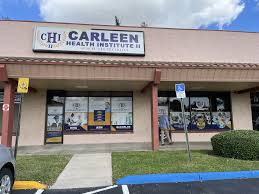
The case involving Althea Rosemarie Grant McLean cannot be viewed in isolation. It is a single thread in a vast and troubling tapestry that emerged from the federal probe into multiple nursing schools across the United States. At the center of this investigation is the Carleen Health Institute in Florida, from where McLean obtained her degree.
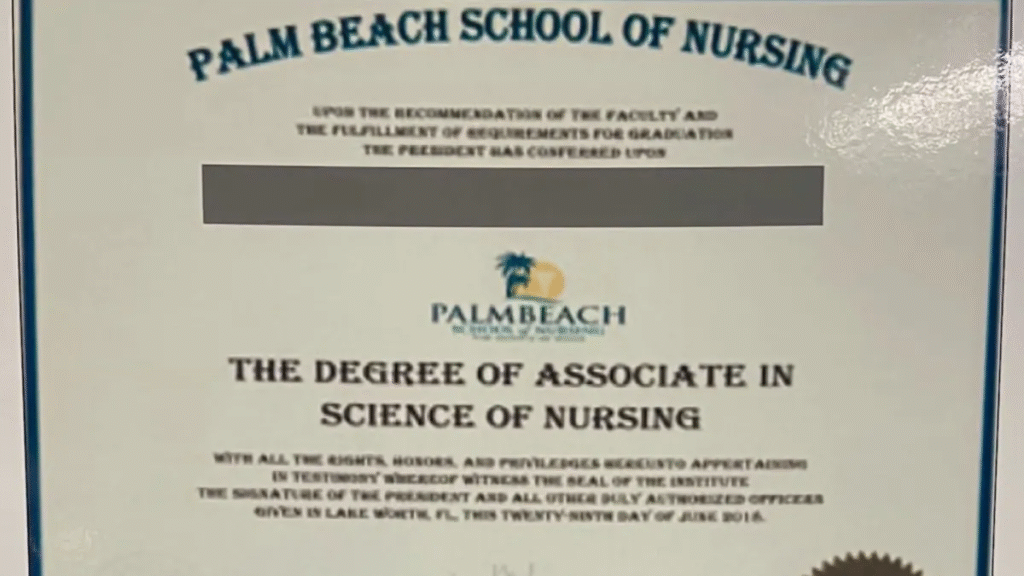
According to documents released by the Connecticut Department of Public Health and federal authorities, this institution was one of several implicated in an alleged scheme where fake nursing diplomas were being sold.
Federal prosecutors revealed that individuals connected to these schools facilitated an “illegal licensing and employment shortcut for aspiring nurses.” In essence, students received diplomas and transcripts that made it appear they had completed the necessary coursework and clinical hours, without actually fulfilling those requirements. These fraudulent documents then enabled them to sit for licensing exams and, in many cases, secure positions in hospitals and other medical facilities.
Read : 56-Year-Old Woman Arrested for Holding Stepson Captive for 20 Years in Connecticut
This scandal, known as Operation Nightingale, unveiled the extent of the scheme and highlighted how deeply rooted such fraud had become. The U.S. Department of Health and Human Services, in collaboration with other federal agencies, launched a sweeping investigation that led to the indictment of dozens of people.
Read : Police Drove an SUV Inside the Emergency Ward of AIIMS in Rishikesh to Arrest a Nursing Officer
The operation is named after Florence Nightingale, a pioneer of modern nursing, symbolizing the stark contrast between the values she upheld and the dishonesty that had crept into some parts of the nursing education system.
Connecticut Takes Action: License Suspension and Implications
On Tuesday, the Connecticut Board of Examiners for Nursing acted swiftly in response to the findings. They suspended the nursing license of Althea Rosemarie Grant McLean after confirming that her degree was obtained from Carleen Health Institute. The decision underscores the seriousness with which the board views educational integrity, especially when it pertains to healthcare professionals.
The suspension is not merely punitive; it serves as a protective measure for patients and healthcare institutions across the state. When a nurse’s education is called into question, it casts doubt on their ability to deliver safe and effective care. Given the complexity and high stakes of modern medicine, even minor lapses in training can lead to severe consequences. By suspending McLean’s license, the board is also sending a clear message to others who might consider circumventing proper educational channels.
This move by Connecticut is part of a broader trend. Several other states have initiated reviews of nursing licenses issued in connection with the implicated schools. Some have already revoked or suspended licenses, while others are conducting investigations to determine the extent of the issue within their jurisdiction. Healthcare regulators now face the immense task of distinguishing genuine professionals from those who may have entered the field through illegitimate means.
A Crisis of Trust and a Call for Reform
Beyond the administrative actions and criminal indictments, Operation Nightingale reveals a crisis of trust within the healthcare education system. Patients, hospitals, and even honest students suffer when fraudulent practices are allowed to flourish. The ease with which some individuals obtained fake diplomas raises unsettling questions about oversight and accountability in nursing schools across the country.
The motivations behind such fraud are not difficult to understand. Nursing is a highly in-demand profession, offering job security, decent wages, and a chance to make a difference. For some, the temptation to bypass years of rigorous education and training in exchange for a fast-track to employment proved too strong to resist. For the institutions involved, the scheme provided a lucrative revenue stream at the cost of public safety.
Addressing this issue requires a multi-pronged approach. First, regulatory bodies need stronger mechanisms to vet educational institutions. Accrediting agencies must be held to higher standards, and their assessments should include more than just paperwork reviews. On-site visits, surprise audits, and student interviews could help detect irregularities early on.
Second, the licensing process itself may need reform. Currently, passing the NCLEX (National Council Licensure Examination) is a primary criterion for becoming a licensed nurse in the United States. While the NCLEX is a rigorous exam, it may not be sufficient to verify a candidate’s clinical competence if their educational background is compromised. Supplemental assessments or mandatory supervised clinical practice for graduates from certain institutions could act as a safeguard.
Third, and perhaps most importantly, there must be legal and ethical accountability. Those found guilty of running or participating in diploma mills must face significant consequences. Deterrence can only be achieved when the cost of engaging in such fraudulent behavior outweighs the benefits. Moreover, victims of these scams—students who were misled into thinking they were receiving legitimate training—deserve restitution and an opportunity to continue their education through proper channels.
The suspension of Althea Rosemarie Grant McLean’s license is a sobering reminder that not every person wearing a medical uniform has necessarily earned their place. It also invites a broader reflection on how professional qualifications are evaluated and validated. At a time when the healthcare system is already under immense pressure, ensuring the competence and integrity of medical staff is more vital than ever.
The case of McLean and the larger scandal surrounding Carleen Health Institute serve as a wake-up call for the entire healthcare community. It is not enough to rely on certificates and transcripts; real training, real education, and real accountability must be the foundation of any medical profession. Only then can we hope to uphold the sacred trust placed in nurses and other healthcare providers.