

In early March, a quiet residential neighborhood in Irvine, California, unexpectedly became the focus of a large federal investigation after authorities discovered materials inside a rented home that raised serious safety concerns. The situation quickly escalated as local police, fire officials, federal investigators, and even specialized hazardous-materials teams arrived at the property to assess what they believed could potentially involve dangerous chemical compounds. Images of personnel wearing protective suits moving in and out of the home circulated widely, prompting questions about what had been found and who was responsible.
At the center of the investigation is Amalvin Fritz, a 17-year-old student who had been conducting scientific experiments in a home laboratory. Authorities were alerted to the situation after a landlord reportedly discovered materials inside the residence that appeared suspicious. According to investigators familiar with the case, the combination of chemical substances and written materials inside the home led to concerns that the items could be connected to hazardous chemical research.
Despite the scale of the response, Fritz has consistently maintained that he is simply a student deeply interested in science. He has publicly described himself as a young researcher working toward a future in medicine and insists that his experiments were part of personal scientific exploration focused on developing treatments for diseases such as cancer and Alzheimer’s. While investigators continue to examine the materials discovered in the home, the unusual case has sparked widespread debate about the boundaries between youthful scientific curiosity and public safety risks.
Early Academic Path and Interest in Science
Amalvin Fritz’s academic journey appears to have been shaped by an early fascination with chemistry, medicine, and scientific discovery. According to statements made during the investigation, the teenager is enrolled in a pre-medical academic track and is expected to graduate soon from a university program associated with the University of California system. At just seventeen years old, his academic timeline suggests an accelerated educational path that allowed him to reach advanced studies earlier than many of his peers.
Amalvin Fritz has described himself as someone motivated by the potential of science to improve human health. In interviews following the investigation, he explained that his long-term goal is to become a physician and eventually pursue medical research. His experiments, he said, were focused on exploring chemical processes that could someday contribute to new treatments for serious neurological and oncological diseases. According to his account, the laboratory setup inside the home served as a space where he could conduct experiments and test chemical reactions related to pharmaceutical development.
The teenager also maintained a small online presence where he documented some of his scientific experiments. Videos posted on his channel reportedly showed demonstrations of chemical procedures conducted in the home laboratory environment. In these recordings, Fritz presented himself as a student researcher explaining experimental methods and discussing chemical reactions in an educational context.
Such independent experimentation is not entirely uncommon among highly motivated science students. Many aspiring researchers begin exploring chemistry and biology outside formal classrooms through science fairs, personal projects, or mentorship programs. However, the complexity and potential hazards associated with advanced chemical compounds often require controlled environments, specialized equipment, and strict safety protocols.
For young scientists, universities and research institutions typically provide laboratories designed specifically to manage volatile chemicals, control emissions, and ensure safe disposal of materials. These facilities also include trained supervisors who monitor experiments and ensure compliance with safety regulations. Conducting similar work outside these environments can raise concerns about whether adequate safeguards are in place.
Irvine teen Amalvin Fritz is finally speaking out after his home chemistry lab triggered a massive, week-long FBI investigation.
— The Kind Joe (@TheKindJoe) March 4, 2026
The 17-year-old UC Irvine student says federal agents mistook his cancer-research experiments for dangerous nerve agents.
Despite the hazmat suits… pic.twitter.com/9A7ynteeaX
Fritz has stated that he believed his work was conducted responsibly and that the chemicals used in his experiments were legally obtainable substances available through scientific suppliers. From his perspective, the laboratory represented a place to pursue knowledge and innovation rather than a source of danger. His comments following the investigation reflect a belief that curiosity and experimentation are essential parts of scientific progress, particularly for young researchers hoping to make meaningful contributions to medicine.
FBI Investigation and Discovery of Home Laboratory
The investigation began when Irvine police officers were called to the residence after the property’s landlord reported finding materials inside the home that appeared suspicious. Once authorities arrived and began examining the contents of the laboratory area, they encountered chemical substances and documentation that raised enough concern to trigger a broader response.
As the investigation progressed, the situation expanded beyond local law enforcement. Fire department officials from the regional fire authority were brought in to evaluate the potential risks associated with the chemicals discovered at the scene. Their involvement suggested that investigators were concerned about the possibility of hazardous or volatile compounds being stored inside the residential property.
Read : 44-Year-Old Phillip Torres Sentenced for Kidnapping and Assaulting Teenage Girl
Soon afterward, federal authorities joined the investigation. Agents from the Federal Bureau of Investigation began examining the site, and specialized teams equipped to handle potentially dangerous materials were deployed. Among those assisting was a National Guard unit trained to respond to incidents involving weapons of mass destruction and hazardous chemical environments.
The presence of these specialized teams highlighted the seriousness with which authorities approached the situation. Personnel wearing protective hazmat suits and breathing equipment were seen entering and exiting the house through the garage area as they conducted a detailed inspection of the laboratory. Their work involved identifying substances, securing chemical containers, and evaluating whether any compounds present posed an immediate threat to the surrounding community.
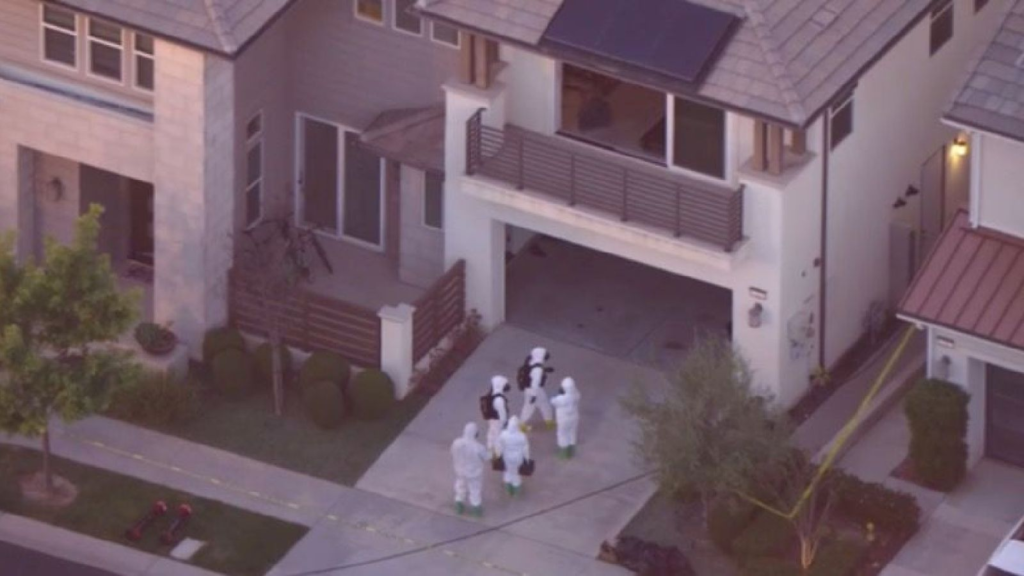
Investigators have not publicly disclosed the full list of materials discovered in the home. However, sources familiar with the case indicated that certain substances, when considered alongside written notes found in the laboratory, initially raised concerns about the possibility of chemical nerve agents. These early suspicions prompted authorities to take precautionary measures until the materials could be properly analyzed.
Throughout the process, Fritz and his family reportedly cooperated with investigators. According to statements from the teenager, he voluntarily handed over his phone and answered questions from authorities in an effort to clarify the purpose of his research. Despite this cooperation, the investigation forced the family to temporarily leave their home while officials continued examining the site. Fritz later expressed frustration and confusion about the situation, explaining that he was not certain which materials had triggered such an extensive response.
From his perspective, the events escalated rapidly without clear explanations about what authorities believed they had discovered. For nearly a week following the initial report, the property remained under investigation. During this time, federal agents and hazardous-materials teams worked to catalog and analyze the chemicals present in the laboratory. The prolonged response reflected the careful procedures required when dealing with substances that could potentially be dangerous if mishandled.
The visibility of the investigation attracted significant public attention, particularly because of the teenager’s age and academic ambitions. Residents in the neighborhood watched as emergency vehicles, federal agents, and specialized response teams conducted their work, transforming an otherwise quiet community into the focus of a high-profile safety investigation.
Debate Over Safety and Ethics of Amateur Chemical Research
While Fritz insists his experiments were harmless and motivated by scientific curiosity, experts in chemistry and laboratory safety have raised important questions about the risks involved in conducting advanced chemical work outside a regulated environment. One chemistry professor who reviewed some of Fritz’s online experiment videos expressed concern about the methods shown in the recordings.
According to the professor, certain compounds visible in the demonstrations should normally be handled only in professional laboratories equipped with proper ventilation systems, protective equipment, and specialized storage facilities. Among the substances reportedly used in the experiments were reactive chemical reagents that can pose significant risks if handled incorrectly. Some of these materials are highly flammable or capable of producing hazardous vapors during chemical reactions.
Read : Teen Mother Morgan Hall and Her 4-Month-Old Son Messiah Missing
In controlled laboratory environments, these substances are typically managed within fume hoods designed to prevent the release of gases into surrounding air. Experts say that the issue is not necessarily the legality of purchasing chemicals, but rather the conditions under which they are used. Many chemical suppliers sell reagents for educational and research purposes, meaning individuals can technically obtain them without violating regulations. However, safe handling requires training, protective gear, and facilities specifically designed to minimize accidents.

Another concern involves the disposal of chemical waste. Laboratories must follow strict guidelines to ensure that leftover reagents and byproducts are neutralized or disposed of through approved hazardous waste systems. Improper disposal can create environmental risks or release toxic compounds into the air, water, or soil. The professor also noted that experiments producing gases could potentially affect individuals with respiratory sensitivities if conducted in a residential setting. In densely populated neighborhoods, even small emissions from chemical reactions may pose health concerns for nearby residents.
These safety issues are part of a broader conversation about the role of amateur or independent research in modern science. Historically, many breakthroughs were achieved by individuals experimenting outside formal institutions. However, the increasing complexity of chemical and biological research has led to stronger regulatory frameworks designed to protect both researchers and the public.
Supporters of young scientific innovators argue that curiosity and experimentation should be encouraged, particularly among students interested in pursuing careers in science and medicine. They point out that access to information and materials has expanded dramatically, allowing motivated learners to explore advanced topics at earlier stages of their education. Critics, however, emphasize that certain areas of chemistry involve hazards that cannot easily be managed outside professional laboratories.
They argue that universities and research institutions exist precisely because they provide the infrastructure necessary to conduct complex experiments safely. The case involving Fritz illustrates the tension between these two perspectives. On one hand, he presents himself as a student driven by the desire to develop medical therapies and contribute to scientific progress. On the other hand, experts caution that even well-intentioned experiments can become dangerous if conducted without proper facilities and oversight.
For now, the investigation continues to determine exactly what substances were present in the home laboratory and whether any laws or safety regulations were violated. Meanwhile, the teenager remains focused on his academic ambitions, expressing hope that the situation will eventually be resolved so he can move forward with his education and future plans in medicine.