
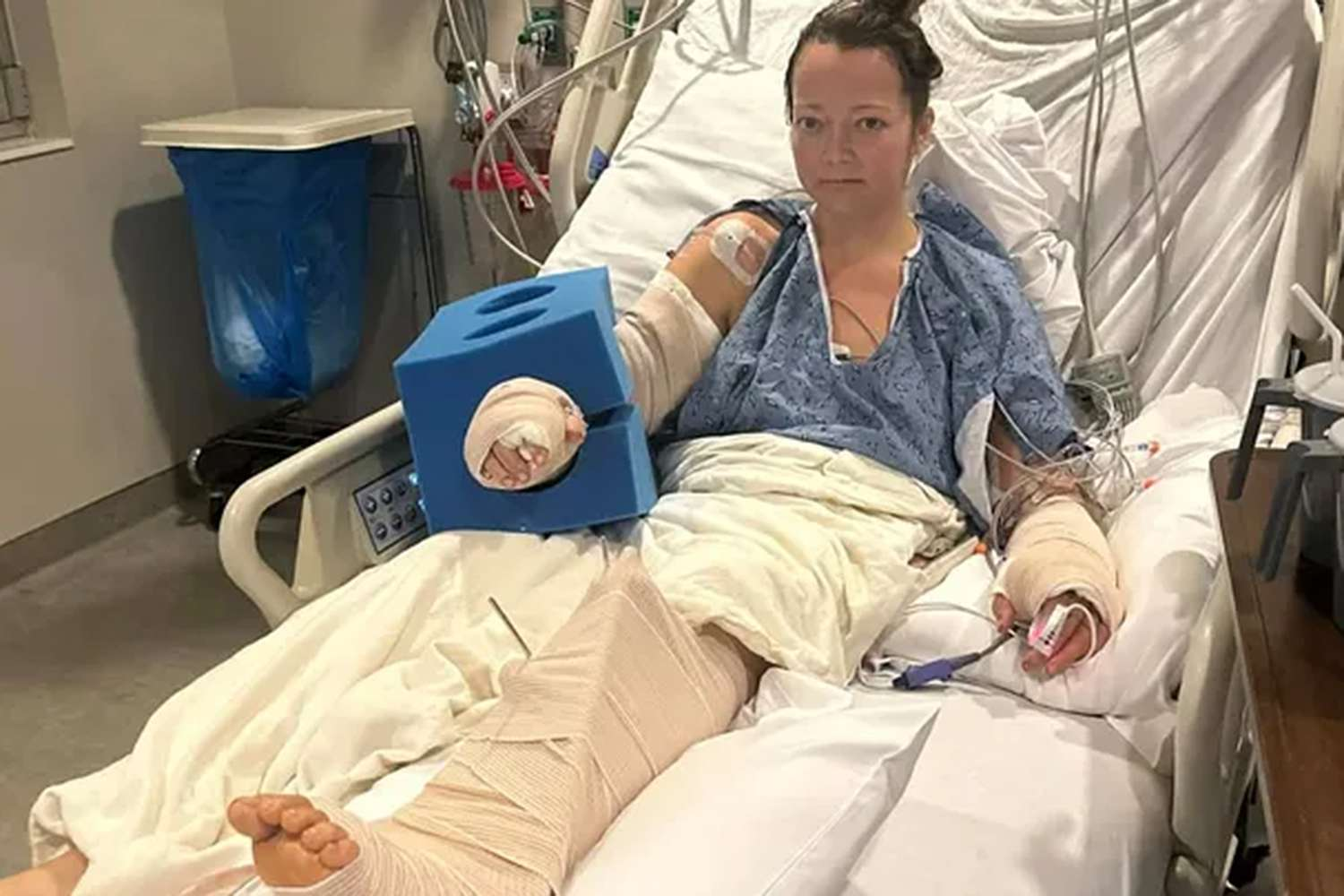
Amanda Mears, a Tennessee mother and healthcare worker, is rebuilding her life after a traumatic dog attack inside her own home resulted in the amputation of one of her legs. The incident, which occurred on December 10, unfolded in a matter of seconds but left permanent physical, emotional, and practical consequences for Mears and her family. What began as a routine moment before taking her dog for a walk escalated into a violent struggle that tested her instincts, endurance, and ultimately forced her to make a life-altering medical decision. Her account offers a stark look at how quickly domestic animal situations can turn catastrophic, even when the dogs involved have no documented history of aggression.
The Attack Inside the Home
On the morning of December 10, Amanda Mears was preparing to take her dog, Dennis, outside when she noticed that her rescue dog, Ralphie, had managed to get out of the bedroom where he had been secured. Dennis, a mixed American Pit Bull and American Staffordshire Terrier, suddenly lunged toward Ralphie, an American Bully. Amanda Mears, who had previously intervened in dog scuffles without serious incident, instinctively stepped between them in an attempt to stop the fight before it escalated.
Instead of releasing or redirecting, Dennis clamped onto her leg. Amanda Mears later recalled that the adrenaline coursing through her body initially masked the pain, allowing her to focus entirely on stopping the attack. Despite her efforts to pry the dog loose, Dennis would not let go. As the struggle continued, he also bit her left hand and inflicted a crushing injury to her right arm, injuries that she would only fully comprehend once the immediate danger had passed.
With remarkable presence of mind, Amanda Mears instructed her 10-year-old son to remain in his room while she fought to protect both him and herself. She attempted to open the dog’s jaws while simultaneously calling emergency services. Realizing that the attack would not end on its own, she wrapped her arms and leg around Dennis and choked him until he released his grip. When the dog finally let go, the severity of her injuries became clear.
Read : Embracing the Spirit of Africa: Top Ten Selfie Spots in Kenya
Amanda Mears later described being unable to stand, as her leg was “basically hanging off,” attached only by a small amount of tissue. The physical damage was extreme, and blood loss and shock were immediate concerns. Emergency responders transported her to the hospital, where doctors assessed the extent of the injuries and began discussing possible treatment paths. What followed was not only a medical crisis but also the beginning of a prolonged period of recovery and adjustment.
Medical Decisions and Life-Altering Consequences
Once stabilized, Amanda Mears faced a difficult choice. Surgeons explained that attempting to save her leg would require approximately a dozen additional surgeries spread over two years. Even with aggressive intervention, the likelihood of chronic pain, limited mobility, and complications remained high. The alternative was amputation, a decision that would permanently change her body but offer a clearer path toward recovery and mobility through prosthetics.
After weighing the options, Amanda Mears chose amputation. She later explained that the prospect of constant pain and repeated surgeries was not sustainable for her or her family. While the decision was devastating, it was also pragmatic, grounded in the realities of long-term quality of life rather than short-term hope. The amputation marked the end of one chapter and the beginning of another, defined by rehabilitation, adaptation, and learning to navigate the world with a prosthetic limb.
Read : Pit Bull Named Disco Bubba Attacks 1-Year-Old Boy on Crowded Manhattan Street
In the weeks following the surgery, Amanda Mears remained hospitalized before eventually being discharged. Friends and supporters organized a GoFundMe campaign to help offset medical costs and lost income, sharing updates on her condition. According to those updates, she began preparing for prosthetic fitting and regained limited mobility with assistance. Simple tasks such as using the restroom required support, underscoring how profoundly the attack had altered her independence.
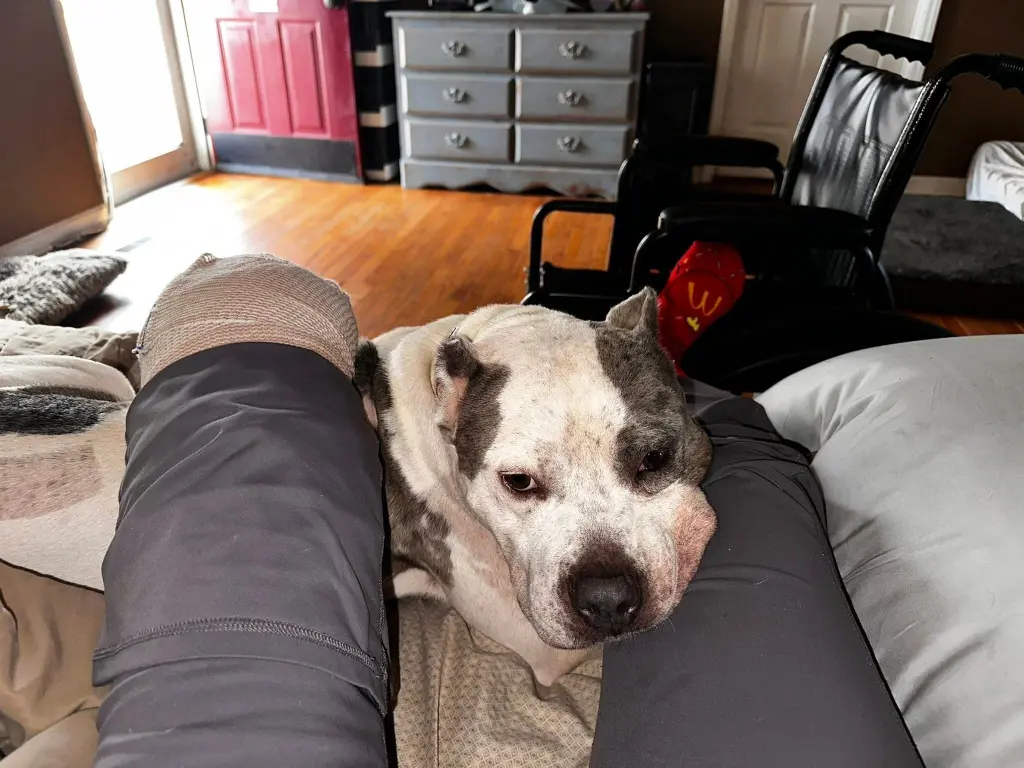
Amanda Mears also returned to work, facing additional challenges due to injuries sustained to her right hand and arm. As a healthcare worker, manual dexterity is essential, and adapting to these limitations has required patience and accommodations. At home, daily life has been reshaped around accessibility needs. She has stated that she cannot yet go outside alone and must rely on another adult to help her navigate stairs, highlighting the ongoing nature of her recovery.
Beyond the physical toll, the emotional weight of the incident remains significant. The trauma of being attacked by a dog she raised from puppyhood has complicated the healing process. The attack was not perpetrated by an unfamiliar or neglected animal but by a dog she considered a companion and friend. This reality has made processing the event especially painful, as it intersects with feelings of shock, grief, and loss alongside physical recovery.
Aftermath, Responsibility, and Moving Forward
In the aftermath of the attack, Mears made the decision to euthanize Dennis. She described him as having always been sweet and never previously aggressive, emphasizing that the choice was not made out of anger but out of responsibility. With a young child in the home, she concluded that ensuring her son’s safety had to take precedence over all other considerations. Although the decision was deeply painful, she stated that it was ultimately clear.
Read : Hilary Guinn’s Four Goats Killed by Two Pit Bulls That Escaped Neighbor’s Yard
This aspect of the story raises difficult questions about pet ownership, animal behavior, and risk assessment. Experts frequently note that dog aggression can be unpredictable and influenced by a range of factors, including environment, stress, and interactions with other animals. While many dogs live their entire lives without serious incidents, cases like Mears’ underscore that even familiar pets can pose risks under certain conditions.
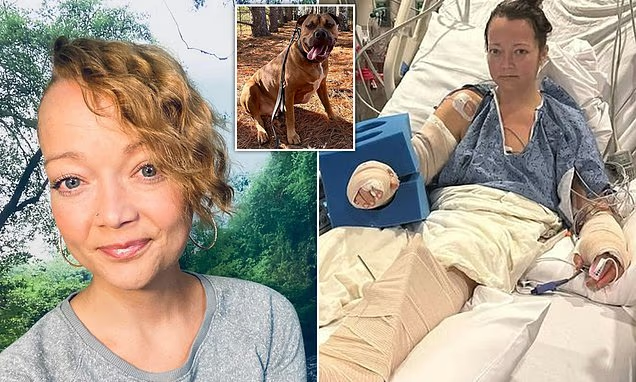
Mears has not framed her experience as an indictment of a particular breed or as a call for fear, but rather as a sobering reminder of how quickly circumstances can spiral. Her account reflects the complexity of loving animals while also recognizing the need for safety, boundaries, and preparedness. Breaking up dog fights is widely discouraged by veterinarians and animal behaviorists due to the high risk of injury, yet in the moment, instinct often overrides training or caution.
As she continues her recovery, Mears has shared updates about adapting her home and routines to her new reality. She has described small victories, such as increased ease moving around the house, alongside ongoing frustrations and limitations. Rehabilitation, prosthetic training, and emotional healing remain works in progress, with no definitive timeline for completion.
Her story has resonated widely because it combines elements of the familiar and the unimaginable. Many people have pets, trust them implicitly, and assume that their homes are safe environments. The suddenness and severity of the attack challenge those assumptions without offering simple answers. Mears’ experience illustrates that trauma does not always come from external threats but can arise within the spaces and relationships people consider safest.
Ultimately, Amanda Mears’ journey is one of survival, adaptation, and resilience in the face of irreversible change. While the attack took her leg, it did not take her capacity to move forward, make difficult decisions, or protect her family. Her ongoing recovery highlights both the fragility of everyday moments and the strength required to rebuild after they are shattered.