
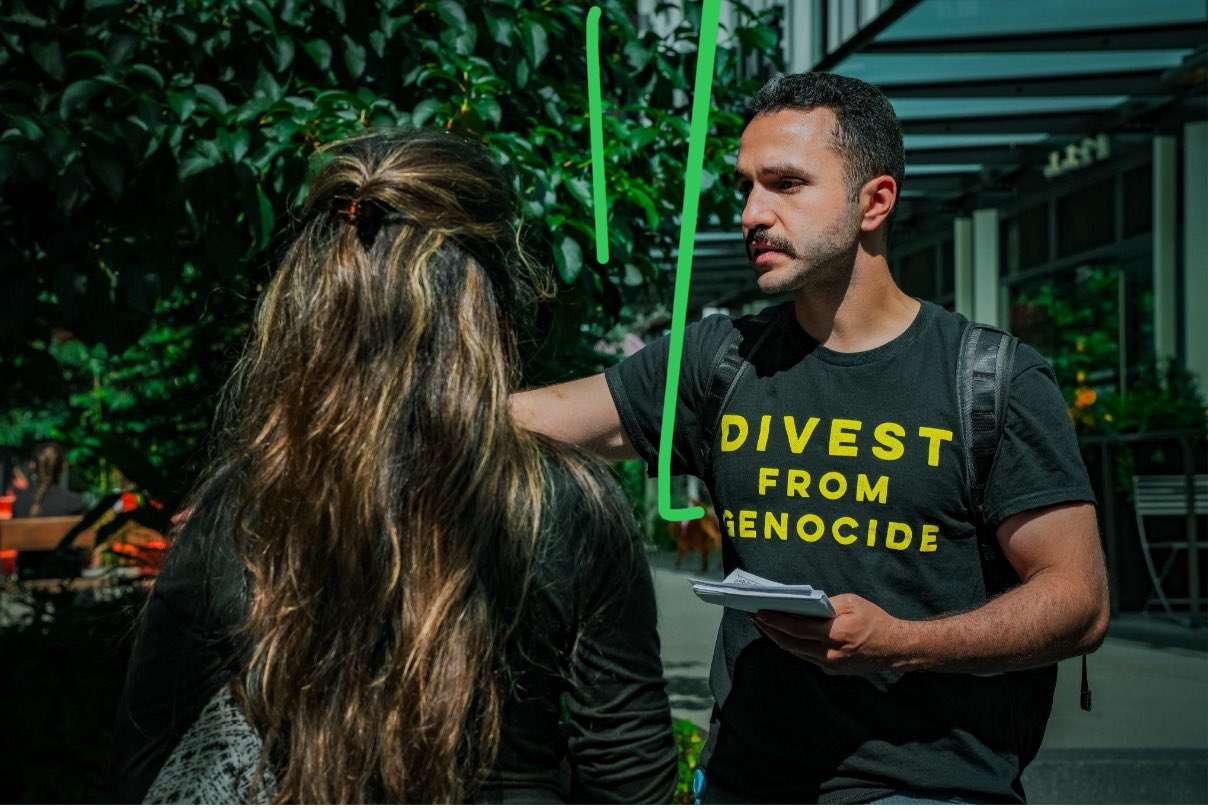
In the high-stakes world of Big Tech, where innovation often intersects with global politics, a recent incident at Amazon has thrust the company into the spotlight for its handling of employee dissent. On September 8, 2025, Ahmed Shahrour, a Palestinian software engineer working for Amazon’s Whole Foods division in Seattle, was placed on paid suspension after voicing strong opposition to the company’s business ties with the Israeli government. Shahrour’s protest centered on Project Nimbus, a $1.2 billion cloud computing contract that Amazon shares with Google, aimed at providing advanced AI, data centers, and infrastructure to Israel.
This event, reported widely in media outlets, highlights the tensions between corporate interests and personal ethics amid the ongoing Israel-Gaza conflict. Shahrour, who has been with Amazon for over three years, described his actions as a moral imperative, driven by the loss of family members in Gaza and a deep sense of dissonance in contributing to a company he believes enables violence against Palestinians. As news of his suspension spreads, it raises questions about free speech in the workplace, the role of tech giants in geopolitical conflicts, and the broader pattern of suppressing pro-Palestinian voices within the industry.
The Incident: Shahrour’s Protest and Amazon’s Swift Response
Ahmed Shahrour’s story began on a typical Monday morning in Seattle, but it quickly escalated into a corporate showdown. As a software engineer in Amazon’s Whole Foods unit, Shahrour had been quietly grappling with the ethical implications of his work. In a letter addressed directly to Amazon CEO Andy Jassy and other executives, which he simultaneously posted across multiple internal Slack channels, Shahrour laid bare his anguish. “Every day I write code at Whole Foods, I remember my brothers and sisters in Gaza being starved by Israel’s man-made blockade,” he wrote.
“I live in a state of constant dissonance: maintaining the tools that make this company profit, while my people are burned and starved with the help of that very profit. I am left with no choice but to resist directly.” This poignant declaration was not just a personal lament; it was a call to action. Shahrour urged his colleagues to join him in forming a “worker-led Palestinian resistance” group, which he dubbed the “Amazon Worker Intifada,” invoking the Arabic term for uprising historically associated with Palestinian struggles against occupation.
The response from Amazon was immediate and decisive. Just two hours after Shahrour sent his email and Slack messages, the company revoked his access to all internal systems, including email and tools. An HR representative informed him via message that “a post you made in multiple internal company Slack channels may violate multiple policies,” placing him on paid suspension “until further notice” pending an investigation.
Amazon also deleted his posts from the Slack channels, effectively erasing his public plea from the company’s digital footprint. Shahrour, speaking in interviews, noted that the suspension letter did not specify which policies were allegedly violated, leaving him in limbo. Despite the paid status, the revocation of access isolated him from his work environment, amplifying his sense of alienation.
Shahrour’s motivations are deeply personal. As a Palestinian with family ties to Gaza, he has endured the heartbreak of the ongoing conflict, which has claimed over 64,000 lives according to Gaza’s Health Ministry since the escalation following the October 7, 2023, Hamas attacks on Israel. He accused Amazon of complicity in what he described as “genocide” through its technological support for Israel.
In his communications, Shahrour highlighted perceived double standards within the company: posts in the “Arabs at Amazon” Slack channel discussing the Gaza conflict were routinely deleted, while anti-Palestinian remarks in other channels, such as referring to Palestinians as “human animals who deserve nothing but death,” remained untouched. He also cited recent incidents, including a warning issued to another engineer for sharing an article about American doctors volunteering in Gaza and the termination of a French employee for criticizing Israel on social media. These examples, which Shahrour claims were confirmed by sources familiar with the matter, paint a picture of selective moderation that favors one side of the discourse.
Amazon suspends Palestinian engineer Ahmed Shahrour after he criticised the company’s $1.2 billion Project Nimbus contract with Israel, placing him on paid leave pic.twitter.com/ug6egCiGxg
— TRT World Now (@TRTWorldNow) September 12, 2025
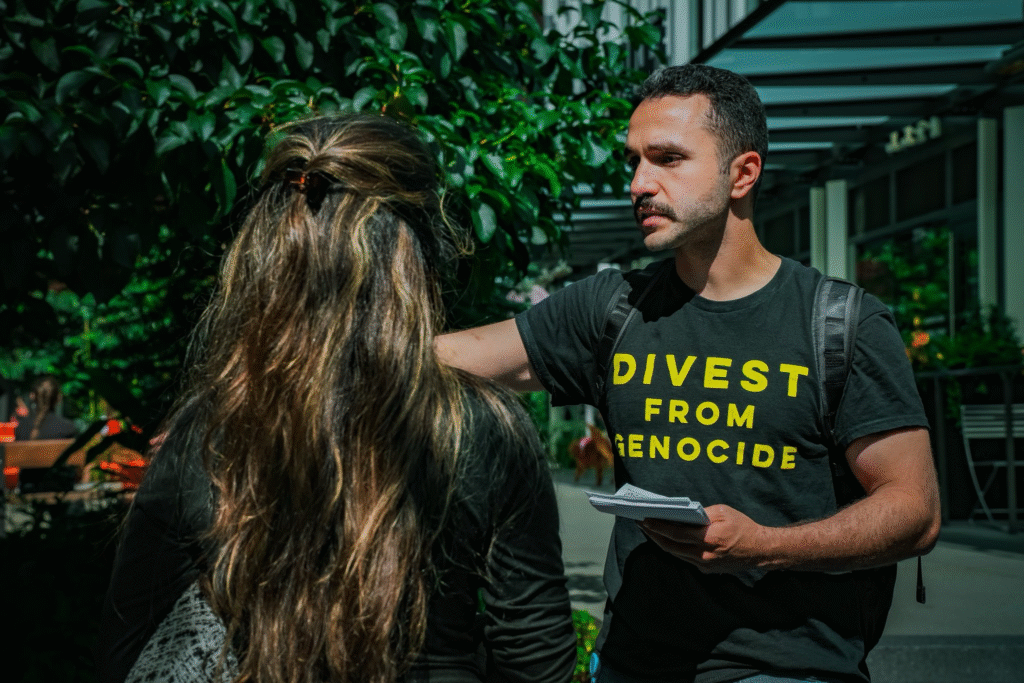
Undeterred by the suspension, Shahrour took his protest outside the company’s walls. Accompanied by supporters, he distributed flyers outside Amazon’s Seattle headquarters, calling on workers to pressure the company to sever ties with Israel. However, this external activism was met with resistance; Shahrour reported harassment from colleagues and warnings from security personnel, who threatened to involve police for alleged trespassing.
Amazon spokesperson Brad Glasser declined to comment on Shahrour’s specific case but emphasized that the company “doesn’t tolerate discrimination, harassment, or threatening behavior or language of any kind in our workplace, and when any conduct of that nature is reported, we investigate it and take appropriate action based on our findings.” This statement implies that Shahrour’s use of terms like “intifada” or his direct challenge to leadership may have been interpreted as threatening, though no explicit threats were mentioned in his letter. The incident underscores the fine line employees walk when engaging in political activism on company platforms, especially in a polarized global context.
Project Nimbus: The Controversial Cloud Contract Fueling the Fire
At the core of Shahrour’s protest lies Project Nimbus, a landmark deal that has become a lightning rod for criticism since its inception in 2021. Valued at approximately $1.2 billion, the contract was awarded jointly to Amazon Web Services (AWS) and Google Cloud to modernize Israel’s government infrastructure with cutting-edge cloud computing, artificial intelligence, machine learning, and data storage solutions.
Proponents, including the Israeli government, argue that the project is essential for enhancing civilian services, such as healthcare, education, and public administration, across the nation’s ministries. Google has explicitly stated that the services are “not directed at highly sensitive, classified, or military workloads,” positioning it as a standard commercial offering available to governments worldwide.
However, critics, including human rights organizations and tech workers, contend that the contract’s scope extends far beyond civilian applications, potentially enabling military surveillance and operations in occupied Palestinian territories. Reports from 2024 revealed that the Israel Defense Forces (IDF) were utilizing AWS to power aspects of their efforts in the Gaza war, including data analysis and AI-driven targeting systems.
Shahrour echoed these concerns in his letter, accusing Amazon of “aiding Israel’s military operations through technology provision.” He referenced a 2023 petition signed by over 1,700 Amazon employees demanding the termination of all contracts with the Israeli military and an immediate ceasefire, which the company ignored. This history of internal dissent dates back further; in 2021, workers from both Amazon and Google formed coalitions to protest the deal, arguing that their labor was being used to “power human rights violations against Palestinians.”

The contract’s implications are profound in the context of the Israel-Palestine conflict. Technologies provided under Project Nimbus could facilitate facial recognition, predictive policing, and real-time data processing—tools that, in the hands of the military, have been linked to the displacement and targeting of civilians in Gaza and the West Bank. Shahrour’s personal stake adds emotional weight: having lost family members in the bombardment, he views his daily coding contributions as indirectly funding the very systems exacerbating the crisis.
Amazon has maintained a neutral stance, stating it supplies technology “wherever they are based” without delving into specifics. Yet, the opacity surrounding the contract’s military applications has fueled ongoing activism. Groups like No Tech for Apartheid, which has staged protests at Microsoft and other firms, have amplified Shahrour’s case, drawing parallels to broader campaigns against tech-enabled apartheid.
This controversy is not isolated to Amazon. Similar deals with Microsoft, including Azure cloud services for the IDF, have led to firings and arrests of protesting employees. In April 2024, Google dismissed 28 workers following sit-ins against Project Nimbus, and just a month before Shahrour’s suspension, Microsoft terminated two employees for demonstrating inside its headquarters. These patterns suggest a coordinated industry response to employee activism, prioritizing lucrative government contracts over internal harmony. As the Gaza conflict persists into 2025, Project Nimbus remains a symbol of how tech giants’ neutrality claims ring hollow when billions are at stake.
Broader Implications: Free Speech, Corporate Ethics, and the Future of Tech Activism
Shahrour’s suspension reverberates far beyond one individual’s plight, igniting debates on free speech, corporate accountability, and the ethical responsibilities of tech workers. In an era where employees increasingly view their roles through a moral lens, incidents like this expose the limits of dissent in at-will employment states like Washington, where Amazon is headquartered.
Legal experts note that while Shahrour’s paid status offers some protection, the company’s ability to investigate and potentially terminate him is legally defensible under policies prohibiting disruptive conduct. However, the perceived bias in enforcement—silencing pro-Palestinian voices while tolerating anti-Palestinian rhetoric—raises allegations of discrimination, potentially inviting scrutiny from labor rights groups or even the Equal Employment Opportunity Commission.
On a corporate level, Amazon’s actions reflect a broader trend among Big Tech firms to safeguard government partnerships amid geopolitical sensitivities. The company’s silence on Shahrour’s case, coupled with Glasser’s generic statement, avoids fueling the fire but also sidesteps addressing systemic issues like content moderation disparities.
Shahrour’s claims of a “racist double standard” align with reports from employee resource groups, where pro-Palestinian discussions are censored to maintain a “neutral” workplace. This approach, critics argue, equates to complicity in suppressing marginalized voices, echoing historical patterns of corporate alignment with powerful governments. CEO Andy Jassy’s post-October 7, 2023, email expressing sympathy for Israeli hostages without mentioning Palestinian casualties, as highlighted by Shahrour, further exemplifies this imbalance, which he labeled a “blatant act of white supremacy.”
The incident also spotlights the human cost of tech’s global reach. For employees like Shahrour, who immigrated to the U.S. seeking opportunity, working for a company entangled in their homeland’s tragedy creates unbearable tension. His call for an “intifada” at Amazon, while provocative, draws from a tradition of nonviolent and militant resistance, signaling a potential wave of organized labor action. Social media reactions have been polarized: pro-Palestinian accounts amplify calls for boycotts, while others defend Amazon’s right to enforce policies. This divide mirrors societal fractures, with over 64,000 Palestinian deaths contrasting with Israel’s security narrative.
Looking ahead, Shahrour’s case could inspire more activism, especially as investigations into Project Nimbus continue. If Amazon terminates him, it risks lawsuits or unionization drives; if it reinstates him, it might embolden further protests. For the tech industry, this serves as a wake-up call to reconcile profit motives with human rights. As Shahrour stated in a Medium post, “We, the workers, have tried the appropriate channels… Now, we resist.” In a world where AI and cloud tech power both progress and peril, balancing ethics with business will define the sector’s legacy. Shahrour’s suspension, while a personal setback, may catalyze a reckoning, reminding us that behind every line of code is a human story demanding to be heard.