
In the picturesque seaside town of Cascais, Portugal — a destination known for its cobblestone streets, golden beaches, and lively nightlife — a shocking act of violence has shattered the tranquility that typically draws thousands of visitors each year. In the early hours of Wednesday morning, an American Tourist Stabbed to Death in Portugal After altercation that began over something as trivial as a hat. The 35-year-old victim, whose name has not yet been released, was attacked alongside his friend in what authorities describe as a senseless and brutal confrontation involving three suspects.
The incident has sparked widespread concern over tourist safety in one of Portugal’s most visited coastal areas and prompted a full-scale investigation by national police. According to statements from Portugal’s Public Security Police (PSP), the assault occurred around 3:20 a.m. in the heart of Cascais, roughly 20 miles west of Lisbon. What began as a seemingly minor provocation quickly escalated into deadly violence.
The initial victim, aged 34, had been walking back to his hotel when three men approached him and allegedly tried to touch his hat without consent. When he refused and told them to stop, one of the men punched him repeatedly in the face. Injured and shaken, he called his friend, who was nearby at the popular nightclub TAJ, to come to his aid. What happened next would leave the small coastal town reeling.
American Tourist Stabbed to Death in Portugal Street
The friend, aged 35, arrived shortly after receiving the distress call, confronting the group in an attempt to defuse the situation. Witness accounts suggest that tempers flared quickly, with both parties engaging in a heated verbal exchange that spiraled into physical violence. Amid the confrontation, one of the suspects produced a sharp weapon and began attacking both men. According to police reports, the suspect stabbed them repeatedly in the face, arms, and back before the group fled the scene in a nearby parked vehicle.
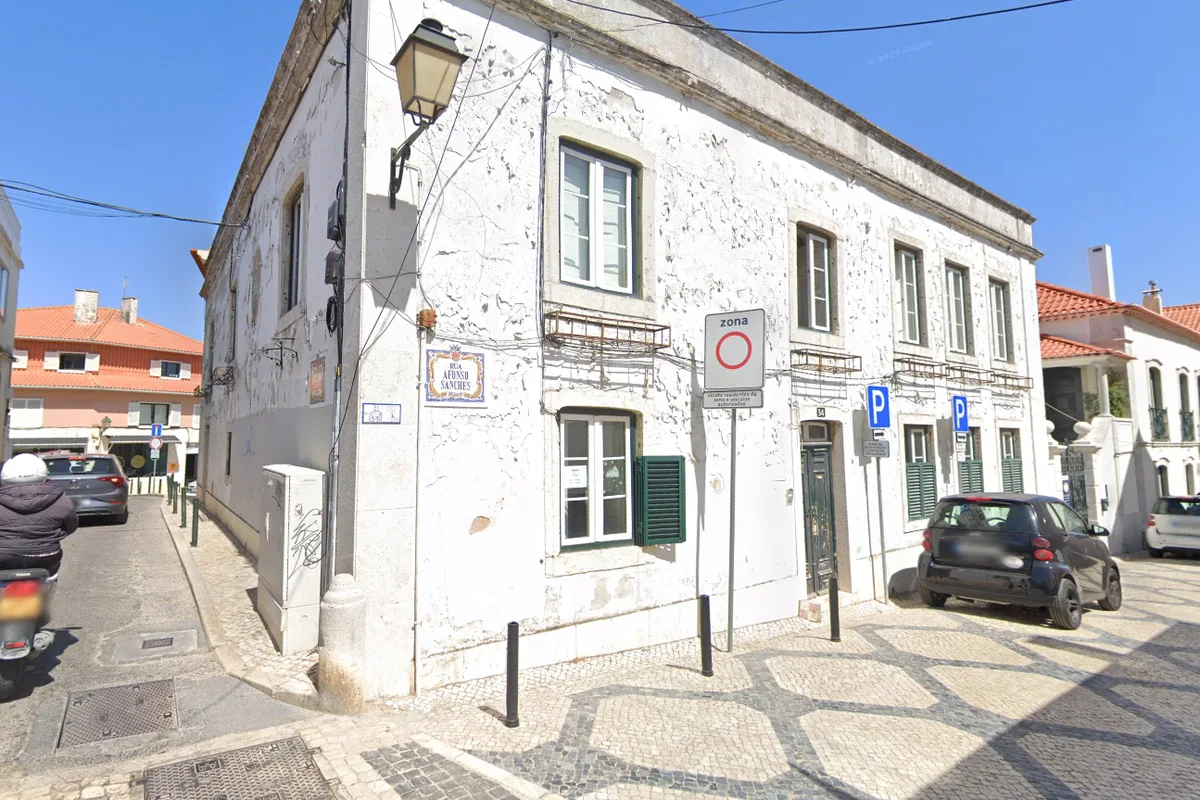
Authorities responding to emergency calls arrived moments later to a horrific sight. On Rua Afonso Sanches — a busy street lined with restaurants, bars, and boutique shops — they discovered both victims covered in blood. The 35-year-old, described as “lying on the ground in a supine position, inanimate and with no obvious signs of life,” had sustained fatal stab wounds to his back. Despite the swift arrival of paramedics and firefighters from Cascais and neighboring Estoril, he was declared dead at the scene. His companion, still conscious, was found sitting on the pavement, nursing facial injuries and a deep cut on his right elbow. He was rushed to Santa Maria Hospital in Lisbon for treatment and is expected to recover physically, though the psychological toll of the ordeal remains unimaginable.
The crime scene quickly filled with police officers, forensic teams, and shocked onlookers. Authorities cordoned off the area as investigators combed the cobblestone streets for clues. Witnesses were questioned, and CCTV footage from surrounding businesses was collected. Within hours, the incident had made headlines across Portugal and the United States, prompting a formal statement from the U.S. State Department. “We are aware of reports of an attack on two U.S. citizens in Cascais and are in contact with local authorities,” a spokesperson told CNN, emphasizing that consular support would be made available to the victims’ families.
Investigation and Arrests
The Criminal Police Body (PSP) and the Judicial Police (PJ), Portugal’s elite investigative unit, have taken charge of the case. Working swiftly, officers were able to track down and arrest three suspects believed to be connected to the attack. While their identities have not been made public, authorities confirmed that one of the men faces a homicide charge, while the other two are accused of participating in the assault. All three remain in custody as questioning continues.
Early reports suggest that the suspects may have been local residents with prior criminal records, though investigators have not ruled out other motives. Police sources have indicated that the assault was likely unplanned and spontaneous, the result of “reckless provocation and intoxicated aggression” rather than premeditation. “What we are seeing is an instance of violence escalating rapidly from a trivial incident,” said one officer familiar with the case. “This was a random confrontation that ended in tragedy.”
The Judicial Police are now reconstructing the sequence of events using surveillance footage and forensic evidence. Blood samples, fingerprints, and DNA traces collected from the scene have been sent for laboratory analysis. Authorities are also working to determine whether the weapon used in the stabbing — believed to be a folding knife or similar sharp object — can be linked directly to any of the suspects.
An American tourist died of stab wounds and another was severely injured, police said, after an attempted robbery in the resort town of Cascais near the Portuguese capital, Lisbon, in the early hours of Oct. 15. pic.twitter.com/HfSj87gfFl
— NTD News (@NTDNews) October 15, 2025
Meanwhile, the U.S. Embassy in Lisbon has been assisting local officials with identification and repatriation procedures for the deceased victim. Friends of the two men, who were reportedly visiting Portugal as part of a week-long holiday, have expressed shock at the senseless nature of the attack. One acquaintance told Portuguese media that the pair were “gentle, well-mannered people” who “loved to travel and explore Europe.” The same acquaintance added, “They were just enjoying their time here. No one could imagine something like this happening in a peaceful town like Cascais.”
Local residents, too, have been left stunned. Cascais, long considered one of Portugal’s safest and most family-friendly destinations, has rarely seen violent crimes of this nature. The municipality, famous for its marina, beaches, and vibrant cultural scene, attracts a steady flow of visitors from around the world. “This is not something that happens here,” said a café owner whose business overlooks the street where the stabbing occurred. “We are used to tourists walking around even late at night — it’s always felt safe. Now people are nervous.”
Tourist Safety and Broader Concerns
While Portugal consistently ranks among the safest countries in Europe, the death of an American tourist in such circumstances has reignited discussions about safety protocols in nightlife districts frequented by visitors. According to the Global Peace Index, Portugal is currently the seventh safest country in the world, known for its low crime rates and welcoming atmosphere. However, incidents of street violence linked to alcohol and late-night altercations have been on a slight uptick, particularly in urban and coastal entertainment areas.
Police data show that while violent crime remains rare, assaults involving sharp objects have seen marginal increases in recent years, often tied to disputes outside bars and nightclubs. Cascais, being a popular nightlife spot for both locals and tourists, has occasionally witnessed brawls during the early hours of the morning — though none as deadly as this one.
Local authorities have responded by pledging to increase nighttime patrols in high-traffic tourist areas. Cascais Mayor Carlos Carreiras expressed condolences to the victim’s family and condemned the attack as “an act of cowardice that has no place in our community.” He assured that municipal security forces are cooperating fully with the national investigation and that steps will be taken to “prevent any recurrence of such senseless violence.”
Experts in tourism and criminology note that while the event is shocking, it does not reflect a broader pattern of danger in Portugal. “This is an isolated incident, not a sign of systemic risk,” said Dr. Helena Duarte, a criminologist at the University of Lisbon. “However, it serves as a reminder that violent altercations can erupt anywhere when alcohol, pride, and impulsivity mix. For tourists, the best protection is awareness and avoidance of confrontation, even over something seemingly insignificant.”

The U.S. State Department currently rates Portugal as a “Level 1” travel destination — the lowest advisory level, encouraging standard precautions. This rating is unlikely to change following the Cascais incident, but U.S. authorities are expected to monitor developments closely. Meanwhile, the victim’s death has sparked grief across online travel communities, where fellow Americans have expressed solidarity and concern. “It’s terrifying to think something so small could end someone’s life like this,” one commenter wrote on a popular travel forum. “I’ve been to Cascais many times, and it always felt perfectly safe.”
Residents of Cascais have organized a small candlelight vigil to honor the slain tourist, placing flowers and candles along Rua Afonso Sanches. Social media posts from local organizations and business owners have also condemned the violence and extended condolences to the victim’s family. “Our town grieves with you,” one post read. “Cascais stands for peace, friendship, and hospitality. Violence will never define us.”
Authorities continue to appeal for witnesses who may have seen the confrontation or the suspects’ getaway vehicle. Police believe that additional security footage from nearby establishments could help clarify the sequence of events and strengthen the case against those arrested. Investigators are also working to determine whether the suspects had been involved in other altercations earlier that night.
As the judicial process unfolds, the incident serves as a grim reminder of how quickly ordinary moments can turn catastrophic. What began as a trivial provocation — a stranger reaching for a hat — spiraled into a tragedy that ended one life, traumatized another, and shook an entire community. For a town that prides itself on its warmth and serenity, the shadow cast by this senseless act will linger long after the investigation concludes.
While the surviving victim continues to recover in Lisbon under medical supervision, his testimony is expected to play a crucial role in identifying the primary aggressor and detailing the sequence of violence. Prosecutors have indicated that the case will likely proceed to court within weeks, with homicide and aggravated assault charges carrying the potential for lengthy prison sentences under Portuguese law.
For now, Cascais mourns quietly — a town famed for its charm and calm, now struggling to come to terms with a moment of brutality that feels entirely foreign to its identity. The cafés along the marina still open their doors, the ocean still glimmers under the Portuguese sun, but beneath the town’s tranquil façade, the memory of that October night endures — a painful testament to the fragility of peace and the human cost of senseless aggression.