
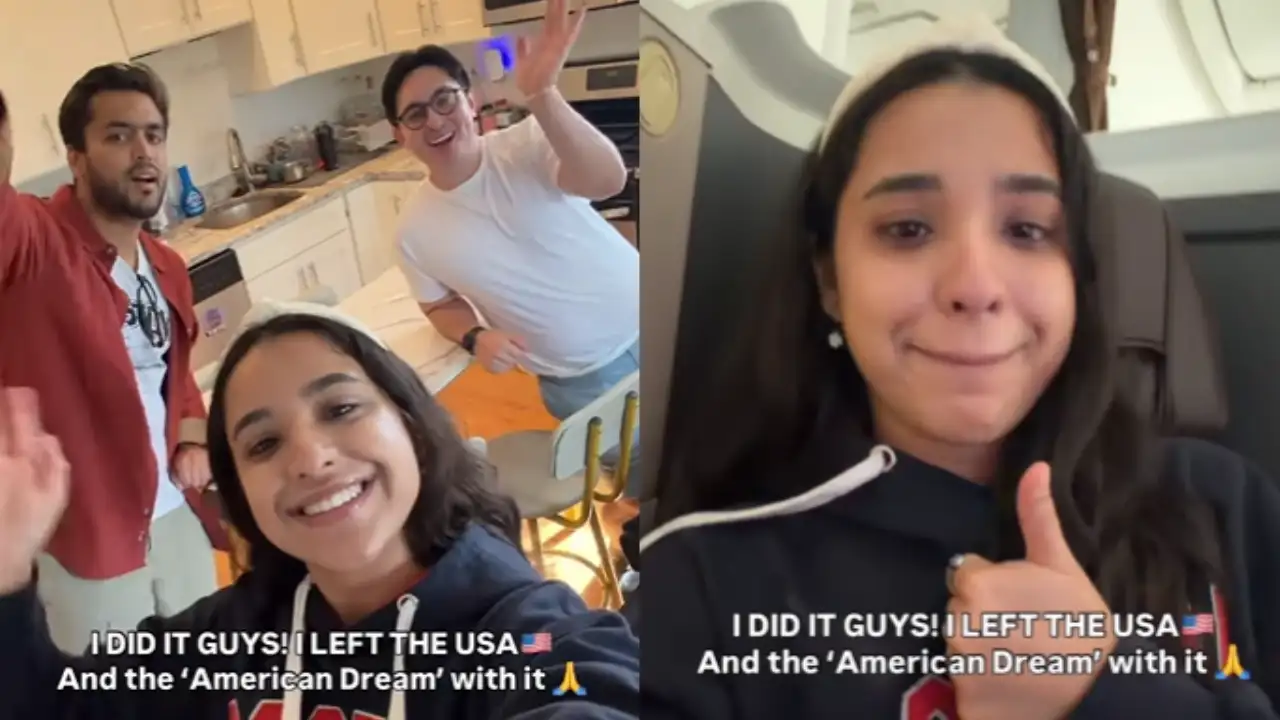
In a poignant reflection on the fragility of the American Dream, Ananya Joshi, a 2024 master’s graduate in Biotechnology from Northwestern University, has become a viral voice for thousands of Indian students navigating the treacherous waters of US visa policies. Her story, shared through raw Instagram videos and LinkedIn posts, underscores the harsh realities of post-graduation job hunts under the F-1 Optional Practical Training (OPT) program.
Laid off from her biotech startup role amid company-wide downsizing, Joshi spent months in a frantic search for sponsorship, only to face repeated rejections tied to visa uncertainties. Now relocating to Dubai, she is openly urging fellow Indian students to broaden their horizons beyond the US, emphasizing that the world offers abundant pathways for success. Her message arrives at a critical juncture, as tightened immigration scrutiny—exacerbated by policy shifts under the Trump administration—leaves many international graduates in limbo.
Joshi’s experience highlights a broader crisis affecting over 200,000 Indian students annually pursuing higher education in the US. According to recent data from the Institute of International Education, Indian enrollment in US universities hit record highs in 2024, driven by prestigious STEM programs. Yet, the transition from academia to employment remains a gauntlet, with OPT providing just 12 months of work authorization—extendable to 36 months for STEM fields like biotechnology—contingent on employer sponsorship for H-1B visas. Joshi’s saga, which exploded across social media in late September 2025, serves as a stark reminder of these barriers, prompting discussions on diversified global strategies for career building.
Ananya Joshi’s US Journey: Ambition Meets Harsh Realities
Ananya Joshi arrived in the US brimming with optimism, embodying the aspirations of countless Indian families who view American education as a golden ticket to global mobility. Hailing from India, she enrolled at Northwestern University, one of the nation’s top institutions for biotechnology, completing her master’s degree in 2024. The program equipped her with cutting-edge skills in molecular biology and drug development, aligning perfectly with the booming US biotech sector valued at over $500 billion. Securing a position at a Chicago-based biotech startup through OPT was a milestone; it marked her entry into professional independence, funding her own life in a foreign land for the first time.
However, the biotech industry’s volatility struck swiftly. In early 2025, amid economic headwinds and funding crunches, her employer initiated mass layoffs. Joshi found herself among the casualties, a development she anticipated but could not fully prepare for. “As a person on a temporary visa, my situation becomes far more complicated after this,” she wrote in a May 2025 LinkedIn post.
The OPT clock, already ticking, imposed a one-month deadline to find a new role or risk deportation. What followed was a grueling campaign: over 20 interviews, countless applications, and relentless networking. Employers, wary of sponsorship costs and bureaucratic hurdles, cited her F-1 status as a non-starter. “Whether it was full-time roles or contract roles, sponsorship was still really hard to find for the field of biotechnology,” Joshi later reflected. This phase exposed systemic inequities. The H-1B visa lottery, capped at 85,000 annually, favors larger firms, leaving startups and mid-sized companies hesitant to invest in international talent.
Joshi’s rejections echoed stories from peers: talented graduates sidelined by “citizens or green card holders only” stipulations. Her public documentation—reels showing rejection emails, interview prep sessions, and moments of despair—garnered empathy from Indian diaspora communities, with hashtags like #OPTStruggles trending on Instagram. By mid-September, with her visa expiration looming, Joshi confronted an unwelcome truth: the US, once a beacon of opportunity, had become a closed door.
The Visa Labyrinth and a Tearful Exit from America
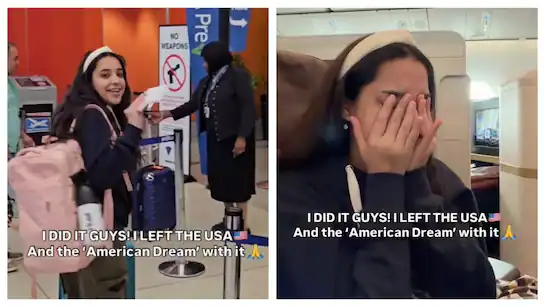
Joshi’s departure on September 29, 2025, unfolded in a viral Instagram reel that captured global attention, amassing millions of views within days. Filmed in the plush confines of an Etihad first-class suite en route to Dubai, the video showed her tears streaming as she bid farewell to the skyline receding below. “By far the hardest step in this journey. Even though I seemed to have accepted my reality, nothing could have prepared me for this day,” she captioned. “America was my first home as a financially independent adult and that will always be a special thing to me. Though short-lived, I really appreciate the life you gave me. AMERICA, I LOVE YOU.”
The emotional outpouring resonated deeply, but it also ignited controversy. Netizens split into camps: supporters praised her vulnerability, sharing similar tales of visa-induced heartbreak, while critics labeled it a “privileged struggle.” Comments flooded in, questioning the optics of crying in business class: “Left the American dream to pursue the Dubai dream and weeping in a first class, such a tough life.” Others defended her, noting the psychological toll of uprooting after investing thousands in education and relocation. Joshi, maintaining composure, has not directly addressed the backlash, focusing instead on advocacy.
Read : Indian-Origin Couple Accused of Deliberately Starving 3-Year-Old Daughter to Death in London
At its core, her exit spotlighted the OPT program’s flaws. Designed as a bridge to permanent residency, it often strands graduates in a “visa nightmare,” as Joshi termed it. Policy experts point to the Trump-era restrictions, reinstated in 2025, which ramped up scrutiny on H-1B approvals and curtailed extensions. For Indian students, who comprise 27% of US international enrollment, this translates to heightened deportation risks. Joshi’s case, detailed in her posts, revealed how even E-Verify compliance—meant to streamline hiring—failed her when her employer backtracked on sponsorship promises.
Unable to pivot domestically, she activated a contingency: leveraging family networks and alumni connections to line up prospects abroad. This farewell reel, shared under her handle @ananyastruggles, transformed personal grief into public discourse. Indian media outlets amplified it, framing Joshi as a cautionary figure amid rising US-India tensions over skilled migration. Her story prompted calls for reforms, including expanded OPT durations and streamlined sponsorships, though legislative momentum remains stalled in a polarized Congress.
Embracing the World: Joshi’s Plea for Diversified Dreams
From the sands of Dubai, Joshi has pivoted to empowerment, explicitly urging Indian students to “look beyond” the US fixation. In a follow-up post dated October 2, 2025, she declared, “The world is actually really big; there are way more opportunities out there.” This sentiment, echoed in interviews with NDTV, positions her as a mentor figure, encouraging peers to view setbacks not as failures but “openings to explore new possibilities.” She recounted her layoff not as tragedy, but a catalyst for reinvention, advising, “Don’t let one door closing define your path—cast a wider net early.”
Dubai emerges as her immediate beacon, a hub for biotech innovation with tax-free salaries and streamlined work visas. The UAE’s Golden Visa program, offering five-to-ten-year residencies to skilled professionals, contrasts sharply with US red tape. Joshi highlighted roles in Dubai’s free zones like Dubai Biotech Park, where firms seek Indian talent for R&D in genomics and personalized medicine.
“Sponsorship here is straightforward—no lotteries, just proven skills,” she noted, drawing from initial outreach. Beyond Dubai, she name-dropped Canada, Germany, and Singapore as viable alternatives. Canada’s Express Entry system prioritizes STEM graduates, while Germany’s Blue Card eases EU access for biotech experts earning above €58,400 annually. Singapore’s Employment Pass, with processing times under a month, appeals for its Asia-Pacific focus.
Joshi’s counsel is pragmatic: diversify applications from day one of grad school. “Build a global LinkedIn network, attend virtual fairs for Europe and the Middle East,” she recommends. For Indian students, this means eyeing scholarships like Germany’s DAAD or Singapore’s A*STAR, which fund biotech pursuits without the US’s debt burden—average US master’s costs hit $60,000, versus $20,000 in Dubai. Her message counters the cultural narrative of America as the sole promised land, noting that 40% of Indian STEM grads now opt for non-US destinations, per 2025 migration reports.
Reactions have been mixed but impactful. Alumni groups at IITs and NITs have hosted webinars featuring Joshi, while student forums buzz with threads on “Post-US Plan B.” Critics persist, arguing her privilege—affluent background enabling Dubai’s high living costs—undermines universality. Yet, her authenticity shines: “I cried because it hurt, but I’m excited for what’s next.” As of October 4, 2025, Joshi reports early Dubai interviews, signaling a fresh chapter. Her urging resonates: in a multipolar world, Indian talent need not queue at one gate. By sharing her blueprint, Joshi empowers a generation to chase dreams unbound by borders.