
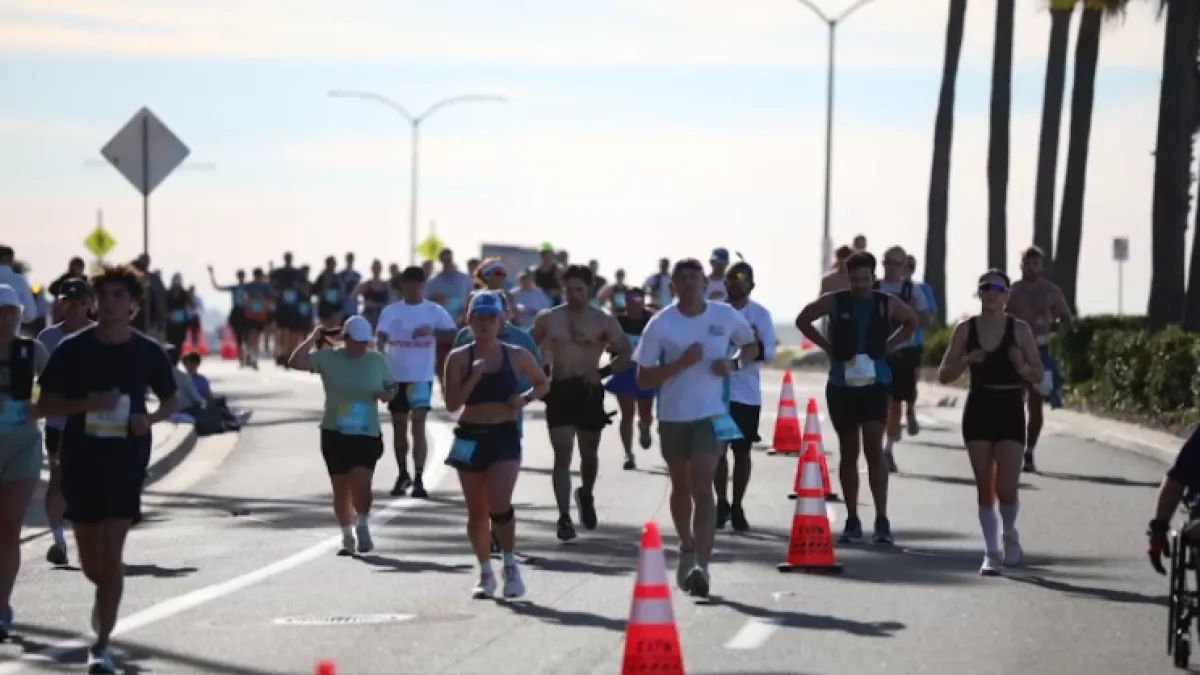
A 25-year-old runner died after collapsing just short of the finish line at the Carlsbad Half Marathon, casting a somber shadow over the popular Southern California race and raising renewed attention on medical emergencies during endurance events. Andres Aguilar, an active young professional who had trained for the race and was running alongside coworkers, suffered a witnessed cardiac arrest near the end of the course and later died at a nearby hospital.
City officials, race organizers, and Aguilar’s family have since shared details surrounding the incident, the emergency response, and the broader circumstances of the event, as investigations into the exact cause of death continue.
The Carlsbad Half Marathon, hosted by In Motion Events, drew thousands of runners over the weekend and was supported by a multi-layered medical plan involving on-site staff, ambulances, and coordination with local emergency services. Despite those preparations, Aguilar became one of nearly a dozen participants who required hospital care during the race. His death has prompted both grief and reflection within the local community, the running world, and among those who knew him personally.
Collapse Near the Finish Line and Emergency Response
According to the city of Carlsbad, Andres Aguilar collapsed just before reaching the finish line near Marron Road during Sunday’s race. Witnesses and race officials reported that he went into cardiac arrest, prompting an immediate medical response. Emergency personnel rushed him to Tri-City Medical Center in Oceanside, where he later died. The San Diego County Medical Examiner’s Office confirmed that Aguilar had suffered a witnessed cardiac arrest and stated that his cause of death remains under investigation.
City officials said that nine runners were transported to hospitals by ambulance during the marathon. Eight of those ambulance transports occurred within a roughly 45-minute window around 10 a.m., a period when race activity and runner density were at their peak. Officials noted that this figure does not include participants who were treated at on-site medical tents for non-emergent issues and did not require hospital transport.
In response to questions about preparedness, the city outlined the medical plan that had been in place for the event. The race featured four ambulances stationed along the course, two first aid stations, and approximately two dozen roaming race guards trained in cardiopulmonary resuscitation. Medical staffing was also concentrated at the finish line, where runners are statistically more likely to experience distress due to physical exertion.
Read : Aurélien Fontenoy Becomes Fastest Ever to Climb Eiffel Tower Stairs on All-Terrain Bike
A spokesperson for the marathon organizers elaborated on these arrangements, stating that the finish line was staffed with an emergency room nurse, EMT supervisors, paramedics, and additional EMTs, with further medical personnel positioned at other locations along the route. Organizers emphasized that they worked closely with local first responders and that the emergency response unfolded quickly once Aguilar collapsed.
Read : Whistler, Canada: A Paradise for Adventure Seekers and Nature Lovers
In Motion Events, the company that hosted the race, released a statement expressing sorrow over the runner’s death and gratitude for the actions of medical teams and emergency responders. The organizers reiterated that participant safety is a central priority of their events and acknowledged the profound impact of the incident.
Aguilar’s Life, Background, and Preparation for the Race
Aguilar was born and raised in San Antonio, Texas, and was the middle child in a family of three boys. His family described him as someone who had always been active and deeply engaged with the people around him. Two years ago, he moved to San Diego for work, a transition that allowed him to spend more time outdoors, an activity he greatly enjoyed.
According to his family, Aguilar frequently spent his free time kayaking or snorkeling in La Jolla and hiking in the region’s coastal and inland areas. Running his first half marathon was viewed by those close to him as a natural extension of his active lifestyle and team-oriented personality. He chose to participate in the Carlsbad Half Marathon alongside a group of coworkers, turning the race into both a personal milestone and a shared experience.

Family members said Aguilar trained in advance of the event and followed a steady pace throughout the race. Data from his live race tracker showed that he maintained his pace through the first 10 miles of the 13.1-mile course, suggesting that he was running within his expected capacity for most of the event. He collapsed just before the finish line, an area where physical strain can intensify as runners push toward completion.
Aguilar worked as an investment consultant at a Charles Schwab branch in Carlsbad, having joined the firm in 2023. In a statement released after his death, the company described him as a valued team member whose loss was felt deeply by colleagues and friends. The firm expressed condolences to his family and said it was supporting employees in the Carlsbad area as they grieved.
Those who knew Aguilar described him as disciplined, social, and committed to both his professional and personal pursuits. His family noted that he received regular medical checkups each year and that no underlying health issues had been identified prior to the race. They emphasized that while routine examinations did not reveal any problems in his case, they hope that sharing his story will encourage others to prioritize regular health screenings.
Race Safety, Medical Planning, and Ongoing Investigation
The death of a young runner at a high-profile endurance event has inevitably focused attention on race-day safety protocols and the inherent risks of long-distance running, even among seemingly healthy participants. City officials and race organizers have emphasized that comprehensive medical planning was in place and that the response to Aguilar’s collapse was swift and coordinated.
Medical incidents during marathons and half marathons are not uncommon, particularly as events attract runners of varying experience levels and physical conditions. Cardiac emergencies, though rare among young athletes, can occur suddenly and without prior warning signs. For this reason, many races invest heavily in on-site medical staffing, rapid-response teams, and coordination with nearby hospitals.
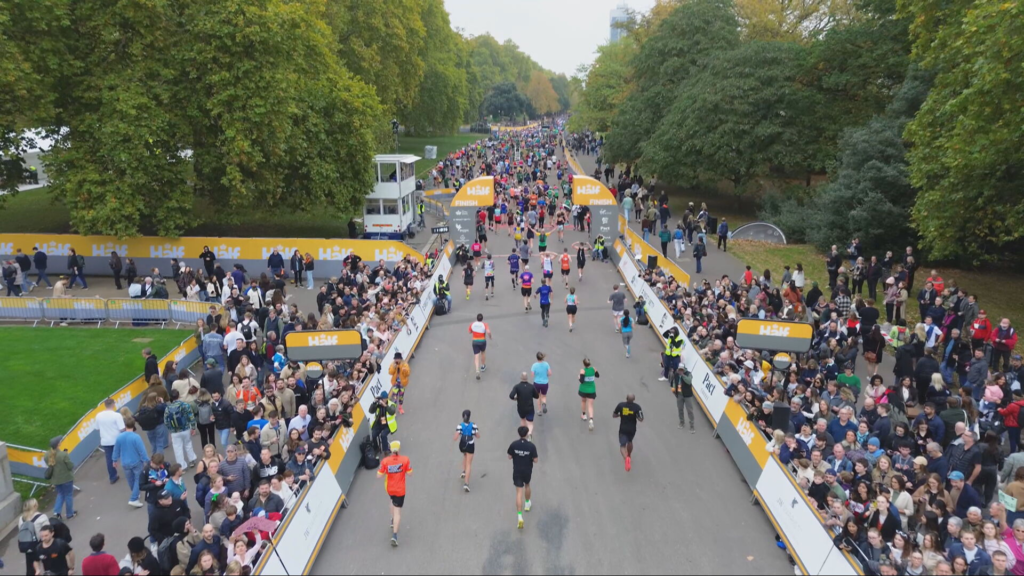
In Carlsbad, officials noted that the concentration of ambulance transports within a short time frame reflected a busy period during the race rather than a systemic failure. The presence of on-site medical tents meant that additional runners were treated for dehydration, cramps, or other non-emergent conditions without requiring hospital care. The San Diego County Medical Examiner’s Office continues to investigate Aguilar’s death, and a final determination of the cause is expected following a full review, which may include an autopsy and toxicology testing.
Until that process is complete, officials have refrained from drawing conclusions beyond confirming that he suffered a cardiac arrest. Statements from the city and race organizers have underscored the importance of collaboration between event staff and local emergency services. Both parties highlighted that first responders were integrated into the race’s medical plan and that communication channels were active throughout the event.
Aguilar’s family has asked for privacy as they grieve, while also sharing aspects of his life and preparation in order to provide a clearer picture of who he was beyond the circumstances of his death. They have expressed appreciation for the support they have received from friends, coworkers, and the broader community in the days following the race.
As the investigation proceeds, the Carlsbad Half Marathon incident stands as a reminder of the unpredictability of medical emergencies during endurance sports. For many runners and organizers, it reinforces the need for ongoing evaluation of safety measures, emergency preparedness, and participant education, even as thousands continue to take part in similar events each year.