
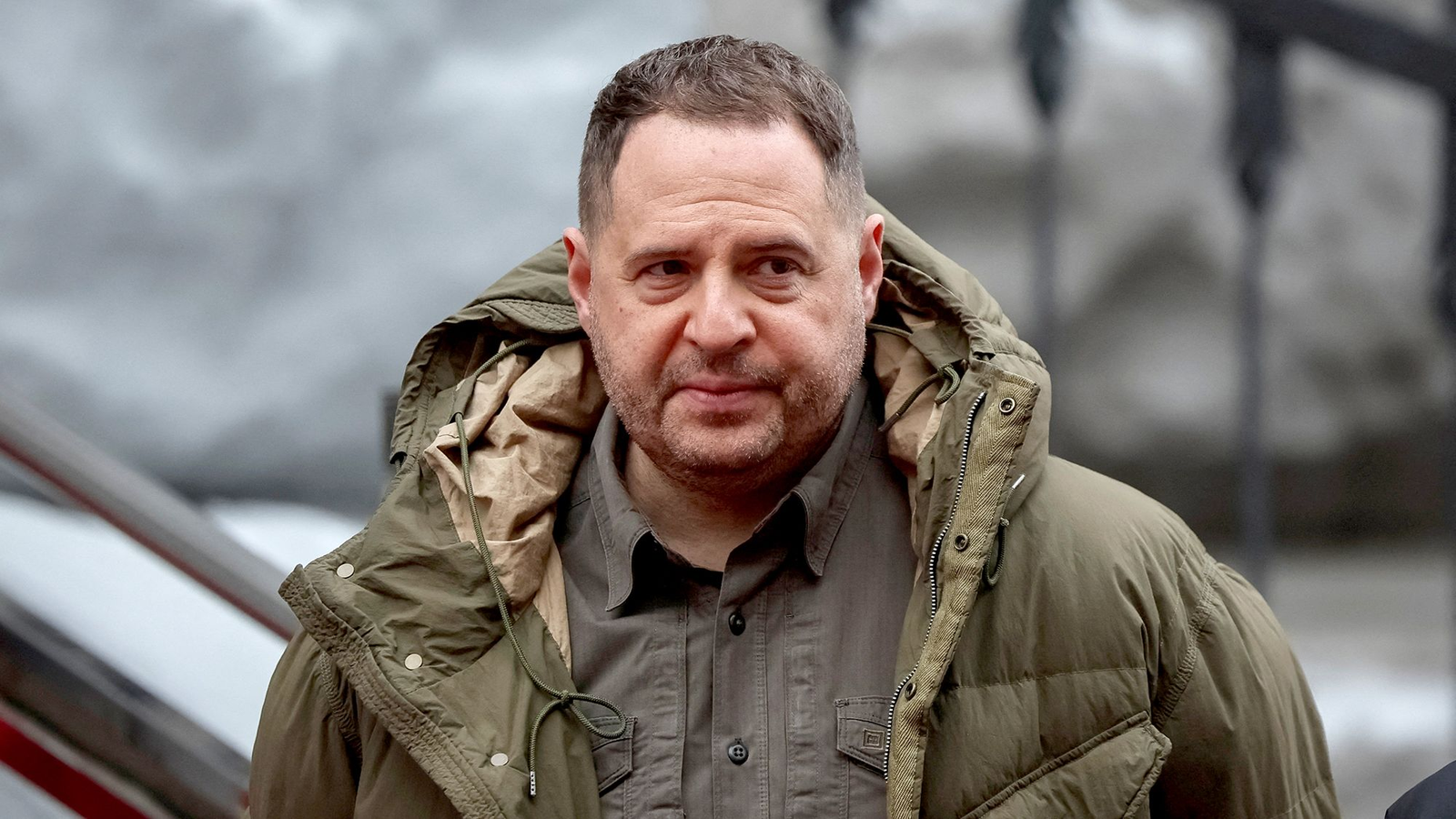
Andriy Yermak’s abrupt resignation as chief of staff to Ukrainian President Volodymyr Zelensky marks one of the most significant political upheavals in Kyiv since the start of Russia’s full-scale invasion in 2022. The move came just hours after anti-corruption investigators raided his home, sending shockwaves through Ukraine’s political establishment and raising difficult questions for a government already under immense international scrutiny.
Yermak has long been regarded not only as a powerful behind-the-scenes operator but also as one of Zelensky’s closest advisers and most influential allies. His departure now unfolds at a critical moment, as Ukraine prepares for a new round of negotiations with the United States and confronts intensifying pressure to accept a peace framework with Russia. At a time when Ukrainian defense capacity and political stability face unprecedented strain, the resignation introduces fresh uncertainty and underscores the depth of Ukraine’s ongoing struggle with entrenched corruption.
Yermak’s Rise to Power and His Role in Zelensky’s Administration
Before entering politics, Andriy Yermak built his career in the legal and entertainment sectors, eventually becoming a well-connected figure in Ukrainian media production. His early work included film and television projects that placed him in the same orbit as Volodymyr Zelensky, who at the time was still a comedian and actor known for his starring role in the satirical TV series Servant of the People.
Their professional relationship soon deepened into political partnership after Zelensky launched his presidential bid in 2019. Yermak became a key strategist on the presidential team and quickly earned the trust of the newly elected leader. When Zelensky appointed him chief of staff in 2020, Yermak’s influence expanded rapidly. The position carries broad authority over presidential administration operations, but Yermak’s role often exceeded traditional responsibilities.
Diplomats, political analysts, and Ukrainian lawmakers frequently described him as the second most powerful person in the country. He cultivated extensive networks across the government, military leadership, and international partners, establishing himself as a central architect of the president’s domestic and foreign agenda. In addition to managing political strategy, Yermak served as a diplomatic envoy in sensitive negotiations.
He became deeply involved in Ukraine’s wartime outreach to the West, playing a prominent part in shaping Kyiv’s communication with the United States and European allies. His oversight of the Ukrainian delegation during recent talks in Geneva with Washington reflects the breadth of his role. As Kyiv navigated mounting tension over proposals for a US-backed peace initiative, Yermak was at the forefront of Ukrainian efforts to push back against concessions deemed unacceptable by the government and the public.
Zelensky’s Chief of Staff Andriy Yermak resigns as the Ukrainian government falls apart
— Nick Cruse 🥋 (@SocialistMMA) November 28, 2025
It’s time to negotiate for peace. NATO needs to take the L
pic.twitter.com/hsehqK8pPL
These responsibilities made Yermak indispensable in Zelensky’s inner circle. His removal now creates a diplomatic vacuum at a moment when Ukraine can least afford uncertainty. With negotiations pending and both Washington and Moscow monitoring Kyiv’s political stability, the question of who will replace Yermak is crucial for Ukraine’s immediate strategic posture.
The Corruption Investigation and the Raid That Triggered the Resignation
Yermak’s resignation followed an early-morning raid on his apartment conducted jointly by the National Anti-Corruption Bureau of Ukraine (NABU) and the Specialized Anti-Corruption Prosecutor’s Office (SAPO). These agencies, established with international backing after the 2014 revolution, are tasked with tackling high-level corruption—an issue that has long hindered Ukraine’s governance and EU accession ambitions.
The investigators have not publicly disclosed the exact grounds for their search, but it takes place just two weeks after the launch of a sweeping probe into an alleged kickback scheme connected to Ukraine’s energy infrastructure. This ongoing investigation has already implicated several individuals close to the president, including two cabinet ministers and a former entertainment industry associate of Zelensky.
Read : Who is Steve Witkoff, the Gaza Peace Deal Architect Now Pushing for Ukraine Ceasefire?
The unraveling scandal highlights vulnerabilities within Ukraine’s political system and exposes the extent to which wartime pressures have increased the stakes of governance. With billions of dollars in Western funding flowing into the country for military support and reconstruction, transparency and accountability have become central to Ukraine’s efforts to maintain credibility among its partners.
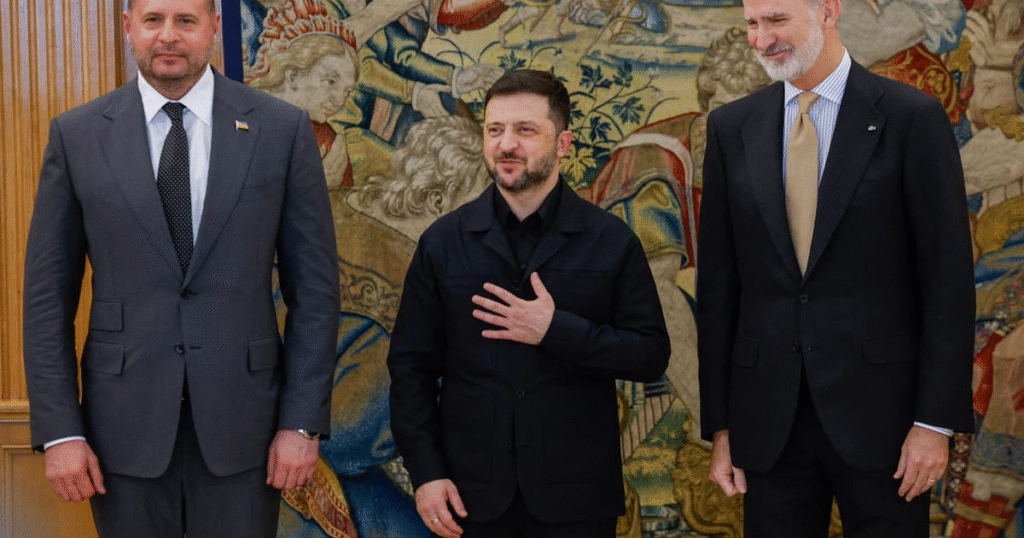
Yermak acknowledged the raid publicly on Telegram, emphasizing that he was fully cooperating with investigators and had granted them complete access to his home. His statement underscored a desire to project openness, yet the optics of the incident were inescapably damaging. For a figure so deeply embedded in Ukraine’s political machinery—and so closely aligned with the president—the raid represented a major blow.
Zelensky announced the resignation during his evening address, framing the decision as necessary to preserve trust in the state. He stated that there must be “no questions about Ukraine today,” signaling a determination to demonstrate that even senior officials are not immune from scrutiny. The president also disclosed plans to “reboot” the Office of the President, suggesting that additional personnel changes may follow as part of a broader internal shake-up.
Yermak has not yet issued a personal statement explaining his departure. Without clarification, speculation continues over whether the resignation reflects political pressure, a gesture of accountability, or a bid to shield Zelensky from further fallout. Regardless of the rationale, the timing underscores how sensitive the situation has become for a government simultaneously confronting domestic discontent, Russian aggression, and international demands for transparency.
Implications for Ukraine’s Negotiations, International Standing and Future Political Landscape
Yermak’s sudden removal introduces complications for Ukraine’s upcoming negotiations with the United States. The latest US peace proposal—a 28-point plan put forward by the Trump administration—reflects several of Russia’s key demands, including territorial concessions, reductions in Ukraine’s military capabilities, and restrictions on possible NATO membership.
Ukrainian and European leaders strongly opposed the plan, viewing it as incompatible with Ukraine’s sovereignty and long-term security. Yermak’s negotiating team had already succeeded in persuading Washington to revise the initial draft, but many unresolved disputes remain. Without Yermak, Kyiv must quickly identify a new chief negotiator capable of maintaining continuity and safeguarding Ukraine’s interests.
Zelensky has indicated he will meet potential candidates and that the delegation will include senior military and intelligence officials. Still, the shift introduces uncertainty just days before critical talks are set to resume. Meanwhile, Russia is closely watching developments. Kremlin spokesperson Dmitry Peskov pointed to growing “uncertainty” caused by the scandal, suggesting Moscow sees opportunity in Kyiv’s moment of internal disruption.
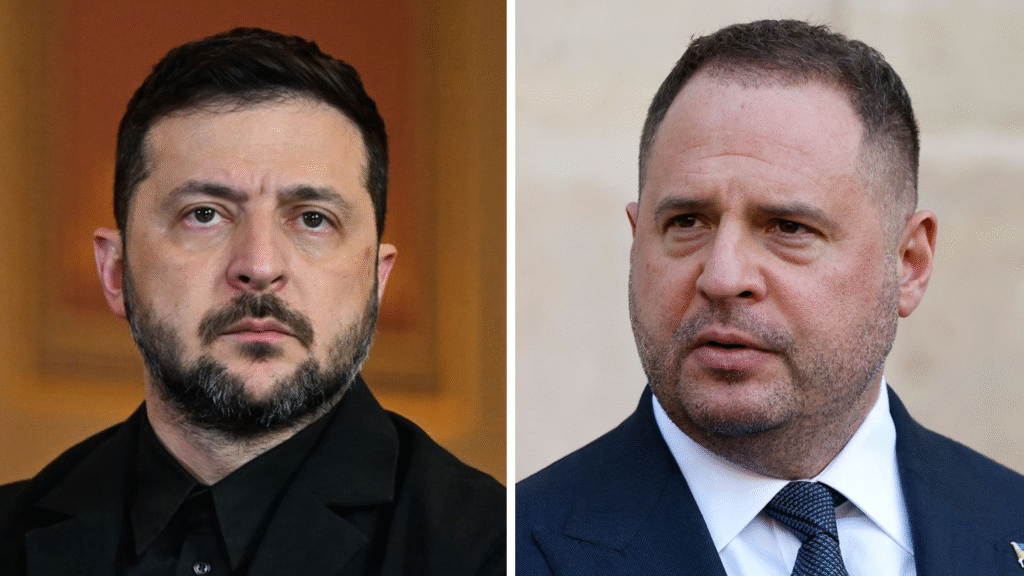
Ukraine’s international partners, including the European Union, have responded cautiously. While the EU has reaffirmed support for Ukraine, it has also stressed the importance of robust anti-corruption institutions—an issue directly tied to Ukraine’s future membership prospects. European Commission spokesperson Paula Pinho noted that the raids demonstrate that Ukraine’s anti-graft agencies are functioning, which could help offset concerns about political interference.
But the broader context remains sensitive. Earlier this year, Zelensky was criticized for pushing legislation that would have placed NABU and SAPO under the oversight of the prosecutor general, a move widely perceived as threatening their independence. Public protests forced the government to reverse course, but the episode raised questions about the administration’s commitment to systemic reform.
The scandal also fuels broader anxieties within Ukraine, where public frustration with corruption persists despite significant wartime unity. Zelensky came to power in 2019 pledging to dismantle entrenched corruption networks. His government has since undertaken numerous reforms and dismissed multiple officials accused of misconduct. International watchdogs have praised progress, yet the persistence of high-level scandals demonstrates the deep-rooted nature of the challenge.
Now, with accusations implicating several of Zelensky’s long-time associates, the president faces renewed pressure to prove that his administration is serious about accountability. Critics argue that Yermak’s centralization of power contributed to the environment that allowed such issues to flourish. Supporters counter that he played a stabilizing role during wartime and was instrumental in securing international assistance.
His departure therefore carries mixed implications: it may reassure anti-corruption advocates but risks weakening Zelensky’s negotiating leverage and administrative coherence. As Ukraine confronts escalating tensions with both Russia and its Western partners over the conditions of a potential peace agreement, political stability becomes a strategic necessity.
Any perception of dysfunction could affect Ukraine’s ability to negotiate from a position of strength, secure continued foreign aid, and maintain domestic confidence. Yermak’s resignation—whatever its ultimate justification—marks a pivotal moment that will influence Ukraine’s political trajectory and its role on the global stage.
This sounds like a fun way to test reflexes—the precision shooting feature seems particularly engaging. I was looking into the genre a bit more and saw another good overview at https://hypackelgames.com/games/G0639CAE32.
The 92jeetoapp makes gaming on the go super easy. Downloaded it last week and already hooked. Get it here 92jeetoapp.
Bạn có thể đánh bài theo level và điều chỉnh mức cược phù hợp như: 1K, 2K, 5K, 10K, 100K, 200K,… Chúng tôi cung cấp thêm chế độ trải nghiệm miễn phí cho bạn thoải mái làm quen. grand slot 888 Hơn 150+ trò chơi cá cược đổi thưởng 3D đang được cập nhật liên tục mỗi ngày. TONY02-03H