
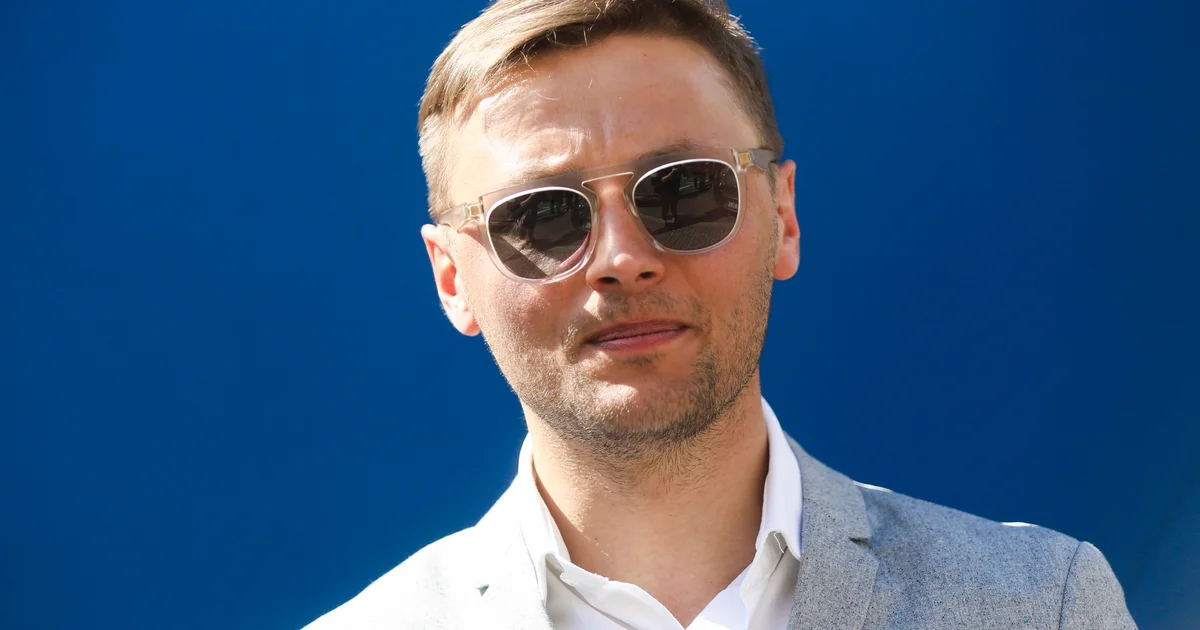
In a feat that pushes the boundaries of human endurance and adventure sports, 37-year-old Polish ski mountaineer Andrzej Bargiel has etched his name into history. On September 22, 2025, Bargiel summited Mount Everest—the world’s highest peak at 8,849 meters—and then skied down its treacherous slopes to base camp without relying on supplemental bottled oxygen.
This groundbreaking achievement combines the grueling demands of high-altitude mountaineering with the precision and risk of extreme skiing, all in the thin air of the “death zone.” For Bargiel, it wasn’t just a climb or a descent; it was a lifelong dream realized after years of meticulous preparation and two prior failed attempts. As news of his success spreads, it celebrates not only individual triumph but also the spirit of innovation in the face of nature’s harshest challenges.
The Grueling Ascent: Battling the Death Zone
Andrzej Bargiel’s journey to the summit began long before the final push, rooted in a rigorous acclimatization process essential for surviving Everest’s extreme altitudes without artificial aid. Departing from Everest Base Camp in Nepal on September 19, he methodically progressed through Camps I, II, III, and IV, allowing his body to adapt to progressively thinner air. This preparation was crucial, as oxygen levels above 8,000 meters drop to dangerously low concentrations—roughly one-third of sea level—heightening risks of altitude sickness, hypoxia, and exhaustion.
More than 6,000 people have summited Everest since the 1950s, but fewer than 200 have done so without supplemental oxygen, underscoring the rarity and peril of Bargiel’s approach. The decisive leg of the ascent unfolded on the night of September 21. At 11:24 p.m., Bargiel left Camp IV, located at about 7,950 meters, embarking on what was intended to be a 12-hour climb but stretched into nearly 16 hours due to unrelenting heavy snowfall.
This prolonged exposure in the death zone—above 8,000 meters, where the human body begins to deteriorate rapidly—tested his limits like never before. “I’d never spent so much time at such an altitude in my life,” Bargiel later reflected, his voice carrying the weight of that ordeal. The fresh snow blanketed the Hillary Step and other technical sections of the South Col route, forcing him to dig deep into reserves of mental fortitude and physical conditioning. Each step was labored, his breaths coming in heavy gasps, as captured in helmet-cam footage that shows the sheer exhaustion etched on his face.
By 3:17 p.m. on September 22, Bargiel crested the summit, a moment of quiet elation amid the whipping winds and sub-zero temperatures. There, at the rooftop of the world, he paused only briefly to clip into his skis. No triumphant flags or lingering celebrations—just the raw satisfaction of having conquered the mountain on his own terms.
Pierwszy w historii zjazd na nartach ze szczytu Mount Everestu bez użycia dodatkowego tlenu ⛷️🏔️
— Andrzej Bargiel (@JedrekBargiel) September 25, 2025
Dziękuję wszystkim za trzymanie kciuków! 🙌
Ogromne podziękowania dla teamu Seven Summit Treks, Chang Dawa, Speed Dawa – bez Was ten sukces nie byłby możliwy 🙏
Serdecznie… pic.twitter.com/udBliwDhZy
This ascent marked his third attempt on Everest; dangerous weather had thwarted efforts in 2019 and 2022, turning potential glory into lessons in resilience. Yet, in 2025, with the post-monsoon season’s unpredictable conditions aligning just enough, Bargiel turned failure into fuel. His success highlights the evolution of Polish Himalayan mountaineering, a tradition born in the 1980s with “Ice Warriors” like Jerzy Kukuczka and Wanda Rutkiewicz, who pioneered daring winter routes and oxygen-free climbs.
The Daring Descent: Skis on the Slopes of the World’s Highest Peak
If the climb was a war of attrition against altitude and weather, the descent was a high-stakes ballet of speed, skill, and survival. Strapping on skis at the summit, Bargiel initiated what would become the first full ski descent of Everest without bottled oxygen—a continuous run down the South Col route that blended serene glides through powder with heart-pounding navigations of knife-edge ridges and near-vertical faces. Videos from the exploit reveal a man transformed: from the labored climber heaving for air to the fluid skier carving turns with apparent ease, even as drop-offs loomed perilously close.
Read : 2 Mountains 100 Times Taller Than Mount Everest Found Below Earth’s Surface
The initial phase took Bargiel from the summit to Camp II at around 6,400 meters by nightfall on September 22. Darkness and fatigue from the extended summit push made further progress impossible, so he rested overnight, preserving energy for the remaining challenges. The next morning, at 7:00 a.m. on September 23, he resumed, passing Camp I by 7:50 a.m. and tackling the infamous Khumbu Icefall without ropes or fixed lines—a section riddled with crevasses and seracs that has claimed countless lives.

By 8:45 a.m., he reached the snowline at base camp, completing the two-day ski journey that spanned roughly 3,000 meters of vertical drop. The entire descent demanded split-second decisions: negotiating narrow cornices where a misstep could mean catastrophe, and managing variable snow conditions that shifted from fresh powder to icy crust under the Himalayan sun. What sets this apart from prior Everest ski descents is the absence of oxygen support.
In 2000, Slovenian Davorin Karnicar achieved the first full ski from summit to base camp, but with bottled oxygen. Others, like Italian skier Marco Siffredi in 2002, also relied on it. Bargiel’s oxygen-free run elevates the feat to a new echelon, demanding not just technical prowess but an intimate attunement to the mountain’s rhythms. “Skiing down Everest without oxygen was a dream that had been growing inside me for years,” he said, capturing the poetic drive behind the risk. The descent wasn’t flawless—moments of heavy breathing and cautious probing of unstable terrain reveal the razor-thin margin for error—but it was pure, unassisted mastery.
A Legacy of Bold Horizons: Reflections and Future Peaks
Bargiel’s triumph resonates far beyond the personal, igniting global awe and national pride. Upon returning to base camp, he was welcomed with a khada, the traditional Tibetan Buddhist scarf symbolizing respect and blessings—a poignant cultural nod amid the technical spectacle. Polish Prime Minister Donald Tusk captured the zeitgeist on social media: “Sky is the limit? Not for Poles! Andrzej Bargiel just skied down Mount Everest.” The words echo a storied lineage of Polish adventurers who redefined high-altitude limits, from Rutkiewicz’s 1986 winter ascent of K2 to contemporary icons like Bargiel himself.
This isn’t Bargiel’s first brush with impossibility. Born in 1988 in Zakopane, Poland—a gateway to the Tatra Mountains—he grew up immersed in skiing and climbing, blending them into a hybrid discipline of ski mountaineering. In 2018, he became the first and only person to ski down K2, the savage second-highest peak often called the “Savage Mountain” for its fatality rate exceeding 20 percent. That descent, also oxygen-free, solidified his reputation as a pioneer. He’s since conquered Annapurna and other 8,000ers in similar style, each pushing the envelope of what’s humanly possible. “It’s one of the most important milestones in my sports career,” Bargiel stated post-Everest, his humility belying the audacity.
Looking ahead, Bargiel shows no signs of slowing. “I have many plans ahead,” he shared. “I’d love to travel to Antarctica, to the Andes in Peru. I simply enjoy doing this, and as long as I remain healthy, I will always keep seeking new mountains, no matter the altitude.” His words hint at untapped frontiers: perhaps a winter descent of another giant or explorations in remote ranges where snow meets sea. In an era of commercialized Everest climbs—where crowds and fixed ropes dilute the wildness—Bargiel’s feat revives the mountain’s mythic allure. It reminds us that true adventure lies in the uncharted, the oxygen-scarce voids where body and mind converge.
Bargiel’s story is a testament to persistence, preparation, and passion. Through 16 hours in the death zone, two days on skis, and a lifetime of chasing horizons, he didn’t just descend Everest—he redefined it. As the world watches, one can’t help but wonder: what peak will claim his skis next? For now, the echo of his turns on the world’s roof lingers, inspiring dreamers everywhere to breathe deeper and aim higher.