
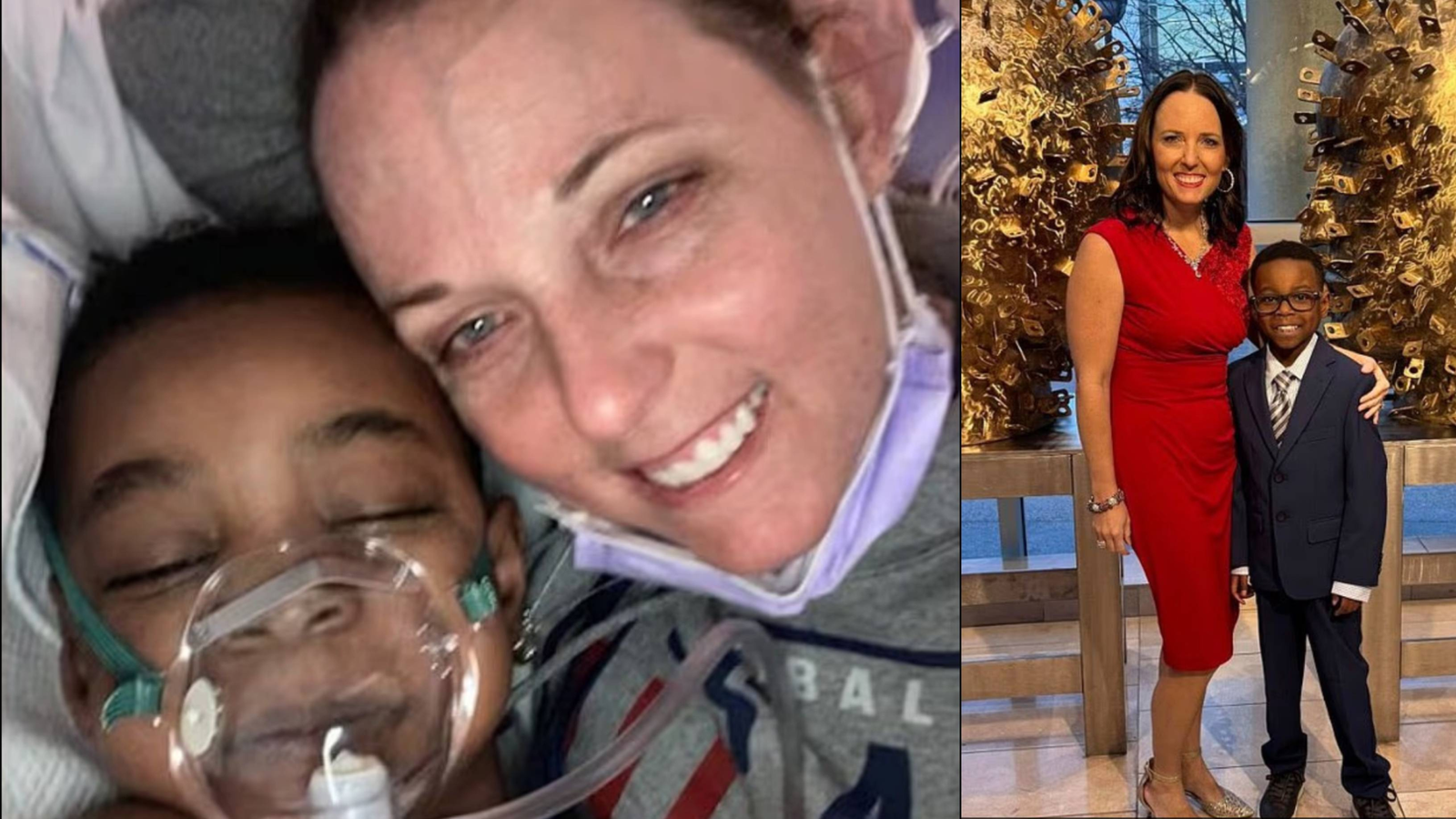
In 2022, a five-year-old boy arrived at a hospital in Omaha, Nebraska, facing one of the most frightening moments of his young life. True Beethe, born with a severe congenital heart condition known as hypoplastic right heart syndrome, needed a complex surgical procedure that would last several hours. Children preparing for such operations are typically surrounded by parents, guardians, or family members who help reassure them before they are taken into the operating room. But on that day, True was alone.
True had been under the supervision of social services at the time. For reasons that remain unclear, he had been dropped off at the hospital without a parent or guardian present. His case worker was reportedly sick with COVID-19 that day, and the young boy had been transferred from another facility before arriving at the children’s hospital. The absence of a responsible adult left him sitting quietly in pre-operative care with no one by his side as he prepared for a life-altering heart procedure.
It was in this moment that anesthesiologist Dr. Amy Beethe encountered True. What began as a routine day in the operating room soon became the starting point of a remarkable story involving compassion, family, and an unexpected adoption. Over the following months and years, Dr. Beethe’s decision to step beyond her professional role would transform not only True’s life but also the lives of several of his siblings.
A Child Facing Surgery Alone
Hypoplastic right heart syndrome is a rare and serious congenital heart defect that affects the structure and function of the heart. Children born with this condition have an underdeveloped right side of the heart, which disrupts the heart’s ability to pump blood properly to the lungs. Many patients require multiple procedures throughout childhood and may eventually need a heart transplant.
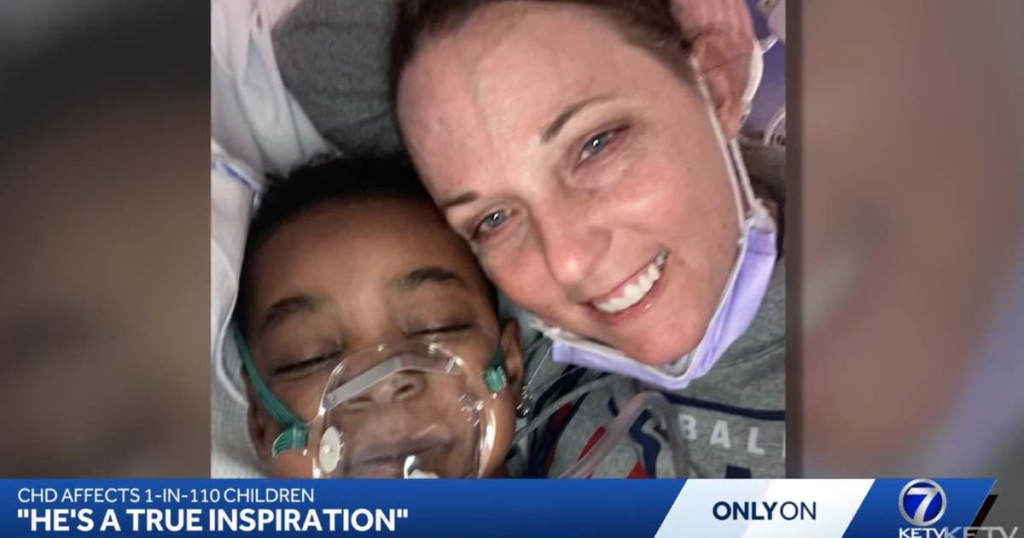
At just five years old, True was already confronting the realities of living with this complex condition. His scheduled surgery was expected to last approximately seven hours and represented one step in the long medical journey ahead of him. For young patients with severe congenital heart disease, medical care extends far beyond a single operation. It requires continuous monitoring, specialized treatment, and stable caregiving at home to ensure medications are taken correctly and symptoms are addressed quickly.
When Dr. Amy Beethe first saw True waiting in the pre-operative area, the situation immediately stood out. Instead of a parent or family member sitting beside him, the boy was alone. In pediatric hospitals, it is uncommon for a young child to face surgery without a familiar adult present. The absence of support was especially striking considering the seriousness of the operation he was about to undergo.
True himself reportedly had little understanding of why he was alone that day. As a child within the social services system, he had already experienced instability in his home life. The circumstances that brought him to the hospital without an adult caregiver were never fully explained, but they underscored the challenges many vulnerable children face when navigating complex medical needs within fragmented support systems.
Read : 22-Year-Old Boy Publicly Executed for Watching K-pop Videos in North Korea
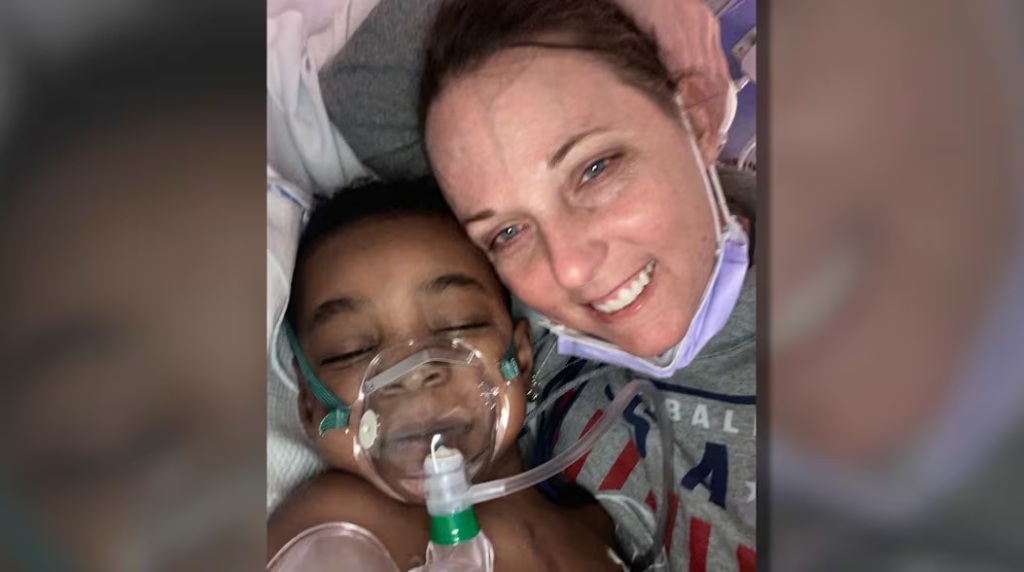
Despite the unusual situation, the medical team proceeded with the procedure. Over the course of the lengthy operation, Dr. Beethe remained responsible for monitoring True’s anesthesia and vital functions while surgeons worked to address his heart defect. Throughout those hours, the young patient’s vulnerability left a deep impression on the anesthesiologist. The image of a child undergoing such a serious operation without family present stayed with her as she continued her work in the operating room.
A Doctor’s Decision to Become a Parent
After the surgery concluded successfully and True was transferred to recovery, Dr. Amy Beethe could not stop thinking about the circumstances surrounding the boy’s hospital visit. The experience had moved beyond the boundaries of a routine medical case. While physicians and nurses often develop compassion for their patients, the situation raised questions for her about what would happen to True after he left the hospital.
At home that evening, she spoke with her husband, Ryan Beethe, about what she had witnessed. The couple already had six children, and the idea of expanding their family further was not a simple one. Raising a child with complex medical needs would require emotional commitment, financial planning, and ongoing medical coordination. Yet the situation felt increasingly difficult for Dr. Beethe to ignore.
Read : 16-Year-Old Jordan Weems Charged with Murder of Adoptive Mother Spring Weems
According to her recollection of the conversation, she asked her husband to keep an open mind before explaining the circumstances surrounding True’s surgery and his unstable living conditions. Ryan initially felt some hesitation, which was understandable given the responsibility involved. However, as the couple discussed the situation in more detail, the idea began to feel less daunting and more meaningful.
For families considering adoption, especially of children with medical complexities, the decision often involves careful consideration of long-term caregiving needs. In True’s case, doctors had already indicated that his heart disease represented one of the more severe forms of congenital heart defects. Pediatric cardiology specialists explained that his condition would eventually lead to heart failure, making a future heart transplant likely.
Medical experts emphasize that children awaiting heart transplants must live in stable environments where caregivers can manage strict treatment protocols. Daily medications, follow-up appointments, and post-transplant monitoring require consistency and reliability. Without a stable home life, patients with conditions like True’s may not even qualify for transplant programs because successful outcomes depend heavily on long-term care after surgery.
Understanding these realities, Dr. Beethe and her husband concluded that offering True a permanent home could make a profound difference in his medical future as well as his emotional well-being. Their decision marked the beginning of a formal adoption process that would take time to complete.
Over the next eighteen months, the legal and administrative steps required for adoption moved forward. During this period, the relationship between True and the Beethe family continued to develop. Eventually, the adoption was finalized, making True the seventh child in the household. What had started as a moment in a hospital operating room evolved into a lifelong commitment.
Reuniting Siblings and Building a Family
True’s adoption was only part of the larger story surrounding his family. Before joining the Beethe household, he had been living with five siblings in an unstable environment. While Dr. Amy Beethe and her husband were prepared to welcome one additional child into their home, adopting all six siblings was beyond what they could realistically manage. Rather than allowing the brothers and sisters to remain scattered across the foster system without connections to one another, Dr. Beethe began exploring ways to keep them supported within extended family networks.
Her approach focused on finding trusted relatives or acquaintances who might be willing to provide permanent homes for the other children. The first step involved reaching out to her own sister and brother-in-law. After discussing the situation and the needs of the children, they agreed to adopt True’s sister TyLynn. The decision meant that one sibling would grow up within the broader family circle, maintaining a connection with True and the Beethe household.
Read : Norman Lee Johnson Accused of Murdering Cousin and His Wife Who Adopted His 7-Year-Old Daughter
Next, Dr. Beethe contacted her sister-in-law and her husband, who eventually agreed to adopt another of True’s sisters, Tyra. This arrangement further strengthened the possibility that the siblings could maintain relationships with each other while growing up in stable homes. Two more of True’s sisters, Tacari and Malia, were welcomed into the family of a coworker and her husband after Dr. Beethe explained the situation and asked if they would consider adoption.
Through these coordinated efforts, several of the siblings were able to move into supportive environments with families who were aware of their background and committed to their well-being. One sibling remained without a permanent placement. At that point, Dr. Beethe returned to her husband to discuss whether their household could accommodate one more child. After careful consideration, the couple agreed to adopt Laney as well.
With that decision, True gained not only a permanent home but also the comfort of having one of his sisters grow up alongside him in the same family. Years after the surgery that first brought him into Dr. Beethe’s life, True celebrated his tenth birthday surrounded by relatives, siblings, and friends. For a child who once sat alone before a life-saving operation, the scene represented a dramatic change. The gathering reflected the extended network of families who had stepped forward to care for him and his siblings.
True continues to live with his congenital heart condition, and his long-term medical journey remains ongoing. Children with hypoplastic right heart syndrome often require multiple procedures throughout childhood, as well as careful monitoring by cardiologists and other specialists. A future heart transplant remains a possibility as his condition progresses.
Within the Beethe household, however, he now grows up in a stable environment that supports his medical needs and emotional development. The presence of parents, siblings, and extended relatives provides the consistent care that specialists say is essential for children managing complex heart disease.
The story that began in a hospital pre-operative room has expanded far beyond the operating theater. It has reshaped the lives of several children and brought together multiple families who chose to provide permanent homes. For Dr. Amy Beethe, the decision to adopt a young patient reflected a belief that caring for children sometimes extends beyond medical treatment and into the responsibility of ensuring they have a place where they are safe, supported, and able to face the future with the stability their health requires.