
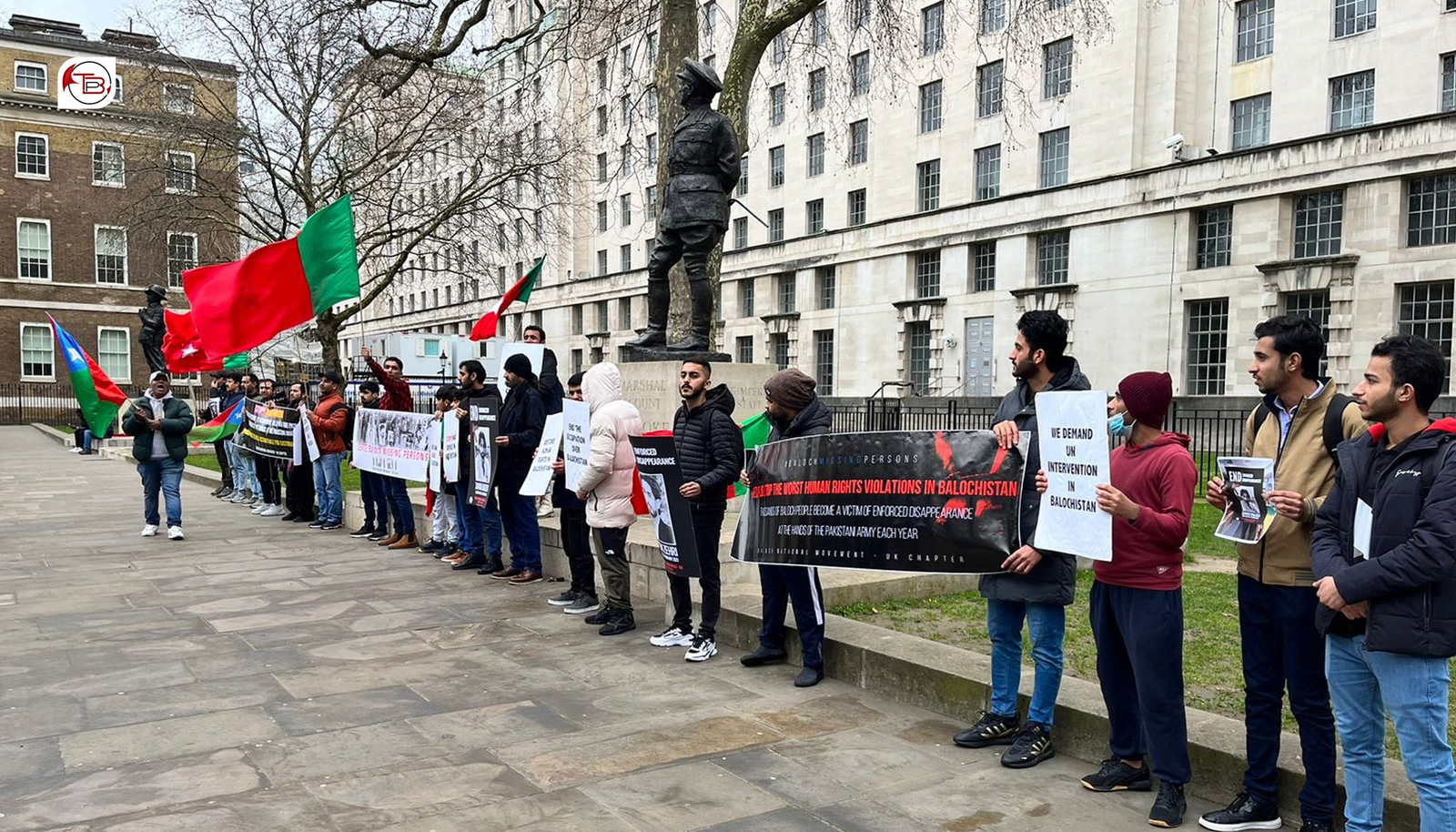
An anti-Pakistan protest at 10 Downing Street was organized by various Baloch parties in London to condemn the abduction of women and children in Balochistan. The protest, held on Sunday, saw participation from the World Baloch Organisation (WBO), Baloch National Movement (BNM), Baloch Students’ Organisation-Azad (BSO-A), and the World Sindhi Congress (WSC).
These organizations aimed to bring global attention to the human rights violations committed by Pakistan in Balochistan. The protesters carried banners and placards, urging international human rights groups to take immediate action against the atrocities faced by the Baloch people.
Balochistan’s Ongoing Human Rights Crisis
Balochistan has long been a region plagued by enforced disappearances, extrajudicial killings, and severe human rights violations. Human rights organizations estimate that at least 8,000 Baloch individuals are victims of enforced disappearances, with over 1,500 individuals found killed and dumped.
The Pakistani security forces have been repeatedly accused of suppressing Baloch voices by targeting activists, journalists, and ordinary civilians. One of the key issues raised during the protest was the recent abduction of several Baloch women and children by Pakistani security forces.
Washington-based organization American Friends of Balochistan (AFB) has appealed to international bodies such as the United Nations, US State Department, Amnesty International, and Human Rights Watch to intervene and help secure the release of these victims.
Read : Mass Protests Erupt in Istanbul After Mayor Ekrem Imamoglu’s Arrest
Among those abducted are Fazila Baloch, wife of Baloch freedom leader Dr. Allah Nazar Baloch, and their four-year-old adopted daughter Popal Jan. Along with them, Fazila’s friend Bibi Salma and her one-and-a-half-year-old son Irfan, as well as two other women and children, have been taken into illegal custody.
London: The @BNM_UK_chapter staged a protest outside the British Prime Minister’s office at 10 Downing Street, London, against the Quetta Massacre, the arbitrary detention of @MahrangBaloch_ and other Baloch activists in Quetta, the brutal murder of Shahjan Baloch by state-backed… pic.twitter.com/ikvZKExMOJ
— Niaz Baloch (@Niaz_Zehri) March 23, 2025
The protestors at 10 Downing Street called attention to these injustices, holding placards with slogans like “Pakistan carrying genocide” and “Stop abducting Baloch women and children.” These demands reflect the growing frustration of the Baloch diaspora and their call for immediate international intervention.
International Response and the Call for Justice
Despite continuous reports from human rights organizations, there has been little concrete action taken by global institutions to hold Pakistan accountable. The protest in London was not just a demonstration but a plea to the world to take a stand against the systematic oppression of the Baloch people.
The participation of the World Sindhi Congress (WSC) in the protest highlighted that the issue of enforced disappearances is not limited to Balochistan alone but is prevalent in other regions of Pakistan, where activists and minorities have faced similar state-sponsored oppression.
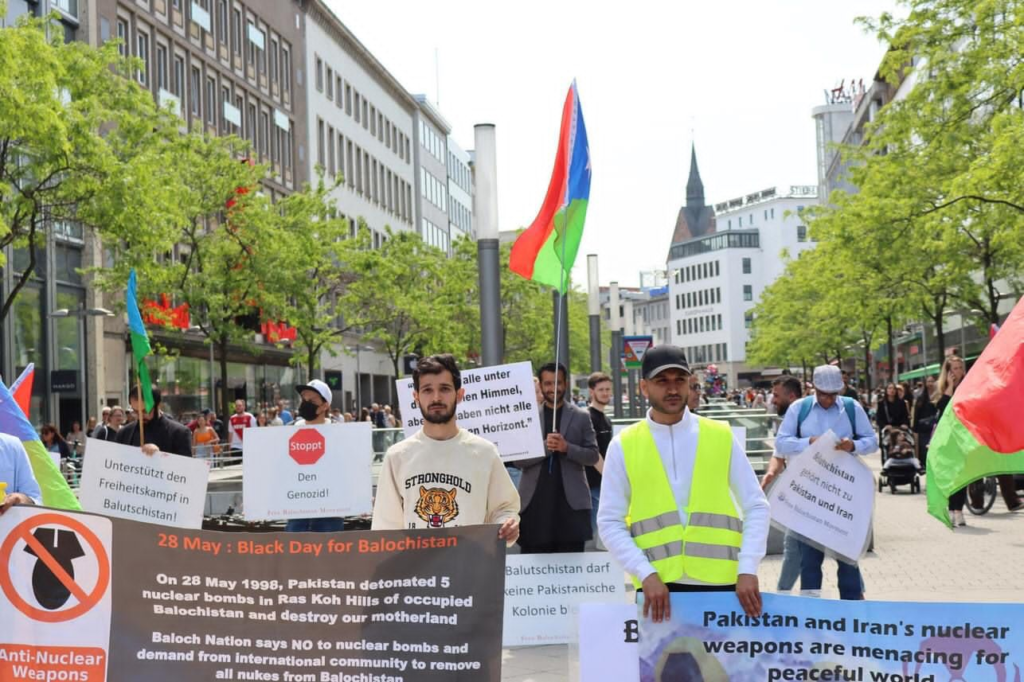
The protestors emphasized the need for global human rights organizations to act decisively rather than issuing statements that have little effect in curbing Pakistan’s oppressive tactics. Protesters urged the United Kingdom and other Western democracies to exert diplomatic pressure on Pakistan and impose sanctions on those responsible for the disappearances.
Many protestors believe that without direct international intervention, Pakistan will continue its oppressive policies against the Baloch people with impunity. They stressed that the silence of the international community only emboldens Pakistan’s security forces to continue their brutal actions in Balochistan.
The Struggle for Baloch Freedom and the Future Ahead
Baloch activists have been fighting for their rights and freedom for decades. The Balochistan conflict, rooted in issues of political autonomy, economic exploitation, and human rights abuses, has remained one of the most underreported conflicts in the world.
The Pakistani government has repeatedly dismissed claims of human rights violations in Balochistan, labeling the Baloch resistance as terrorism. However, reports from independent human rights groups continue to document cases of enforced disappearances, extrajudicial killings, and systematic suppression of dissent in the region.
The Baloch nationalist movement has gained momentum over the years, with an increasing number of protests being held across Europe and North America.
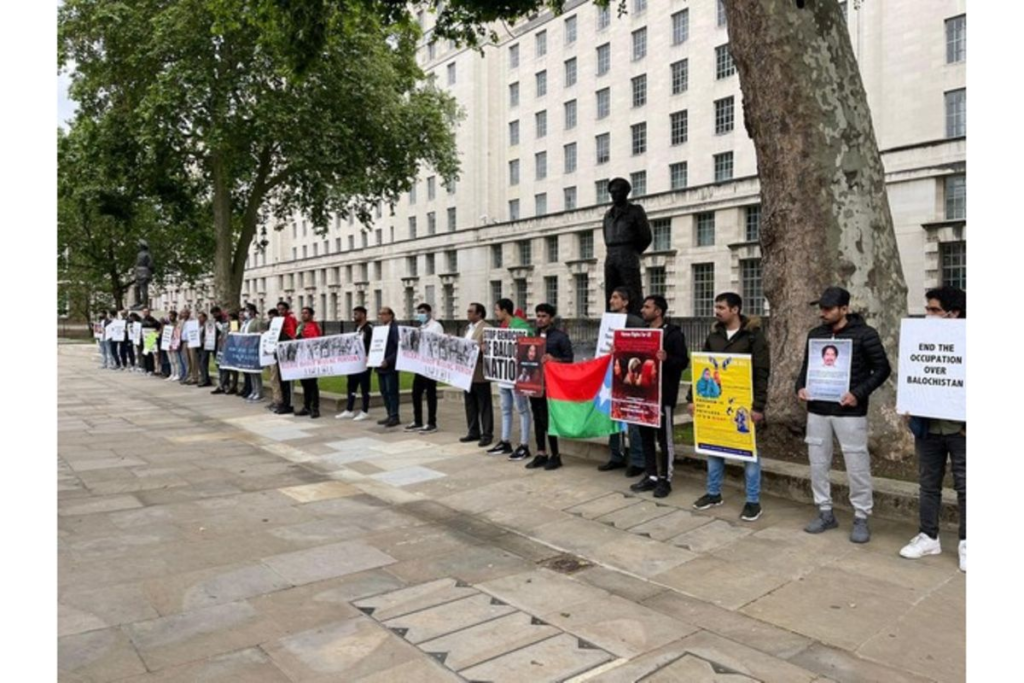
Activists believe that international awareness is crucial in pressuring global leaders to take action against Pakistan’s violations. The London protest at 10 Downing Street was a significant step in this direction, as it aimed to bring the plight of the Baloch people to the forefront of international discourse.
The protesters vowed to continue their struggle until justice is served and the abducted women and children are released. They emphasized that the fight for Baloch rights is not just a regional issue but a matter of fundamental human rights that concerns the entire global community.
In conclusion, the anti-Pakistan protest in London was a powerful demonstration against the oppression faced by the Baloch people. With banners calling for justice and slogans demanding an end to enforced disappearances, the protestors sent a clear message: the international community must no longer ignore the suffering of the Baloch people.
As long as Pakistan continues its repressive policies, the struggle for Balochistan’s freedom and justice will persist, and the world must take notice before more innocent lives are lost.