
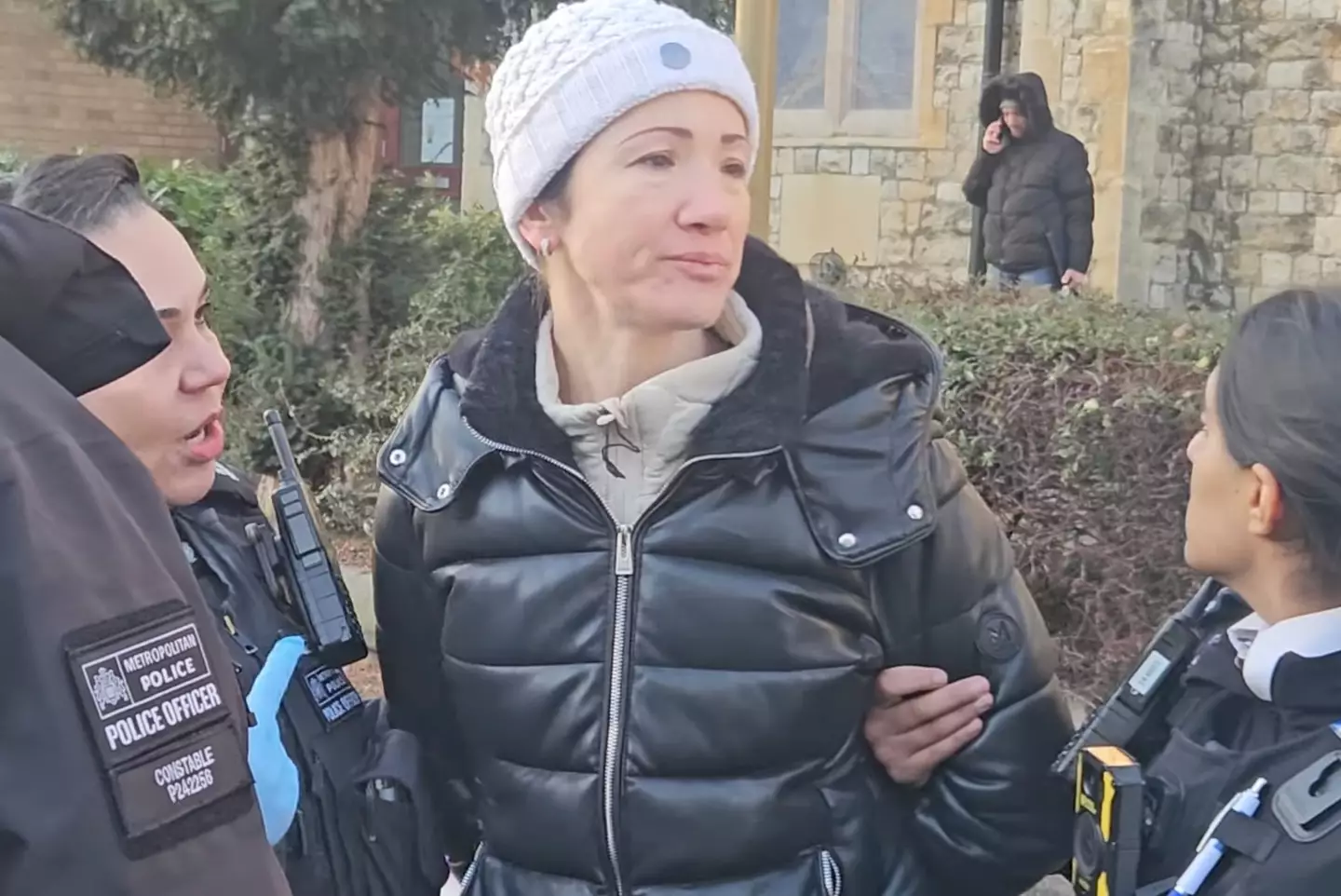
A video showing a woman being Arrested and Handcuffed While Feeding Pigeons on a London high street has triggered widespread public debate over proportionality, enforcement powers, and the use of police resources. The incident occurred in broad daylight in Wealdstone, Harrow, and quickly circulated on social media, drawing criticism from onlookers and viewers who questioned whether such a response was justified for what many regard as a minor civic offence.
Authorities, however, maintain that the arrest followed repeated refusals by the woman to comply with lawful requests and was carried out within the framework of existing legislation. The footage, filmed by a passer-by, shows a visibly distressed woman surrounded by a significant number of police officers and council enforcement workers. As the scene unfolds, members of the public can be heard challenging the officers’ actions, with some openly calling the response excessive.
The Metropolitan Police and Harrow Council have since issued statements explaining the circumstances and legal basis for the arrest, citing a breach of a local Public Spaces Protection Order and a subsequent failure to provide personal details when requested.
The incident has reignited discussion around the enforcement of Public Spaces Protection Orders, the balance between maintaining public order and exercising discretion, and the way such encounters are perceived by the public when they take place in full view and are shared widely online. While the authorities emphasise that the arrest was not for feeding birds alone, public reaction has focused heavily on the optics of the situation and the broader implications for everyday interactions between citizens and law enforcement.
The Incident on Wealdstone High Street
The arrest took place at approximately 2.30pm on Wednesday on Wealdstone High Street, a busy area in the London Borough of Harrow. According to video footage and eyewitness accounts, a woman believed to be in her forties was feeding pigeons in the street when she was approached by local council enforcement officers. Feeding birds in the area is prohibited under a Public Spaces Protection Order, a local regulation designed to address specific issues considered to be detrimental to public life.
The footage shows the woman surrounded by at least six individuals, including Metropolitan Police officers and council enforcement staff. She appears distressed as officers speak to her and eventually place her in handcuffs. Her pockets are searched, and she is escorted to a police van, where she is placed in the back. Throughout the encounter, the man filming the video can be heard voicing strong objections, repeatedly questioning why such measures were being taken. Other passers-by also express disbelief, with one voice clearly stating that the situation is “ridiculous.”
From the perspective of those witnessing the event, the scale of the response appeared disproportionate to the act of feeding pigeons. The presence of multiple officers and the use of handcuffs for what is commonly perceived as a minor offence contributed significantly to the public reaction. The video, once shared online, quickly gained attention, with many viewers focusing on the apparent imbalance between the behaviour in question and the enforcement action taken.
Read : In Anger Over Pigeon’s Death, Man Kills Three Puppies in Bareilly
Authorities later clarified that the arrest did not occur solely because the woman was feeding pigeons. According to official statements, council enforcement officers initially sought to issue a fixed penalty notice for breaching the PSPO. In order to do so, they required the woman’s name and address. When she allegedly refused to provide these details despite repeated requests, police officers became involved.
Read : Top 5 Places in india Where You Can Spot Majestic White Tigers
After approximately 20 minutes of discussion, officers arrested her on suspicion of breaching Section 50 of the Police Reform Act, which makes it an offence to refuse to give personal details when lawfully required. Once her details were obtained, the woman was de-arrested, meaning she was released from police custody without further police action. The matter was then handed back to council officers to be dealt with under the relevant local authority procedures. Despite this clarification, the images of the arrest itself continued to dominate public discussion.
Public Reaction and Social Media Response
The rapid spread of the video on social media platforms amplified the public response to the incident. Viewers from across the country and beyond weighed in, with many criticising what they saw as an excessive and heavy-handed approach. Comments frequently highlighted the number of officers involved, the use of handcuffs, and the distress visible in the woman’s behaviour. For many, the idea that feeding pigeons could result in arrest and detention was difficult to reconcile with their expectations of policing priorities.
The reaction on the street at the time of the arrest mirrored the response online. In the video, members of the public can be heard challenging officers directly, questioning the necessity of their actions. Such spontaneous reactions are not uncommon in highly visible enforcement situations, particularly when the alleged offence is viewed as minor or harmless. In this case, the presence of a camera and the immediacy of social media meant that those reactions were preserved and shared widely, shaping public perception almost instantly.
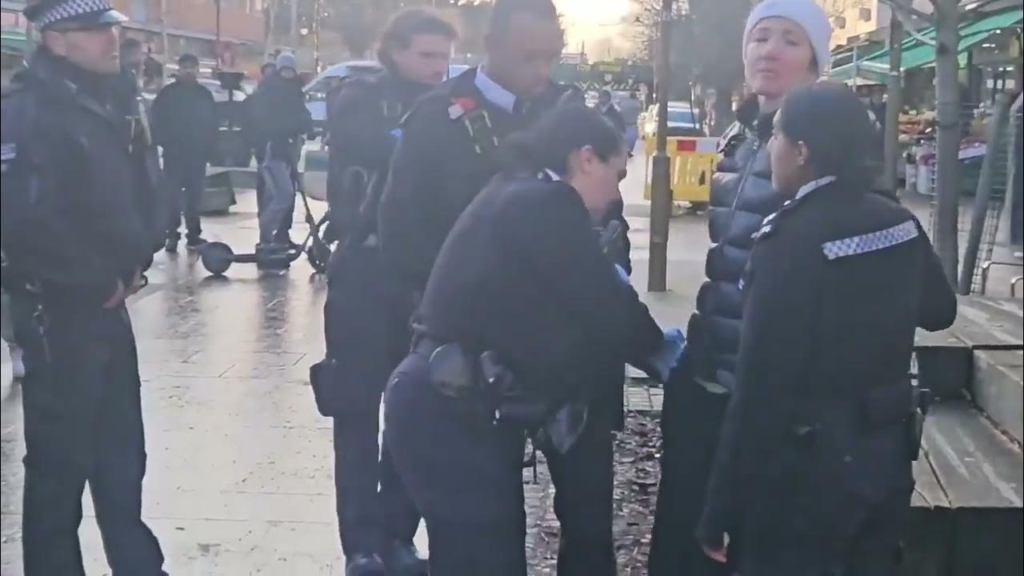
Critics of the response argued that the incident illustrated a disconnect between law enforcement practices and public sentiment. Some questioned whether police resources were being used effectively, while others raised concerns about the impact such encounters can have on public trust. The image of a distressed woman being handcuffed in a busy shopping area became a focal point for broader discussions about policing culture, discretion, and the human impact of enforcement decisions.
Supporters of the authorities’ position, however, pointed out that laws and regulations are in place for a reason and that refusal to comply with lawful requests can escalate situations unnecessarily. They noted that the police involvement stemmed from a refusal to provide personal details rather than the act of feeding pigeons itself. From this perspective, the arrest was a consequence of non-compliance rather than an overreaction to a trivial offence.
The contrasting interpretations highlight how quickly narratives can diverge once an incident enters the public domain. While official explanations tend to focus on legal frameworks and procedural steps, public reactions often centre on visual impressions and emotional responses. In this case, the sight of multiple officers restraining a single individual overshadowed the legal nuances in many discussions.
Legal Framework and Official Explanations
At the heart of the incident lies the application of a Public Spaces Protection Order, a legal tool available to local authorities in England and Wales. PSPOs are designed to address specific behaviours in defined public areas that are considered to have a detrimental effect on the quality of life of those in the locality. In Harrow, one such order prohibits the feeding of birds in certain areas, citing concerns about cleanliness, public health, and safety.
Read : Horrible ! Food Truck Worker Captures Live Pigeon off the Street and Bring Back Into Cart to Cook
Under the terms of the PSPO, individuals found feeding birds can be issued with a fixed penalty notice of £100. Council enforcement officers are responsible for monitoring compliance and issuing fines where appropriate. In order to issue a fixed penalty notice, officers must obtain the individual’s name and address. Failure to provide these details can lead to further action.
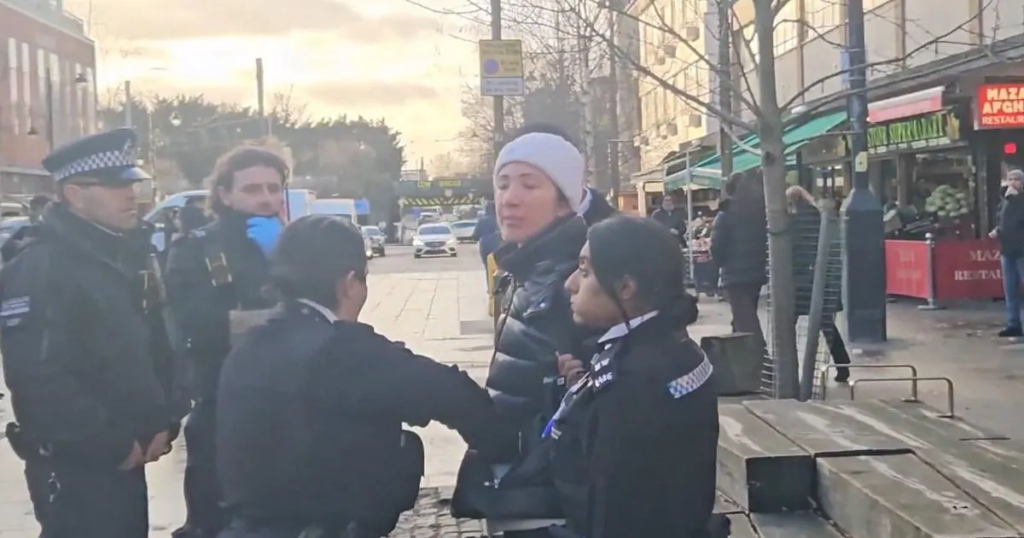
The Metropolitan Police stated that officers were approached by council enforcement staff who were dealing with what they described as an anti-social behaviour incident. After speaking with the woman for around 20 minutes, officers allege that she repeatedly refused to provide her personal details. This refusal, they said, constituted a suspected breach of Section 50 of the Police Reform Act. This section gives police the power to require a person to provide their name and address if they believe the individual has been acting, or is acting, in an anti-social manner.
Once arrested under this provision, the woman’s details were obtained, after which she was de-arrested. The police emphasised that the arrest was not ongoing and that responsibility for the matter was passed back to council officers. Harrow Council confirmed that the woman was in breach of the PSPO and reiterated that refusal to provide details is an offence. The council stated that the PSPO exists to help keep streets clean and safe and that anyone breaching it faces a £100 fine.
From a legal standpoint, the sequence of events aligns with the powers granted to both council enforcement officers and the police. However, the case also illustrates how the enforcement of such powers can become contentious when carried out in highly visible ways. While the law provides mechanisms for escalation when individuals do not comply, the manner in which those mechanisms are applied can significantly influence public perception. The incident in Harrow serves as a case study in the complexities of modern urban enforcement.
It underscores the challenges faced by local authorities and police when enforcing regulations that, while legally valid, may not command widespread public support. At the same time, it highlights the importance of communication, discretion, and proportionality in maintaining public confidence. As debates continue, the event remains a vivid example of how everyday encounters can escalate and how quickly they can become symbols in broader discussions about law enforcement and civic life.