

The prohibition of an experienced art teacher from the profession has drawn attention to the strict rules governing public examinations and the responsibilities placed on teachers entrusted with their delivery. Wendy Lewis, a long-serving food technology and art teacher, has been banned from teaching indefinitely after a professional conduct panel found that she deliberately breached GCSE examination regulations.
The case, which emerged from events at St Dunstan’s School in Glastonbury, highlights how even well-regarded and experienced teachers can face the most serious sanctions when exam integrity is compromised. While the panel acknowledged Lewis’s previous good record and her expressions of remorse, it concluded that her actions amounted to dishonest conduct that undermined confidence in the examination system and brought the profession into disrepute.
Events Leading to the Investigation
The panel hearing before the Teaching Regulation Agency examined conduct that took place during GCSE art assessments in April 2023. These assessments are governed by clear and detailed rules, requiring students to complete their work within a fixed number of supervised hours. In this case, pupils were allowed 10 hours of supervised time to produce and refine their work, with explicit instructions that no additions or amendments could be made outside that period. Teachers overseeing such exams are expected to act solely as invigilators, ensuring compliance rather than providing guidance or assistance.
According to the findings, Wendy Lewis did not adhere to these requirements. Over two days on 26 and 27 April, she offered pupils specific suggestions on how to improve their artwork. These included advising one student to add a black background and recommending that another mute the colours in her piece. The panel heard that Lewis also allowed students to ask her questions during the assessment and indicated that she could move around the room to help them. In more than one instance, she was found to have carried out some drawing herself for pupils, a serious breach of examination conditions.
The investigation further established that Lewis gave pupils misleading information about the assessment timetable. She told students they could receive additional time because of “strike days” and “bank holidays”, despite this not being permitted under the exam board’s rules. This created the impression that extensions were authorised when they were not, potentially encouraging pupils to believe that completing work outside supervised hours was acceptable.
Read : Special Education Teacher Linda Brown’s Death Ruled Suicide by Drowning in Lake Michigan
The most striking incident occurred at the end of the assessment period, when Lewis addressed the class by saying: “If you have any unfinished work that you need to get done… I am going to leave the room and I think you know what I mean.” This remark was interpreted by the panel as a deliberate signal that pupils could take their work home and complete it outside the allowed exam conditions. Such conduct, the panel concluded, directly enabled students to gain an unfair advantage and undermined the integrity of the assessment process.
Read : Magnificent Mongolia: Top Ten Selfie Spots for Embracing Nomadic Splendor
Following these events, the school conducted an internal disciplinary investigation. Lewis resigned from her position in August 2023, shortly after the investigation concluded. The matter was then referred to the Teaching Regulation Agency, which is responsible for determining whether teachers’ conduct warrants prohibition from the profession.
Findings of the Teaching Regulation Agency Panel
The professional conduct panel considered both the factual evidence and the broader implications of Lewis’s actions. In its judgment, the panel emphasised that examination rules exist to ensure fairness and consistency for all candidates. Any deviation from those rules, particularly by a teacher in a position of authority, risks compromising public confidence in the qualifications awarded.
The panel found that Lewis’s behaviour lacked integrity and was dishonest. It concluded that she knowingly breached exam regulations by providing advice and assistance, offering unauthorised extensions, and enabling pupils to access and amend their work beyond the permitted supervised time. The panel also took into account the fact that Lewis provided false justifications for these actions, referring to strike days and bank holidays as reasons for additional time when no such allowances applied.
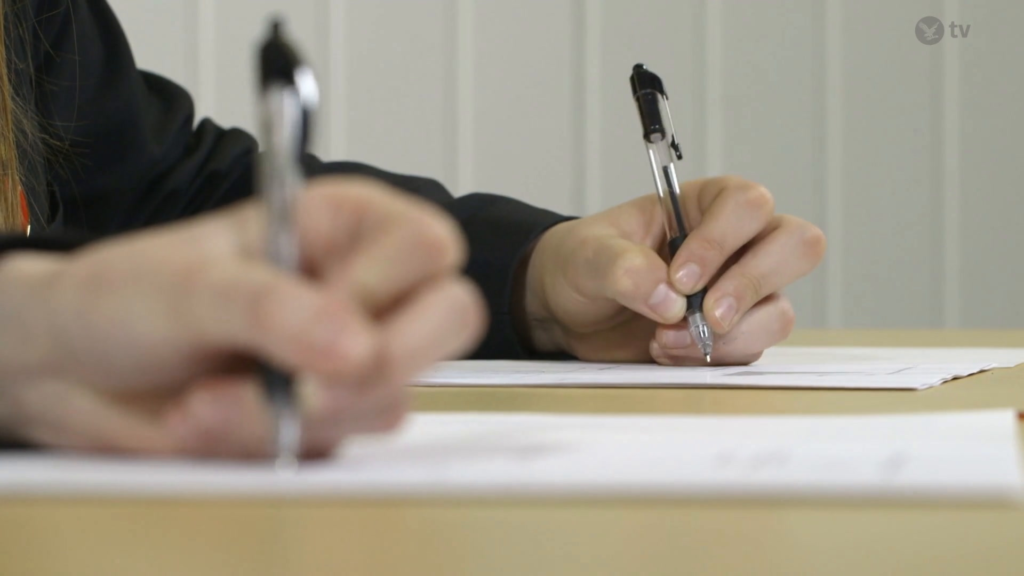
In its written determination, the panel stated that these actions were clear examples of conduct falling short of the high standards expected of teachers. It noted that teachers are entrusted with safeguarding the fairness of assessments and must act as role models for students, demonstrating honesty and respect for rules. By contrast, Lewis’s conduct was found to have facilitated rule-breaking and conveyed the message that examination regulations could be disregarded.
Importantly, the panel accepted that Lewis made full admissions and expressed genuine remorse. Evidence was presented that she had worked as a teacher since 2001 and was widely regarded as a well-respected and high-performing member of staff. Colleagues and school leaders described her as committed to her pupils and passionate about her subjects. These factors were considered as mitigation, alongside her previously unblemished record.
Despite this, the panel concluded that the seriousness of the misconduct outweighed the mitigating factors. It determined that Lewis’s actions were deliberate rather than accidental or the result of misunderstanding. As a teacher with more than two decades of experience, she was expected to be fully aware of examination requirements and the importance of adhering to them. The panel found that she had failed in her duties while occupying a position of trust and responsibility, and that her conduct brought the teaching profession into disrepute.
Implications for Exam Integrity and Professional Standards
The outcome of the case has wider implications for the teaching profession, particularly in relation to exam integrity and professional standards. GCSE and other public examinations rely on strict supervision and uniform conditions to ensure that grades reflect students’ own abilities and efforts. When these conditions are breached, it raises questions about fairness, not only for the pupils involved but also for others who have complied fully with the rules.
The panel’s decision to impose an indefinite prohibition reflects the seriousness with which such breaches are regarded. Although Lewis is permitted to apply for the prohibition order to be reviewed in December 2027, the ban prevents her from teaching in any school, college, or children’s home in the meantime. This sanction underscores the principle that maintaining trust in the examination system is fundamental to the role of a teacher.

Cases of this nature also highlight the pressures that can exist within schools, particularly around coursework-based subjects such as art. Teachers may feel a strong desire to support their students and help them achieve their best possible results. However, professional standards require that such support remains within clearly defined boundaries. The panel’s findings reinforce the expectation that teachers must balance encouragement with strict adherence to rules, even when doing so may feel uncomfortable or contrary to their instinct to help.
For regulatory bodies, the case demonstrates the importance of clear guidance and consistent enforcement of standards. By taking decisive action, the Teaching Regulation Agency has signalled that deliberate breaches of exam regulations will attract severe consequences, regardless of a teacher’s prior reputation or length of service. This approach is intended to protect the integrity of the profession as a whole and to reassure the public that qualifications are awarded fairly.
At the same time, the acknowledgment of Lewis’s remorse and previous good character suggests that panels will continue to consider individual circumstances carefully. The option for her to apply for a review of the prohibition order after several years reflects a recognition that professional misconduct cases can involve complex human factors, and that rehabilitation may be possible in some circumstances.
The banning of Wendy Lewis serves as a reminder of the high ethical standards expected of teachers, particularly during examinations. It illustrates how actions intended to help students can cross the line into misconduct when they undermine fairness and honesty. By enforcing strict consequences in such cases, regulators aim to uphold confidence in the education system and reinforce the principle that integrity must remain at the core of the teaching profession.