

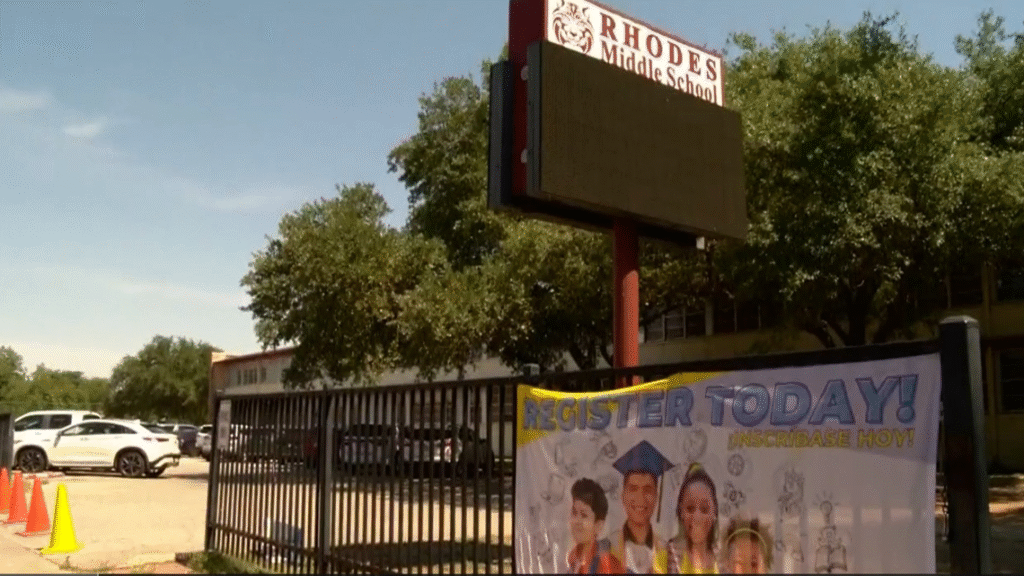
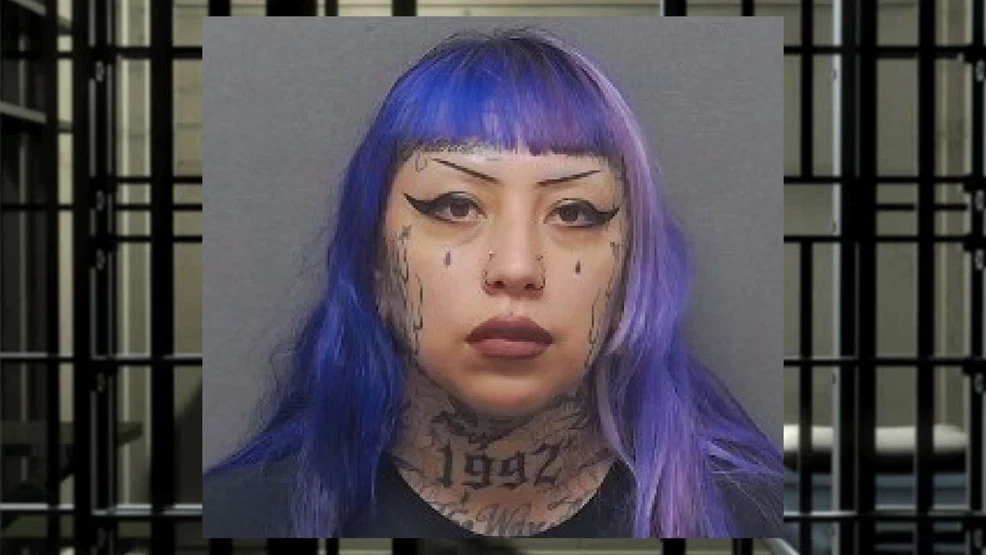
On May 12, 2025, a chilling plot targeting Jeremiah Rhodes Middle School in San Antonio, Texas, was uncovered, leading to the arrest of 33-year-old Ashley Pardo.
Pardo faces charges of aiding in the commission of terrorism after allegedly purchasing ammunition and tactical gear for her son, who investigators say was planning “mass targeted violence” at the school. The arrest has sparked widespread concern about parental responsibility, school safety, and the growing threat of ideologically driven violence among youth.
A Mother’s Alleged Role in Facilitating Violence
Ashley Pardo’s arrest stems from accusations that she knowingly provided her son with resources to carry out a violent attack. According to the Bexar County arrest affidavit, Pardo purchased tactical gear, including a vest capable of concealing ballistic plates, a helmet, magazines, and army clothing, as well as live ammunition.
These items were allegedly obtained in exchange for her son babysitting his younger siblings, a transaction that authorities argue demonstrates her intentional support of his plans. The affidavit further states that Ashley Pardo was aware of her son’s desire to commit acts of mass violence, having been contacted by local law enforcement, child protective services, and school officials about his concerning behavior.
Despite these warnings, Pardo reportedly dismissed concerns, telling school officials she was not worried about her son’s actions or violent expressions. This refusal to acknowledge the severity of his behavior is a focal point of the case against her.
Authorities argue that her actions facilitated her son’s ability to prepare for an attack, placing Rhodes Middle School “in further fear of serious bodily injury.” Pardo’s bond was set at $75,000, and she was released from Bexar County Jail on May 13 after posting bail. Her next court appearance is scheduled for July 17, and she has requested a court-appointed attorney.
Read : 11 Students of Fort Dearborn Elementary School Hospitalized After Eating Marijuana Edibles
The case raises critical questions about parental accountability. While parents are often the first line of defense in identifying troubling behavior in their children, Pardo’s alleged actions suggest a troubling complicity.
Read : 20-Year-Old Gunman Who Fired at Trump Was Rejected from School Rifle Team
Her purchase of items commonly associated with mass shootings, such as tactical gear and ammunition, underscores the ease with which such materials can be acquired and the devastating potential when they fall into the wrong hands. This incident highlights the need for greater scrutiny of how parents respond to warning signs and the role they play in either mitigating or exacerbating threats.
A Troubled Student and a School on High Alert
The student at the center of this case, whose identity has not been disclosed due to his age, exhibited a pattern of alarming behavior that escalated over months. According to the affidavit, school officials first raised concerns in January 2025 when they discovered drawings by the student that included a “suicide route” map, the school’s name written alongside a rifle, and timestamps suggesting a planned attack.
When questioned, the student expressed a fascination with past mass shooters and their manifestos, a red flag that prompted further monitoring. In April, the student was suspended for researching the 2019 Christchurch mosque shootings, which killed 51 people, on a school-issued computer.
The Christchurch attack, carried out by white supremacist Brenton Tarrant, appears to have been a source of inspiration for the student. This was evident in a homemade explosive device found in his bedroom, inscribed with “For Brenton Tarrant,” along with references to “14 words” and “SS” symbols—both tied to white supremacist ideology. The discovery of a handwritten note listing mass shooters and their victim counts further underscored his fixation on violent acts.
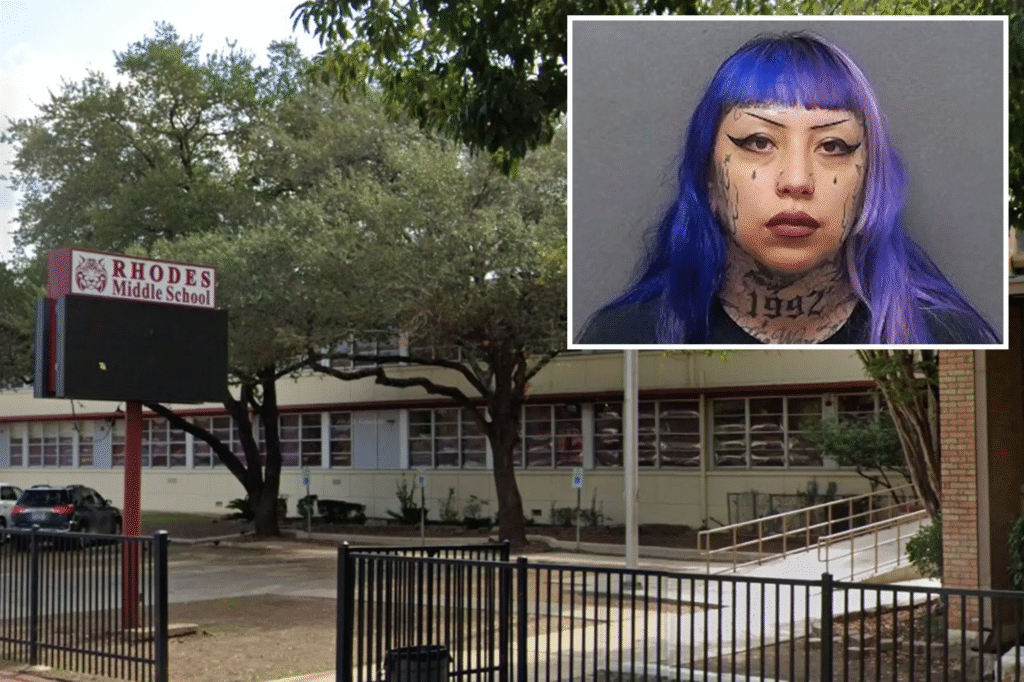
On May 12, the student arrived at Rhodes Middle School wearing a mask, camouflage jacket, and tactical pants, alarming school staff. He left the campus shortly afterward, prompting fears that he might return to carry out an attack.
The school implemented heightened security measures, including deploying additional police officers and conducting a sweep for potential explosive devices. The student was later detained off-campus, averting a potential tragedy. The school’s principal, in a letter to parents, emphasized the district’s commitment to safety, stating, “We take all potential threats seriously and act immediately to protect everyone in our care.”
The student’s grandmother played a pivotal role in alerting authorities to the threat. On May 11, she learned that Pardo had provided her grandson with ammunition and tactical gear. The following day, she discovered troubling items in his bedroom, including the explosive device, loaded magazines, and the handwritten note.
Her decision to contact the San Antonio Police Department likely prevented a catastrophic event. This case underscores the importance of vigilant family members and community members in identifying and reporting potential threats, particularly when a parent fails to act responsibly.
Broader Implications for School Safety and Ideological Extremism
The events at Rhodes Middle School are a stark reminder of the ongoing challenges schools face in preventing targeted violence. Schools across the United States have implemented extensive safety protocols, including active shooter drills, security cameras, and threat assessment teams.
However, the increasing prevalence of ideologically motivated violence, particularly among young individuals, poses a unique challenge. The student’s apparent fixation on white supremacist ideology, as evidenced by his references to Brenton Tarrant and “14 words,” reflects a broader trend of youth being radicalized through online platforms and extremist content.
This case also highlights the role of family dynamics in either mitigating or exacerbating the risk of violence. Ashley Pardo’s alleged support of her son’s violent inclinations stands in stark contrast to the actions of his grandmother, who took decisive steps to intervene.
Schools and communities must work to engage families in prevention efforts, ensuring that parents are equipped to recognize and address warning signs. This may involve increased collaboration between schools, law enforcement, and mental health professionals to provide early intervention and support for at-risk youth.
The accessibility of tactical gear and ammunition is another critical issue raised by this case. While these items are legally available for purchase, their acquisition by individuals with malicious intent underscores the need for stronger oversight and regulation.
Policymakers must balance Second Amendment rights with the imperative to prevent such materials from being used in acts of violence. Community education programs that teach parents and guardians about the risks associated with these items could also play a preventive role.
Furthermore, the incident at Rhodes Middle School underscores the importance of fostering inclusive school environments that counter extremist ideologies. Schools can implement programs that promote empathy, critical thinking, and media literacy to help students resist the allure of hateful ideologies.
By addressing the root causes of radicalization, such as social isolation and exposure to extremist content, schools can reduce the likelihood of students adopting violent ideologies. The case also raises questions about the role of technology in monitoring and preventing threats.
While the student’s use of a school-issued computer to research mass shootings was detected, it is unclear whether additional monitoring could have identified his intentions earlier. Schools must navigate the delicate balance between protecting student privacy and ensuring safety, potentially through the use of advanced threat detection software and partnerships with law enforcement.
The arrest of Ashley Pardo and the uncovering of her son’s plot to attack Jeremiah Rhodes Middle School serve as a sobering reminder of the complex challenges facing schools and communities in preventing targeted violence.
Ashley Pardo’s alleged role in providing her son with the means to carry out an attack highlights the critical importance of parental responsibility and accountability. The swift actions of the student’s grandmother and school officials demonstrate the power of vigilance and collaboration in averting tragedy.
As schools continue to grapple with the threat of violence, this case underscores the need for comprehensive strategies that address ideological extremism, family dynamics, and the accessibility of dangerous materials.
By fostering inclusive environments, strengthening community partnerships, and promoting early intervention, schools can work to ensure the safety of students and staff. The events in San Antonio should serve as a call to action for all stakeholders—parents, educators, policymakers, and community members—to remain vigilant and proactive in preventing such threats from becoming reality.
Hey! This is my first visit to your blog! We are a group of volunteers and starting a new initiative in a community in the same niche.
Your blog provided us useful information to work on. You have
done a wonderful job!
I visit day-to-day some web pages and information sites to read posts,
however this webpage offers feature based content.