
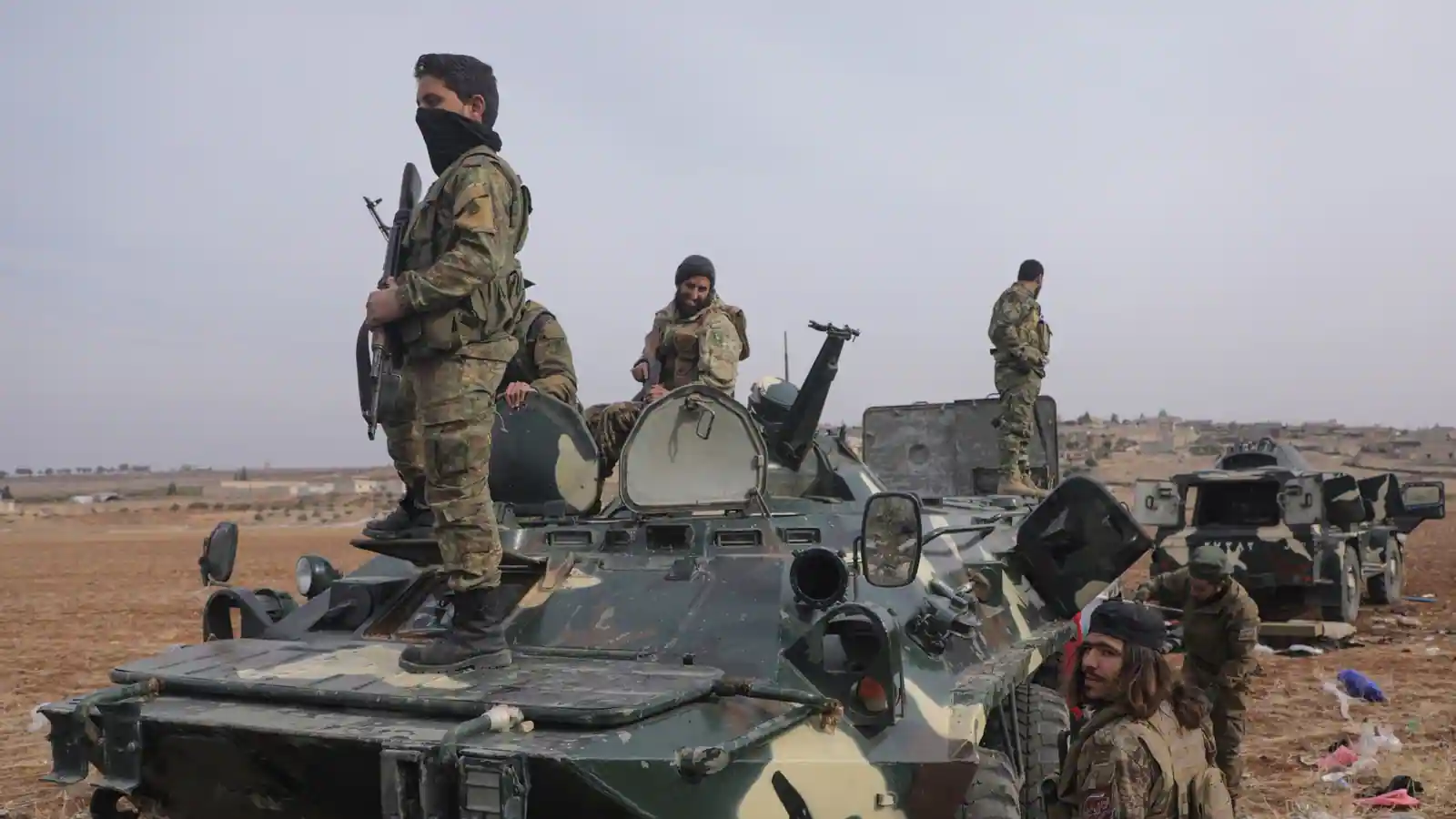
The fall of President Bashar Assad’s government marks a dramatic turning point in Syria’s prolonged civil war. After more than a decade of conflict, the Syrian regime appears to have collapsed under the weight of a swift and decisive offensive by opposition forces. The insurgents, led by powerful factions, have entered Damascus, signaling a new chapter in Syria’s turbulent history.
The Advance of Opposition Forces
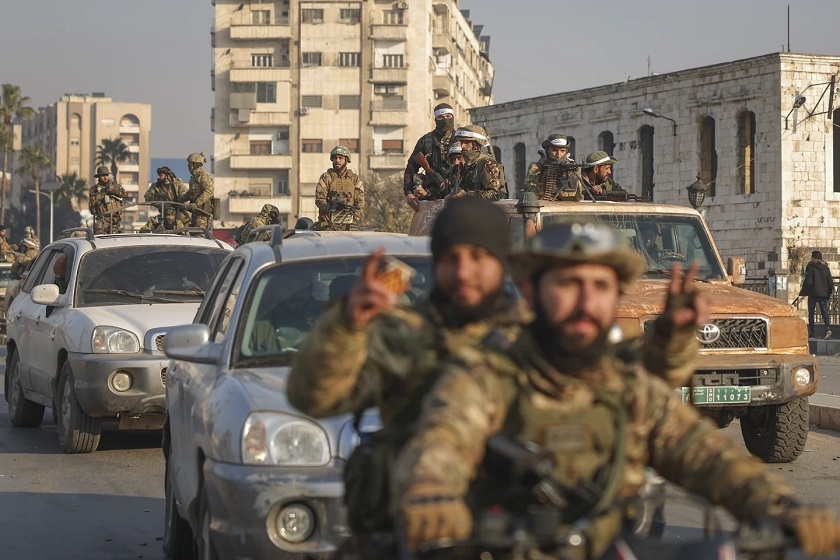
The offensive leading to Damascus unfolded with remarkable speed, taking much of the world by surprise. Opposition fighters, spearheaded by Hayat Tahrir al-Sham (HTS) and the Turkish-backed Syrian National Army, achieved significant territorial gains over just a few weeks.
Their march to Damascus began with the capture of key northern cities such as Aleppo and Hama, followed by the strategic city of Homs. These victories were pivotal, effectively severing Assad’s capital from the northern coastal regions where his support base was concentrated.
Homs, often referred to as the “capital of the revolution,” was a major symbolic and strategic loss for Assad’s regime. Its fall not only demoralized loyalist forces but also cut vital supply lines between Damascus and strongholds in Latakia and Tartus.
The swift retreat of Syrian forces from these cities underscored the regime’s waning capacity to resist the advancing insurgents. Reports of Iranian and Hezbollah forces withdrawing from Syria further emphasized the unraveling of Assad’s military support network.
Read : Hezbollah Sends 2,000 Fighters, 150 Military Advisors to Syria Despite Ongoing Conflict with Israel
As the opposition reached the Damascus suburbs, their presence was reported in key areas such as Maadamiyah, Jaramana, and Daraya.
BREAKING:
— Republicans against Trump (@RpsAgainstTrump) December 8, 2024
Syrian rebels have entered Assad's Presidential Palace in Damascus. pic.twitter.com/MPmzUuQCUm
The sounds of gunfire and explosions in the capital marked the insurgents’ proximity, creating an atmosphere of uncertainty and fear among residents. The entry of opposition forces into the notorious Saydnaya military prison and the liberation of prisoners there highlighted the regime’s inability to maintain control even over its most fortified locations.
The Collapse of Assad’s Rule
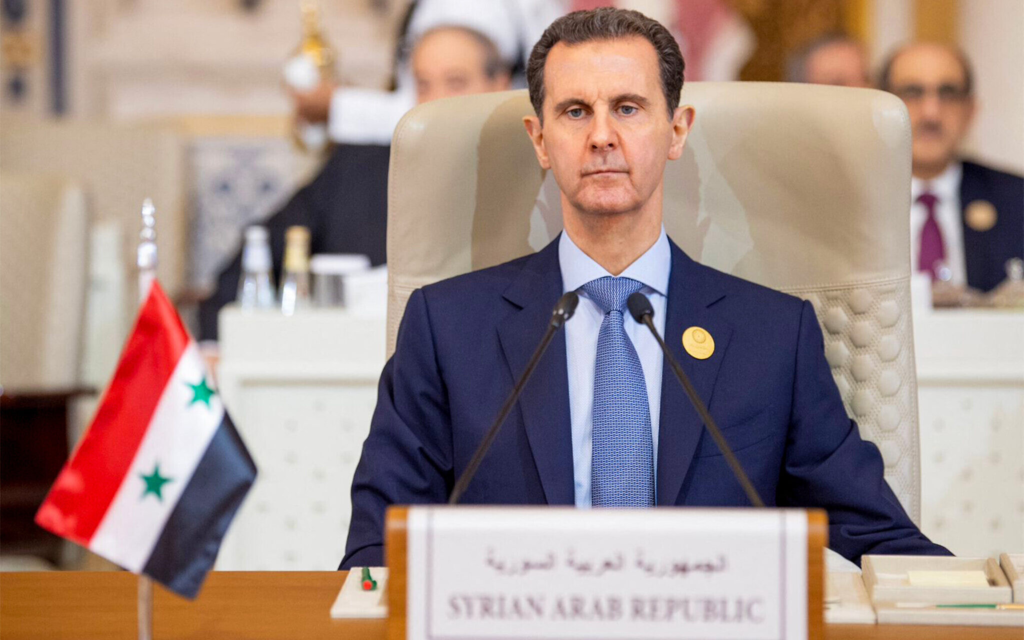
President Bashar Assad’s departure from Syria marks a significant moment in the country’s modern history. Reports suggest Assad fled Damascus on a flight to an undisclosed location as opposition forces closed in on the capital.
This decision came amid a crumbling defense by the Syrian military and the abandonment of key positions across the country. High-ranking Syrian army officers confirmed the evacuation, while the Damascus airport was reportedly shut down, halting all flights.
The Syrian army’s notification to officers that Assad’s rule had ended sent shockwaves across the nation. Prime Minister Mohammed Ghazi Jalali attempted to project an image of resilience, stating in a video address that he remained committed to his role and calling for order amidst the chaos. However, his inability to address Assad’s departure further highlighted the disarray within the government.
Internationally, the response to Assad’s flight has been mixed. The White House expressed uncertainty about his whereabouts while reaffirming its stance of non-intervention in Syria’s civil war.
President Biden’s administration emphasized the need to focus on American national security priorities, particularly the threat posed by extremist groups such as the Islamic State. Former President Donald Trump echoed a similar sentiment, urging the United States to refrain from involvement in the conflict.
Assad’s exit brings an end to the al-Assad family’s five-decade-long reign over Syria, which began in 1971 with Hafez al-Assad’s rise to power. The collapse of the regime underscores the complex and often brutal dynamics of the Syrian civil war, which has left millions displaced and hundreds of thousands dead.
Regional Implications and the Path Forward
The fall of Damascus and the broader collapse of Assad’s government have far-reaching implications for Syria and the region. The swift advance of opposition forces has exposed the fragility of Assad’s alliances with key international backers, including Russia, Iran, and Hezbollah.
With Russia preoccupied by its war in Ukraine and Hezbollah weakened by its prolonged conflict with Israel, the Syrian regime found itself increasingly isolated. Iran, too, faced setbacks as Israeli airstrikes degraded its regional proxies and disrupted supply lines.
The capture of Homs and Aleppo, along with opposition gains in southern provinces such as Daraa and Sweida, have reshaped Syria’s territorial landscape.
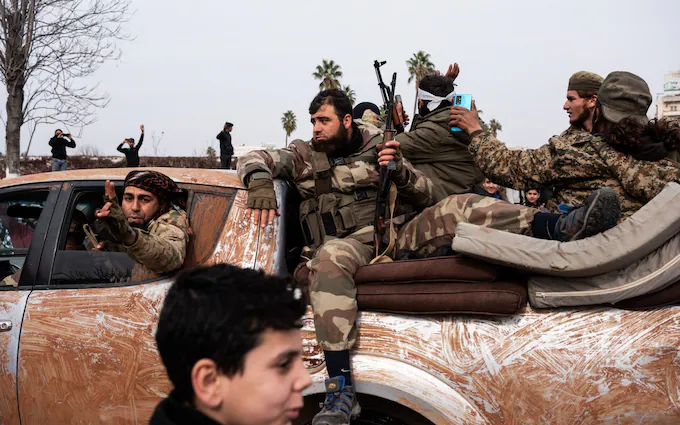
The loss of these areas has effectively dismantled the regime’s control over much of the country, leaving only pockets of resistance in Latakia and Tartus. These coastal provinces, home to Russian military bases, remain significant due to their strategic value.
Meanwhile, the Kurdish-led Syrian Democratic Forces (SDF) have made gains in eastern Syria, capturing parts of the Deir el-Zour province and a key border crossing with Iraq.
These developments further complicate the situation, as various factions vie for control in the absence of a central authority. The SDF’s advances also diminish Iran’s influence in the region, disrupting its corridor linking the Mediterranean to Iraq.
The international community faces significant challenges in responding to the evolving crisis. Qatar has called for urgent political dialogue to prevent further fragmentation of the country.
The foreign ministers of Iran, Russia, and Turkey are set to meet to discuss the situation, highlighting the importance of diplomatic engagement in addressing Syria’s future. However, the rapid pace of events on the ground underscores the urgency of finding a viable political solution.
The insurgents, led by HTS and allied groups, now face the daunting task of establishing governance in the territories they control. The inclusion of HTS, a group with roots in al-Qaida, raises concerns about the ideological direction of the opposition and its ability to unite diverse factions. The potential for internal divisions and the risk of extremist elements exploiting the power vacuum further complicate the path forward.
The fall of President Bashar Assad’s regime marks a turning point in Syria’s civil war, with opposition forces achieving unprecedented gains and reshaping the country’s political landscape.
The swift collapse of the government underscores the complexities of the conflict and the challenges of transitioning from authoritarian rule to a more inclusive political framework.
As Syria enters a new phase, the international community must navigate a delicate balance between supporting stability and addressing the aspirations of the Syrian people for freedom and justice.