

In a bizarre incident that has left the Florence County community reeling, 32-year-old teaching assistant Alexander Paul Roberts Lewis has been arrested for allegedly unleashing a wave of foul odors across West Florence High School. The prank-like behavior, involving a commercially available spray designed to mimic the smell of feces, reportedly spanned nearly a month and led to widespread health complaints among students and significant financial repercussions for the school district.
Authorities from the Florence County Sheriff’s Office announced the arrest on September 19, 2025, charging Lewis with disturbing schools and malicious injury to property valued at over $10,000. This event, unfolding in the heart of South Carolina’s educational system, raises serious questions about workplace conduct, student safety, and the boundaries of juvenile antics in professional environments. As details emerge, the story serves as a stark reminder of how seemingly harmless pranks can escalate into criminal matters, disrupting the daily lives of hundreds of young learners.
The Mysterious Odor: A Timeline of Disruption and Distress
The saga began subtly on August 25, 2025, when the first reports of an inexplicable, pungent smell surfaced at West Florence High School, located in Florence, South Carolina. What initially seemed like a one-off anomaly quickly escalated into a persistent nightmare for students, teachers, and administrators. Over the following weeks, the odor—described by witnesses as overwhelmingly fecal—permeated hallways, classrooms, and stairwells, turning the school into an unwitting gas chamber of discomfort.
By early September, complaints had snowballed. Students recounted harrowing experiences of navigating the building while battling waves of nausea and dizziness. One anonymous student shared with local reporters that during second-period transitions, the stairwell became a gauntlet of misery: “Teachers were covering their noses and mouths, coughing uncontrollably because of the smell. I got physically sick the other day—I felt like I was going to pass out from the lightheadedness.”
Parents echoed these sentiments, with one mother revealing that her son’s asthma had been triggered multiple times, necessitating three separate doctor visits. The air grew so toxic that some pupils required immediate medical attention for respiratory issues, including headaches, vomiting, and shortness of breath. School officials, baffled by the source, initiated an internal investigation. Maintenance crews scoured vents and plumbing systems, suspecting a sewer leak or chemical spill.
Deep cleaning efforts were underway almost daily, but the stench returned with alarming regularity, often peaking during class changes or in high-traffic areas. Attendance dipped as parents grew increasingly alarmed, pulling their children from school or demanding remote learning options. The disruption was palpable: lessons halted mid-sentence, assemblies canceled, and an overarching sense of unease settled over the campus. By September 19, the cumulative impact had forced the school to confront not just a hygiene crisis, but a full-blown health emergency affecting over 1,500 students and staff.
Read : Acharya Prashant: The Most Followed Spiritual Leader Globally on YouTube
What made this ordeal particularly insidious was its intermittent nature. The odor wouldn’t linger indefinitely but would dissipate just enough to lull everyone into a false sense of security before striking again. Surveillance footage later captured suspicious activity, though the full extent of the footage’s role in unmasking the perpetrator remains under wraps as the investigation continues. For nearly a month, West Florence High School operated under a cloud of suspicion and sickness, a far cry from the typical back-to-school buzz of enthusiasm and routine.
Unmasking the Suspect: From Prank to Prosecution
The breakthrough came swiftly once the Florence County Sheriff’s Office took the reins. Deputies, responding to escalating pleas from the school district, reviewed security recordings and interviewed witnesses, piecing together a trail that led directly to one of their own: Alexander Paul Roberts Lewis, a 32-year-old teaching assistant employed at the school. Lewis, a Florence resident, had allegedly procured the offending substance—an internet-sold spray engineered to replicate the unmistakable aroma of feces—from an online retailer, turning a novelty gag into a weaponized nuisance.
Investigators allege that Lewis deployed the spray on multiple occasions between August 25 and September 19, strategically targeting common areas to maximize exposure. The motive remains unclear; was it a misguided attempt at humor, a bid for attention, or something more sinister? Lewis himself has reportedly claimed the liquid was merely lemon-flavored hand sanitizer, a defense that authorities have swiftly debunked through chemical analysis. Booking photos show a disheveled man in standard orange attire, his expression a mix of defiance and resignation, as he was processed at the Florence County Detention Center on September 19.
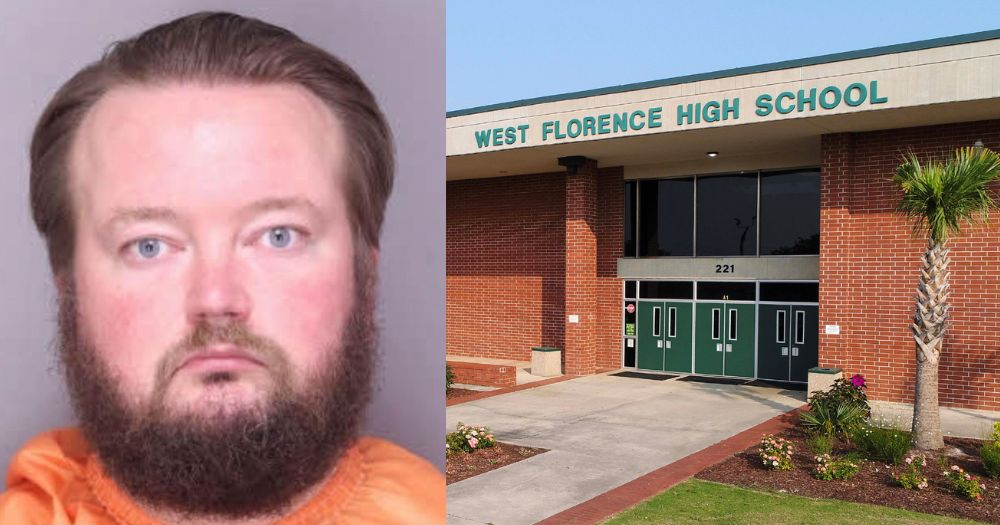
The charges leveled against him are no laughing matter. Lewis faces one count of disturbing schools (non-student), a misdemeanor that underscores the interference with educational operations, and a felony count of malicious injury to property exceeding $10,000. Bond was set at $1,090 for the former, returnable to magistrates’ court on October 9, and $8,000 for the latter, slated for general sessions court on November 19. He was released on September 20 after posting the combined $9,090, but the shadow of potential additional charges looms large. The sheriff’s office has indicated that their probe is ongoing, hinting at deeper layers to this olfactory offense.
Lewis’s role as a teaching assistant—a position typically involving support for special needs students or classroom aides—amplifies the betrayal felt by the community. Colleagues described him as unassuming, someone who blended into the background of the bustling high school environment. Yet, this act of sabotage shattered that facade, transforming a trusted educator into a pariah overnight. As one faculty member anonymously noted, “We entrust these people with our kids’ safety and well-being. How do you come back from something like this?”
Aftermath and Implications: Health Toll, Financial Fallout, and Broader Lessons
The ripple effects of Lewis’s alleged actions extend far beyond the immediate arrest, etching a costly scar on West Florence High School and its stakeholders. Financially, the prank has exacted a staggering toll: over $55,000 in expenses for air-conditioning system inspections, repairs, and deep-cleaning protocols. The HVAC units, contaminated by the pervasive spray, required professional remediation to purge the residue and restore functionality. This sum, drawn from the district’s budget, could have funded new textbooks, extracurricular programs, or facility upgrades—instead, it’s a punitive reminder of negligence’s price tag.

On the health front, the human cost is immeasurable. Dozens of students sought medical care, with symptoms ranging from mild irritation to severe asthmatic episodes. Emergency room visits spiked, and pediatricians in the area reported a cluster of cases linked to “environmental exposure at school.” Mental health strains emerged too; the constant dread of the next whiff eroded focus and morale, with some teens developing anxiety around enclosed spaces. Parents, furious and frightened, have voiced demands for accountability, including enhanced background checks and prank policies. The Florence 1 Schools district, while tight-lipped on internal discipline, confirmed Lewis’s immediate suspension pending the legal outcome.
This incident spotlights vulnerabilities in school safety protocols. How does a substance marketed as a joke infiltrate a secure educational space? Online retailers peddle these sprays with abandon, often touting them for pranks on friends or in public elevators, but their deployment in sensitive venues like schools demands scrutiny. Regulators might eye stricter labeling or age restrictions, while schools could bolster surveillance and anonymous reporting systems. For educators, it’s a wake-up call: even adults in authority aren’t immune to immature impulses, and the line between levity and liability is razor-thin.
As West Florence High School resumes normalcy—odors banished, vents scrubbed—the community grapples with healing. Lewis’s court dates loom, promising deeper revelations. In the end, this foul chapter underscores a timeless truth: in the pursuit of a laugh, one risks tears, bills, and broken trust. For now, the halls echo with relief, but the scent of caution lingers.