
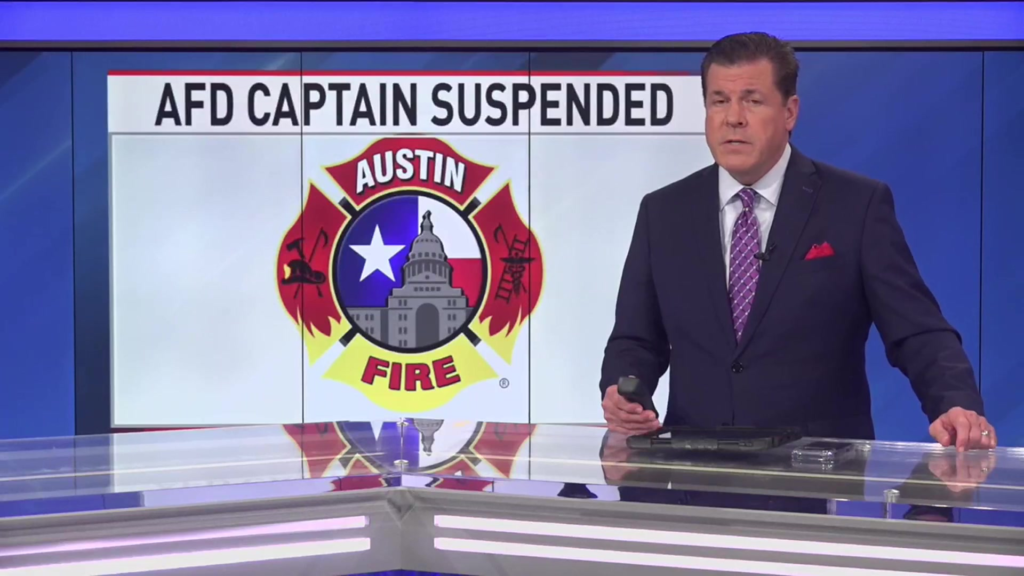
The Austin Fire Department’s decision to indefinitely suspend a senior officer has triggered a wider debate over internal controls, billing practices, and disciplinary consistency within one of the city’s most visible public safety agencies. Capt. Chelsea Caloia, a longtime member of the department assigned to its Support Division, was placed on indefinite suspension late last month following an internal investigation that concluded she engaged in timekeeping fraud and violated multiple city and departmental policies.
City officials say the findings were supported by physical and electronic evidence gathered after an anonymous tip, while Caloia’s attorney and the firefighters’ union argue that she has been unfairly singled out amid broader, longstanding procedural problems. The case has exposed fault lines between management and labor, raised questions about how fire prevention inspections are billed and tracked, and prompted city leaders to initiate department-wide process reforms intended to prevent similar controversies in the future.
Investigation Findings and the City’s Case
According to statements from Austin Fire Chief Joel Baker, the investigation into Capt. Chelsea Caloia began in July after the Austin Fire Professional Standards Office received an anonymous allegation of timekeeping fraud. Investigators reviewed electronic records, examined physical documentation, and conducted interviews with Caloia’s supervisors and colleagues in the Prevention Division, where she was assigned at the time. Chief Baker said the inquiry substantiated the original allegation and also uncovered violations of several additional city and departmental policies, leading to the decision to impose an indefinite suspension.
City staff informed members of the Austin City Council and the mayor’s office of the outcome through an internal email that not only outlined the action taken against Caloia but also acknowledged broader issues within the department. The message stated that the investigation had revealed concerns with timekeeping practices beyond a single employee and noted that Austin Fire was undergoing process improvements to address the problems identified. While the city did not publicly release a detailed accounting of the specific policy violations, officials emphasized that the findings were serious enough to warrant the most severe administrative discipline short of termination.
From the city’s perspective, the case underscores the importance of accurate time reporting and compliance with established policies, particularly in divisions that interact closely with private contractors and generate fee-based revenue. Fire prevention inspections for new construction, plan reviews, and related services are an essential component of the department’s mandate to ensure public safety, but they also involve billing practices that must withstand scrutiny. Any discrepancies between reported work time and actual activities, city officials argue, risk undermining public trust and exposing the city to legal and financial liability.
Read : Mars was Once an Iceball: Study of Rocks and Soils from Gale Crater
Chief Baker has maintained that the investigation was conducted thoroughly and fairly, stressing that the department followed established procedures in evaluating the evidence and determining discipline. He has also sought to frame the incident as an opportunity for organizational improvement, announcing that Austin Fire is implementing new auditing measures and revising its policies on added time and overtime to ensure clearer guidance across all divisions. These steps, he said, are intended not only to address the issues identified in the Chelsea Caloia investigation but also to prevent similar problems in the future.
Defense Arguments and Union Response
Chelsea Caloia’s attorney, Doug O’Connell, has forcefully challenged the city’s characterization of the case, arguing that his client has been made a scapegoat for systemic issues that predate the investigation and extend far beyond her individual conduct. Central to the defense is the claim that the alleged timekeeping irregularities relate to fire prevention inspections for new construction, which O’Connell says are billed at fixed, standardized rates rather than based on the actual time spent on site.
Under this system, he argues, inspectors are not expected to track their hours in the same way as employees performing tasks billed on a time-and-materials basis. According to O’Connell, the real issue is not timekeeping fraud by an individual employee but what he describes as the city’s longstanding practice of systematically overbilling construction contractors for inspection services.
Read : 17-Year-Old Bradey Ming Arrested After Intentionally Setting Friend on Fire
Because fees are set according to factors such as building size and project scope, rather than precise inspection duration, he contends that discrepancies between reported time and actual work do not necessarily indicate misconduct. In this context, O’Connell has suggested that focusing disciplinary action on Caloia diverts attention from structural problems in how inspection services are priced and recorded.
The defense has also addressed additional allegations referenced by city officials, including claims related to off-duty employment and the use of an assigned department vehicle. O’Connell characterized these issues as a smokescreen designed to bolster the case against his client, asserting that if Caloia’s actions are deemed improper, similar conduct could be attributed to numerous other firefighters and leaders operating under the same policies and informal practices.
He has emphasized that any evaluation of her conduct should be measured against how rules have been interpreted and enforced historically within the department. The Austin Firefighters Association has echoed concerns about fairness and due process, while stopping short of disputing the city’s authority to discipline employees for administrative violations.
In a statement, AFA President David Girouard said the union was aware of the serious allegations involving a member of the Support Division but stressed that at no point did the alleged violations compromise public safety. Girouard underscored the union’s position that discipline, when warranted, must be grounded in evidence and applied consistently, warning against selective enforcement that could erode morale and trust within the ranks.
The union’s response reflects a broader anxiety among firefighters that administrative investigations can sometimes be used to single out individuals without adequately addressing systemic issues. While acknowledging the importance of accountability, union leaders have called for transparency in the investigative process and for reforms that clarify expectations for timekeeping, overtime, and secondary employment. They argue that clear, consistently applied rules are essential not only for preventing misconduct but also for protecting employees from arbitrary or uneven discipline.
Broader Implications for Austin Fire Department Policies
Beyond the immediate dispute over Capt. Chelsea Caloia’s suspension, the case has prompted a wider examination of internal controls and administrative practices within the Austin Fire Department. The acknowledgment by city staff that the investigation uncovered department-wide issues with timekeeping suggests that the problems may be rooted in outdated or ambiguous policies rather than isolated misconduct.
Read : Teen Boy Charged with Manslaughter Following Flat Fire That Killed 15-Year-Old Tiffany Regis
For a large organization with diverse operational and support functions, ensuring consistent compliance across divisions is a complex challenge, particularly when different units operate under different billing and scheduling models. Fire prevention and inspection services occupy a unique space within the department, blending public safety responsibilities with regulatory and revenue-generating functions.
Inspectors must balance the need for thorough oversight of new construction with efficiency and consistency in billing. If fee structures are not closely aligned with timekeeping requirements, confusion can arise about how work hours should be recorded and evaluated. The Caloia case has highlighted the potential risks of such misalignment, including the perception of impropriety even when employees believe they are following accepted practices.
Chief Baker’s announcement of new auditing processes and revisions to added time and overtime policies represents an effort to address these challenges proactively. By standardizing procedures and increasing oversight, department leadership aims to reduce ambiguity and ensure that all employees have a clear understanding of expectations. Audits can help identify patterns or discrepancies early, allowing corrective action before issues escalate into disciplinary cases.
Revised policies, if communicated effectively and enforced uniformly, may also help rebuild confidence among employees and stakeholders. At the same time, the controversy underscores the importance of transparent communication between management, labor representatives, and city officials. When disciplinary actions intersect with broader policy questions, the absence of clear explanations can fuel mistrust and speculation.
Providing detailed, accessible information about how investigations are conducted, what standards are applied, and how decisions are made can help mitigate these tensions. For the public, such transparency is essential to maintaining confidence in a department entrusted with both safety and stewardship of public resources.
As the Austin Fire Department moves forward with its planned reforms, the outcome of Capt. Caloia’s case, including any appeals or further proceedings, will likely continue to attract attention. Whether the suspension is ultimately upheld or modified, the episode has already served as a catalyst for change, forcing the department to confront weaknesses in its administrative systems. How effectively those weaknesses are addressed will shape not only internal operations but also the department’s relationship with its workforce and the community it serves.
There is noticeably a bundle to know about this. I assume you made certain nice points in features also.