
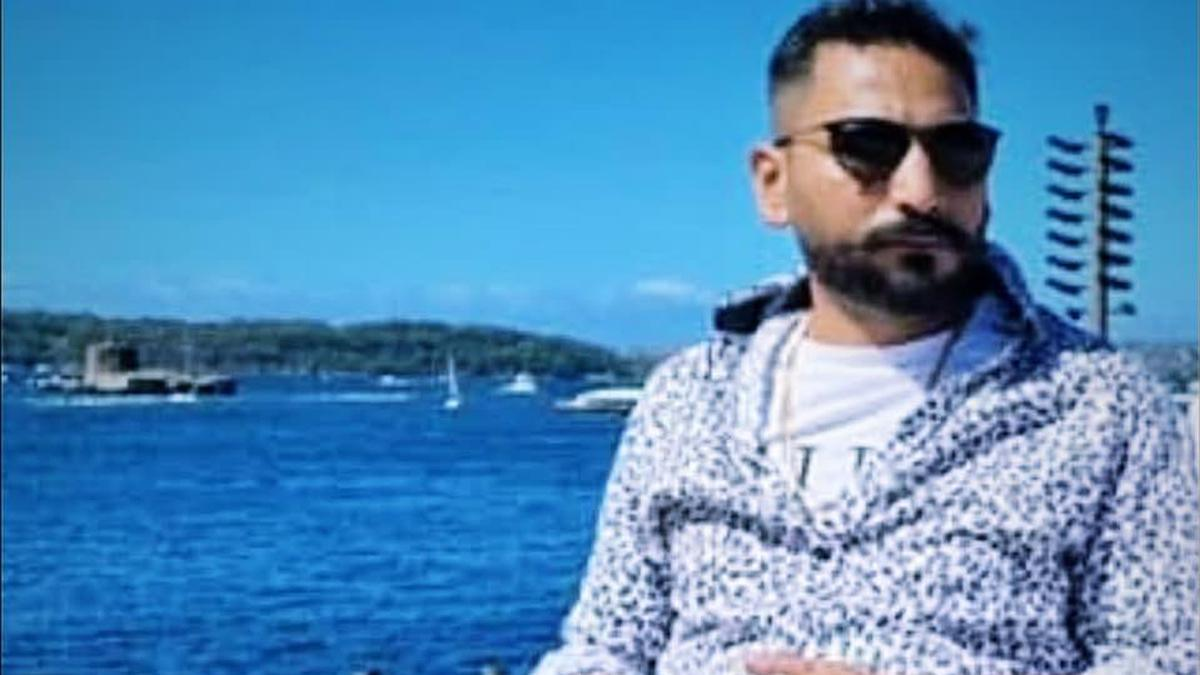
The death of 42-year-old Indian-origin man Gaurav Kundi in Adelaide has sparked a wave of concern and questions over police conduct, echoing global debates on excessive force and the treatment of minorities in law enforcement encounters. Kundi died on June 12, nearly two weeks after Australian Police Knelt on His Neck and he sustained critical injuries during a violent arrest on May 29.
His case, marked by disturbing similarities to the infamous George Floyd incident in the United States, has drawn both outrage and official denial, setting the stage for a contentious investigation into what really happened on that day.
Kundi, a father of two from Modbury North in Adelaide’s eastern suburbs, had been involved in a public dispute with his wife, Amritpal Kaur, when the police arrived. According to Kaur, her husband had been drinking but was not violent.
He reportedly lay on the ground and slightly pushed her in a drunken stupor—an act that triggered a 911 call and the eventual confrontation with police. What followed was a brutal restraint, caught partially on video, in which Kundi can be heard saying, “I didn’t do anything wrong,” moments before officers pinned him down.
A Family Dispute Turns Tragic
The events that unfolded on May 29 began with what was described as a minor domestic disturbance. Kaur later clarified that while there was an argument, it did not warrant police intervention on the scale that followed. Kundi, intoxicated and lying on the ground, allegedly nudged his wife—an act that officers interpreted as domestic violence.
Upon arriving, police attempted to restrain him, quickly escalating the situation into a full-force takedown. Eyewitnesses and Kaur herself have stated that the officers used disproportionate force. She began recording the incident on her mobile phone, capturing her husband’s pleas and the officers’ physical restraint.
At one point, Kaur said she stopped filming after seeing an officer drive his knee into Kundi’s neck—a move chillingly reminiscent of the Minneapolis police killing of George Floyd in 2020. According to Kaur, the officers also slammed Kundi’s head against both a police vehicle and the asphalt. The force of the impact left him unconscious at the scene.
Why is noone talking about Gaurav Kundi?
— Arko Mitra (@Ark0tweets) June 16, 2025
He’s in critical condition after Australian police knelt on his neck, just like George Floyd.
Same injustice. Same method. Different skin.
Raise your voice! #Blm #BrownLivesMatter #JusticeForGaurav #stoppoliceBrutality #Australia pic.twitter.com/ToxdaOz9XW
Kundi was immediately transported to the Royal Adelaide Hospital, where doctors discovered he had suffered severe brain trauma and significant damage to the nerves in his neck. Despite days of medical intervention, he succumbed to his injuries on June 12.
Official Response: Denials, Justifications, and Doubt
South Australian Police have categorically denied any misconduct during Kundi’s arrest. Police Commissioner Grant Stevens emphasized that body-worn camera footage did not support claims that a knee was placed on Kundi’s neck. “At this stage, there is nothing to support any allegations that a knee was placed on the person’s neck during the incident,” Stevens said. He also dismissed any racial motivations behind the police response.
Read : Gaurav Kundi in Coma After Australian Police Allegedly Kneel on His Neck During Arrest
Acting Assistant Commissioner John DeCandia further backed the officers, stating that Kundi had resisted arrest violently and that the response from law enforcement was both necessary and measured. “Our officers followed their training and acted in accordance with protocol,” he noted, adding that a full investigation was underway.

South Australia Premier Peter Malinauskas also lent his support to the police, acknowledging the difficult and dangerous nature of their work. He stopped short of commenting on the specifics of the incident but stressed the importance of due process and thorough review. “We must allow investigations to take their full course before drawing conclusions,” the Premier stated.
However, these assurances have done little to quiet concerns among Kundi’s family and community members, many of whom see troubling parallels between this case and previous incidents where minorities have suffered or died in police custody. The perception that excessive force was used, coupled with the alleged use of a neck restraint, has renewed calls for transparency, accountability, and systemic reform in how law enforcement handles domestic incidents—especially those involving vulnerable or intoxicated individuals.
Public Reaction and the Call for Accountability
The Indian-origin community in Australia, as well as human rights advocates, have reacted with shock and sorrow over the death of Gaurav Kundi. While the official line insists that police acted within protocol, many believe that the aggressive tactics used against a clearly intoxicated and unarmed man were both unnecessary and dangerous.
Kaur has continued to speak out, calling for justice for her husband. She insists that the bodycam footage should be made public, as it would offer an objective view of the events that unfolded. “I saw it with my own eyes,” she said in an emotional statement. “They pushed his head down, slammed it, and I could hear him struggling. He told them he didn’t do anything, but they didn’t listen.”
Activists and legal experts have also questioned the speed with which officials moved to exonerate the officers involved, raising concerns about bias and the thoroughness of internal investigations. They are demanding that an independent body review the case, rather than allowing the police to investigate their own conduct.
“There’s a clear conflict of interest here,” said a spokesperson from an Adelaide-based civil rights group. “Transparency demands that an outside agency be involved, especially when the outcome is as serious as death.”

The case has also rekindled broader debates in Australia about how the police handle people from multicultural backgrounds. Questions are being asked about whether cultural misunderstandings, stereotypes, or even subconscious racial bias may have contributed to the escalation. Despite denials of racism from the authorities, the optics of the case—an Indian man dying after a knee-on-neck restraint—evoke a disturbing pattern that is hard to ignore.
Community leaders have called for restraint training to be re-evaluated, particularly in how police manage potentially non-violent but chaotic domestic incidents. “This isn’t just about one man,” said one local councillor. “It’s about how the system treats people who look different, who speak with an accent, or who find themselves in vulnerable situations. We need to change how we police these moments.”
In the days since Kundi’s death, vigils have been held in his memory, and an online petition demanding justice has garnered thousands of signatures. His friends and family describe him as a gentle, loving father who was known for his warm personality and deep commitment to his children. “He wasn’t perfect,” one friend said, “but he didn’t deserve to die like this. No one does.”
Despite the growing pressure, South Australian authorities have shown little sign of yielding to demands for an independent investigation or for the release of the bodycam footage. As a result, the gap between public perception and official narrative continues to widen, and the sense of injustice deepens.
In the coming weeks, an inquest is expected to be held to determine the precise cause of death and assess the actions taken by police during the arrest. The findings will be closely watched, not only by those seeking justice for Kundi but also by wider communities concerned about the future of policing in Australia.
The tragic death of Gaurav Kundi has become more than just a single incident. It has become a symbol—of the need for reform, of the dangers of unchecked force, and of the painful human cost that can result when trust between the community and the police breaks down.