

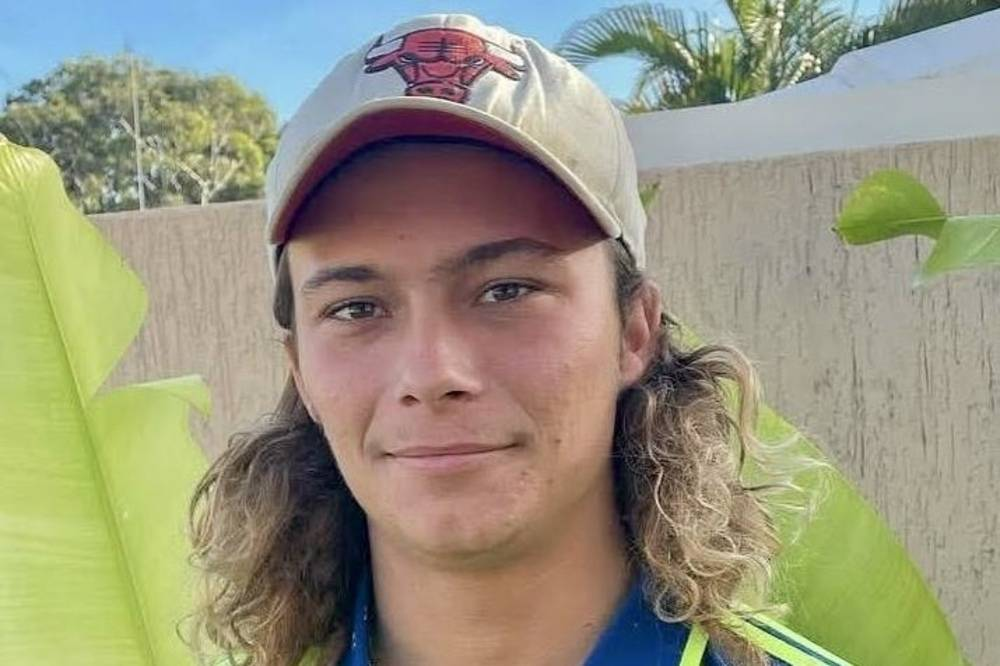
In a story that has gripped Australia and raised urgent questions about medical practices overseas, the family of 23-year-old Byron Haddow is reeling from a double tragedy. Byron, a vibrant young man from Queensland’s Sunshine Coast, traveled to Bali for what should have been a carefree holiday. Instead, he was found dead in the plunge pool of his rented villa in North Kuta on May 26, 2025. Weeks later, when his body was repatriated to Australia, a shocking discovery emerged: his heart was missing.
The organ had been removed during an autopsy without the family’s knowledge or consent, only to be returned separately two months after his death—at a cost of $700 to his grieving parents. This incident, unfolding amid suspicions of foul play in Byron’s death, has sparked outrage, diplomatic tensions, and calls for accountability from Indonesian authorities. As DNA tests continue to verify the returned heart’s authenticity, the Haddow family fights not just for justice but for the dignity their son deserved in life and death.
Byron Haddow was the kind of young man who lit up rooms with his energy and kindness. Born and raised in the laid-back coastal community of Noosa, he embodied the spirit of adventure that draws so many Australians to Bali’s sun-soaked shores. At 23, Byron was building a life full of promise. He worked as a fly-in, fly-out operator in Darwin’s mining industry, managing crushing plants in remote sites.
His schedule—two weeks on, one week off—allowed him precious time back home in Cooroy, where he shared a close bond with his parents, Robert and Chantal Haddow. Friends and family describe him as always happy, quick with a laugh, and deeply loyal. “He was our world,” Chantal would later say, her voice cracking in interviews. Byron’s trip to Bali in May was meant to be a well-earned break, a chance to unwind with a friend after the rigors of his demanding job.
What began as an exciting escape turned into a nightmare. On the evening of May 25, Byron and his friend ventured out from their private villa, immersing themselves in Bali’s lively nightlife. According to accounts pieced together from police reports, they connected with two women—described only as foreign nationals—and returned to the villa for what was intended as a casual continuation of the evening.
The details grow hazy here, shrouded in the fog of alcohol and the chaos of the night. But by the morning of May 26, tragedy struck. Byron was discovered unconscious in the shallow plunge pool, face-down and unresponsive. Emergency services rushed him to Prof. Ngoerah Hospital in Denpasar, Bali’s main medical facility, but efforts to revive him failed. He was pronounced dead at the scene, leaving his family thousands of miles away to grapple with the unimaginable.
Initial reports from Balinese authorities pointed to drowning as the cause of death, possibly exacerbated by alcohol consumption. Toxicology results later confirmed alcohol in his system, but the circumstances raised red flags from the start. Byron’s mother, Chantal, has publicly voiced her gut instinct that something more sinister occurred. “I feel like there was foul play,” she told Channel Nine in a raw, emotional interview. “I think that something happened to him prior to being in the pool.” Her suspicions were fueled by inconsistencies in the timeline and the behavior of key witnesses.
The two women who had been at the villa reportedly left the island shortly after the incident, without providing statements to police. Byron’s friend, who was present, also departed Bali soon after, citing distress over the events. Balinese police documents, obtained by media outlets, reveal plans to interview these three Australians—Byron’s friend and the two women—through the Australian Federal Police, as they had already returned home. Yet, for reasons described as “not clearly explained,” local officers allowed them to leave without interrogation, prompting sharp criticism from the family’s legal team.
A Noosa FIFO worker who mysteriously died in Bali has been repatriated, but his grieving family has more questions than ever. They claim his body came home without a heart. https://t.co/YReZ2eFq2R @SaavanahB #7NEWS pic.twitter.com/PbFJoTuTtJ
— 7NEWS Sunshine Coast (@7NewsSC) September 22, 2025
The Haddow family’s lawyer in Bali, Ni Luh Arie Ratna Sukasari of Malekat Hukum International Law Firm, has been vocal about these lapses. “The police allowed all three to leave Bali without interrogation and without providing any account of the events leading to Byron’s death,” she stated during a press conference in Tibubeneng Badung regency.
The absence of these statements has only deepened the mystery, leaving the family to wonder if vital clues were overlooked in the rush to close the case. An initial autopsy was conducted at Prof. Ngoerah Hospital at the request of both the family—due to their foul play concerns—and Bali police. It was this procedure that would later become the epicenter of the scandal.
The Heartbreaking Discovery: A Body Returned Incomplete
As the Haddow family navigated the bureaucratic maze of international repatriation, hope for closure seemed within reach. Byron’s body arrived back in Queensland nearly four weeks after his death, a delay attributed to standard processing times. Preparations for his funeral were underway when, just two days before the service, a call from the Queensland Coroner shattered their fragile peace. “They just rung us to ask if we were aware that his heart had been retained over in Bali,” Chantal recounted, her words heavy with disbelief. A second autopsy, ordered as part of routine checks, had revealed the unthinkable: Byron’s chest cavity was empty where his heart should have been.
The news hit like a physical blow. Robert and Chantal, already bowed by grief, described the revelation as “another kick in the guts.” In a joint statement to News.com.au, they poured out their anguish: “Two days before his funeral, we were told by the Queensland Coroner his heart had been taken and left behind in Bali—without our knowledge, without our consent, without any legal or moral justification. This is inhumane. This is devastating beyond words.” The parents, who had meticulously planned a memorial to honor their son’s life, now faced the surreal task of proceeding without a piece of him.
Images of the family holding documents at a Bali press conference capture the raw toll: faces etched with exhaustion, eyes red from endless tears. The hospital’s handling of the situation only compounded the horror. According to Prof. Ngoerah’s medical director, Dr. Nola Margaret Gunawan, the heart was removed “for forensic purposes” during the autopsy and retained as part of standard operating procedures. “I have given the autopsy result and explanation to the family. They have accepted my explanation,” Gunawan told The Sydney Morning Herald. But acceptance was far from reality.
The family insists no such consent was sought or granted, a claim echoed by their lawyer. Sukasari emphasized that the retention violated ethical norms, turning a routine procedure into a profound desecration. “Our clients have not only suffered the loss of their son but have also endured violations of their rights as next-of-kin,” the firm declared. This incident, they argued, exposed deep flaws in communication between medical staff and foreign families, where language barriers and cultural differences can amplify misunderstandings into nightmares.
The emotional ripple effects have been profound. Chantal has spoken of sleepless nights haunted by questions: Why was her son’s body treated this way? What right did strangers have to alter him without a word? Robert, typically the stoic figure in the family, broke down recounting the moment they learned of the missing organ, his voice faltering as he described the “inhumane” treatment that layered fresh trauma onto their loss. Siblings and friends, too, have rallied in support, sharing memories of Byron’s infectious smile to keep his spirit alive amid the scandal. Yet, the void left by the missing heart symbolizes more than a medical oversight—it represents a stolen finality, a denial of the complete farewell every family deserves.
Controversies and Calls for Justice: Unraveling the Aftermath
The missing heart saga has ignited a firestorm of controversy, with accusations of organ theft clashing against official denials. Indonesian authorities, including the Bali Doctor Association’s chairman Dr. Made Sudarmaja, have staunchly defended the autopsy as compliant with protocols. The heart, they say, was preserved for further toxicological analysis, a common step in suspicious deaths. But the family’s demand for transparency has exposed cracks in the system.
In August 2025—over two months after Byron’s passing—the organ was finally shipped to Queensland, arriving via Australian Federal Police channels. Yet, even this resolution came with a sting: the Haddows footed a $700 bill for its transport, a financial burden on top of their emotional one. Doubts persist about the heart’s provenance. Sukasari revealed a chilling possibility: the returned organ might not even belong to Byron. “This possibility is under examination. The returned heart is undergoing DNA testing in Queensland to verify that it is indeed Byron’s,” she told Guardian Australia.
Results are pending as of late September, but the mere suggestion has fueled fears of mishandling or worse. Prof. Ngoerah’s director, I Made Darmajaya, issued a firm denial of theft allegations during a September 25 statement, insisting no organs were sold or misused. Still, the hospital’s failure to notify the family promptly has drawn widespread condemnation. “This incident raises serious questions regarding medical practices in Bali,” the legal team asserted. “What happened to Byron Haddow is a grave matter of law, ethics, and humanity.”

On the diplomatic front, Australia’s Department of Foreign Affairs and Trade has stepped in forcefully. Senior officials in Bali and Jakarta have lodged formal representations with Indonesian counterparts, demanding a full accounting. A spokesperson confirmed consular assistance for the family but cited privacy rules in withholding details. This intervention underscores broader concerns about tourist safety in Bali, a paradise that welcomed over a million Australians in 2023 alone.
Past scandals— from drink-spiking to unexplained deaths—have long shadowed the island’s allure, but Haddow’s case strikes at a visceral nerve: the vulnerability of the deceased. The family, undeterred, is pushing for an independent police investigation into both the death and the autopsy. They want answers on why witnesses evaded questioning and how a routine procedure spiraled into such distress.
Chantal’s plea resonates: “They are entitled to know the truth, to receive honest explanations, and to have their son treated with dignity and respect.” As media coverage intensifies—from ABC News exposés to Daily Mail exclusives—the pressure mounts for reform. Legal experts point to murky consent laws in Indonesia, where families abroad often fall through informational gaps. This tragedy could catalyze changes, ensuring no other parent faces a call about a missing piece of their child.
A Legacy of Love Amid Unanswered Questions
Byron Haddow’s story is more than a headline—it’s a testament to a life cut short and a family’s unyielding fight for truth. From the vibrant beaches of Noosa to the tragic poolside in Bali, his journey reminds us of youth’s fragility and the bonds that endure beyond it. As DNA tests loom and investigations grind forward, Robert and Chantal hold onto memories: barbecues in Cooroy, mining tales swapped over beers, a son’s unwavering joy. “He was always happy,” Chantal says simply, a phrase that captures Byron’s essence.
This ordeal has tested the Haddows’ resilience, forging them into advocates for overseas travelers. They’ve shared their pain not for pity, but to prevent repeats—urging families to document consents, question procedures, and demand clarity in crises. Bali remains a beacon for Aussies seeking escape, but Haddow’s case spotlights the shadows: from nightlife risks to postmortem protocols.
As September 2025 draws to a close, the world watches, hoping for resolution. For now, the Haddows grieve a son whose heart—literal and figurative—beat fiercely for those he loved. In their words, this is about “honoring Byron with the respect he deserved.” May his memory drive the change his family so desperately seeks.
I have recently started a web site, the information you offer on this web site has helped me tremendously. Thanks for all of your time & work.
Write more, thats all I have to say. Literally, it seems as though you relied on the video to make your point. You definitely know what youre talking about, why waste your intelligence on just posting videos to your blog when you could be giving us something enlightening to read?
I have recently started a web site, the info you offer on this site has helped me greatly. Thank you for all of your time & work.
Nice post. I used to be checking continuously this blog and I am impressed! Very useful information specially the final phase 🙂 I deal with such information much. I used to be seeking this certain info for a very lengthy time. Thanks and best of luck.