
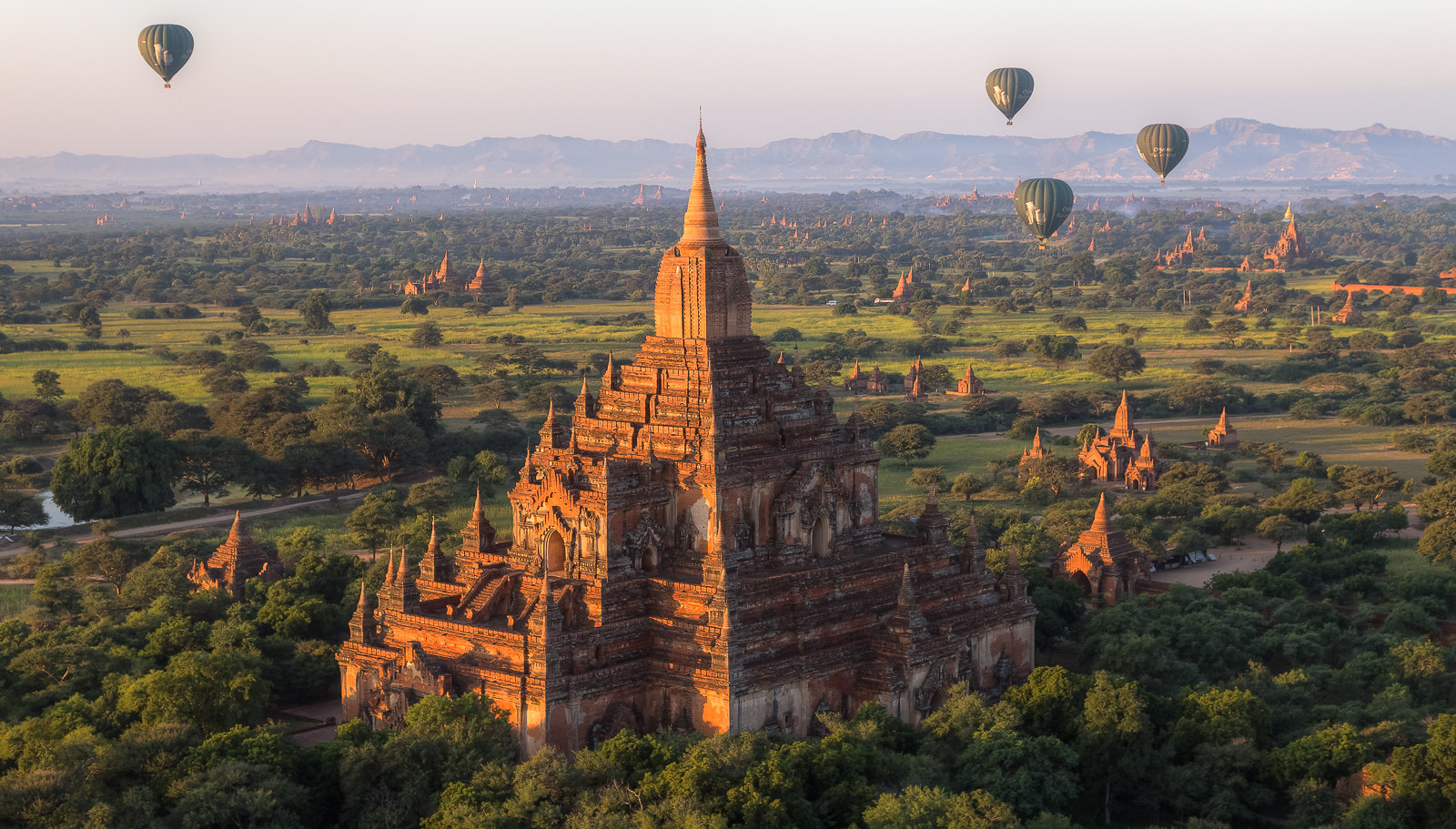
In the heart of Myanmar lies a place that once captured the imaginations of all who beheld it—a place where the echoes of ancient civilizations still linger, and the remnants of a golden age of culture and devotion remain etched in the very earth.
Bagan, with its stunning temples, tranquil landscapes, and timeless beauty, was once described as one of the most beautiful places on earth. Its breathtaking vistas, set against the backdrop of a vast, sun-drenched plain, were a sight to behold. For centuries, it stood as a testament to human ingenuity and spiritual devotion.
But like all great stories, its beauty and splendor eventually faded, leaving only the memories of what once was. The temples may have crumbled with time, but the essence of Bagan remains indelible—a once sacred place of unparalleled beauty and spiritual significance.
A Sacred Landscape of Serenity
Set in the heart of Myanmar, was more than just a physical location; it was a place imbued with deep spiritual meaning. The land was dotted with thousands of temples, pagodas, and stupas, each one an architectural marvel, constructed with the highest reverence for the divine.
The plains of city were a canvas on which generations of artisans and craftsmen painted their devotion. These structures were not mere buildings; they were expressions of faith, each stone placed with reverence, each spire pointing toward the heavens, an attempt to bridge the earthly and the divine.
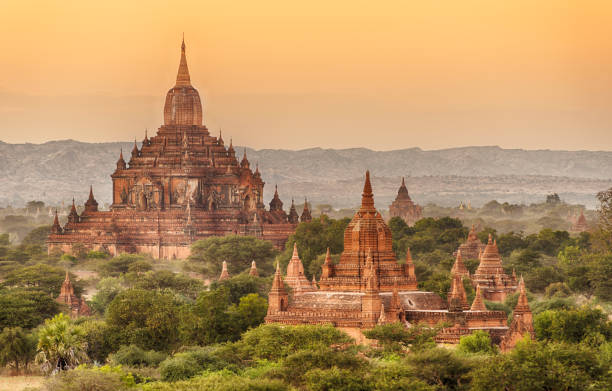
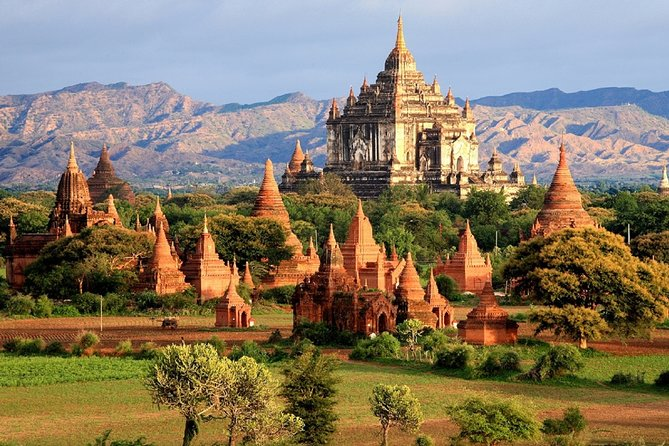
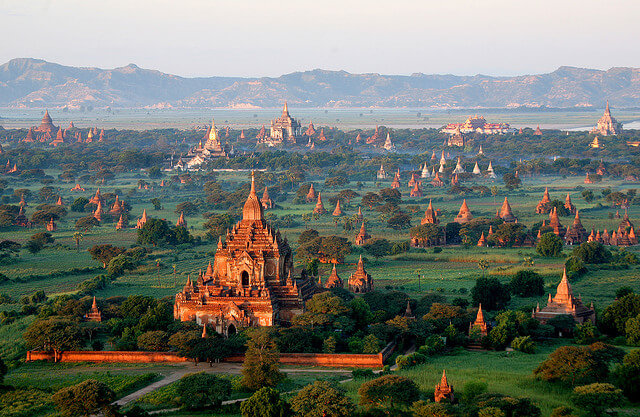
The landscape itself added to Bagan’s otherworldly charm. The plains stretched for miles, an endless sea of golden and red temples, pagodas, and stupas, all standing in quiet solemnity.
The horizon seemed to vanish into the sky, and during sunrise and sunset, the land would glow with an ethereal light, casting long shadows over the temples and bathing the area in a soft, golden hue.
The beauty of this place was not only in its grand structures but also in the peacefulness that enveloped it, a sense of timelessness that made it feel as though the world had stopped turning, and all that mattered was the stillness of the land and the call of distant monks’ chants.
Read : Top Ten Remarkable Villages of Myanmar You Should Explore
The Ayeyarwady River, which gently flowed to the west of Bagan, further added to its tranquil beauty. The river, shimmering under the sun, served as a lifeblood to the region, providing sustenance to the people and connecting them to the broader world.
Read : Mystical Myanmar: Top Ten Selfie Spots to Capture the Magic
The sounds of birds, the rustling of trees, and the occasional flutter of a monk’s robes in the breeze were the only disruptions in the silence. Bagan was a place where nature and spirituality merged, creating an environment of peace that few could resist.
The Rise and Glory of Bagan
Bagan’s transformation from a remote settlement to one of the most powerful and influential cities in Southeast Asia began around the 9th century.
Under the rule of King Anawrahta, city became the heart of the Pagan Kingdom, a prosperous and influential dynasty that spanned much of present-day Myanmar. Anawrahta’s reign marked the beginning of Bagan’s golden age, during which it became a center for Buddhism and a hub of architectural and cultural achievements.
At its peak, Bagan was not only a spiritual center but also a thriving metropolis. It was home to over 10,000 temples, many of which were grand structures, designed to reflect the kingdom’s wealth, power, and devotion.

The city was a melting pot of cultures, with influences from India, China, and beyond, as trade routes passed through the region, bringing new ideas, art, and religion. The temples of Bagan were an embodiment of this cultural exchange, combining Indian and Southeast Asian architectural styles, and were adorned with intricate carvings, frescoes, and statues of the Buddha.
The art and architecture of Bagan were unparalleled in their beauty. Each temple and pagoda was meticulously designed and decorated, and the city became a showcase of the heights of Burmese architecture. The Ananda Temple, with its four massive Buddha statues, stood as a symbol of the kingdom’s power and devotion.
The Shwezigon Pagoda, with its gilded stupa, was considered one of the most sacred places in Bagan, drawing pilgrims from across the region. These grand temples and pagodas were not just structures of worship; they were also symbols of the power and wealth of the Pagan Kingdom, a reflection of the devotion of its rulers and the faith of its people.
As Bagan grew, so too did its influence. The Pagan Kingdom expanded its territories, and Bagan became the heart of a vast empire. Trade flourished, and the kingdom’s wealth and culture were spread far and wide.
Pilgrims traveled from all corners of Asia to visit the city, seeking blessings, enlightenment, or simply a glimpse of its beauty. The city’s significance extended beyond its religious importance; it was a political and cultural powerhouse in Southeast Asia, a place of both worldly and spiritual significance.
The Decline: When the Sun Set on Bagan’s Glory
Despite its grandeur, the fall of Bagan was inevitable. The factors leading to its decline were both internal and external. In the 13th century, the Mongol invasions, led by Kublai Khan, began to destabilize the region.
Bagan was struck by a series of invasions that weakened the kingdom’s defenses and drained its resources. The great temples and palaces of Bagan were destroyed or looted, and the once-thriving city began to fade into obscurity.
In addition to external pressures, Bagan also faced internal challenges. As the Pagan Kingdom weakened, political fragmentation and infighting took hold, further eroding the city’s power.
The religious unity that had once been a defining characteristic of Bagan began to fracture as various factions vied for control. The result was a slow but steady decline, as the kingdom fell into disarray, and the once-great city of Bagan became a shadow of its former self.
Over time, the temples and pagodas of Bagan fell into ruin. The gold leaf that once adorned the stupas tarnished, and the frescoes faded. Nature began to reclaim the land, and the once-bustling streets became silent.
Yet, even in its decline, Bagan retained an air of mystery and magic. The ruins of the ancient city, set against the backdrop of the golden plains, still whispered the stories of a time when Bagan was a beacon of civilization, a jewel in the heart of Southeast Asia.
Today, Bagan is a UNESCO World Heritage Site, recognized for its historical and cultural significance. The temples still stand, albeit weathered by centuries of neglect and natural disasters. Yet, despite their age, they continue to captivate visitors from around the world.
The beauty of Bagan may have dimmed with time, but it has not disappeared. It remains a place of pilgrimage, a reminder of a once-great civilization, and a testament to the enduring power of human creativity and devotion. The land may be quieter now, but the echoes of Bagan’s glory still resonate in the heart of Myanmar, and the world.
Bagan, though now a shadow of its former self, continues to be a place of wonder and reverence. Its temples stand tall, weathered by time but still magnificent, each one telling a story of the past. The ruins are more than just remnants of a bygone era; they are living monuments to the creativity, faith, and dedication of the people who built them.
As the sun sets over Bagan, the shadows cast long and deep, and for a moment, it feels as if time itself has stopped, allowing visitors to step into a world of ancient beauty and spirituality. The legacy of Bagan may have faded, but its spirit endures, forever etched into the fabric of the earth.