
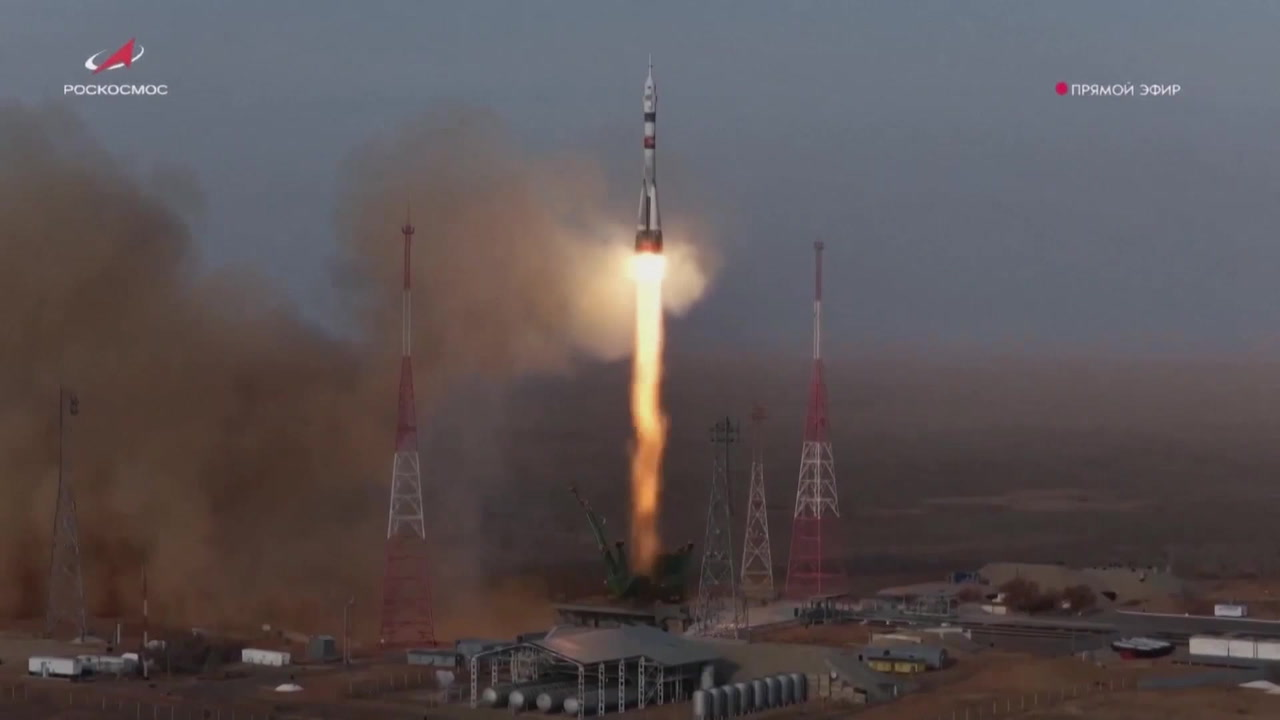
The recent incident at the Baikonur Cosmodrome has marked a turning point in the history of Russian spaceflight, interrupting a tradition of continuous human space launch capability that has existed since the early 1960s. Following the launch of the Soyuz MS-28 spacecraft, critical structural damage occurred at the site, leaving Russia without an operational crewed-launch platform for the first time in more than six decades.
Although the mission itself proceeded as planned and delivered three astronauts safely to the International Space Station, the collapse of a section of the launchpad revealed deep concerns about the reliability of the infrastructure that has long served as the backbone of Russia’s human spaceflight program. The implications of this event extend far beyond immediate repairs, touching on operational continuity, technological resilience, and Russia’s ambitions for a future independent orbital station.
Impact of the Soyuz MS-28 Launch on the Baikonur Infrastructure
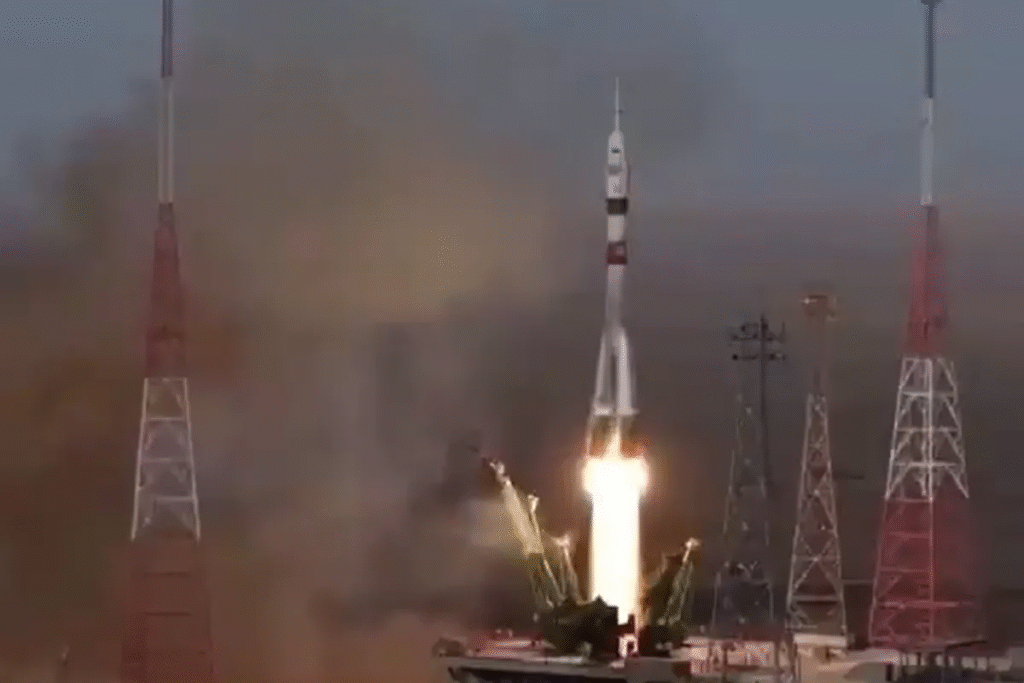
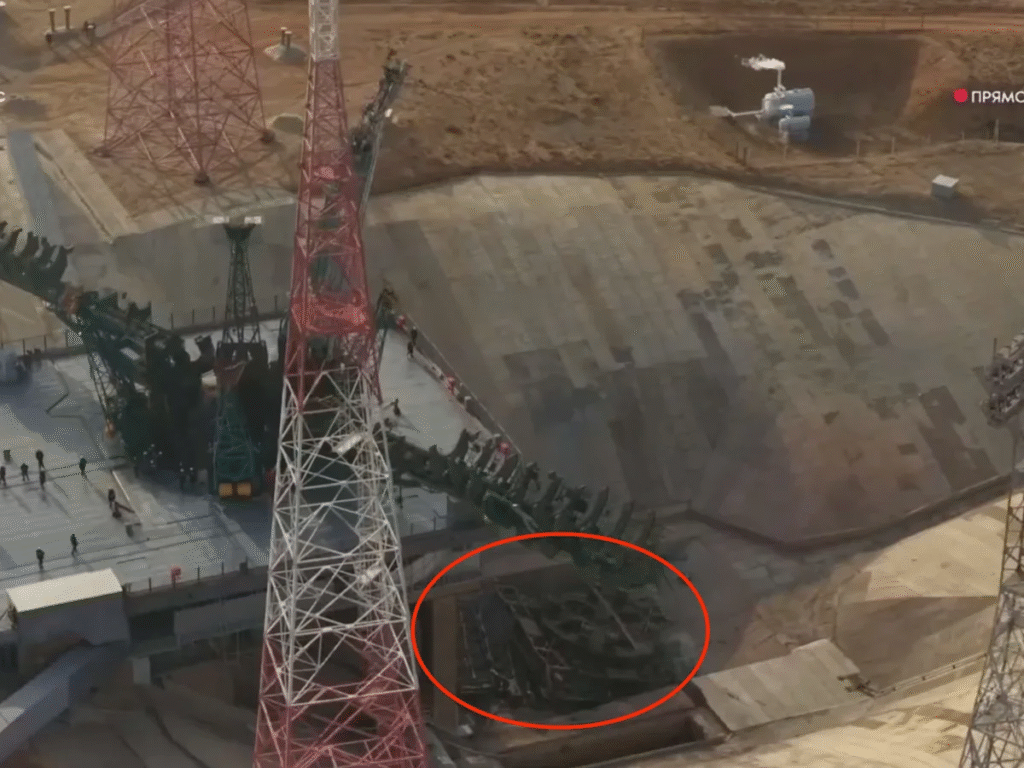
The Soyuz MS-28 mission was designed to be routine—a continuation of Russia’s long-running partnership with international space agencies and a proven process for delivering crew to low-Earth orbit. The launch carried NASA astronaut Chris Williams alongside two Russian cosmonauts, all of whom safely reached the ISS without incident. However, the blast force from the rocket caused an unexpected collapse of part of the launchpad, including an area that fell into the underlying exhaust trench.
Roscosmos later confirmed that significant components of the launch complex had been damaged, with initial assessments pointing to destroyed cabling, sensors and support structures housed in the service bay. Although the agency emphasized that the damage could be repaired using available backup parts, analysts immediately voiced skepticism about the speed and complexity of the recovery.
The Baikonur Cosmodrome has served as the primary site for crewed launches since the dawn of the space age. Its infrastructure, though periodically upgraded, relies on engineering systems developed during earlier eras of spaceflight. Over time, these systems have required significant maintenance, and experts have repeatedly warned that the heavy reuse of aging platforms could become increasingly risky.
The latest collapse underscored these longstanding concerns, raising questions about how much stress the facility can continue to withstand even in standard operations. Complicating matters further is the dependence of Russia’s ISS program on this single launchpad. With no immediate alternative available, Roscosmos faces a logistical and strategic dilemma.
Russia’s last operational crewed launch pad collapsed moments after Soyuz MS-28 lifted off. The rocket reached the ISS, but the ground system failed. Baikonur is now unusable, halting all Soyuz missions. For the first time since Gagarin, Russia can’t launch its own crew. pic.twitter.com/qaR1tEi5Oa
— Café no Front (@SagranCarvalho) November 27, 2025
While the agency has asserted its confidence in a rapid restoration, independent observers are cautious, noting that reconstruction of critical systems—especially those involving safety mechanisms for crewed missions—typically demands extensive testing and certification. Any rushed repairs would need to be balanced against the stringent safety standards required for human spaceflight, potentially extending the downtime of the platform far beyond initial estimates.
Consequences for Russia’s Crewed Spaceflight Capability
The most profound impact of the launchpad damage is the temporary loss of Russia’s ability to launch astronauts into space. This marks a historical moment, as Russia has maintained uninterrupted human launch capability since Yuri Gagarin’s landmark flight in 1961. The continuity of crewed missions has long been a symbol of national pride and a testament to the country’s enduring role in global space exploration. The sudden interruption of this capability represents a significant operational setback and could influence Russia’s standing in international collaborations.
Read : Top Ten Companies with the Most Satellites in the World
Russian space analysts have noted that while the Soyuz MS-28 spacecraft and associated systems remain fully functional, their utility is now hindered by the absence of a viable launch platform. The process of certifying a secondary site, such as another pad at Baikonur or the Vostochny Cosmodrome in Russia’s Far East, is far from straightforward. These facilities would require substantial modifications and testing to accommodate crewed-mission requirements, including life-support connections, emergency escape systems and rigorous reliability certifications.
The situation also raises questions about the scheduling of future missions. The current Soyuz MS-28 crew aboard the ISS is expected to return to Earth in July 2026, but Russia must restore its launch capability well before then to maintain predictable rotation cycles and fulfill its commitments to both domestic and international partners. Any prolonged delay could complicate coordination with NASA and other ISS stakeholders, who rely on consistent crew exchange schedules to sustain scientific operations and ensure station safety.
The geopolitical dimension of the interruption cannot be overlooked. Russia has historically portrayed its space program as a symbol of technological independence and national strength. An unplanned outage in human launch capability not only disrupts operational plans but also challenges this narrative at a moment when global competition in space exploration is intensifying. Other spacefaring nations—including the United States, China and emerging private-sector players—continue to expand their launch capabilities, and Russia now faces pressure to demonstrate resilience and adaptability within this competitive landscape.
Implications for the Future Russian Orbital Service Station (ROSS)
The launchpad incident has implications not only for immediate ISS operations but also for the long-term trajectory of Russia’s planned Russian Orbital Service Station (ROSS). As the ISS approaches its scheduled decommissioning in 2030, Russia has been prioritizing the development of an independent orbital outpost intended to ensure continuous national presence in low-Earth orbit. The first module of ROSS is currently planned for launch in 2027, an objective that demands consistent progress in both spacecraft production and launch readiness.
Read : Internet is Laughing at Pakistan’s First EO-1 Satellite Launch for Its Water Tank-Like Look
However, the loss of the only functioning crewed-launch platform introduces uncertainty into this timeline. The damaged launchpad was expected to serve not only the Soyuz program for ISS missions but also the initial human missions to ROSS. Any significant delay in restoring Baikonur’s operational status could interfere with preparation schedules for these early modules and the cosmonaut crews assigned to them. Moreover, the incident highlights a broader vulnerability in Russia’s space infrastructure: the heavy reliance on a single aging launch site.
To meet the ROSS schedule, Russia may need to accelerate modernization efforts at alternative facilities. Vostochny Cosmodrome, which was envisioned as the future hub of Russian space operations, has experienced delays and technical issues in its development. Although it has hosted several uncrewed launches, it has not yet been fully adapted for human missions. Converting Vostochny into a crew-capable site would require significant investment and may conflict with limited federal resources already stretched by other strategic programs.
The prospect of modernizing other launch complexes at Baikonur also presents challenges. Some infrastructure remains under joint Russian-Kazakh governance, which introduces additional administrative layers to any refurbishment efforts. The extensive technical requirements for crewed missions further complicate this path, making a quick transition unlikely.
Despite these hurdles, Roscosmos maintains that the Soyuz MS-28 event will not derail its long-term plans. The agency has emphasized the availability of backup components and expressed confidence in its engineering teams. Nonetheless, the degree of damage observed suggests that even with concerted effort, the process of restoring full operational readiness will be complex. The need to balance swift action with strict safety standards means that timelines will remain uncertain, especially as independent experts consider a range of potential scenarios for recovery.
The broader question for Russia is how this incident will shape the evolution of its space strategy. The launchpad collapse may serve as a catalyst for modernization, prompting a reassessment of aging infrastructure and long-term investment priorities. It may also force greater emphasis on diversification of launch capabilities to ensure continuity in the event of future disruptions. Such shifts could have lasting implications for Russia’s position in global space cooperation, particularly as the ISS era winds down and new international partnerships begin to take shape.
The coming months will be crucial in determining the pace and direction of Russia’s recovery. Engineering assessments, repair strategies and official updates will collectively shape expectations for when human spaceflight operations can resume. Meanwhile, the Soyuz crew currently aboard the ISS continues its mission, but their eventual return adds a layer of urgency to restoration efforts. As Russia confronts the immediate challenges posed by the launchpad incident, the event also marks a defining moment in the nation’s spaceflight history, one that may reshape both its near-term operations and its long-term ambitions in orbit.
Always on the lookout for good deals and kkkjilipromocode comes through! Getting those extra perks makes it even better to play. Check regularly for some cool promos kkkjilipromocode.
The regulatory landscape surrounding hemp-derived CBD https://www.cornbreadhemp.com/products/full-spectrum-cbd-gummies shifted drastically with the 2018 Farm Bill in the United States. Products containing less than 0.3 percent THC became federally legal, clearing doors for consumers and businesses similarly. Nevertheless, state regulations continue to vary, so reviewing local laws remains essential. This developing framework continues to shape how people access and enjoy cannabidiol-based wellness products across the territory.