
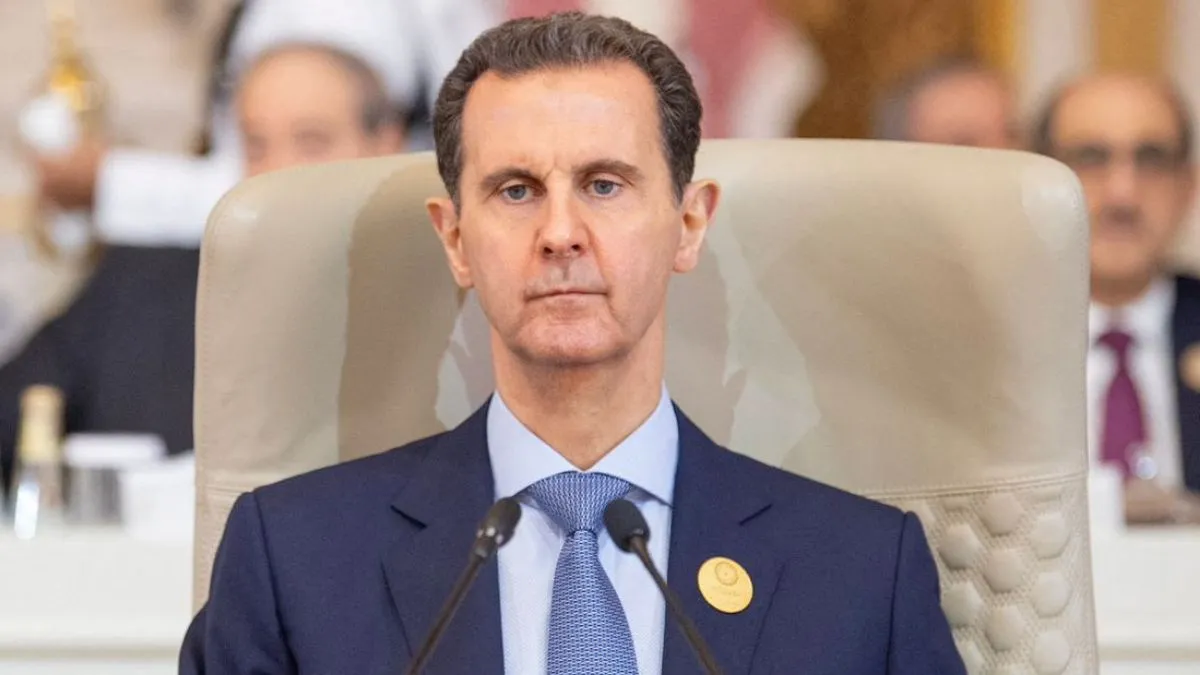
Bashar al-Assad, the former president of Syria, has been at the center of international scrutiny ever since his ousting in a brutal rebel offensive in December.
The violent overthrow of Assad, a leader who had ruled Syria for over two decades, was the culmination of a decade-long civil war that left the country in ruins.
Since his removal from power, Bashar al-Assad has been under the protection of Russian President Vladimir Putin, seeking refuge in Moscow since December 8, 2024.
However, new reports claim that Assad may have been the victim of an alleged poisoning attempt while residing in Russia. While the details are still emerging, the implications of this incident could have significant ramifications for both Syrian and Russian politics.
Bashar al-Assad Allegedly Poisoned in Moscow
Bashar al-Assad’s fall from power marked the end of an era for Syria. The man who had once presided over a totalitarian regime in Damascus found himself suddenly on the run when a well-coordinated rebel offensive forced him out of Syria’s capital.
The rebellion, led by a coalition of various armed groups including the Islamist faction Hayat Tahrir al-Sham (HTS), made rapid gains in early December 2024, eventually breaking through the defenses surrounding Damascus.
The rebel alliance’s swift advance, along with widespread public discontent with Assad’s reign, led to the announcement of his overthrow after only an 11-day campaign.
Read : Asma al-Assad Diagnosed with Leukemia
On December 8, Bashar al-Assad sought refuge in Russia, where he was granted sanctuary by Russian President Vladimir Putin. Moscow, Assad’s primary ally throughout the conflict, offered him protection from the forces that had managed to overthrow him.
An alleged poisoning attempt has been made on ousted Syrian dictator Bashar al-Assad#BasharalAssad #Moscow #syriacivilwar #Poisoned #Viral #GlobalNews https://t.co/CHIY1EM3rL pic.twitter.com/B6AVDc17Pp
— News18 (@CNNnews18) January 2, 2025
However, despite his escape from the immediate danger in Syria, Assad’s future remains uncertain. His political downfall and loss of control over Syria have made him a symbol of failure and isolation on the global stage, and his continued presence in Russia has only deepened his position as a controversial figure.
The Alleged Poisoning Attempt
The latest developments regarding Bashar al-Assad’s health have shocked the international community. On Sunday, a report surfaced claiming that Assad had fallen seriously ill, requiring urgent medical attention.
According to the social media account named General SVR, which is reportedly run by a former Russian spy, Assad began coughing violently and choking after seeking medical help. The account further speculated that the symptoms were consistent with poisoning, leading to suspicions of an assassination attempt.
According to these sources, Assad was treated in his Moscow apartment, and his condition stabilized by Monday. Tests conducted on him reportedly confirmed that poison was found in his system.

However, both the Syrian government and Russian authorities have yet to officially confirm or deny these claims, leaving the situation shrouded in uncertainty. If the allegations are true, it would raise significant questions about who would benefit from an assassination attempt on a leader who has already been ousted from power.
The alleged poisoning marks a troubling escalation of tensions surrounding Assad’s exile in Russia. If it was indeed a targeted attack, it could be linked to several possible motives, including internal power struggles within the Assad family, opposition factions, or even external actors who may seek to further destabilize the already fragile situation in Syria.
Political and Strategic Implications
Assad’s time in Russia is crucial not only for his personal survival but also for the broader geopolitical dynamics at play in Syria and the Middle East. Over the years, Assad has maintained a close relationship with Russian President Vladimir Putin, who has provided crucial military and political support to the Syrian regime.
Russian forces have been instrumental in helping Assad maintain control over significant parts of Syria during the civil war, particularly when the regime was on the brink of collapse.
Putin’s protection of Assad, however, has not been without controversy. Moscow’s support for Assad has drawn sharp criticism from the West, particularly from the United States and European Union, which view Assad as a brutal dictator responsible for war crimes and the deaths of thousands of civilians. As such, the alleged poisoning attempt could have far-reaching consequences for Russia’s image in the international community.
If the poisoning incident is confirmed, it could potentially strain Russia’s relationship with its ally, Assad. Despite their close ties, there have always been underlying tensions between the two.
Assad’s declining power and influence in Syria, coupled with his reliance on Russia for protection, could put Putin in a precarious position. While Russia has been Assad’s main supporter, it is unclear how much longer the Kremlin will tolerate the fallout from Syria’s instability.
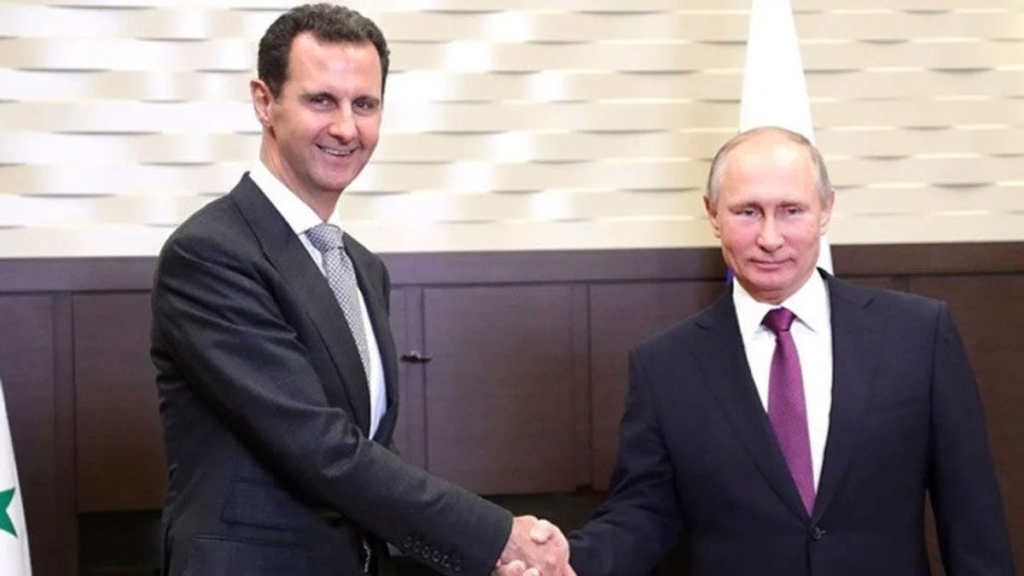
Moreover, the international community may view the alleged poisoning as further evidence of the lengths to which both internal and external actors are willing to go in order to maintain control in the chaotic political landscape of Syria.
The civil war in Syria has led to a complex web of rivalries and alliances, with multiple regional and global powers vying for influence. The alleged poisoning of Assad could represent an attempt by one of these powers, either within Syria or from abroad, to eliminate him as a player in the ongoing geopolitical struggle.
On the other hand, the poisoning attempt may also signal internal unrest within the Assad family or his inner circle. With Assad’s rule already deeply unpopular and his regime losing ground in Syria, factions within his family or the broader political structure may be seeking to remove him from the equation.
In this scenario, the alleged poisoning could be the result of a power struggle within Assad’s own camp, with rivals attempting to rid themselves of his leadership.
The Ongoing Struggles of Syria and the Fate of Bashar al-Assad
Assad’s personal health aside, the larger issue remains the fate of Syria itself. Despite his forced removal from power, the conflict in Syria is far from over. The country remains fractured, with different factions and foreign powers controlling various parts of the country.
The government forces, backed by Russia and Iran, continue to hold significant portions of Syria, while rebel groups and Kurdish forces control others. The situation has resulted in a political vacuum, with no clear path to resolution.
Bashar al-Assad’s fall has left a power void that is unlikely to be filled easily. While Assad’s departure marked a symbolic end to his dictatorship, the country’s future remains uncertain.
The rebel alliance, despite their success in overthrowing Assad, faces significant challenges in establishing their authority over the country. Without the support of foreign powers, the factions that ousted Assad may struggle to maintain their grip on power.
At the same time, Russia’s involvement in Syria is unlikely to diminish anytime soon. Putin has long viewed Syria as a strategic ally, providing Moscow with a foothold in the Middle East. The presence of Russian military forces in Syria is crucial for Russia’s geopolitical ambitions, and Putin is unlikely to allow the situation in Syria to spiral out of control.
The future of Syria will depend heavily on the decisions made by external powers like Russia, as well as the internal dynamics of the rebel groups and the remnants of Assad’s regime. While Assad may have been ousted, his legacy continues to loom large over the region, and the conflict shows no signs of abating in the near future.
A Tense and Uncertain Future
The alleged poisoning of Bashar al-Assad is a dramatic development that adds another layer of intrigue to the already complex and volatile situation in Syria. While the official details remain scarce, the incident raises important questions about who might have been behind the attack and what it means for the future of Syria.
As Assad remains under Russian protection, the political and military strategies of both Russia and Syria will continue to evolve, with the potential for further violence and instability.
The world continues to watch closely as Assad’s fate unfolds, and the geopolitical implications of this latest development will likely reverberate far beyond Syria’s borders. Whether this was an assassination attempt or a symptom of the internal struggles within Assad’s circle, it serves as a stark reminder of the deep divisions and ongoing turmoil that define modern-day Syria.