
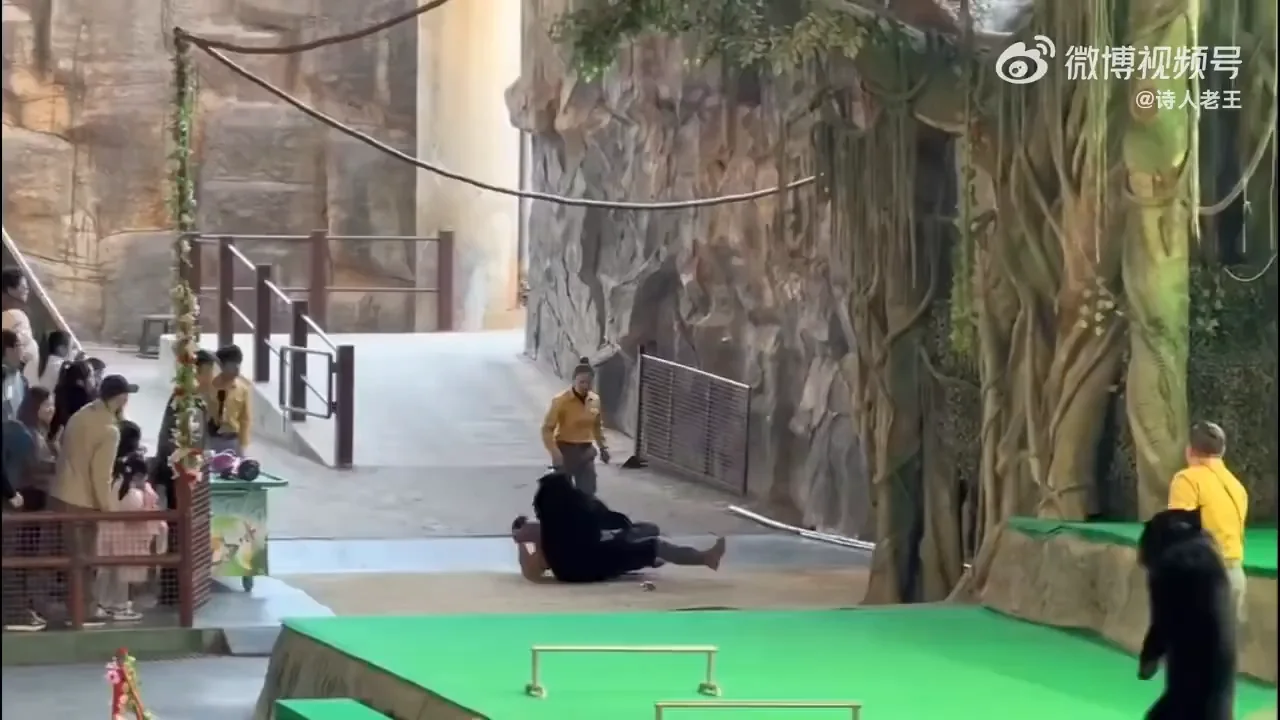
A disturbing incident at Hangzhou Safari Park in Zhejiang Province has ignited fresh scrutiny of animal performances in China after a black Bear Attacks Keeper during a weekend show. What began as a routine presentation quickly descended into chaos when the bear, moments removed from completing an earlier act, suddenly lunged at the handler guiding it toward the stage.
Although neither the keeper nor the animal sustained injuries, the episode has resurfaced long-standing concerns over the safety, ethics, and pressures surrounding the use of wild animals for entertainment. With footage widely circulated across social media, the event has prompted a nationwide discussion about whether such shows should continue in modern wildlife facilities. The dramatic attack, the rapid response from staff, and the broader reaction across Chinese social media have combined to transform a short incident into one of the most debated wildlife issues of the week.
Bear Lunges During Stage Transition
According to videos recorded by audience members, two keepers were leading a pair of black bears toward the stage for the next segment of the performance when the unexpected attack occurred. One bear proceeded as instructed, demonstrating the conditioned behavior spectators had come to see, while the second bear deviated from the routine entirely.
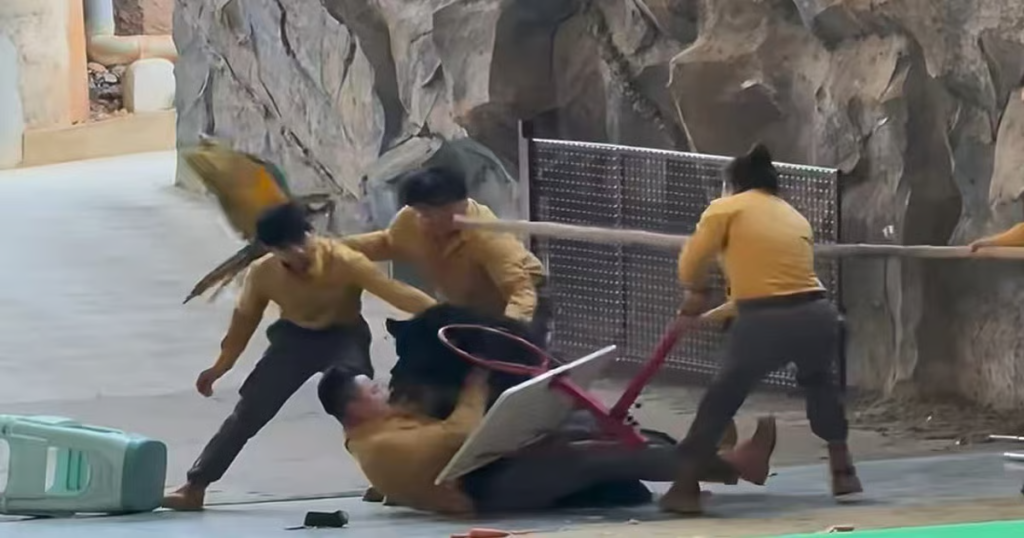
Just as it approached the main performance area, the bear abruptly pounced on its handler, knocking him to the ground with the force of the surprise impact. Viewers could be heard gasping as the serene environment of a family-friendly show gave way to a highly dangerous confrontation. The fallen keeper attempted to shield himself while staff members rushed to his aid, using chairs, poles, and whatever was immediately available to separate the animal from the man pinned beneath it.
Despite being pulled off once, the bear attempted a second lunge only moments later, forcing staff to react with even greater urgency to block the animal from closing in again. The coordinated response enabled the team to guide the bear away, creating enough distance for the injured keeper to stand and retreat from the immediate area.
A shocking 46 seconds: At Hangzhou Safari Park, a black bear unexpectedly attacked its keeper during a show. The zoo confirms the keeper is safe, the bear has been removed from shows, and officials suggest the smell of treats may have triggered the bear's food drive. pic.twitter.com/pZSM5tr25J
— Shanghai Daily (@shanghaidaily) December 7, 2025
Spectators, many of whom had been filming, appeared shaken as the scene unfolded. Those videos rapidly spread online, where viewers debated whether the bear’s behavior reflected aggression, confusion, stress, or a natural reaction to something the keeper carried. The abruptness of the attack sharply contrasted with the controlled environment typical of animal shows, underscoring how unpredictably wild animals can react even under supervision.
Hangzhou Safari Park later issued a statement explaining that the keeper had been carrying a large bag of carrots and apples, items routinely used as rewards during training sessions. As the bear approached, it likely caught the strong scent of the food and became overly stimulated. According to the zoo, the bear’s sudden leap was not an intentional attack on the keeper but rather an instinctive reaction toward the food bag. While this explanation may clarify the immediate trigger, it has not diminished broader discussions online about the use of wild animals in staged performances or the inherent risks involved when animals are placed in high-stress settings.
Zoo Response and Immediate Safety Measures
Following the incident, Hangzhou Safari Park moved quickly to reassure the public that both the bear and the keeper were unharmed. The zoo stated that the keeper had managed to escape without serious injuries and that the bear had not suffered harm during staff intervention. Beyond this confirmation, the park announced that the bear involved in the incident would be removed from upcoming performances as a precautionary measure while staff reviewed the situation.
Officials emphasized that the bear’s behavior had been driven by food motivation rather than hostility, suggesting that the keeper’s proximity to the bag of rewards had inadvertently triggered the response. This explanation has prompted further scrutiny of the zoo’s training protocols. Observers have questioned whether carrying food bags openly in close proximity to performing animals increases the risk of unpredictable behavior.
Read : Don’t Bring Chaos to Asia: China Warns NATO Amid Decisive War Enabler Row
Wildlife experts commenting online noted that many facilities follow strict guidelines to regulate how and when food is presented to animals, especially those that can become highly motivated or agitated by food cues. Although the zoo did not indicate whether its procedures would be revised, it acknowledged that the keeper involved would exercise greater caution in future interactions. The incident has also prompted discussion about on-stage safety measures.
Read : 18-Year-Old Zhu Ye Dashes Into Burning Apartment to Rescue Elderly Neighbour in China
During the attack, staff members used chairs and poles to create distance between the bear and the handler, tools commonly employed in animal management but rarely seen by the public in such a direct and urgent manner. The rapid coordination among employees demonstrated preparedness for emergency scenarios, but it also revealed the underlying risks present each time a wild animal enters a performance ring. Audiences often perceive these shows as harmless entertainment, yet the tools and staff movements seen in the footage underscored the vigilance required to maintain safety in close-contact environments.
With increasing visibility from social media, facilities across China have faced growing pressure to reevaluate their use of trained animal performances. The swift online reaction to the Hangzhou incident suggests that zoos and safari parks may face heightened scrutiny as they defend or modify their operational practices. As of now, Hangzhou Safari Park has not indicated whether the broader performance program will undergo changes, but removing the bear from upcoming shows signals at least a temporary shift in how the park evaluates risk.
Renewed Public Debate Over Animal Performances
The violent images circulating from the incident have reignited a nationwide conversation over whether wild animals should be used in entertainment settings at all. Many internet users argued that animal shows place unnecessary stress on creatures that are not naturally suited for such environments, pointing out that even well-trained animals can become unpredictable when overstimulated or confused.
Read : China Detains Pastor Ezra Jin Mingri of Zion Church Along with Dozens of Staff and Members
Commenters expressed concern for the bear, noting that its behavior appeared rooted in instinct rather than aggression, and that the stressful setting of the performance might have contributed to its reaction. Others emphasized the danger to staff members, who place themselves at risk when interacting so closely with animals capable of inflicting severe harm. Calls to ban animal performances have grown louder in recent years, fueled by shifting public attitudes toward wildlife welfare.
Incidents such as this one tend to amplify those concerns, particularly when they occur in highly publicized environments. Some users pointed to the growing international movement toward ending shows that require wild animals to perform unnatural behaviors, arguing that China should consider similar reforms across its zoo and safari park systems. They contended that modern wildlife facilities should focus on conservation, education, and naturalistic habitats rather than staged entertainment.
Supporters of continued animal performances, though fewer in number in this instance, argued that such shows can offer educational value and generate revenue necessary for zoo operations. However, even among those who defended the general concept, many acknowledged that incidents like the one in Hangzhou highlight the need for stricter safety protocols and more rigorous training standards. The public conversation has broadened beyond the single incident, touching on ethical questions about how wildlife is managed in human-controlled spaces and whether entertainment-driven displays align with evolving societal expectations.
The rapid spread of the attack footage contributed significantly to the scale of the debate. Social media platforms in China often serve as catalysts for discussions related to animal welfare, and the graphic, unfiltered nature of the videos made the incident especially impactful. As viewers repeatedly watched the bear knock its keeper to the ground and attempt a second lunge, many questioned whether any level of training could fully eliminate the inherent risks of working with wild animals. The visual immediacy of the event strengthened the argument that performances asking animals to behave in unnatural ways carry consequences not only for human safety but also for the animals’ well-being.
The Hangzhou Safari Park incident is now part of a broader narrative that includes other recent animal-related accidents, each contributing to a growing shift in public opinion. While the Hangzhou Safari Park’s explanation that the bear acted from food motivation may clarify the mechanical cause of the attack, it has done little to temper concern over the conditions that placed the animal in such a situation to begin with. For many viewers, the incident reinforced the belief that wild animals, regardless of training, can revert to natural impulses at any moment, and that expecting them to perform consistently under artificial circumstances is inherently unstable.
As debate continues, the incident may influence how Chinese wildlife parks structure their shows and training programs in the future. Whether this leads to policy changes, new safety measures, or a gradual reduction of performance-based exhibitions remains to be seen. What is clear from the widespread reaction is that the public is increasingly questioning the ethical and practical foundations of using wild animals for staged entertainment, and events like the Hangzhou bear attack serve as potent reminders of the unpredictable realities beneath polished performances.
Alright, finally got my 79kingcomdangnhap login sorted. Took a minute, but all good now. Smooth sailing after that. 79kingcomdangnhap