
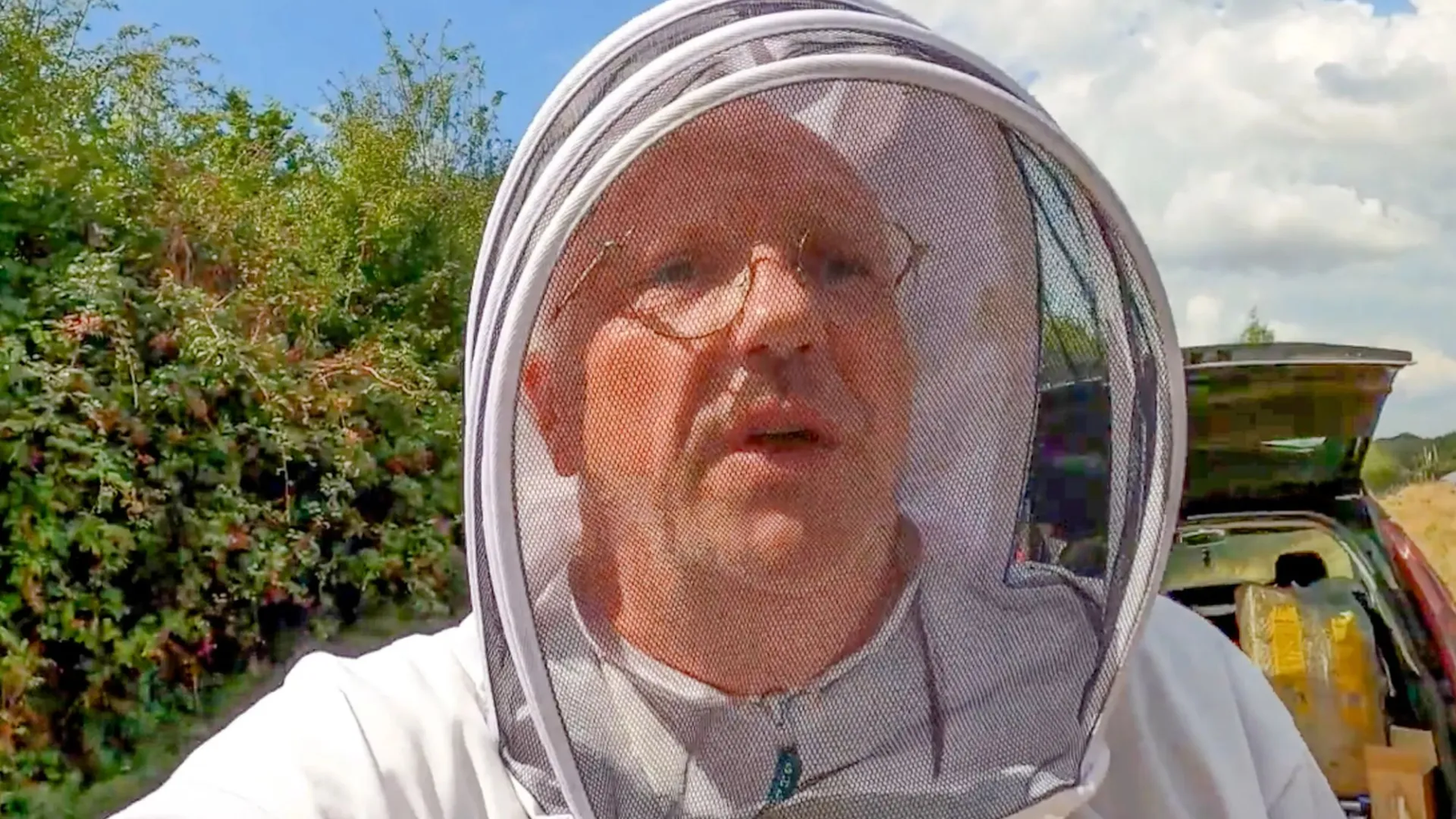
The death of amateur beekeeper Alan Ransom has drawn renewed attention to the potentially fatal risks associated with bee stings and the importance of protective measures, even among experienced or long-standing hobbyists. Mr Ransom, 55, from Godshill in Ventnor on the Isle of Wight, died on 15 May 2024 after suffering a severe allergic reaction to a bee sting sustained while tending to his hives.
A coroner later concluded that his death resulted from an anaphylactic reaction after he failed to wear a beekeeper’s hat, leaving his ear exposed. The case has highlighted how quickly anaphylaxis can develop and how critical immediate recognition and response are in preventing fatal outcomes. Mr Ransom was not a commercial beekeeper but had spent several years developing his skills and sharing his experiences publicly.
Known online as “The Vectis Beeman,” he documented both his learning process and his practical work with bees through a YouTube channel that attracted a modest but engaged following. His sudden death has resonated with the local community and the wider beekeeping world, underscoring that familiarity with bees does not eliminate risk and that allergic reactions can occur unpredictably, even in individuals without a previously diagnosed severe allergy.
Coroner’s Findings and Circumstances of the Incident
A written inquest conducted by senior coroner Caroline Sumeray examined the events leading to Mr Ransom’s death and formally recorded a conclusion of misadventure. According to the coroner’s findings, Alan Ransom died at St Mary’s Hospital in Newport from hypoxic ischaemic encephalopathy and anaphylactic shock. These conditions developed as a direct result of a severe allergic reaction to a bee sting on his left ear. The coroner stated that the fatal reaction occurred after he failed to wear a beekeeper’s hat, a standard piece of protective equipment designed to shield the face, neck, and ears from stings.
The inquest clarified that the sting itself was the trigger for the rapid and life-threatening response. Anaphylaxis is known to cause sudden airway swelling, breathing difficulties, and a sharp drop in blood pressure, all of which can quickly deprive the brain of oxygen. In Mr Ransom’s case, the reaction progressed to hypoxic ischaemic encephalopathy, a form of brain injury caused by insufficient oxygen supply, ultimately proving fatal.
Born in Epsom, Surrey, Mr Ransom later settled on the Isle of Wight, where he worked professionally as a civil engineer. Alongside his career, he pursued beekeeping as a serious hobby, investing time in learning about hive management, bee behaviour, and swarm control. His online presence reflected an openness about the challenges involved in the practice. In the description of his YouTube channel, he described himself as a “hobbyist beekeeper” and explained that his goal was to document both mistakes and successes as he progressed from a beginner to a more experienced beekeeper.
Read : Power-Packed Produce: Top Ten Fruits to Boost Hemoglobin Levels Naturally
In 2023, he received local attention for successfully rehoming a swarm of approximately 2,000 bees discovered in the car park at the headquarters of Island Roads in Newport, where he was employed. The swarm was relocated to one of his hives at Marvel Solar Farm, an operation that was viewed as both practical and environmentally beneficial. That incident reinforced his reputation locally as someone capable and knowledgeable around bees, making the circumstances of his death all the more striking to those who knew him.
Anaphylaxis and the Risks Associated with Bee Stings
Anaphylaxis is a severe, systemic allergic reaction that can be triggered by foods, medications, or insect stings, including those from bees and wasps. While many people experience only mild or moderate reactions to stings, such as localised pain, redness, and swelling, a small proportion of individuals can develop anaphylaxis. The condition can occur even in people who have previously been stung without serious consequences, making it difficult to predict with certainty who is at risk.
Read : Cringe! Spanish Tourist Pours Beer Down Elephant’s Trunk at Ol Jogi Conservancy in Kenya
Medical guidance describes anaphylaxis as a medical emergency requiring immediate treatment. Symptoms typically develop rapidly and can include swelling of the throat and tongue, difficulty breathing or rapid breathing, wheezing or noisy breathing, and tightness in the throat. Other signs include dizziness, fainting, confusion, and changes in skin colour, such as blue, grey, or pale lips and tongue. Some individuals may also develop a raised, itchy rash or widespread swelling.

In the United Kingdom, health authorities advise that anyone suspected of experiencing an anaphylactic reaction should receive urgent medical attention, with emergency services contacted immediately by calling 999. The timely administration of adrenaline is considered the first-line treatment. Adrenaline works by reducing airway swelling, improving blood pressure, and counteracting many of the life-threatening effects of the allergic response.
The Medicines and Healthcare products Regulatory Agency has strengthened its guidance in recent years on recognising and responding to anaphylaxis. This includes clearer advice on the use of adrenaline auto-injectors such as EpiPen and Jext, which are prescribed to individuals known to be at risk of severe allergic reactions. The agency has emphasised that the speed of response can be the difference between life and death, particularly in cases where breathing becomes compromised.
Mr Ransom’s case illustrates how a sting in a vulnerable area, such as the ear or face, can exacerbate the danger. Swelling in these regions can rapidly obstruct the airway, accelerating the progression of symptoms. The absence of protective headgear increased his exposure, allowing the sting to occur in an area where complications are more likely.
Safety, Awareness, and the Wider Implications for Beekeeping
Beekeeping is widely regarded as a rewarding activity that contributes to biodiversity, pollination, and environmental sustainability. However, it carries inherent risks, particularly from stings. Standard safety guidance for beekeepers emphasises the consistent use of protective clothing, including veils or hats, gloves, and appropriate suits, even during routine hive inspections. Such equipment is designed not only to reduce the number of stings but also to prevent stings to sensitive areas of the body.
Read : Buzzpocalypse! Swarm of Bees Stings 24 in French Town of Aurillac
The death of Mr Ransom has prompted discussion within beekeeping communities about complacency and risk perception. Hobbyist and experienced beekeepers alike can become more comfortable over time, sometimes choosing to forgo certain protective measures in familiar settings or during perceived low-risk tasks. While many beekeepers report fewer stings as their handling skills improve, the possibility of an unexpected defensive response from bees remains.

The case also highlights the importance of understanding personal health risks. Individuals who work regularly with bees are often advised to discuss potential allergies with their healthcare providers and to be aware of the signs of anaphylaxis. For those known to be at risk, carrying an adrenaline auto-injector and ensuring that others nearby know how to use it can be critical. Even for those without a diagnosed allergy, awareness of symptoms and emergency procedures remains essential.
Beyond the beekeeping community, the incident serves as a broader reminder of the seriousness of insect-sting allergies. Bee stings are common, particularly during warmer months, and can occur in a wide range of settings, from gardens and parks to rural and agricultural environments. While fatalities are relatively rare, they do occur, often when anaphylaxis is not recognised or treated promptly.
Mr Ransom’s online legacy through “The Vectis Beeman” channel reflects his commitment to learning and sharing knowledge about beekeeping. His stated aim of documenting mistakes as well as successes now takes on a poignant significance. The circumstances of his death have become an unintended but powerful lesson about the limits of experience and the importance of safety precautions.
As investigations and reporting have shown, his death was not the result of reckless behaviour but of a single lapse in protective measures combined with a severe and rapid medical reaction. The coroner’s conclusion of misadventure reflects this, acknowledging that the fatal outcome arose from an unforeseen chain of events rather than deliberate risk-taking.
Okay, so rule34video… well, you probably know what to expect. Enter at your own discretion dudes. I’m not sure if I should be recommending this haha. rule34video