

A frightening malfunction on a popular carnival ride turned a festive high school event into a scene of chaos and concern late Saturday evening, as carriages on the Zipper ride broke free and crashed to the ground at Bishop Conaty – Our Lady of Loretto High School. The incident, which unfolded during the school’s “Electric Illusion: Nocturnal Carnival” fundraiser, trapped dozens of riders mid-air for over an hour before emergency crews could safely evacuate them. Miraculously, no injuries were reported, but the episode has prompted an immediate investigation by state safety regulators and raised questions about the oversight of third-party amusement operators at community events.
The malfunction occurred around 9 p.m. on September 27, 2025, in the Pico-Union neighborhood of Los Angeles, where the all-girls Catholic high school had set up a sprawling carnival to engage families and raise funds for student programs. Eyewitness videos circulating on social media captured the harrowing moments: the towering Zipper ride, known for its spinning gondolas that zip up and down a central axis, suddenly halted with a jolt.
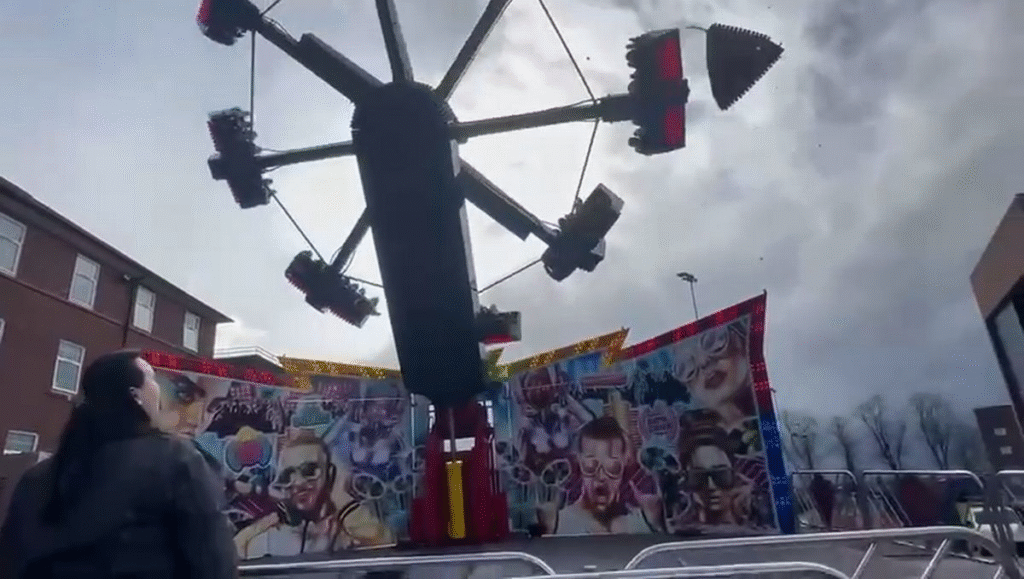
Riders screamed as several passenger compartments collided violently, and at least two carriages detached partially, plummeting several feet before slamming into the ride’s base structure below. Firefighters from the Los Angeles Fire Department (LAFD) arrived swiftly, using ladders and harnesses to extract the stranded participants, many of whom were teenagers and parents attending the event.
School officials and the Archdiocese of Los Angeles, which oversees the institution, confirmed the details in statements released Monday morning. “We are grateful that no one was injured over the weekend when a carnival ride, operated by a third-party vendor, experienced a malfunction at a Bishop Conaty High School event,” read the archdiocese’s official response. “We are very thankful to the first responders who arrived to help.” The statement emphasized the school’s commitment to safety and noted that the carnival was intended as a joyful community gathering, not a source of alarm.
Riders were reportedly trapped for up to an hour after a carnival ride malfunction at a school event in Southern California. Thankfully, no injuries were reported. https://t.co/8asBEonIOS pic.twitter.com/R4lJmtpOO9
— ABC News (@ABC) September 29, 2025
This incident marks yet another in a string of amusement ride failures in recent years, underscoring the inherent risks of temporary setups at public venues. As details emerge from ongoing probes, the focus turns to accountability, prevention measures, and the broader implications for carnival operations in urban school environments.
Incident Unfolds: A Night of Thrills Turns to Terror
The “Electric Illusion: Nocturnal Carnival” was billed as a highlight of the school year at Bishop Conaty – Our Lady of Loretto High School, drawing hundreds of attendees to the campus at 2900 West Pico Boulevard. The event featured classic fairground attractions, including food stalls, games, and illuminated rides under the night sky, all designed to foster school spirit and support scholarships for the 400-student institution. By all accounts, the evening was proceeding smoothly until the Zipper ride—a staple of traveling carnivals since the 1970s—encountered catastrophic failure.
Witnesses described a routine cycle gone awry. The Zipper, manufactured by Chance Rides and typically accommodating up to 24 riders in enclosed, rotating cars that ascend a 70-foot tower, began its ascent as normal. Approximately midway through the spin, the ride’s hydraulic system apparently seized, causing the central chain to slacken. This led to a cascade of errors: gondolas swung wildly into one another, metal-on-metal impacts echoing across the grounds, and safety latches on at least two compartments failed to hold. Videos show one carriage dangling precariously before dropping about 10 feet to the platform, while another collided with the ride’s support beams, sparking brief but visible friction.
Read : Grammy-Winning Rapper Lil Nas X Seen Walking Down the Street in His Underwear in Los Angeles
Maria Gonzalez, a parent of a junior at the school, was among those filming from the sidelines. “It was like something out of a nightmare,” she recounted to local reporters on scene. “The kids were laughing one second, and then there were screams everywhere. You could hear the banging—boom, boom—and see the cars just falling. Parents were rushing the gates, but security held us back while the fire trucks came.” Gonzalez estimated that 20 to 30 people were aboard at the time, including several groups of high school girls celebrating with friends.
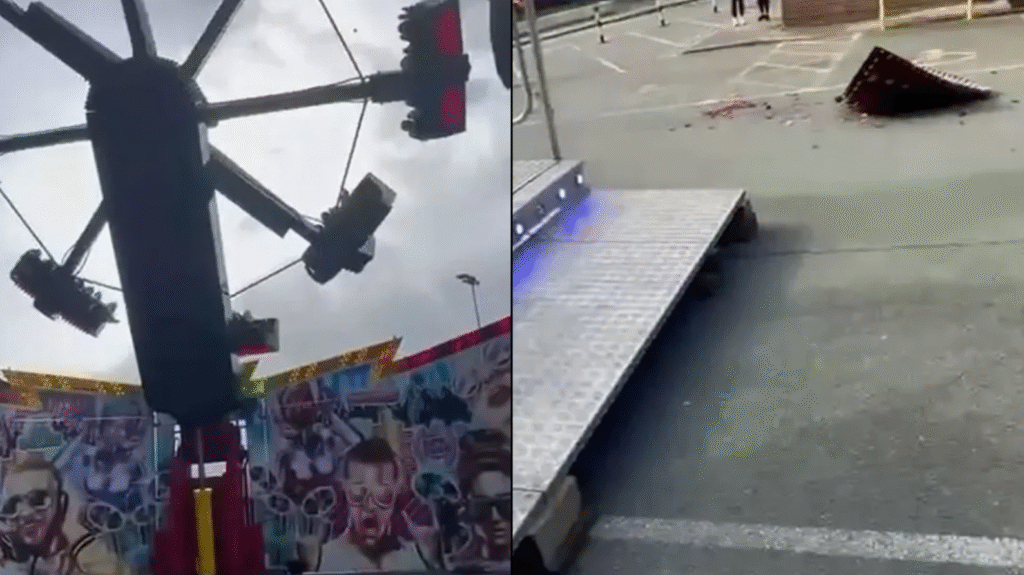
Emergency response was prompt but tense. LAFD units from nearby Station 10 arrived within eight minutes of the 911 calls, deploying an aerial ladder truck and technical rescue teams trained in high-angle extractions. Crews worked methodically, prioritizing the lowest-hanging gondolas and communicating with trapped riders via megaphones. Evacuations took between 45 minutes and an hour, with some participants reporting nausea and panic attacks from the ordeal. Paramedics evaluated all 28 individuals who were rescued—according to preliminary LAFD logs—but cleared them on-site without the need for hospital transport. The ride operator, identified only as a subcontractor from a regional carnival company, shut down the attraction immediately and cordoned off the area with caution tape.
In the immediate aftermath, school administrators activated their emergency protocol, escorting families to a nearby gymnasium for debriefing and offering counseling services through the archdiocese’s pastoral care team. The carnival continued in limited capacity elsewhere on the grounds, but attendance dwindled as word spread. By 11 p.m., the site was cleared, and the malfunctioning ride was secured under tarps for inspection.
Investigation Launched: Cal/OSHA Steps In to Probe Safety Lapses
As cleanup crews dismantled the damaged Zipper on Sunday morning, California’s Division of Occupational Safety and Health (Cal/OSHA) announced it had opened a formal inquiry into the malfunction. The Amusement Ride and Tramway Unit, which oversees temporary installations like those at fairs and school events, dispatched inspectors to the site to examine mechanical components, maintenance records, and operator certifications. Preliminary findings, shared in a Cal/OSHA press release, point to a potential failure in the ride’s braking mechanism and chain tensioners, though a full report is not expected for several weeks.
Cal/OSHA regulations require all traveling amusement devices to undergo daily pre-operational checks, including load tests and hydraulic inspections, by licensed technicians. Rides like the Zipper must also carry current inspection stickers from the state, renewed annually. Sources close to the investigation indicate that the vendor in question—a company with a history of operating at Southern California events—may face scrutiny over compliance. “We’re looking at everything from installation stability to rider restraints,” said a Cal/OSHA spokesperson in a Monday briefing. “Public safety is paramount, especially at events involving minors.”
This probe aligns with heightened scrutiny on carnival safety following high-profile incidents nationwide. In 2024 alone, the U.S. Consumer Product Safety Commission documented over 1,200 amusement ride complaints, with mechanical failures accounting for 40 percent. The Zipper model has a checkered past; a 2017 derailment in Ohio injured 11 riders, leading to enhanced federal guidelines on gondola latches. Experts note that temporary setups, often assembled in under 24 hours, amplify risks due to ground inconsistencies and weather exposure—factors potentially relevant here, given Los Angeles’ recent unseasonal winds.
School and archdiocesan officials have pledged full cooperation, while retaining a private engineering firm to conduct an independent audit. “Transparency is key as we support our community through this,” said Principal Elena Ramirez in a letter to parents emailed Sunday. The vendor has not publicly commented, but industry insiders suggest contract clauses will likely shift liability toward the operator, with the school potentially seeking reimbursement for lost event revenue estimated at $15,000.
Community Response and Safety Reflections: Calls for Stricter Oversight
The Bishop Conaty community, still reeling from the close call, has rallied with a mix of relief and resolve. Parent-teacher meetings scheduled for this week include sessions on event planning and risk assessment, while student-led forums aim to process the trauma. “Our girls are resilient, but this shook us,” said sophomore class president Sofia Alvarez. “We want to know how this happened and how to make sure it never does again.” Social media posts from attendees blend harrowing clips with messages of gratitude to first responders, amassing thousands of views and sparking broader discussions on carnival safety.
The Archdiocese of Los Angeles, which manages 78 schools across the region, has extended its thanks to the LAFD and LAPD for their “swift and professional” intervention. In a broader statement, diocesan safety director Father Michael Torres outlined upcoming reviews of all third-party vendor protocols, including mandatory background checks and on-site audits. “Events like this bring joy to our families, but we must balance that with vigilance,” Torres said. Donations to a school relief fund have already topped $5,000, earmarked for enhanced security measures at future gatherings.
On a citywide level, the incident has reignited debates over amusement regulations in densely populated areas like Pico-Union, where community events are vital for cohesion. Los Angeles Councilmember Eunisses Hernandez, whose district includes the school, called for a hearing on temporary ride permitting, citing the event’s proximity to residential zones. “No family should fear sending their kids to a school fair,” Hernandez posted on her official channels. Advocacy groups like Safer Parks America echoed this, urging pre-event simulations and rider briefings as standard practice.
As Cal/OSHA’s investigation unfolds, the Bishop Conaty malfunction serves as a stark reminder of the fine line between fun and peril in public amusements. With no injuries to mar the night, the focus now shifts to prevention, ensuring that the next carnival spin is one of unadulterated delight. School officials plan to reschedule a scaled-down version of the event in November, sans the Zipper, as a testament to their commitment to healing and forward momentum.
jlgfrt